
In the dynamic and competitive world of the hotel industry, understanding key performance indicators (KPIs) is paramount for success. Among the most crucial metrics is Revenue Per Available Room, commonly known as RevPAR. This seemingly simple calculation offers a powerful snapshot of a hotel’s revenue-generating efficiency, providing insights into its pricing strategy, occupancy rates, and overall market performance. For hotel owners, operators, and even investors, a deep comprehension of RevPAR is indispensable for strategic decision-making, performance benchmarking, and ultimately, maximizing profitability.
Understanding the Core Metrics: ADR and Occupancy
Before delving into the intricacies of RevPAR, it’s essential to grasp its fundamental components: Average Daily Rate (ADR) and Occupancy Rate. These two metrics, while valuable on their own, derive their true power when combined to form RevPAR.
Average Daily Rate (ADR)
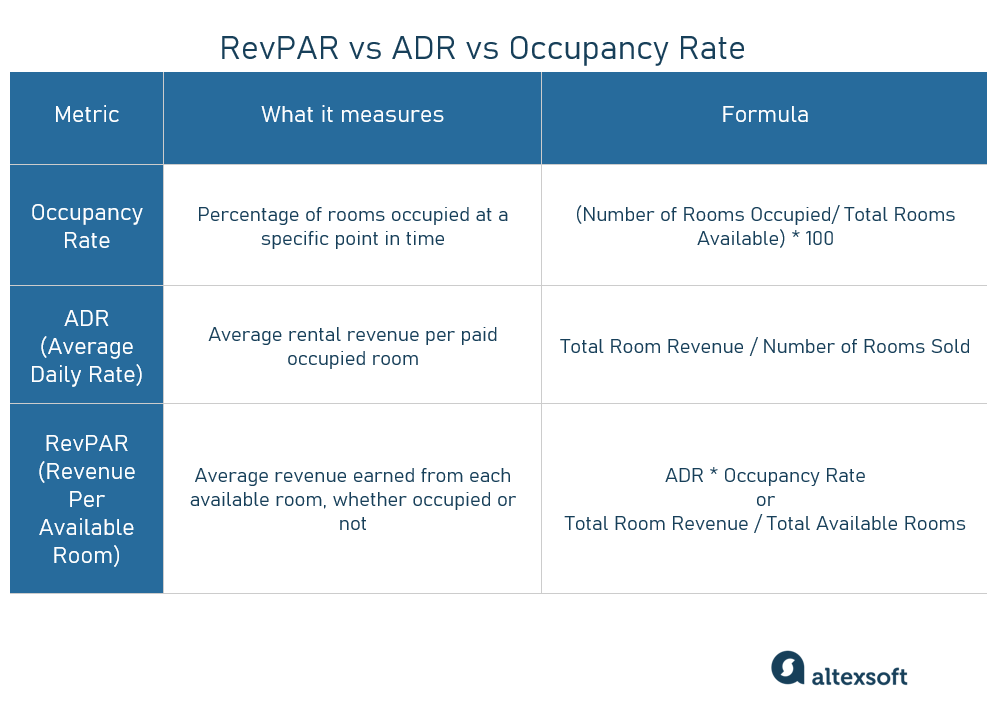
The Average Daily Rate (ADR) is a measure of the average rental income per occupied room in a given period. It is calculated by dividing the total room revenue by the total number of rooms sold.
ADR Formula:
Total Room Revenue / Number of Rooms Sold = ADR
For instance, if a hotel generates $10,000 in room revenue and sells 200 rooms in a day, its ADR would be $50. ADR is a critical indicator of a hotel’s ability to command premium pricing and the effectiveness of its sales and marketing efforts in attracting guests willing to pay a certain rate. A rising ADR often signifies a strong demand or successful upselling strategies, while a declining ADR might point to increased competition, lower demand, or aggressive discounting.
Occupancy Rate
The Occupancy Rate, on the other hand, measures the percentage of available rooms that were sold during a specific period. It reflects the hotel’s ability to attract guests and fill its rooms.
Occupancy Rate Formula:
(Number of Rooms Sold / Total Number of Available Rooms) * 100 = Occupancy Rate
Using the previous example, if the hotel has 250 rooms available and sold 200 of them, its occupancy rate would be 80% ((200 / 250) * 100). A high occupancy rate is generally desirable, indicating that the hotel is a popular choice and is maximizing its physical asset. However, an extremely high occupancy rate achieved through deep discounting might be detrimental to profitability if the ADR suffers significantly.
Calculating and Interpreting RevPAR
Revenue Per Available Room (RevPAR) effectively combines the insights from ADR and Occupancy Rate into a single, comprehensive metric. It represents the average revenue generated per available room, regardless of whether that room was occupied or not. This distinction is crucial, as it accounts for the total revenue potential of the hotel’s inventory.
There are two primary ways to calculate RevPAR, both yielding the same result:
Method 1: Using ADR and Occupancy Rate
This method directly utilizes the previously calculated ADR and Occupancy Rate.
RevPAR Formula (Method 1):
ADR * Occupancy Rate = RevPAR
Continuing with our example: if the hotel’s ADR is $50 and its Occupancy Rate is 80%, then:
$50 * 0.80 = $40 RevPAR
Method 2: Using Total Room Revenue and Total Available Rooms
This method bypasses the intermediate ADR calculation and directly uses the total room revenue and the total number of available rooms.
RevPAR Formula (Method 2):
Total Room Revenue / Total Number of Available Rooms = RevPAR

Using the same figures: if the hotel generated $10,000 in room revenue and had 250 available rooms:
$10,000 / 250 = $40 RevPAR
Both calculations will always produce the same RevPAR figure.
Interpreting RevPAR
A RevPAR of $40 in our example indicates that, on average, each available room in the hotel generated $40 in revenue during the period. This metric is invaluable for several reasons:
- Performance Measurement: It provides a standardized way to measure a hotel’s revenue performance over time. Tracking RevPAR trends allows management to identify periods of strong or weak performance.
- Benchmarking: RevPAR is a critical tool for comparing a hotel’s performance against its competitors or against industry averages. This helps identify areas of strength and weakness relative to the market. For instance, if a competitor in New York City achieves a higher RevPAR with a similar occupancy rate, it suggests their ADR might be higher, indicating a more effective pricing strategy or a stronger brand appeal.
- Strategic Planning: Understanding RevPAR drivers (ADR and Occupancy) informs strategic decisions. If RevPAR is low due to low occupancy, the focus might be on sales and marketing. If it’s low due to low ADR, pricing strategies or product enhancements might be considered.
- Investment Analysis: For investors, RevPAR is a key indicator of a hotel’s income-generating potential and its attractiveness as an investment. A consistently growing RevPAR is a strong signal of a healthy and well-managed property.
Beyond Room Revenue: Expanding the RevPAR Concept
While the standard RevPAR calculation focuses solely on revenue generated from room sales, the modern hotel industry often considers a broader definition to capture the full revenue potential of guest stays. This expanded concept is sometimes referred to as “Total RevPAR” or “TRevPAR,” although the industry standard typically refers to the room-only metric.
Total RevPAR (TRevPAR)
TRevPAR encompasses revenue from all sources within the hotel, including rooms, food and beverage, spa services, meeting spaces, and other ancillary offerings. This provides a more holistic view of the hotel’s overall financial performance.
TRevPAR Formula:
Total Revenue (Rooms + F&B + Other) / Total Number of Available Rooms = TRevPAR
A hotel that excels in cross-selling and upselling various services will likely see a higher TRevPAR compared to its room-only RevPAR. For example, a luxury resort like the Bora Bora Pearl Beach Resort & Spa might derive a significant portion of its revenue from its restaurants, spa, and activities, making TRevPAR a more accurate reflection of its financial success than just room revenue.
The Importance of Context
It is crucial to interpret RevPAR within its proper context. Factors such as seasonality, location, hotel type, and the competitive landscape all influence RevPAR figures. A beach resort in the Maldives will naturally have different RevPAR expectations than a business hotel in London during a major conference.
- Seasonality: RevPAR will typically be higher during peak tourist seasons and lower during off-peak periods.
- Location: Prime locations in high-demand cities or tourist destinations will command higher RevPAR.
- Hotel Class: Luxury hotels and branded properties like the Ritz-Carlton will generally achieve higher RevPAR than economy or mid-scale hotels.
- Competition: The presence of numerous competitors offering similar services can drive down ADR and, consequently, RevPAR.
- Economic Conditions: Broader economic trends, such as recessions or periods of economic growth, can significantly impact travel demand and hotel pricing, thus affecting RevPAR.
Leveraging RevPAR for Hotel Success
Mastering RevPAR is not just about understanding the calculation; it’s about actively using it to drive business decisions and improve profitability.
Strategies to Enhance RevPAR
Several strategic initiatives can be implemented to boost a hotel’s RevPAR:
- Optimize Pricing Strategies: Implement dynamic pricing that adjusts rates based on demand, seasonality, and competitor pricing. This can involve yield management techniques to maximize revenue during high-demand periods and attract price-sensitive guests during low-demand times.
- Improve Occupancy Rates: Targeted marketing campaigns, strategic partnerships with online travel agencies (OTAs), loyalty programs, and enhancing the hotel’s online presence can drive more bookings.
- Increase Average Daily Rate (ADR): Focus on enhancing the guest experience to justify higher rates. This could include offering premium room types, providing exceptional amenities, implementing effective upselling and cross-selling techniques at check-in and during the stay, and investing in room upgrades.
- Enhance Ancillary Revenue Streams: For TRevPAR, focus on driving revenue from F&B, spa, events, and other services. This requires offering high-quality products and services and effective marketing to guests.
- Data Analysis and Forecasting: Utilize hotel management software and data analytics tools to track RevPAR performance, identify trends, and forecast future demand. This allows for proactive adjustments to strategies.
- Competitive Analysis: Regularly monitor the RevPAR of key competitors to understand market dynamics and identify opportunities for differentiation or improvement.
- Channel Management: Optimize distribution channels to minimize commission costs and maximize net revenue per booking.

The Role of Technology
Technology plays an increasingly vital role in maximizing RevPAR. Revenue management systems (RMS) use sophisticated algorithms to analyze market data, predict demand, and recommend optimal pricing strategies. Property management systems (PMS) help track occupancy, revenue, and guest data, providing the essential information needed for RevPAR calculations and analysis. Customer relationship management (CRM) systems can help personalize guest experiences and drive repeat bookings, contributing to both ADR and occupancy.
In conclusion, Revenue Per Available Room (RevPAR) is a foundational KPI in the hotel industry. It offers a clear and concise measure of a hotel’s ability to generate revenue from its available room inventory. By understanding its calculation, components, and the factors that influence it, hotel professionals can make informed decisions, implement effective strategies, and ultimately drive greater profitability and success in this competitive sector. Whether managing a boutique hotel in Paris or a large convention center hotel in Las Vegas, mastering RevPAR is a key step towards achieving operational excellence.
LifeOutOfTheBox is a participant in the Amazon Services LLC Associates Program, an affiliate advertising program designed to provide a means for sites to earn advertising fees by advertising and linking to Amazon.com. Amazon, the Amazon logo, AmazonSupply, and the AmazonSupply logo are trademarks of Amazon.com, Inc. or its affiliates. As an Amazon Associate we earn affiliate commissions from qualifying purchases.