
When planning a trip, choosing the right place to stay is paramount. While the terms “hotel” and “motel” are often used interchangeably, they represent distinct accommodation types, each catering to different traveler needs and preferences. Understanding these differences can significantly enhance your travel experience, ensuring you book lodging that aligns with your budget, itinerary, and desired amenities. This guide delves into the core distinctions between hotels and motels, exploring their history, typical offerings, and ideal use cases.
Historical Origins and Evolution
The divergence between hotels and motels is rooted in their historical development and the evolving landscape of transportation.

The Rise of the Hotel
Hotels, in their modern conception, emerged alongside the growth of rail travel and the burgeoning tourism industry. As people began to travel for leisure and business with greater ease, the demand for comfortable and well-appointed accommodations in city centers and popular destinations grew. Early hotels were often grand establishments, offering a range of services that catered to a more affluent clientele. They aimed to provide a complete hospitality experience, encompassing dining, social spaces, and personalized service.
The Birth of the Motel
The advent of the automobile and the construction of extensive road networks in the United States during the early to mid-20th century gave rise to the motel. The term “motel” is a portmanteau of “motor” and “hotel,” reflecting its primary purpose: to serve motorists. These establishments were designed with convenience for drivers in mind, typically located along major highways, offering easy access, ample parking directly outside guest rooms, and a simpler, more functional lodging experience. Motels were born out of necessity, providing weary travelers a safe and convenient place to rest between long drives.
Architectural Design and Layout
The physical structure and layout of hotels and motels are perhaps their most immediately discernible differences.
Hotels: Centralized and Multi-Story
Hotels are generally characterized by multi-story buildings with a centralized entrance and reception area. Guest rooms are typically accessed via interior corridors, often served by elevators and stairwells. This design prioritizes security, privacy, and the efficient management of a large number of rooms. The layout encourages guests to utilize communal spaces within the hotel, such as lobbies, restaurants, and bars, fostering a more integrated guest experience. Many larger hotels also feature extensive grounds, incorporating amenities like swimming pools, fitness centers, and conference facilities.
Motels: Exterior Access and Low-Rise Structures
Motels, conversely, are typically low-rise structures, often one or two stories high, arranged in a linear or U-shaped fashion around a central parking area. Each room usually has a private entrance that opens directly onto the parking lot or an exterior walkway. This design is a direct response to the needs of motorists, allowing them to park their vehicles close to their rooms, facilitating easy loading and unloading of luggage. The focus is on accessibility and efficiency for travelers on the go, with minimal emphasis on grand architecture or extensive interior common areas.
Services and Amenities
The range and quality of services and amenities offered are significant differentiators between hotels and motels, reflecting their target demographics and pricing strategies.
Hotels: Comprehensive Services and Diverse Amenities
Hotels, especially those in the mid-range to luxury segments, pride themselves on offering a comprehensive suite of services and a wide array of amenities. These can include:
- 24-Hour Front Desk and Concierge Services: Assistance with reservations, local information, and special requests.
- On-site Dining: Restaurants, cafes, and bars offering various culinary experiences.
- Room Service: Convenient dining options delivered directly to the guest room.
- Housekeeping and Daily Cleaning: Regular maintenance of rooms and common areas.
- Fitness Centers and Swimming Pools: Recreational facilities for guests.
- Business Centers and Meeting Rooms: Facilities for corporate travelers.
- Spa Services: Relaxation and wellness treatments.
- Bellhops and Luggage Assistance: Help with carrying luggage.
Larger hotel chains like Marriott, Hilton, and Hyatt often feature these extensive offerings, aiming to provide a complete hospitality experience.
Motels: Essential Services and Functional Amenities
Motels generally provide more basic services, focusing on the core needs of a traveler seeking a clean and comfortable place to sleep. Typical offerings include:
- Basic Front Desk Services: Check-in and check-out, often with limited hours.
- Simple Room Amenities: Clean linens, private bathrooms, and basic toiletries.
- Parking: Free and readily accessible parking, usually directly outside rooms.
- Wi-Fi: Increasingly common, though speeds and reliability can vary.
- Vending Machines: For snacks and drinks.
- Limited or No On-site Dining: Some may offer a continental breakfast.
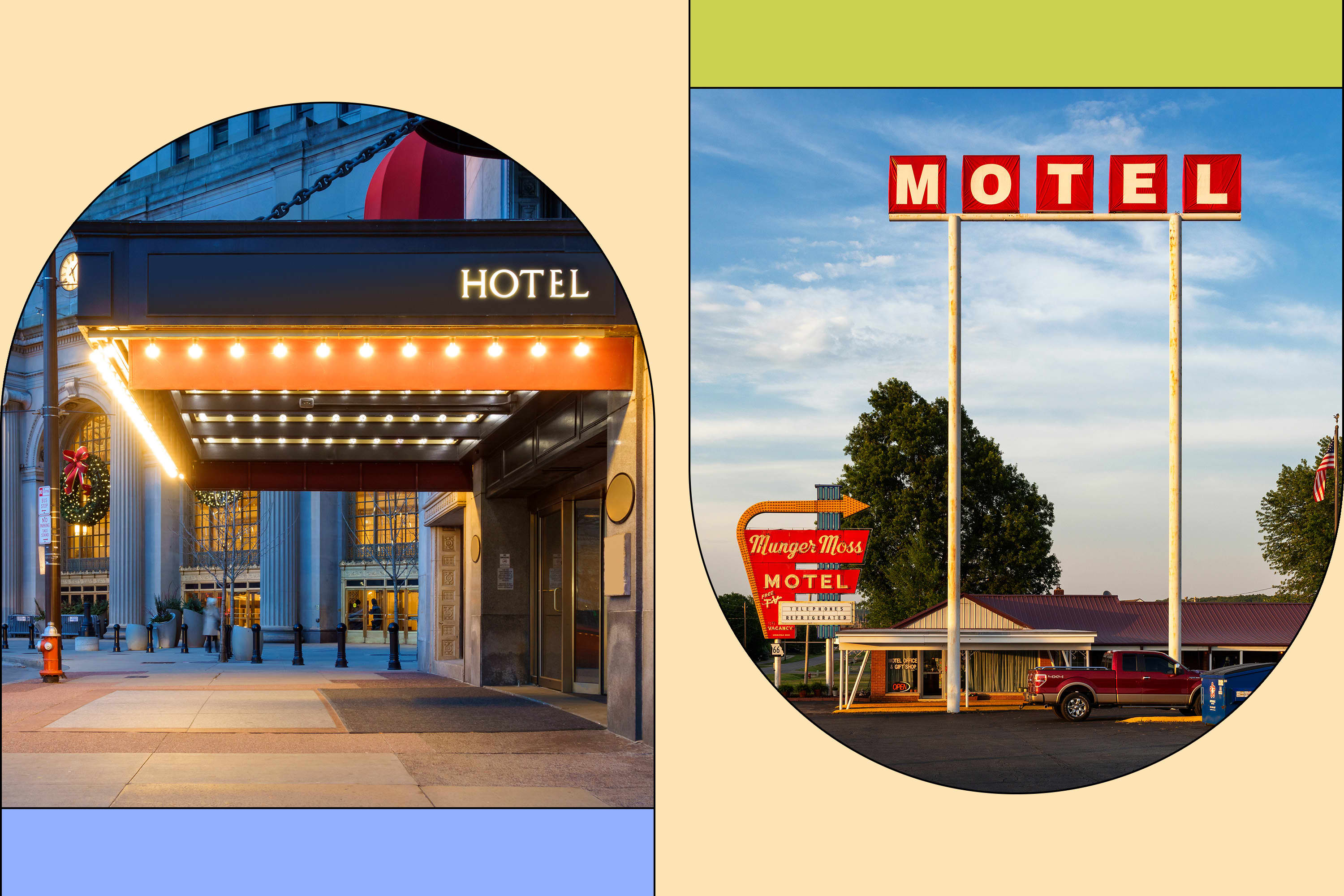
While some modern motels, particularly those operated by brands like Motel 6 or Super 8, have upgraded their amenities to include features like free Wi-Fi and flat-screen TVs, their fundamental offering remains centered on functional, no-frills lodging.
Target Audience and Purpose of Stay
The distinct characteristics of hotels and motels naturally attract different types of travelers and cater to specific travel purposes.
Hotels: Business Travelers, Tourists, and Long-Term Stays
Hotels are well-suited for a diverse range of travelers:
- Business Travelers: The amenities like business centers, meeting rooms, and convenient locations in urban areas make hotels ideal for corporate stays. Brands like The Ritz-Carlton often cater to high-end business needs.
- Tourists: Hotels offer a comfortable base from which to explore a city or region, with access to services that enhance the travel experience.
- Leisure Travelers Seeking Comfort and Convenience: Those who value amenities, dining options, and a higher level of service often opt for hotels.
- Long-Term Stays: Some hotels offer extended-stay options with kitchenettes, making them suitable for longer visits.
Motels: Road Trippers, Budget Travelers, and Short Stays
Motels are primarily designed for:
- Road Trippers: Their location along highways and easy parking make them perfect for travelers on extended road journeys.
- Budget Travelers: Motels are typically more affordable than hotels, making them an attractive option for those seeking to minimize accommodation costs.
- Short-Term Overnight Stays: When the primary need is a safe and comfortable place to sleep before continuing a journey, motels are an efficient choice.
- Travelers Needing Basic Accommodation: Those who are less concerned with extensive amenities and more focused on a functional place to rest.
Pricing and Value Proposition
The pricing structures of hotels and motels reflect their differing levels of service, amenities, and overall experience.
Hotels: Wider Price Spectrum, Value Through Services
Hotels span a broad price range, from budget-friendly chains to ultra-luxury resorts. The cost generally reflects the location, brand reputation, quality of facilities, and the range of services provided. Guests pay for the convenience of on-site dining, concierge assistance, housekeeping, and often, recreational facilities. For business travelers, the ability to work efficiently and the professional atmosphere can justify higher costs. For leisure travelers, the comfort and access to amenities can contribute to a more memorable vacation.
Motels: Cost-Effective, Value Through Simplicity
Motels are almost universally more budget-friendly than hotels. Their value proposition lies in providing essential, clean, and safe lodging at a lower price point. The savings allow travelers, particularly those on road trips or with limited budgets, to allocate more resources to their journey itself, such as fuel, meals, or attractions. While they may lack the frills of a hotel, their cost-effectiveness makes them indispensable for many travelers.
Choosing the Right Accommodation
The decision between a hotel and a motel ultimately depends on your specific travel needs, priorities, and budget.
When to Choose a Hotel:
- You are traveling for business and require work facilities.
- You are on a leisure trip and want to take advantage of on-site amenities like pools, spas, or restaurants.
- You prefer the convenience of a central location in a city or near attractions.
- You value a higher level of service, such as concierge assistance and room service.
- You are looking for a more immersive hospitality experience.
- You are planning a longer stay and may benefit from services like daily housekeeping and on-site dining.
Consider a hotel if you’re visiting a major city like New York City or a popular tourist destination like Orlando, Florida.

When to Choose a Motel:
- You are on a road trip and need a convenient stopover point along a highway.
- You are traveling on a tight budget and prioritize cost savings.
- Your primary need is a clean and safe place to sleep for a single night.
- You prefer direct access to your room from your vehicle.
- You are less concerned with extensive amenities and more focused on functionality.
Motels are excellent choices for segments of a road trip across states like Texas or through the scenic landscapes of the Pacific Northwest.
In conclusion, while both hotels and motels offer lodging, their historical roots, architectural designs, service offerings, and target audiences create distinct experiences. By understanding these differences, travelers can make informed decisions to ensure their accommodation perfectly complements their journey, whether it’s a bustling city exploration or a cross-country adventure.
LifeOutOfTheBox is a participant in the Amazon Services LLC Associates Program, an affiliate advertising program designed to provide a means for sites to earn advertising fees by advertising and linking to Amazon.com. Amazon, the Amazon logo, AmazonSupply, and the AmazonSupply logo are trademarks of Amazon.com, Inc. or its affiliates. As an Amazon Associate we earn affiliate commissions from qualifying purchases.