
The question of whether Kansas is a “right-to-work” state is a matter of significant importance for businesses considering relocation, employees seeking clarity on their labor rights, and individuals planning travel or extended stays in the Sunflower State. While the direct economic implications might not be immediately apparent to a casual tourist or a business traveler, understanding the legal framework governing employment can subtly influence the overall economic health and business climate of a region, which in turn can affect the types of businesses that thrive, the local culture, and even the variety of amenities available to visitors. For those engaging with Kansas beyond a fleeting visit, this understanding can offer a deeper appreciation of the state’s foundational principles.
Understanding “Right-to-Work” Legislation
At its core, a “right-to-work” law dictates that an individual cannot be required to join a labor union or pay union dues as a condition of employment. This legislation aims to protect an employee’s freedom to choose whether or not to associate with a union, independent of their employer.
Key Provisions of Right-to-Work Laws
- Freedom of Association: Employees are not compelled to join a union or pay agency fees, even if a union represents their workplace.
- Union Membership vs. Employment: The law separates the right to work from the obligation to support a union financially or through membership.
- Impact on Collective Bargaining: While employees retain the right to form or join unions, the laws often influence the power and reach of collective bargaining agreements.
Distinguishing from “At-Will” Employment
It is crucial to differentiate “right-to-work” from “at-will” employment. “At-will” employment means that either the employer or the employee can terminate the employment relationship at any time, for any reason not prohibited by law, without notice. This concept is prevalent across most of the United States, including in right-to-work states. While both concepts relate to employment, they address different aspects of the employer-employee dynamic. “Right-to-work” specifically concerns union membership and fees, whereas “at-will” pertains to the termination of employment.
Kansas: A Right-to-Work State
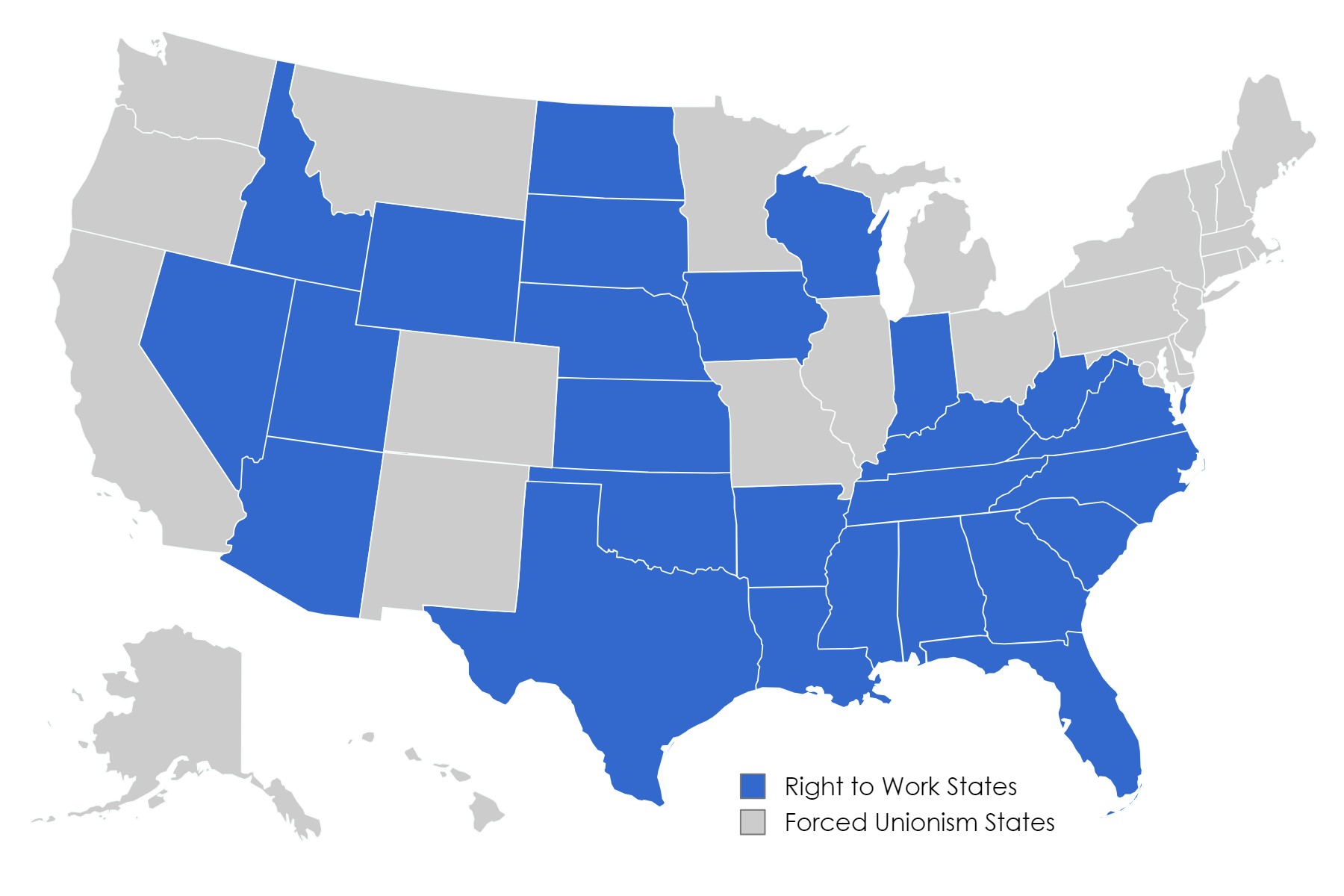
The answer to the central question is a definitive yes. Kansas enacted its right-to-work law in 1958, making it one of the earlier states in the United States to adopt such legislation. This means that in Kansas, employees cannot be forced to join a union or pay dues as a prerequisite for securing or maintaining employment.
Historical Context and Legislative Journey
The passage of the right-to-work law in Kansas was the culmination of a significant political and social debate. Proponents argued that such laws would attract businesses by reducing labor costs and increasing flexibility for employers, thereby fostering economic growth. Opponents, often labor unions, contended that these laws would weaken unions, leading to reduced wages, benefits, and worker protections. The law has remained in effect for decades, shaping the state’s labor relations landscape.
Implications for Businesses and Employees in Kansas
- For Businesses: The right-to-work status is often cited as a positive factor for businesses looking to establish or expand operations in Kansas. It can be perceived as a signal of a business-friendly environment, potentially leading to lower operational costs related to union negotiations and dues. Companies operating in Kansas may find it easier to implement uniform employment policies across their workforce without the complexities of mandatory union participation. This can be particularly attractive for sectors that are highly sensitive to labor costs, such as manufacturing or logistics, influencing the types of industries that choose to set up shop in cities like Wichita or Overland Park.
- For Employees: For individual workers in Kansas, the law guarantees their autonomy regarding union affiliation. They have the freedom to join a union if they believe it serves their interests and to negotiate their terms of employment individually or collectively through a union of their choice. However, if a union is present and successful in organizing a workplace, employees who choose not to join may still benefit from the collective bargaining agreements negotiated by the union, though they are not obligated to contribute financially to the union’s efforts. This can lead to a dynamic where workers have a choice in their level of engagement with organized labor.
The Broader Impact on Kansas’s Economic Landscape and Visitor Experience
While not a primary driver for booking a hotel in Kansas City or planning a visit to the Flint Hills, the state’s right-to-work status contributes to its overall economic environment, which can indirectly shape the visitor experience.
Business Climate and Industry Diversification
The presence of right-to-work legislation can attract a diverse range of industries to Kansas. This can lead to a more robust and varied economy, which in turn supports a wider array of local businesses, restaurants, and cultural attractions. For instance, a strong manufacturing base, potentially bolstered by favorable labor laws, can lead to the development of specialized local eateries catering to a workforce, or unique craft breweries that become points of interest for visitors. The economic stability and growth fostered by business-friendly policies can also contribute to the development and maintenance of public spaces, parks, and historical sites, enhancing the appeal of destinations like Dodge City or the Tallgrass Prairie National Preserve.
Community Development and Amenities
A thriving economy, partly influenced by legislative frameworks like right-to-work, can translate into more resources for community development. This could mean better-funded local initiatives, more investment in infrastructure such as improved roadways or public transportation, and enhanced cultural programming. For visitors, this can mean a more seamless and enjoyable experience, whether they are navigating between attractions in Lawrence or seeking out authentic Kansas cuisine. The availability of well-maintained parks, vibrant downtown areas, and a variety of lodging options, from boutique hotels to larger resorts, can all be indirectly linked to the economic vitality of the state, a vitality that right-to-work legislation aims to support.
Influence on Local Culture and Events
The types of businesses that flourish in a state can also subtly influence its local culture and the events that take place. For example, if right-to-work laws attract a significant number of technology companies, Kansas might see an increase in tech-related events or a growing scene for innovation startups, which can lead to unique co-working spaces or entrepreneurial hubs that are interesting to explore. Conversely, a strong presence of traditional industries might foster a culture rooted in heritage and craftsmanship, leading to festivals celebrating agricultural roots or historical reenactments that draw considerable tourist interest. The interplay of economic factors and social policies thus creates a multifaceted environment that can enrich the experience of anyone visiting or staying in Kansas.
Navigating Employment and Travel in Kansas
For individuals planning to work or reside in Kansas for an extended period, or even for those simply curious about the state’s operational framework, understanding its right-to-work status is beneficial. It provides insight into the labor dynamics that shape the state’s economy and, by extension, its communities and attractions.
Practical Considerations for Workers
Anyone seeking employment in Kansas should be aware that they will not be required to join a union or pay dues as a condition of employment, regardless of whether a union exists in their workplace. This affords individuals the autonomy to decide their level of union involvement. It is advisable for prospective employees to research the specific labor relations environment within their target industry and companies of interest.
Travelers and Cultural Appreciation
For travelers, the right-to-work status is less about direct impact and more about the broader economic and social tapestry it contributes to. A robust economy, potentially supported by such legislation, can mean more investment in tourism infrastructure, a wider variety of dining and entertainment options, and well-preserved historical and natural landmarks like the Pony Express National Historic Trail. Understanding this aspect of Kansas can add a layer of depth to one’s appreciation of the state, moving beyond just the surface attractions to grasp some of the foundational elements that shape its character. Whether you are visiting Topeka for its historical sites, exploring the arts scene in Kansas City, or enjoying the vast open spaces, the state’s economic policies play a subtle role in the richness of the experience.
LifeOutOfTheBox is a participant in the Amazon Services LLC Associates Program, an affiliate advertising program designed to provide a means for sites to earn advertising fees by advertising and linking to Amazon.com. Amazon, the Amazon logo, AmazonSupply, and the AmazonSupply logo are trademarks of Amazon.com, Inc. or its affiliates. As an Amazon Associate we earn affiliate commissions from qualifying purchases.