
The question of whether motorcyclists can legally filter through stopped or slow-moving traffic, a practice commonly known as lane splitting, is a significant concern for riders and motorists alike. In the United States, the legality of this maneuver varies drastically from state to state. Understanding these regulations is crucial for safe riding and for avoiding legal entanglements. This article delves into the specific legal standing of lane splitting in Kansas, exploring the current laws, the rationale behind them, and the ongoing discussions surrounding this practice.
Understanding Lane Splitting
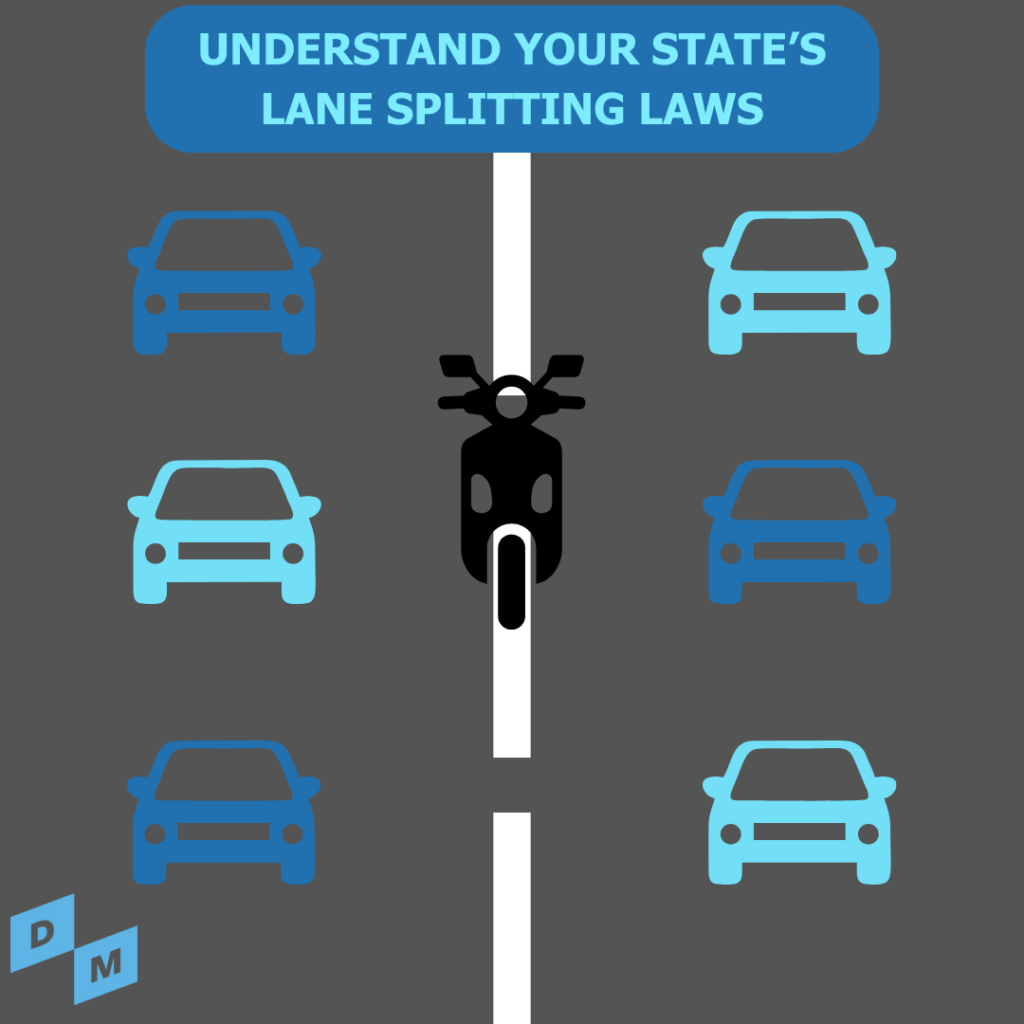
Lane splitting, also referred to as lane filtering or lane sharing, is the act of a motorcyclist riding between lanes of vehicles, typically in congested traffic. The primary motivation for lane splitting is safety and efficiency. Proponents argue that it allows motorcyclists to move to the front of traffic, avoiding prolonged exposure to the risks associated with being surrounded by larger vehicles and reducing the likelihood of being rear-ended. Furthermore, it can help alleviate traffic congestion by allowing motorcycles to bypass gridlock.
The Mechanics and Risks
The practice involves carefully maneuvering a motorcycle between two adjacent lanes of vehicles that are either stopped or traveling at very low speeds. This requires exceptional skill, situational awareness, and a keen understanding of the surrounding traffic environment. The inherent risks associated with lane splitting include:
- Unpredictability of Other Drivers: Drivers in cars may change lanes unexpectedly, open doors, or make sudden turns without seeing a motorcyclist.
- Limited Space: The space between vehicles can be narrow, leaving little room for error.
- Road Conditions: Debris, potholes, or slick surfaces can pose a significant hazard to a motorcyclist attempting to split lanes.
- Speed Differential: Even at low speeds, a significant speed differential between the motorcycle and other vehicles can lead to accidents.
Different State Approaches
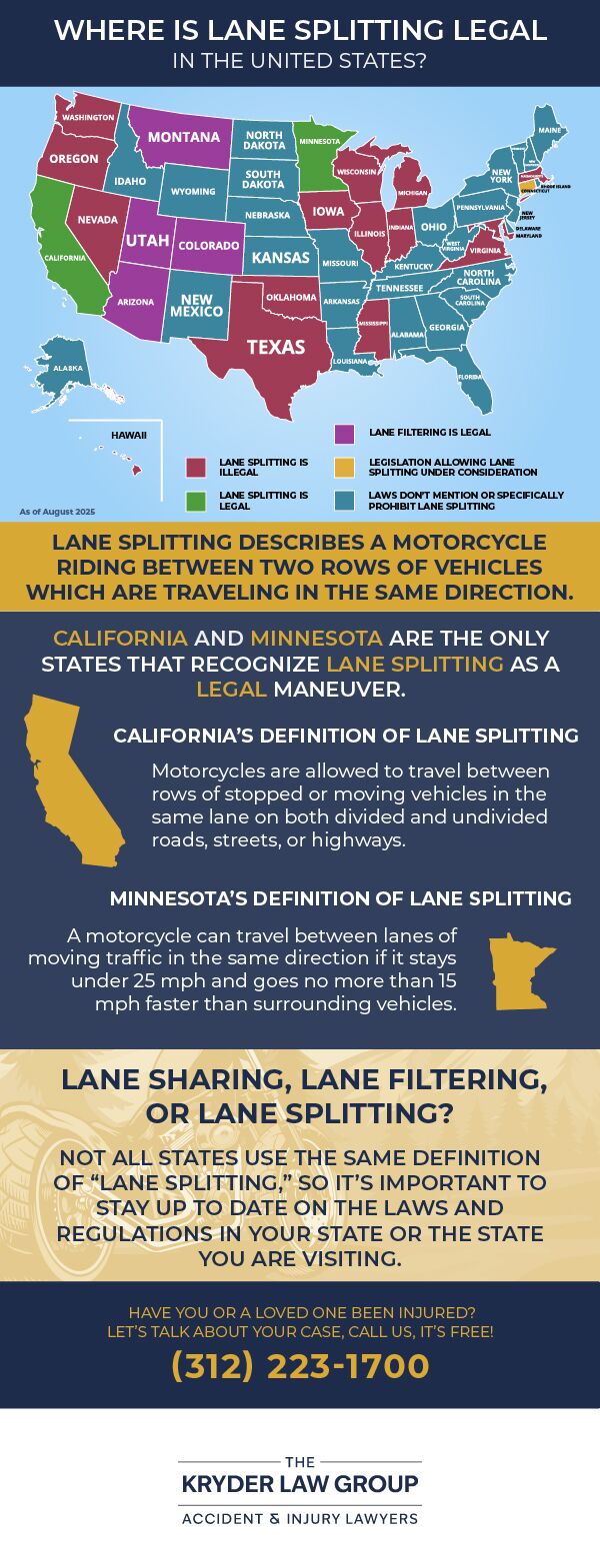
The legal landscape for lane splitting in the United States is diverse. Some states have explicitly legalized lane splitting, often with specific conditions and guidelines. Other states have explicitly prohibited it. A significant number of states, however, have no specific laws addressing lane splitting, leaving its legality in a gray area, often interpreted as illegal under general traffic statutes.
- States Where Lane Splitting is Legal: As of the latest information, states like California, Arizona, Nevada, Utah, and Oklahoma have laws permitting lane splitting under certain circumstances. These laws typically outline conditions such as speed differentials, proximity to other vehicles, and road conditions.
- States Where Lane Splitting is Prohibited: Many states have laws that explicitly forbid motorcyclists from moving between lanes of traffic.
- States with No Specific Laws: In these states, the legality is often determined by broader traffic laws, such as those pertaining to reckless driving or maintaining a single lane.
Lane Splitting in Kansas: The Current Legal Landscape
As of the most recent legislative updates and interpretations, Kansas does not have any statutes that explicitly permit lane splitting. This means that the practice is generally considered illegal under the state’s existing traffic laws. The absence of explicit legalization places the burden on motorcyclists to adhere to the general rules of the road, which typically mandate that a vehicle should occupy a single lane and not maneuver between lanes of traffic.
Kansas Statutes and Their Implications
While there isn’t a specific “lane splitting ban” in Kansas statutes, existing laws can be applied to prohibit the practice. Key statutes that are relevant include:
- K.S.A. 8-1522 (Following too closely): While this statute primarily addresses following distance between vehicles in the same lane, the principle of not impeding traffic flow or creating a hazard can be extrapolated.
- K.S.A. 8-1543 (Driving on laned roadways): This statute generally requires that a vehicle be driven as nearly as practicable entirely within a single lane and shall not be moved from such lane until the driver has ascertained that such movement can be made with safety. Maneuvering between lanes of stationary or slow-moving traffic would likely be interpreted as a violation of this provision.
- K.S.A. 8-1567 (Reckless driving): If a motorcyclist engages in lane splitting in a manner deemed unsafe, they could be cited for reckless driving. This is a broad statute that allows law enforcement to address dangerous driving behaviors that may not be explicitly defined elsewhere.
Law Enforcement Interpretation and Enforcement
In Kansas, law enforcement officers are likely to interpret lane splitting as a violation of the aforementioned statutes. When motorcyclists deviate from their designated lane to move between other vehicles, especially in congested traffic, it can be viewed as unsafe operation of a vehicle. Enforcement may vary, but the potential for receiving a citation for improper lane change, following too closely, or reckless driving is present.
It is important to note that the interpretation and enforcement of traffic laws can evolve. However, without a specific legislative change to permit lane splitting, the default legal standing in Kansas remains prohibitive.

The Debate Around Lane Splitting in Kansas
Despite the current legal status, discussions surrounding the legalization of lane splitting occur in various states, and Kansas is not entirely immune to these conversations. The debate often centers on safety, traffic flow, and the rights of motorcyclists.
Arguments for Legalization
Advocates for legalizing lane splitting in Kansas often point to the experiences of states where it is permitted. They argue that:
- Enhanced Safety: When conducted responsibly, lane splitting can reduce the risk of motorcyclists being struck from behind by inattentive drivers. It allows them to position themselves more visibly and avoid being trapped between vehicles.
- Reduced Congestion: Motorcycles take up less space than cars, and allowing them to filter through traffic can contribute to smoother overall traffic flow, especially in urban areas like Wichita or Kansas City.
- Motorcyclist Rights: Some argue that motorcyclists, as licensed and insured operators of vehicles, should have the same rights and considerations as other road users, including the ability to navigate traffic efficiently and safely.
- Economic Benefits: Reduced commute times and less frustration for motorcyclists could have subtle economic benefits.
Arguments Against Legalization
Opponents of lane splitting in Kansas raise concerns primarily related to safety and the potential for increased accidents:
- Increased Risk of Accidents: Critics argue that lane splitting inherently increases the risk of collisions, especially with drivers who may not be accustomed to motorcycles filtering through traffic. The possibility of drivers opening doors, changing lanes without signaling, or simply not seeing the motorcycle is a significant concern.
- Enforcement Challenges: Establishing clear guidelines and ensuring consistent enforcement of lane splitting laws can be challenging for law enforcement agencies.
- Driver Confusion and Frustration: Legalizing lane splitting could lead to confusion and frustration among drivers of other vehicles, potentially leading to aggressive behaviors towards motorcyclists.
- Lack of Rider Training: A common argument is that the average motorcyclist in Kansas may not possess the advanced skills and judgment required for safe lane splitting, leading to dangerous situations.
The Role of Motorcycle Safety Organizations
Motorcycle advocacy groups and safety organizations often play a crucial role in shaping the debate. These organizations may conduct research, lobby lawmakers, and educate riders and the public on issues related to lane splitting. In Kansas, any movement towards legalization would likely involve significant input and advocacy from such groups.
Navigating Kansas Roads as a Motorcyclist
Given the current legal framework in Kansas, motorcyclists must prioritize safety and adhere to the general traffic laws applicable to all vehicles. This means:
- Riding within a Single Lane: Always maintain your position within a single marked lane.
- Maintaining Safe Following Distance: Keep a safe distance from the vehicle in front of you.
- Being Visible: Utilize high-visibility gear, headlights, and proper lane positioning to make yourself as visible as possible to other drivers.
- Defensive Riding: Anticipate potential hazards and the actions of other drivers. Be prepared to react to unexpected situations.
- Awareness of Surroundings: Constantly scan your environment for traffic, road hazards, and potential dangers.
- Understanding the Law: Be aware that lane splitting is not legal in Kansas and that attempting to do so could result in citations.
The Importance of Rider Education
Regardless of the legal status of lane splitting, comprehensive motorcycle rider education is paramount. Courses like those offered by the Motorcycle Safety Foundation (MSF) teach essential riding skills, hazard perception, and defensive riding techniques. These skills are critical for all motorcyclists, whether they ride in states where lane splitting is legal or not. For riders in Kansas, focusing on these foundational skills ensures safer operation of their motorcycle within the existing legal framework.
What if the Laws Change?
The legal landscape for motorcyclists is dynamic. As states continue to evaluate and re-evaluate traffic laws, it is possible that the stance on lane splitting in Kansas could evolve. Motorcyclists, advocacy groups, and the general public should stay informed about legislative developments. Should discussions or proposed changes arise regarding lane splitting in Kansas, it would be essential to follow the legislative process and engage in informed dialogue.
Conclusion
In conclusion, as of the current legal standing, lane splitting is not legal in Kansas. The state’s traffic laws do not explicitly permit motorcyclists to maneuver between lanes of traffic. While the debate surrounding the safety and efficacy of lane splitting continues across the nation, motorcyclists operating in Kansas must adhere to existing regulations that require vehicles to remain within their designated lanes. Prioritizing rider education, defensive riding techniques, and constant awareness of the surrounding traffic are the most effective ways for motorcyclists to ensure their safety and compliance with the law while navigating the roads of Kansas. The absence of explicit legalization means that any attempt at lane splitting carries the risk of legal consequences.
LifeOutOfTheBox is a participant in the Amazon Services LLC Associates Program, an affiliate advertising program designed to provide a means for sites to earn advertising fees by advertising and linking to Amazon.com. Amazon, the Amazon logo, AmazonSupply, and the AmazonSupply logo are trademarks of Amazon.com, Inc. or its affiliates. As an Amazon Associate we earn affiliate commissions from qualifying purchases.