
The Kansas-Nebraska Act of 1854 stands as a pivotal, albeit contentious, piece of legislation in the antebellum United States. Its impact resonated far beyond the prairie territories it sought to organize, acting as a potent catalyst that propelled the nation towards the precipice of the American Civil War. To understand this act’s significance is to delve into the intricate political landscape of the mid-19th century, characterized by escalating sectional tensions over slavery, westward expansion, and the very definition of American democracy.
The Precursors to Compromise and Conflict
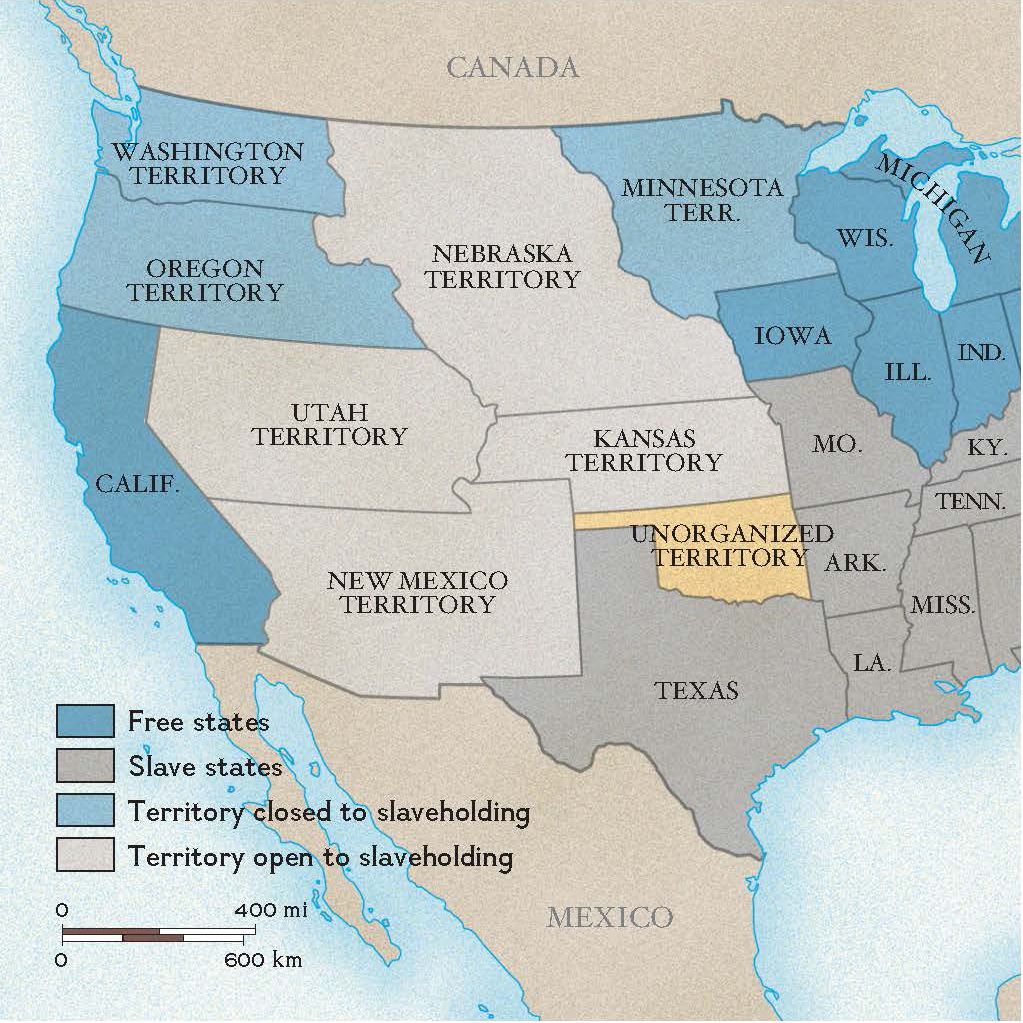
By the mid-1850s, the United States was a nation grappling with profound divisions, primarily centered on the institution of slavery. The delicate balance struck by previous compromises, such as the Missouri Compromise of 1820, was increasingly strained. The acquisition of vast territories from Mexico following the Mexican-American War opened new frontiers for settlement but also ignited fierce debates about whether slavery would be permitted in these new lands.
The Missouri Compromise and its Demise
The Missouri Compromise had sought to appease both pro-slavery and anti-slavery factions by admitting Missouri as a slave state and Maine as a free state. Crucially, it also prohibited slavery in the northern part of the Louisiana Purchase territory, establishing the 36°30′ parallel as a dividing line. However, as the nation expanded westward, this line became an increasingly arbitrary and unworkable boundary.
The Drive for Westward Expansion and a Transcontinental Railroad
A significant impetus behind the Kansas-Nebraska Act was the desire to organize the remaining unorganized territory west of the established states. This region, largely comprising present-day Kansas and Nebraska, was seen as crucial for westward expansion and, importantly, for the construction of a transcontinental railroad. Senator Stephen Douglas of Illinois, a prominent figure in the Democratic Party and chairman of the Committee on Territories, was a fervent advocate for the railroad, believing it would connect the East Coast with the burgeoning West, fostering trade and national unity.
Douglas’s vision for the railroad’s route, however, necessitated the organization of these territories. He recognized that popular support, particularly from Southern states, would be essential to secure funding and passage for this ambitious infrastructure project. This political calculus directly influenced the content and reception of the Kansas-Nebraska Act.
The Core Tenets of the Kansas-Nebraska Act
The Kansas-Nebraska Act of 1854 was ostensibly designed to address the question of slavery in the newly organized territories. Its most revolutionary and consequential provision was the principle of “popular sovereignty.”
Popular Sovereignty: A Double-Edged Sword
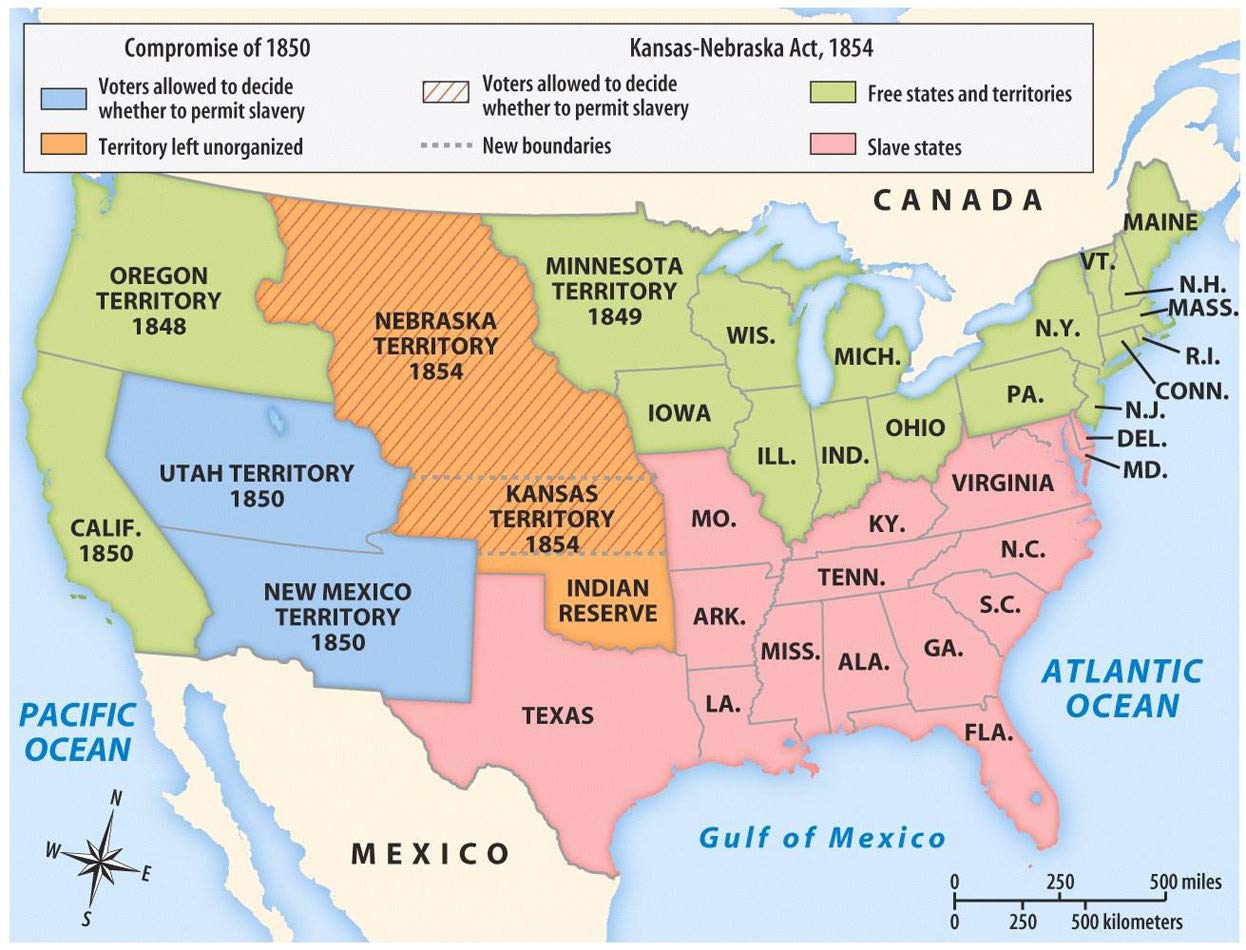
Popular sovereignty, championed by Senator Douglas, proposed that the residents of a territory, rather than the federal government, should decide whether to permit slavery within their borders. This doctrine was presented as a democratic solution, empowering local communities to make their own choices. However, critics argued that it effectively repealed the Missouri Compromise and its prohibition of slavery north of the 36°30′ parallel, thereby opening vast new areas to the potential expansion of slavery.
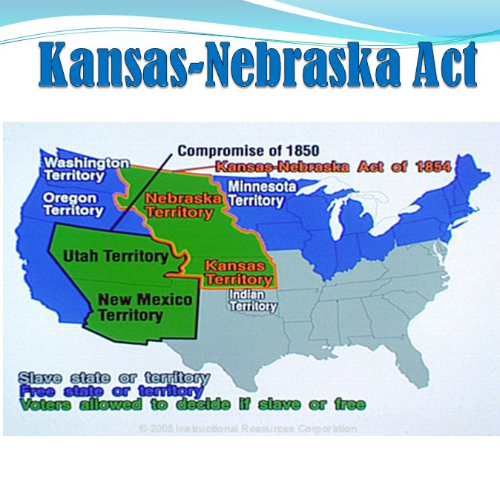
The act formally divided the unorganized territory into two distinct entities: the Territory of Kansas and the Territory of Nebraska. Under the doctrine of popular sovereignty, settlers in both territories would have the right to determine the status of slavery for themselves. This was a direct challenge to the established geographic boundaries that had, for decades, attempted to contain the spread of slavery.
Repeal of the Missouri Compromise
Perhaps the most significant implication of the Kansas-Nebraska Act was its implicit repeal of the Missouri Compromise. By allowing slavery to be decided by popular vote in territories that had previously been guaranteed as free soil, the act shattered the fragile peace that had been maintained by earlier legislative agreements. This decision ignited outrage among anti-slavery Northerners, who saw it as a betrayal of the nation’s founding principles and a concession to the slaveholding South.
The Immediate Aftermath: “Bleeding Kansas”
The implementation of the Kansas-Nebraska Act in the Territory of Kansas was far from peaceful. The principle of popular sovereignty, intended to resolve the issue of slavery through democratic means, instead devolved into violent conflict.
The Influx of Pro-Slavery and Anti-Slavery Settlers
Almost immediately after the act’s passage, both pro-slavery and anti-slavery advocates began a determined effort to influence the outcome of the vote in Kansas. From states like Missouri, pro-slavery “Border Ruffians” crossed into Kansas with the express purpose of voting for slavery. Simultaneously, abolitionist organizations, such as the New England Emigrant Aid Company, sponsored and financed anti-slavery settlers to move to Kansas, determined to prevent its admission as a slave state.
This influx of ideologically driven settlers transformed Kansas into a proxy battleground. The competing factions established their own governments, leading to a period of intense political turmoil and, ultimately, widespread violence.
Violence and Political Instability
The ensuing period, known as “Bleeding Kansas,” was characterized by electoral fraud, intimidation, skirmishes, and outright bloodshed. The pro-slavery faction established a legislature in Lecompton, while anti-slavery settlers formed a rival government in Topeka. Both sides engaged in acts of violence, including raids and massacres.
One of the most notorious incidents was the Sack of Lawrence in May 1856, where a pro-slavery mob destroyed much of the anti-slavery town of Lawrence. In retaliation, abolitionist John Brown and his followers carried out the Pottawatomie Massacre, killing five pro-slavery settlers. These escalating acts of violence solidified the territory’s reputation as a volatile and dangerous place, a stark illustration of the failure of popular sovereignty to achieve a peaceful resolution.
The Broader Consequences and Legacy
The Kansas-Nebraska Act of 1854 had profound and far-reaching consequences that extended well beyond the borders of the territories it affected. It fundamentally altered the political landscape and accelerated the nation’s descent into civil war.
The Rise of the Republican Party
The repeal of the Missouri Compromise and the ensuing violence in Kansas galvanized anti-slavery sentiment across the North. The Whig Party, which had been a major national force, fractured over the slavery issue, with many Northern Whigs aligning with anti-slavery Democrats and Free Soilers. This coalesced into a new political force: the Republican Party.
The Republican Party was founded on a platform of opposing the expansion of slavery into the territories. The Kansas-Nebraska Act provided the moral and political impetus for its rapid growth, transforming it from a regional movement into a national opposition party. The election of Republican Abraham Lincoln in 1860 would ultimately trigger the secession of Southern states.
Increased Sectionalism and Division
The act intensified the already deep sectional divisions between the North and the South. It was perceived in the North as a victory for the slave power and a violation of the principles of free labor and westward opportunity for all. Conversely, in the South, it was seen by some as a necessary step to protect their interests and expand their influence, though many were also wary of the potential for conflict.
The failure of popular sovereignty to achieve a peaceful resolution in Kansas demonstrated the deep-seated and irreconcilable nature of the slavery debate. It highlighted that compromise was becoming increasingly difficult, and that the nation was heading towards a confrontation.
The Road to the Civil War
In essence, the Kansas-Nebraska Act served as a critical turning point. By abandoning the established compromises and embracing popular sovereignty in a way that directly threatened the balance of power, it inflamed passions, emboldened radical factions on both sides, and ultimately rendered peaceful coexistence impossible. The violence of “Bleeding Kansas” was a microcosm of the larger national crisis brewing. The act did not merely organize territories; it violently reopened the wound of slavery, ensuring that the nation would not heal until it was cauterized by war.
LifeOutOfTheBox is a participant in the Amazon Services LLC Associates Program, an affiliate advertising program designed to provide a means for sites to earn advertising fees by advertising and linking to Amazon.com. Amazon, the Amazon logo, AmazonSupply, and the AmazonSupply logo are trademarks of Amazon.com, Inc. or its affiliates. As an Amazon Associate we earn affiliate commissions from qualifying purchases.