
Embarking on a journey to the Sunshine State promises an unforgettable array of experiences, from sun-kissed beaches and vibrant city life to thrilling theme parks and serene natural wonders. However, savvy travelers know that successful trip planning extends beyond just booking flights and hotels; understanding the local time zone is a subtle yet critical detail that can significantly impact your travel experience. While many assume a state as contiguous as Florida operates under a single time zone, the reality is a bit more nuanced. Florida is one of a handful of United States states that straddles two distinct time zones, a geographical quirk that can catch unsuspecting visitors off guard. This guide delves into the specifics of Florida’s time zones, offering insights crucial for smooth travel, seamless bookings, and an enjoyable stay, whether you’re exploring the magic of Orlando or the pristine shores of the Florida Panhandle.
Understanding Florida’s Unique Time Landscape
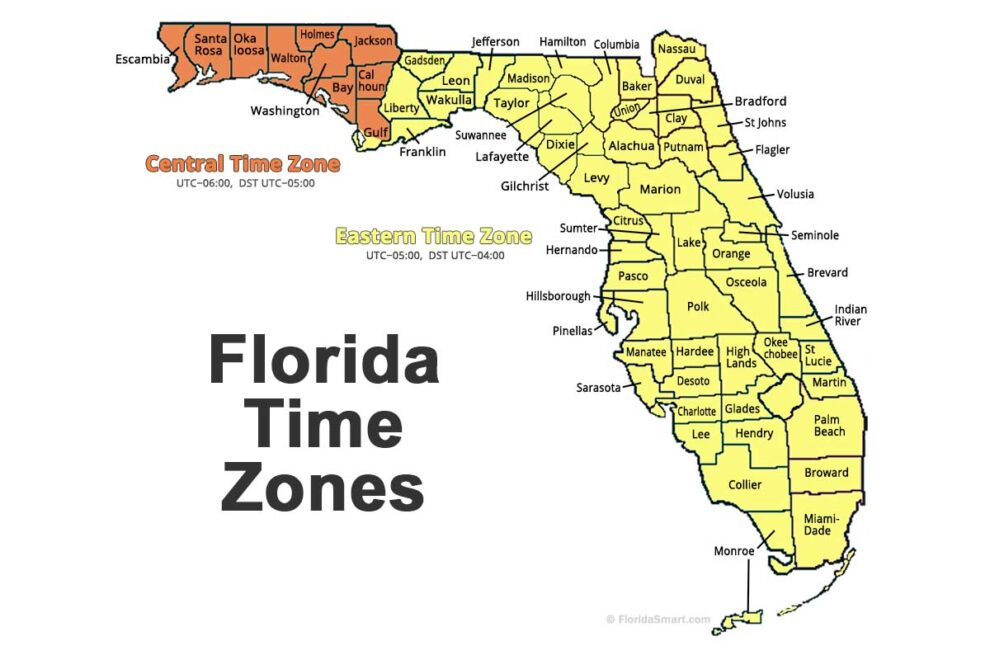
The vast majority of Florida operates on Eastern Time Zone (ET), aligning it with much of the East Coast of the United States. This is the standard for bustling metropolitan areas, world-renowned attractions, and the popular coastal regions that draw millions of tourists annually. However, a significant portion of the western Florida Panhandle observes Central Time Zone (CT), creating a fascinating, albeit sometimes confusing, temporal divide within the state.
The Dominance of Eastern Time
For most visitors, especially those arriving via major international gateways like Miami International Airport, Orlando International Airport, or Tampa International Airport, Eastern Time Zone will be their primary temporal reference. This time zone, often referred to as Eastern Standard Time (EST) during colder months and Eastern Daylight Time (EDT) during daylight saving periods, is Greenwich Mean Time (GMT) minus five hours (GMT-5) or GMT minus four hours (GMT-4) respectively.
This extensive zone encompasses all the beloved destinations that define Florida for many:
- Major Cities: From the vibrant energy of Miami and the historical charm of St. Augustine to the business hub of Jacksonville, the theme park capital of Orlando, the cultural hotspot of Tampa, and the upscale appeal of Fort Lauderdale, Sarasota, and Naples, all these urban centers and their surrounding areas fall within the Eastern Time Zone.
- Iconic Attractions: The magic of Walt Disney World Resort, the cinematic adventures at Universal Orlando Resort, the awe-inspiring space exploration at Kennedy Space Center, and the sun-drenched shores of South Beach are all synchronized with Eastern Time.
- Unique Regions: The entire string of islands known as the Florida Keys, stretching down to Key West, also strictly adheres to Eastern Time, as does the vast wilderness of Everglades National Park and the pristine sands of Amelia Island and Daytona Beach.
For the vast majority of your Florida vacation planning, especially if you’re sticking to the peninsula, knowing that you’re on Eastern Time is usually sufficient.
Exploring the Central Time Zone in the Panhandle
The geographical quirk of Florida comes into play as you move westward into the state’s narrow arm, the Florida Panhandle. This region, which borders Alabama and Georgia to its north, aligns itself with the Central Time Zone (CT). This means it is one hour behind Eastern Time Zone. Like ET, CT observes daylight saving time, switching between Central Standard Time (CST, GMT-6) and Central Daylight Time (CDT, GMT-5).
The primary cities and popular tourist destinations within the Florida Panhandle that operate on Central Time include:
- Pensacola: A city rich in history and beautiful beaches.
- Panama City Beach: Famous for its vibrant spring break scene and stunning Gulf of Mexico beaches.
- Destin: Known as the “world’s luckiest fishing village” and part of the breathtaking Emerald Coast.
- Other towns and areas like Fort Walton Beach and the majority of Okaloosa County, Walton County, Santa Rosa County, and Escambia County.
If your travel plans involve exploring the pristine white sands and emerald waters of the Florida Panhandle, especially its western half, it is crucial to remember this one-hour difference.
Navigating the Time Zone Divide: Where and Why
Understanding the precise demarcation between Eastern Time and Central Time in Florida is key to avoiding confusion, particularly for those driving across the state or flying into airports on the border.
The Invisible Border: Defining the Change
The official time zone boundary in Florida generally follows the Apalachicola River and extends south into the Gulf of Mexico. More specifically, the dividing line passes through the Florida Panhandle, affecting several counties:
- Gulf County: This county is split, with the eastern portion, including the city of Port St. Joe, observing Eastern Time, while the western part, encompassing Mexico Beach, switches to Central Time. This means you could effectively be driving through a time zone change within the same county!
- Bay County: All of Bay County, home to Panama City Beach, is in the Central Time Zone.
- Calhoun County: Entirely within Central Time.
- Jackson County: Entirely within Central Time.
- Washington County: Entirely within Central Time.
- Holmes County: Entirely within Central Time.
- Walton County: Entirely within Central Time.
- Okaloosa County: Entirely within Central Time.
- Santa Rosa County: Entirely within Central Time.
- Escambia County: Entirely within Central Time.
To the east of this line, including Franklin County, Liberty County (except for the town of Bristol), and beyond, Eastern Time prevails. Travelers planning to explore this transitional zone should be particularly vigilant about checking local times to avoid missing appointments or confusing transportation schedules.
Historical Roots of Florida’s Dual Time Zones
The reason for Florida’s dual time zones is rooted in practicality and historical precedent, largely influenced by federal legislation and regional alignment. The concept of standardized time zones in the United States was first formalized with the Standard Time Act of 1918 Standard Time Act of 1918, which established the current four continental time zones. Later, the Uniform Time Act of 1966 Uniform Time Act of 1966 provided consistency for the observation of Daylight Saving Time across the country, while also granting states the option to choose not to observe it (though Florida does).
The decision for the Florida Panhandle to adopt Central Time was largely influenced by its geographical and economic ties to neighboring states like Alabama. Many residents of the western Panhandle have stronger connections to communities in Alabama than to those in the Florida peninsula. Maintaining a consistent time zone with their immediate neighbors facilitates business, travel, and social interactions, making it a logical choice despite being within the same state. The Department of Transportation Department of Transportation, the federal agency responsible for time zone boundaries, reviews and approves these designations, often considering local preferences and geographical logic.
Practical Implications for Florida Travelers
For travelers, being aware of Florida’s time zones is more than just a trivial fact; it’s a vital piece of information that can save you from missed connections, late arrivals, or simply confusion.
Planning Your Itinerary Across Time Zones
When planning a Florida itinerary, particularly one that spans from the peninsula to the Panhandle, careful consideration of the time change is essential:
- Flight and Transportation Schedules: If flying into one of the smaller airports in the Panhandle, such as Pensacola International Airport or Northwest Florida Beaches International Airport near Panama City Beach, remember that departure and arrival times will be listed in local time. A flight from Orlando (ET) to Destin (CT) might appear to take an hour less on paper if you’re not factoring in the one-hour difference.
- Hotel and Accommodation Check-ins: Confirm your check-in and check-out times with hotels, villas, or apartment rentals, especially if you’re staying near the time zone border. A late check-out you negotiated in Port St. Joe might be an hour earlier if you miscalculate the local time.
- Tour and Activity Bookings: Whether it’s a deep-sea fishing charter in Destin, a dolphin cruise in Panama City Beach, or a dinner reservation in Pensacola, ensure you’re noting the local time for all your scheduled activities.
- Business Meetings and Communications: For those traveling for business, coordinating meetings across Florida’s two time zones requires extra vigilance. A 9 AM meeting in Jacksonville (ET) would be 8 AM for a colleague in Pensacola (CT).
- Cruise Departures: While cruise ports like PortMiami and Port Canaveral are firmly in Eastern Time, guests traveling from the Panhandle need to account for the time difference when making their way to the port.
Minimizing Confusion: Tips for a Seamless Trip
To ensure your Florida adventure is as seamless as possible, follow these practical tips:
- Rely on Your Smartphone: Modern smartphones automatically update to the local time zone. Keep your phone’s location services on, and it will be your most reliable guide for the correct time.
- Double-Check All Bookings: Before finalizing any reservations or travel plans that involve crossing the time zone boundary, explicitly confirm the local time for all appointments and departures.
- Ask Locals: If you’re ever unsure, don’t hesitate to ask hotel staff, tour guides, or even friendly locals about the current time. They are usually more than happy to help clarify.
- Set Reminders with Location Awareness: Utilize reminder apps that can trigger based on your geographical location, which can be helpful if you’re frequently crossing the divide.
- Allow Buffer Time: When driving near the time zone border, build in an extra hour of buffer time for critical appointments. It’s always better to be early than late.
- Understand Daylight Saving: Be aware of when Daylight Saving Time begins and ends, as this will shift the clock forward or backward by an hour, affecting both time zones simultaneously.
Daylight Saving Time in the Sunshine State
Like most of the United States, Florida observes Daylight Saving Time, meaning clocks “spring forward” one hour in early March and “fall back” one hour in early November. This applies to both the Eastern Time Zone and the Central Time Zone within the state.
There has been political discussion and legislative efforts in Florida to permanently adopt Daylight Saving Time, effectively staying on Eastern Daylight Time year-round for the Eastern Time portion of the state. This initiative, dubbed the “Sunshine Protection Act,” has passed the state legislature and received the governor’s approval, but it requires approval from the United States Congress to become federal law, as federal statute, specifically the Uniform Time Act of 1966 Uniform Time Act of 1966 and the subsequent Federal Energy Policy Act of 2005 Federal Energy Policy Act of 2005, mandates the observance of standardized time zones and daylight saving adjustments. As of now, Florida continues to adhere to the twice-yearly clock changes. For travelers, this means being mindful of these shifts, as they can temporarily add another layer of complexity to scheduling, particularly during the transition weeks.
In conclusion, while the majority of Florida’s iconic attractions and vibrant cities proudly operate on Eastern Time, the captivating shores of the western Florida Panhandle march to the beat of Central Time. This unique temporal landscape adds a dash of intrigue to the Sunshine State, emphasizing the importance of informed planning for a truly seamless and enjoyable travel experience. By understanding where the time zones divide and applying a few simple tips, you can ensure that your Florida vacation is perfectly timed, allowing you to fully immerse yourself in all the wonders this diverse state has to offer, without a single missed beat.
LifeOutOfTheBox is a participant in the Amazon Services LLC Associates Program, an affiliate advertising program designed to provide a means for sites to earn advertising fees by advertising and linking to Amazon.com. Amazon, the Amazon logo, AmazonSupply, and the AmazonSupply logo are trademarks of Amazon.com, Inc. or its affiliates. As an Amazon Associate we earn affiliate commissions from qualifying purchases.