
The ubiquitous nature of the telephone number, once a primary identifier for businesses and residences alike, has seen a significant shift in recent years. However, understanding the area codes that serve a sprawling metropolis like Los Angeles remains a pertinent question, particularly for those planning a visit, engaging with local businesses, or simply trying to decipher the origins of a call. The Los Angeles area is not defined by a single code but is a complex tapestry woven from multiple overlay area codes, each serving a vast and diverse geographic region. This layering is a testament to the exponential growth of the telecommunications network and the ever-increasing demand for phone numbers within one of the most populous metropolitan areas in the United States.

The original area code for much of Los Angeles County was 213. Established in 1947 as one of the first 86 area codes in North America, it covered an immense territory. As the population grew and telephone usage proliferated, the need for more numbers became apparent. This led to a series of splits and overlays, a common phenomenon in densely populated regions. Today, while 213 still exists, its geographical boundaries have shrunk considerably, primarily serving the downtown Los Angeles area. This historical context is crucial for understanding the current, more intricate system.
Navigating the L.A. Area Code Landscape
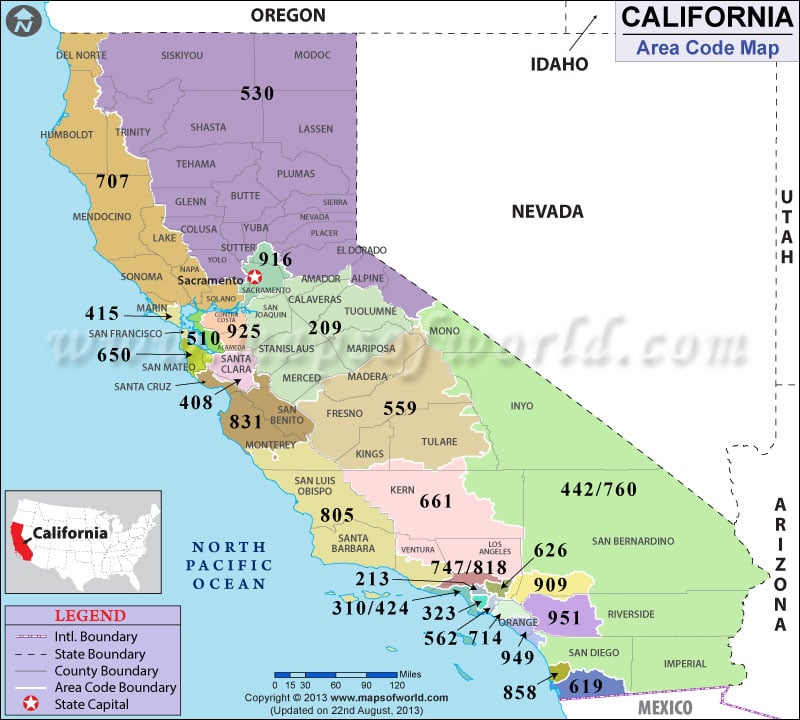
The modern Los Angeles area code map is characterized by a sophisticated overlay system. This means that multiple area codes can cover the exact same geographic territory. The North American Numbering Plan Administrator (NANPA) implements these overlays to ensure a continuous supply of telephone numbers without requiring extensive geographic reassignments, which can be disruptive. For a visitor or someone unfamiliar with the region, this can initially seem confusing, but understanding the primary codes and their general service areas can be quite helpful.
Key Area Codes and Their General Coverage
While it’s impossible to provide an exhaustive, street-by-street breakdown due to the overlay system, several area codes are predominantly associated with the Los Angeles metropolitan area.
213
As previously mentioned, the historic 213 area code is primarily associated with Downtown Los Angeles and surrounding central districts. This includes areas like Bunker Hill, the Financial District, the Historic Core, and parts of the Civic Center. If you’re looking for official city government buildings or major financial institutions in the heart of the city, you’re likely to encounter numbers with the 213 prefix.
310
The 310 area code is synonymous with the western and southwestern parts of Los Angeles County. This encompasses affluent coastal cities such as Beverly Hills, Santa Monica, Malibu, and Palos Verdes Peninsula. It also extends inland to cover areas like Torrance and parts of Inglewood. For many, the 310 prefix evokes images of luxury homes, iconic beaches, and high-end shopping.
323
This area code was created in 1998 by splitting from the 213 area code. The 323 area code generally covers the central and southern portions of the city of Los Angeles, excluding the downtown core. It includes neighborhoods like Hollywood, Mid-Wilshire, East Hollywood, South Los Angeles, and Crenshaw. This code represents a significant portion of the city’s residential and entertainment districts.
424
Introduced in 2006, the 424 area code is an overlay for the 310 area code. This means that 424 numbers are assigned within the same geographic region as 310 numbers. If you’re dialing a number in Beverly Hills, Santa Monica, or Malibu, you might encounter either a 310 or a 424 prefix. This overlay was implemented to alleviate the exhaustion of available numbers within the 310 service area.

626
Serving the northeastern San Gabriel Valley, the 626 area code was created in 1997 as a split from the 818 area code. It covers cities such as Pasadena, Glendale, Burbank, Monterey Park, and El Monte. This region is known for its diverse communities, cultural attractions, and a mix of residential and commercial areas.
661
The 661 area code serves the northern and western parts of Los Angeles County, extending into Kern County and portions of other adjacent counties. This includes cities like Bakersfield, Lancaster, and Palmdale. While geographically part of the broader Los Angeles metropolitan area, its distinct rural and suburban character sets it apart from the more urban cores.
747
The 747 area code is an overlay for the 818 area code, which primarily serves the San Fernando Valley. Introduced in 2009, it covers many of the same cities and neighborhoods, including Sherman Oaks, North Hollywood, Valley Glen, Van Nuys, and Northridge. This overlay ensures a sufficient supply of phone numbers for this populous valley region.
818
This area code has historically been associated with the San Fernando Valley, a large and populous region in the northwestern part of Los Angeles city and county. Cities such as Burbank, Glendale, Pasadena (partially), and numerous valley communities fall under its purview. It was split from the original 213 in 1984.
213/310/323/424/626/661/747/818
It is important to reiterate that the overlay system means these codes often overlap geographically. For instance, a business located in Hollywood might have a 323 number, while a residence just a few blocks away, or a business in a neighboring sector of the same district, could have a 213 or even a 424 number. The specific area code assigned often depends on the numbering block available at the time a new phone line or service was activated.
Why Does This Matter for Travelers and Visitors?
For the casual traveler, understanding the nuances of Los Angeles area codes might not be a primary concern. However, it can be helpful in several practical ways:
- Local vs. Long-Distance Calls: While most mobile phones today treat all calls within a national plan as local, understanding area codes can still be relevant for landlines or when trying to determine if a call to a local business might incur long-distance charges if you are outside the immediate calling area.
- Business Research: When researching hotels, restaurants, or attractions in Los Angeles, you might notice different area codes associated with businesses in close proximity. This is a direct result of the overlay system. For example, a hotel in Santa Monica might have a 310 number, while another hotel nearby could have a 424 number.
- Understanding the City’s Geography: The area code map, in a simplified sense, can offer clues about the city’s development and expansion. The older codes like 213 are concentrated in the historic downtown, while newer codes and overlays cover the expanding suburbs and outlying regions.
- Emergency Services and Local Contacts: While 911 is the universal emergency number, when contacting non-emergency local services, having the correct area code ensures you’re dialing within the intended jurisdiction.
The Future of Area Codes in a Digital Age
The evolution of telecommunications continues to shape how we interact with phone numbers. With the rise of VoIP (Voice over Internet Protocol) services, virtual phone numbers, and the ability to port numbers across different service providers, the traditional association of an area code with a specific physical location is becoming increasingly fluid. Mobile phone users, in particular, often have numbers with area codes that may not even correspond to where they currently reside.
Despite these changes, the foundational structure of area codes remains a critical component of the North American Numbering Plan. For a city as vast and dynamic as Los Angeles, the existence of multiple overlapping area codes is a pragmatic solution to a complex problem, ensuring that the city’s communication needs continue to be met. While you may not need to memorize them all, recognizing the primary area codes associated with different parts of Los Angeles can offer a small but insightful glimpse into the city’s intricate infrastructure and its continuous growth.
LifeOutOfTheBox is a participant in the Amazon Services LLC Associates Program, an affiliate advertising program designed to provide a means for sites to earn advertising fees by advertising and linking to Amazon.com. Amazon, the Amazon logo, AmazonSupply, and the AmazonSupply logo are trademarks of Amazon.com, Inc. or its affiliates. As an Amazon Associate we earn affiliate commissions from qualifying purchases.