
Understanding the compensation landscape for educators in Louisiana is crucial for both those considering a career in teaching within the state and for the broader discussion on educational funding and teacher retention. While the national average salaries and cost of living often dominate headlines, focusing on a specific state like Louisiana reveals unique economic factors and regional variations that significantly impact teacher earnings. This article delves into the intricacies of teacher salaries in Louisiana, exploring the average figures, the factors that influence them, and how they compare to national benchmarks and the cost of living within the state.
Average Teacher Salaries in Louisiana
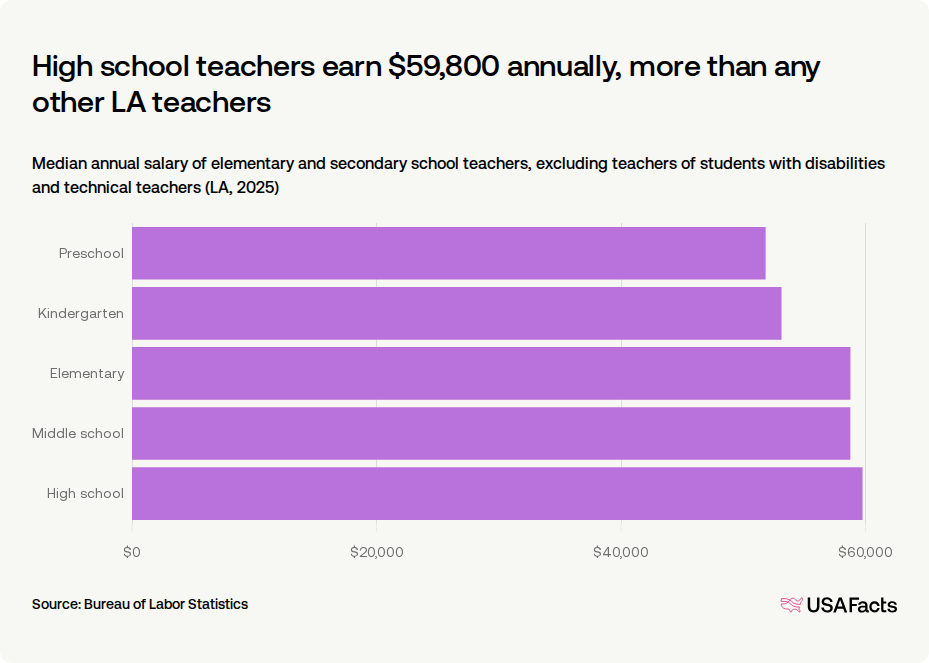
The average annual salary for a teacher in Louisiana fluctuates based on data from various sources, but generally hovers around the $50,000 to $55,000 mark. For instance, reliable data often indicates an average in the vicinity of $53,000 to $54,000. This figure represents a snapshot, and it’s essential to recognize that this is an average that encompasses a wide spectrum of experience levels, educational qualifications, and geographical locations within the state. Entry-level positions will naturally earn less, while veteran teachers with advanced degrees and specialized certifications can command higher salaries.
Factors Influencing Teacher Pay
Several key elements contribute to the variance in teacher salaries across Louisiana:
- Experience: This is perhaps the most significant factor. Teachers typically see a steady increase in their annual earnings as they accumulate years of service. Salary schedules in most Louisiana school districts are designed to reward longevity and demonstrated effectiveness in the classroom. New teachers may start in the $40,000s, while those with 20 or more years of experience could be earning upwards of $60,000 or more, depending on the district.
- Education Level: Holding a master’s degree, a doctorate, or specialized certifications can lead to higher pay. School districts often have salary scales that differentiate pay based on academic credentials. For example, a teacher with a master’s degree might be placed on a higher step of the salary scale than a peer with only a bachelor’s degree, even with the same years of experience. Advanced certifications in high-demand areas like special education or STEM subjects can also sometimes carry salary incentives.
- School District and Location: Salaries can vary significantly from one school district to another within Louisiana. Larger, more affluent districts, or those located in areas with a higher cost of living, may offer more competitive salaries to attract and retain qualified educators. Conversely, smaller or more rural districts might struggle to match the compensation offered in urban or suburban areas, sometimes relying on other benefits or incentives. For instance, districts around metropolitan areas like New Orleans or Baton Rouge might offer slightly higher pay than those in more remote parishes.
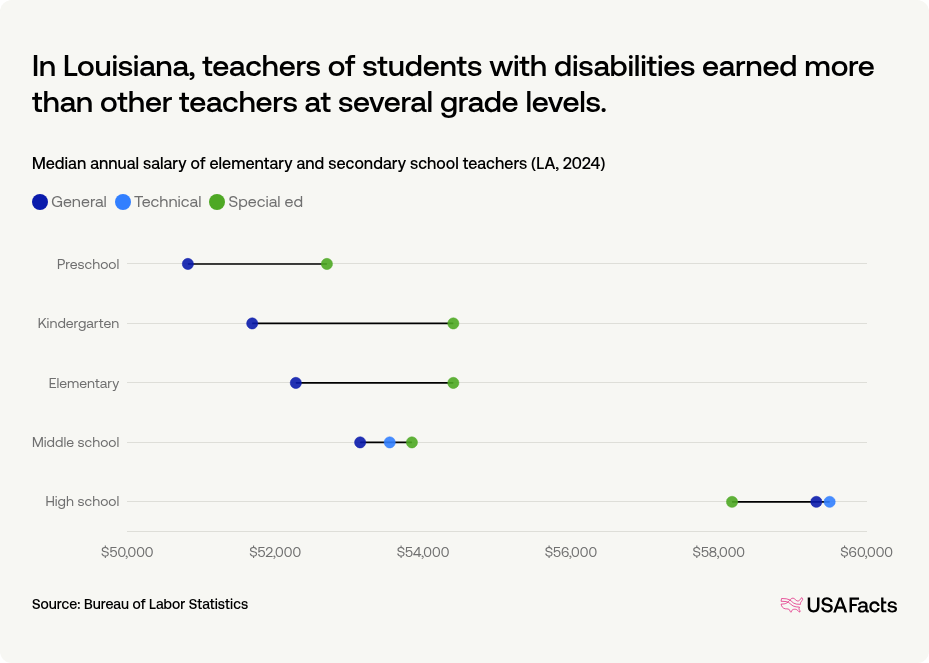
- Subject Area and Demand: While not as pronounced as in some other professions, there can be some variation in pay based on subject area, particularly for subjects facing teacher shortages. High-demand areas like mathematics, science, and special education may occasionally see targeted salary increases or bonuses to attract teachers.
- Additional Duties: Teachers who take on extra responsibilities, such as coaching sports, leading extracurricular clubs, or serving as department heads, often receive stipends or additional compensation for these duties, boosting their overall annual earnings beyond their base salary.
Comparison to National Averages and Cost of Living
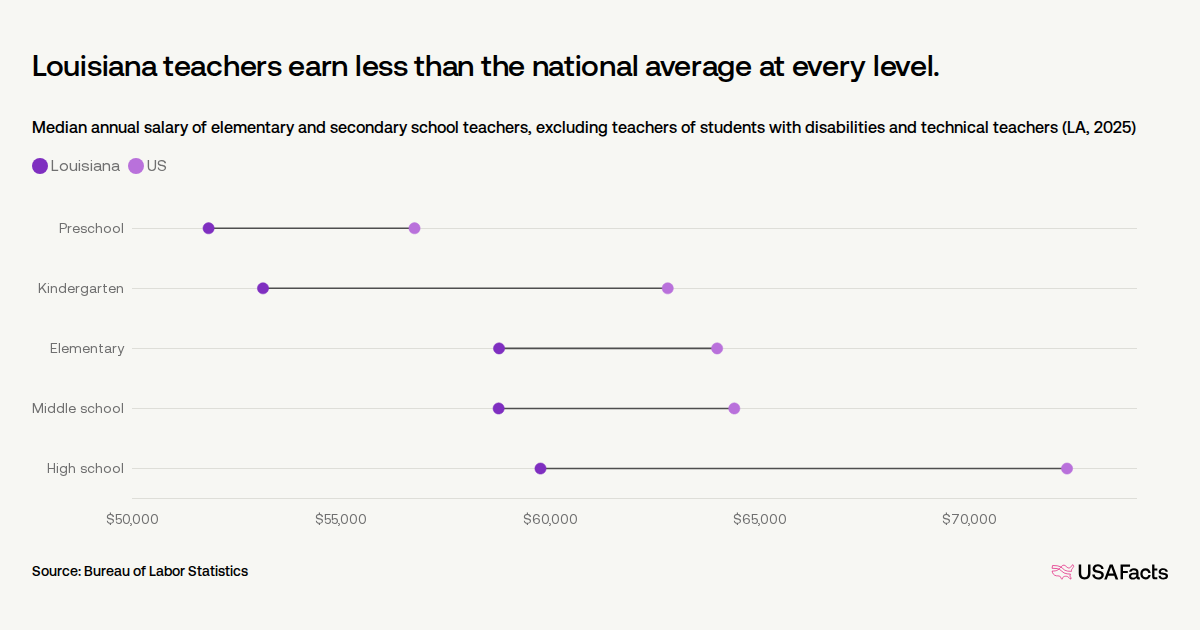
When comparing Louisiana teacher salaries to the national average, it’s evident that Louisiana often falls below the nationwide figures. The average teacher salary across the United States typically ranges from $60,000 to $65,000, and sometimes higher, depending on the source and reporting year. This disparity is a recurring theme in discussions about teacher compensation in states with lower overall economic output or different funding priorities.
However, a direct comparison of raw salary figures can be misleading without considering the cost of living. Louisiana generally boasts a lower cost of living compared to many other states, particularly in areas like housing, utilities, and everyday expenses. This means that a teacher’s salary in Louisiana may, in fact, provide a comparable or even better standard of living than a higher salary in a state with a much higher cost of living. For example, the affordability of housing in cities like Shreveport or towns in more rural parishes can make a $50,000 salary stretch further than a $70,000 salary in a high-cost-of-living area.
The Impact of Cost of Living on Purchasing Power
To truly gauge the financial well-being of teachers in Louisiana, one must analyze their purchasing power. While the average salary might appear modest when compared to national averages, the lower cost of living can significantly enhance the real value of that income. This is a critical point for potential educators considering a move to the state. They need to research not just the salary but also the specific cost of living in the cities or towns where they might be employed. Factors like rent or mortgage payments, grocery costs, transportation, and healthcare expenses will all play a role in how far a teacher’s salary will go.
For instance, a teacher earning $53,000 in a relatively affordable area of Louisiana might find their disposable income to be quite comfortable, allowing for savings, leisure activities, and manageable debt. In contrast, a teacher earning $65,000 in a state like California or New York might find their budget stretched much thinner due to significantly higher living expenses. Therefore, while Louisiana’s teacher salaries might not be the highest in the nation, their effectiveness in supporting a reasonable lifestyle can be greater than in more expensive states.
Trends and Future Outlook for Teacher Salaries in Louisiana
The landscape of teacher compensation in Louisiana is subject to ongoing discussions and potential changes. Factors such as state legislative budgets, local property tax revenues, and advocacy efforts by teacher unions and educational organizations all play a role in shaping future salary trends.
In recent years, there have been legislative efforts and public discourse aimed at increasing teacher pay in Louisiana. These initiatives often stem from concerns about teacher shortages, teacher burnout, and the need to attract and retain high-quality educators in a competitive job market. While significant salary increases can be challenging due to budgetary constraints, incremental improvements and targeted bonuses are sometimes implemented.
Challenges and Opportunities for Educators
The challenges facing teachers in Louisiana, as in many states, include managing large class sizes, securing adequate classroom resources, and navigating complex curricula. These challenges can indirectly influence compensation discussions, as higher pay is often seen as a way to acknowledge the demanding nature of the profession and attract dedicated individuals.
Opportunities for teachers to increase their earnings within Louisiana include pursuing advanced degrees and certifications, seeking leadership positions within schools or districts, or transitioning to administrative roles. Furthermore, some teachers find supplementary income through tutoring, summer school programs, or other educational ventures.
The economic vitality of Louisiana and the state’s commitment to education funding will ultimately determine the pace and extent of any future salary increases for its teachers. Continued advocacy, data-driven policy-making, and a recognition of the vital role educators play are essential for improving compensation and ensuring a robust teaching force across the state. Understanding the nuances of teacher pay in Louisiana, beyond just the average figures, provides a more accurate picture for educators and policymakers alike.
LifeOutOfTheBox is a participant in the Amazon Services LLC Associates Program, an affiliate advertising program designed to provide a means for sites to earn advertising fees by advertising and linking to Amazon.com. Amazon, the Amazon logo, AmazonSupply, and the AmazonSupply logo are trademarks of Amazon.com, Inc. or its affiliates. As an Amazon Associate we earn affiliate commissions from qualifying purchases.