
Establishing a Limited Liability Company (LLC) in Louisiana is a strategic move for entrepreneurs seeking to protect their personal assets while operating a business. This versatile business structure offers a blend of the pass-through taxation of a partnership or sole proprietorship with the limited liability of a corporation. The process, while straightforward, requires careful attention to detail and adherence to state regulations. This guide will walk you through the essential steps to successfully form an LLC in the Pelican State, ensuring you navigate the requirements with confidence.
Understanding the Louisiana LLC Framework
Before diving into the formation process, it’s crucial to grasp the fundamental aspects of an LLC in Louisiana. An LLC is a legal entity separate from its owners, known as members. This separation is the cornerstone of limited liability, meaning that in most cases, the personal assets of the members are shielded from business debts and lawsuits.
Key Benefits of an LLC
- Limited Liability Protection: As mentioned, this is the primary advantage. Your personal assets, such as your home, car, and savings, are generally protected from business liabilities.
- Pass-Through Taxation: Unless elected otherwise, an LLC is taxed as a pass-through entity. This means the LLC itself does not pay federal income taxes. Instead, profits and losses are passed through to the members’ personal income tax returns. This avoids the “double taxation” often associated with C-corporations.
- Flexibility in Management: LLCs can be managed by their members (member-managed) or by appointed managers (manager-managed). This flexibility allows businesses to structure their operations according to their specific needs.
- Credibility and Professionalism: Operating as an LLC can lend an air of legitimacy and professionalism to your business, which can be appealing to customers, suppliers, and potential investors.
Louisiana-Specific Considerations
While the core principles of LLCs are consistent nationwide, Louisiana has its own specific filing requirements and nuances. The primary state agency responsible for business filings is the Louisiana Secretary of State. Understanding their guidelines is paramount to a smooth formation process.
Step-by-Step Guide to Forming Your Louisiana LLC
The formation of a Limited Liability Company in Louisiana involves several distinct stages. Each step is designed to ensure your business is legally recognized and compliant with state laws.
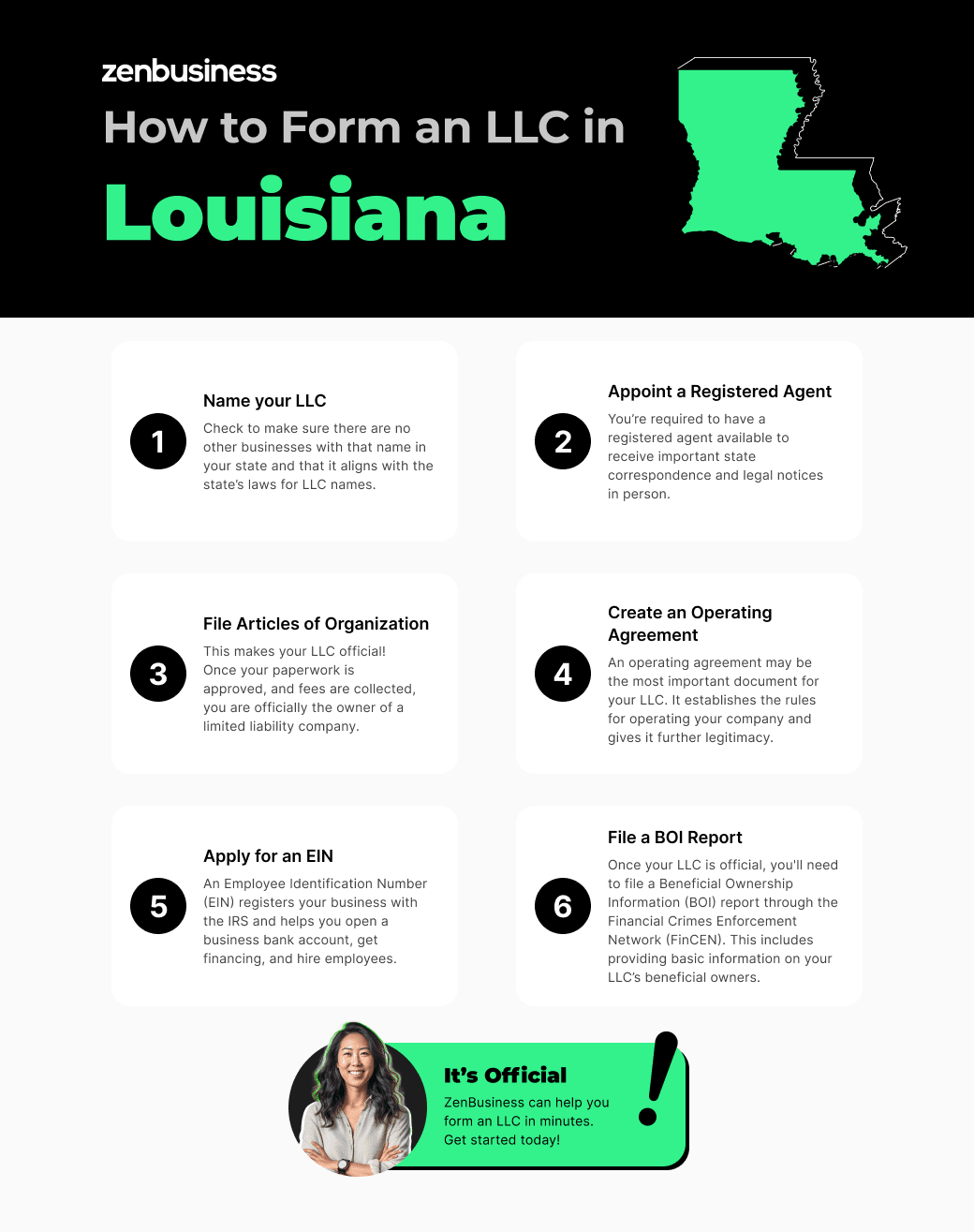
Step 1: Choose a Business Name
Your LLC’s name is its identity and must comply with Louisiana state regulations.
Name Requirements
- Distinctiveness: The name must be distinguishable from the names of other existing businesses registered in Louisiana. It cannot be misleadingly similar to existing names.
- Required Designator: The name must include a designator that indicates it is a limited liability company. Acceptable designators include:
- “Limited Liability Company”
- “LLC”
- “L.L.C.”
- Prohibited Words: Certain words are restricted or prohibited, such as “bank,” “credit union,” “insurance,” or words that imply affiliation with a government agency.
Name Availability Search
Before officially selecting a name, it’s highly recommended to conduct a name availability search through the Louisiana Secretary of State’s website. This will help you confirm if your desired name is available and prevent potential rejection of your formation documents. You can also reserve a name for a period if you’re not ready to file immediately.
Step 2: Appoint a Registered Agent
A registered agent is a designated individual or entity responsible for receiving official legal documents, such as service of process (lawsuit notifications) and state correspondence, on behalf of your LLC.
Registered Agent Requirements
- Physical Address: The registered agent must have a physical street address within Louisiana. A P.O. Box is generally not sufficient.
- Availability: The agent must be available during normal business hours to accept deliveries.
- Individual or Entity: The registered agent can be an individual resident of Louisiana, a domestic business entity, or a foreign entity authorized to do business in the state. Many business owners choose to act as their own registered agent if they meet the criteria, while others opt for a professional registered agent service for privacy and convenience.
Step 3: File the Articles of Organization
This is the primary legal document that officially creates your LLC in Louisiana.
Key Information Required
The Articles of Organization (often referred to as the Certificate of Organization in other states) will require specific information, including:
- Name of the LLC: The exact name you have chosen.
- Name and Address of the Registered Agent: The designated individual or entity.
- Principal Office Address: The main business address of your LLC.
- Name and Address of each Organizer: The individual(s) or entity filing the document.
- Management Structure: Whether the LLC will be member-managed or manager-managed.
- Duration of the LLC: Most LLCs are formed to exist perpetually.
Filing Procedure
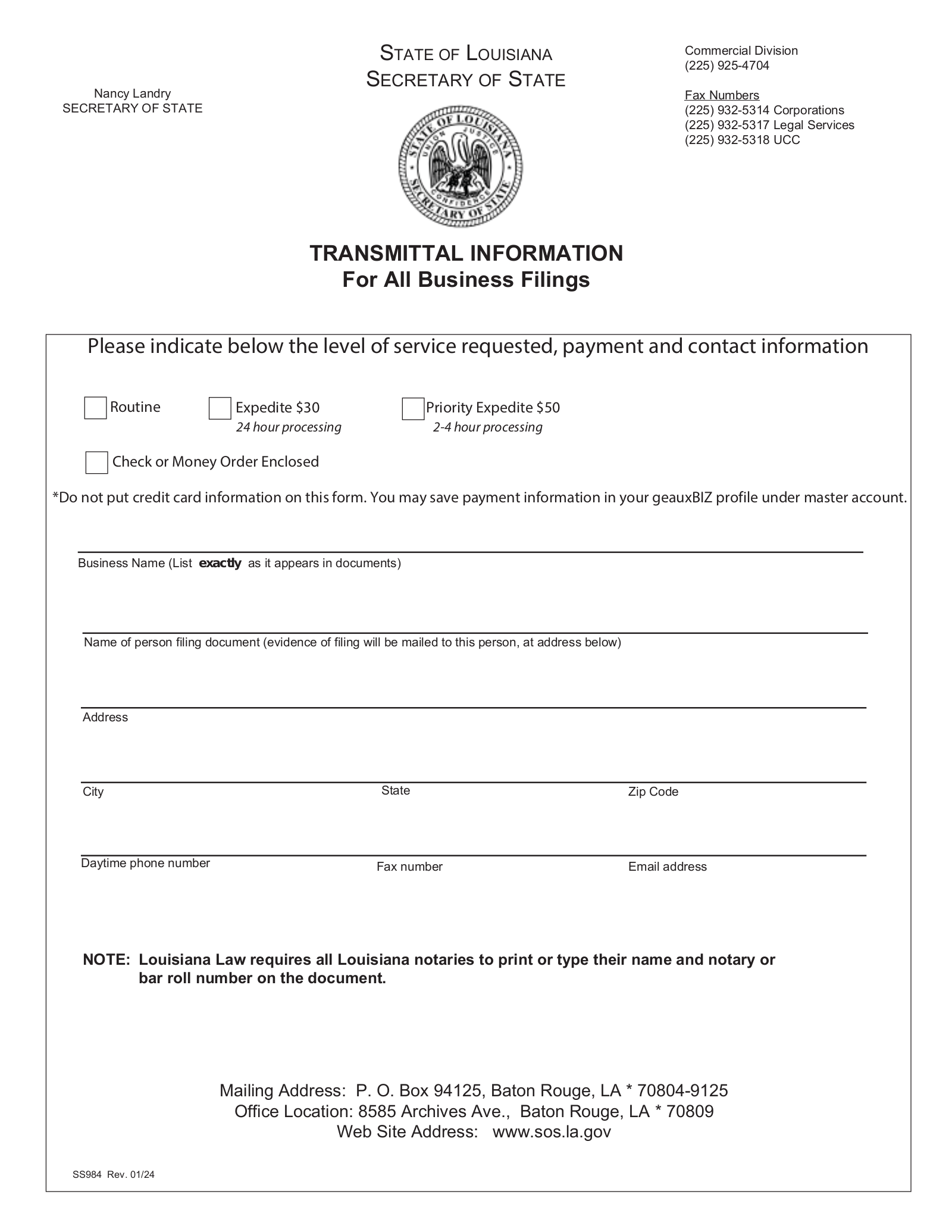
The Articles of Organization must be filed with the Louisiana Secretary of State. You can typically file online, by mail, or in person. There is a filing fee associated with this process, which can be found on the Secretary of State’s website.
Step 4: Create an Operating Agreement
While not legally required by the state of Louisiana for LLC formation, an Operating Agreement is a critical internal document for any LLC. It outlines the ownership structure, management responsibilities, operating procedures, and how profits and losses will be distributed among the members.
Importance of an Operating Agreement
- Defines Roles and Responsibilities: Clarifies the duties and authority of each member and manager.
- Outlines Profit and Loss Distribution: Specifies how profits and losses are allocated, which can differ from ownership percentages.
- Governs Membership Changes: Details procedures for admitting new members, member withdrawal, or death.
- Dispute Resolution: Can include mechanisms for resolving disagreements among members.
- Preserves Limited Liability: A well-drafted Operating Agreement helps maintain the separation between the LLC and its members, reinforcing limited liability protection.
Step 5: Obtain an Employer Identification Number (EIN)
An Employer Identification Number (EIN), also known as a Federal Tax Identification Number, is a unique nine-digit number assigned by the Internal Revenue Service (IRS) to business entities operating in the United States.
When an EIN is Needed
You will need an EIN if your LLC:
- Has more than one member.
- Plans to hire employees.
- Operates as a corporation or partnership for tax purposes.
- Files excise tax returns.
- Is involved with certain types of organizations.
How to Obtain an EIN
You can apply for an EIN online directly through the IRS website. The application is free, and you will receive your EIN immediately upon approval.
Ongoing Compliance and Best Practices
Forming an LLC is just the beginning. To maintain your LLC’s legal standing and ensure its continued protection, ongoing compliance and adherence to best practices are essential.
Annual Reporting and Fees
Louisiana requires LLCs to file an annual report with the Secretary of State to keep their information current. There is also an annual franchise tax that must be paid. Failure to comply with these requirements can lead to administrative dissolution of your LLC.
Maintaining Separate Finances
A critical aspect of maintaining limited liability is to keep your business finances completely separate from your personal finances. This means:
- Separate Business Bank Account: All business income should be deposited into and all business expenses paid from this account.
- Avoid Commingling Funds: Do not use your business account for personal expenses or vice versa.
- Accurate Record Keeping: Maintain detailed financial records for your LLC.
Business Licenses and Permits
Depending on your industry and the specific activities of your business, you may need to obtain various federal, state, and local licenses and permits to operate legally. Research the requirements specific to your business in Louisiana and any municipalities where you conduct business. For instance, a restaurant in the French Quarter of New Orleans will have different licensing needs than an accounting firm in Baton Rouge.

Conclusion: Setting Your Louisiana Business Up for Success
Forming an LLC in Louisiana is a significant step towards establishing a formal business structure that offers valuable protection and flexibility. By diligently following the steps outlined above, from selecting a unique name and appointing a registered agent to filing your Articles of Organization and establishing an Operating Agreement, you lay a solid foundation for your venture. Remember that ongoing compliance and sound financial management are key to preserving the benefits of your LLC and ensuring its long-term success. With careful planning and execution, you can confidently navigate the process and focus on growing your business in the vibrant economic landscape of Louisiana.
LifeOutOfTheBox is a participant in the Amazon Services LLC Associates Program, an affiliate advertising program designed to provide a means for sites to earn advertising fees by advertising and linking to Amazon.com. Amazon, the Amazon logo, AmazonSupply, and the AmazonSupply logo are trademarks of Amazon.com, Inc. or its affiliates. As an Amazon Associate we earn affiliate commissions from qualifying purchases.