
Understanding the specific regulations surrounding vehicle window tinting is crucial for any driver in Louisiana. Beyond aesthetics, legal tint limits are in place to ensure visibility for law enforcement and to maintain safe driving conditions for everyone on the road. Navigating these rules can feel complex, with different restrictions often applying to various parts of the vehicle. This guide aims to demystify Louisiana tint laws, providing clear, actionable information so you can tint your vehicle with confidence and avoid costly citations.
Understanding Tint Percentages (VLT)
The primary metric used to define window tint legality is the Visible Light Transmission (VLT) percentage. VLT measures how much light can pass through the tinted window. A lower VLT percentage indicates darker tint, meaning less light can penetrate. Conversely, a higher VLT percentage means the tint is lighter and more light can pass through.
How VLT is Measured
VLT is measured using a specialized light meter device. This device is typically used by law enforcement officers during traffic stops to verify the legality of a vehicle’s window tint. The device emits a beam of light onto the tinted window and measures the intensity of the light that passes through. The result is expressed as a percentage, indicating the VLT.
Common VLT Levels and Their Meanings
- 90% VLT: This is almost clear, allowing nearly all natural light to pass through. It offers minimal privacy or heat rejection.
- 70% VLT: Allows a significant amount of light in, offering very subtle tinting.
- 50% VLT: A moderate level of tint, providing a noticeable darkening of the window while still allowing good visibility from the outside.
- 35% VLT: A popular choice for a balance between privacy, heat rejection, and visibility.
- 20% VLT: Significantly darkens the window, offering substantial privacy and heat reduction.
- 5% VLT (Limo Tint): The darkest available tint, allowing very little light to pass through. This is often used for commercial vehicles or for maximum privacy.
It’s important to note that these percentages are standardized, and reputable tint installers will always adhere to these measurements to ensure compliance.
Louisiana’s Specific Tint Regulations
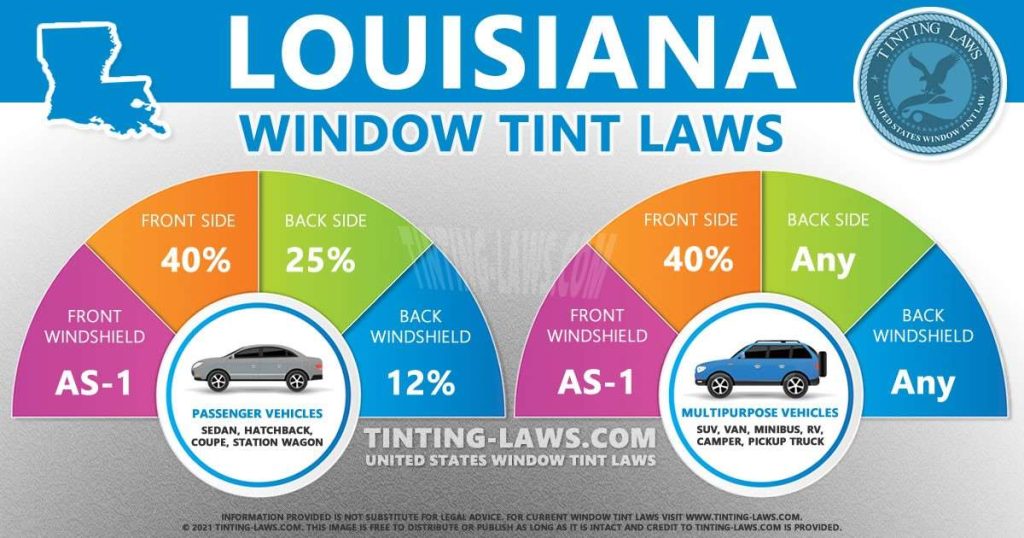
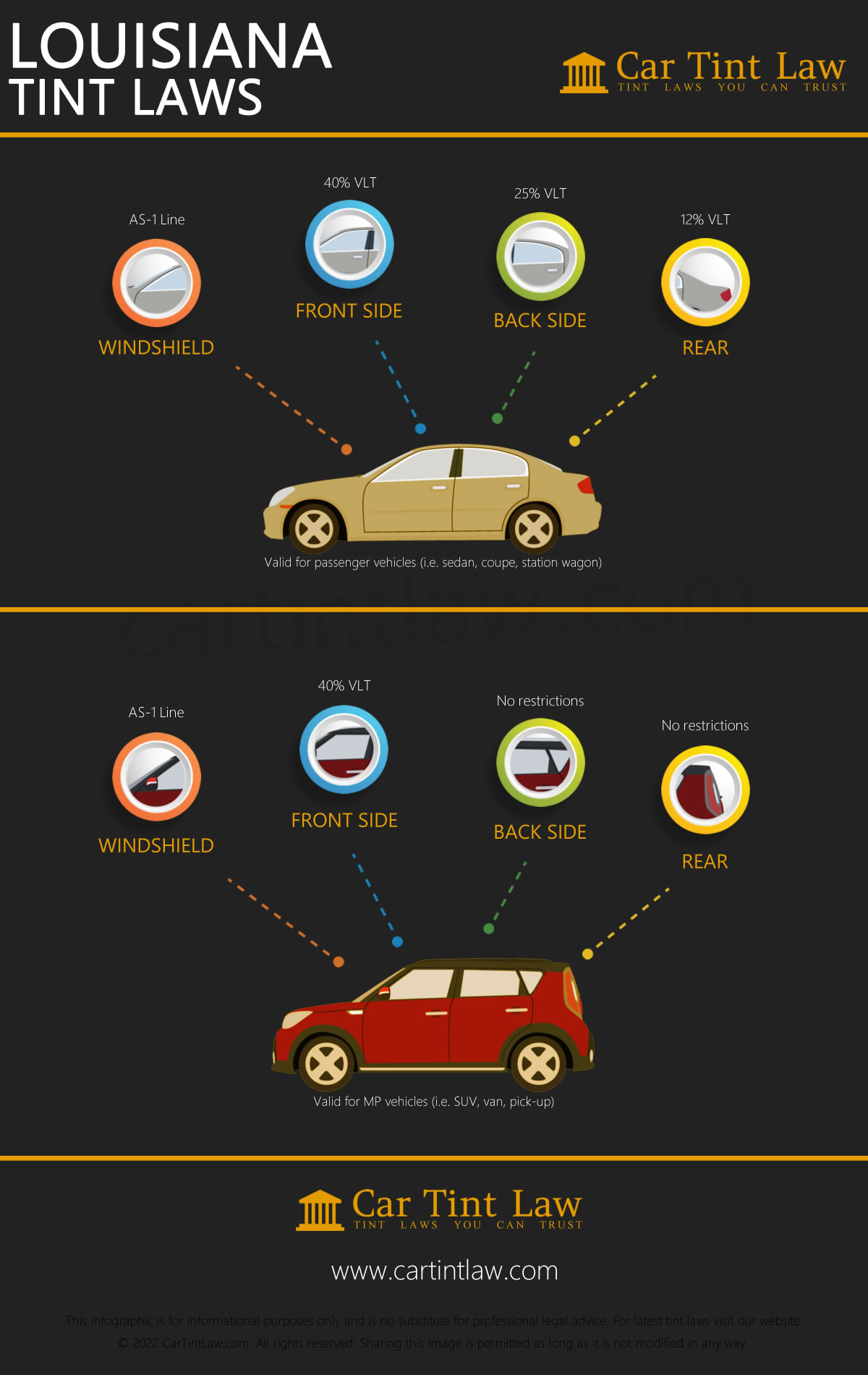
Louisiana has established specific VLT requirements for different windows on passenger vehicles. These regulations are designed to balance the desire for privacy and heat reduction with the paramount need for driver visibility and officer safety.
Front Windshield Tint
The front windshield is the most restricted area when it comes to tinting in Louisiana. The law mandates that the windshield must allow a minimum of 70% VLT. This means that any tint applied to the windshield cannot reduce the visible light transmission by more than 30%. Importantly, this regulation is in place to ensure that drivers have a clear, unobstructed view of the road ahead at all times, particularly in varying light conditions.
Key Points for Front Windshield Tint:
- Maximum Darkness: 70% VLT (meaning no more than 30% tint can be applied).
- Purpose: To maintain clear forward visibility.
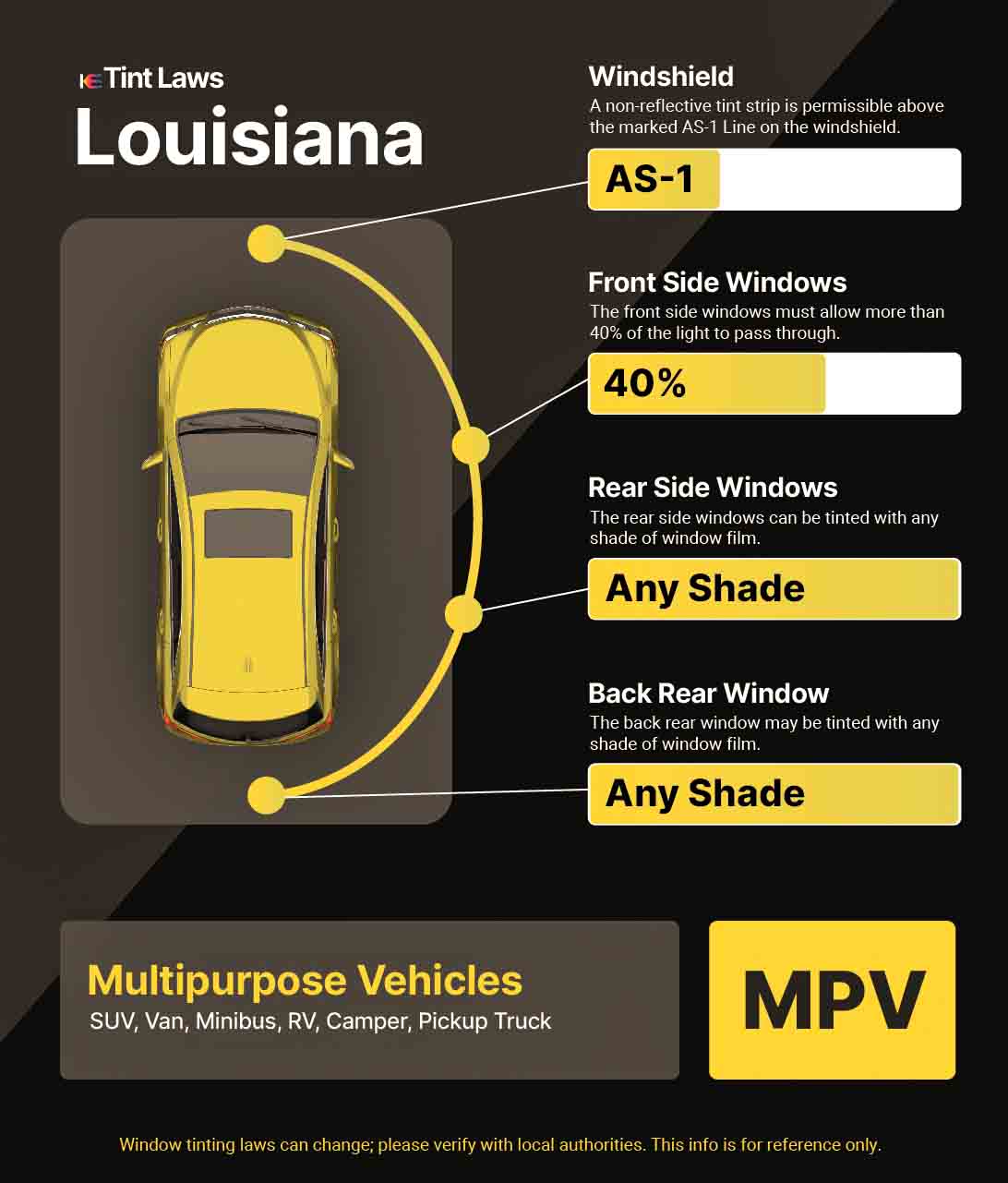
- Non-Reflective Strip: Some states allow a non-reflective strip at the top of the windshield. While Louisiana law is strict on VLT, it’s generally understood that a very light, often unnoticeable strip at the very top edge of the windshield for sun glare reduction might be permissible, but it’s best to consult with local law enforcement or a professional installer for absolute clarity. However, the core VLT rule of 70% remains the definitive requirement for the majority of the windshield.
Front Side Window Tint
The front side windows, typically the driver and front passenger windows, also have strict limitations in Louisiana. These windows must allow a minimum of 40% VLT. This restriction is critical for law enforcement officers to be able to see the occupants of the vehicle and to assess potential situations.
Key Points for Front Side Window Tint:
- Maximum Darkness: 40% VLT (meaning no more than 60% tint can be applied).
- Purpose: To allow visibility into the vehicle for safety and law enforcement purposes.
- Driver Visibility: This percentage ensures that the driver can see clearly outside the vehicle, even in challenging weather conditions.
Rear Side Window and Rear Windshield Tint
The regulations become more lenient for the rear side windows and the rear windshield. In Louisiana, these windows can be tinted darker, with a minimum of 25% VLT required. This means you can apply tint that blocks up to 75% of visible light on these windows.
Key Points for Rear Side and Rear Windshield Tint:
- Maximum Darkness: 25% VLT (meaning no more than 75% tint can be applied).
- Purpose: To provide increased privacy for occupants and to reduce heat buildup within the vehicle.
- Convexity: For vehicles with curved rear windows, the tint must adhere smoothly without excessive wrinkling or bubbling.
Exceptions and Special Circumstances
While the general rules are clear, Louisiana law does provide for certain exceptions to these tinting regulations, primarily for medical reasons.
Medical Exemptions
Individuals who have a documented medical condition that requires them to have darker window tint for protection from sunlight may be eligible for a medical exemption. This exemption allows drivers to exceed the standard VLT limits for specific windows.
Process for Obtaining a Medical Exemption:
- Physician’s Statement: The first step is to obtain a written statement from a licensed physician. This statement must clearly state the medical necessity for darker tint and specify which windows require the darker tint and the recommended VLT percentage.
- Application: The driver will typically need to submit this physician’s statement, along with a completed application form (often available from the Louisiana Office of Motor Vehicles or State Police), to the appropriate state agency.
- Official Decal/Card: If approved, the driver will usually receive an official decal to display on their vehicle or an exemption card to carry with them. This documentation must be presented to law enforcement if stopped.
Important Considerations for Medical Exemptions:
- Specificity: The exemption is specific to the individual and their medical condition. It is not transferable.
- Documentation: Always carry the official exemption documentation with you whenever you are driving.
- Renewals: Medical exemptions may need to be renewed periodically, as determined by the issuing authority.
Other Vehicle Types
It’s worth noting that these regulations are primarily for passenger vehicles. Commercial vehicles, such as trucks, buses, or limousines, may have different tinting allowances. However, for the average driver, the regulations outlined above are the most relevant. Always consult official Louisiana state statutes or your local law enforcement agency for the most precise and up-to-date information regarding commercial vehicle tinting.
Consequences of Illegal Tint
Driving with window tint that does not comply with Louisiana state laws can lead to legal repercussions. Understanding these consequences can help reinforce the importance of adhering to the regulations.
Traffic Citations and Fines
The most common consequence of having illegal window tint is receiving a traffic citation. This citation will typically come with a fine. The amount of the fine can vary depending on the discretion of the issuing officer and local court policies. Multiple citations for the same offense can also lead to increased penalties.
Requirement to Remove Tint
In many cases, a citation for illegal tint will include a “fix-it ticket” component. This means that the driver will be required to remove the non-compliant tint and have their vehicle re-inspected by law enforcement or a designated inspection station. Failure to rectify the issue by the specified deadline can result in further penalties or a court appearance.
Pretext for Stops
While law enforcement officers cannot arbitrarily stop a vehicle solely based on the suspicion of illegal tint without reasonable cause, window tint can sometimes be a factor in a traffic stop. If an officer has a valid reason to stop a vehicle for another traffic violation, they may then inspect the window tint and issue a citation if it is found to be non-compliant.
Ensuring Your Tint is Legal
To avoid any issues with your window tint in Louisiana, it’s essential to be informed and to choose a reputable professional for installation.
Consult a Professional Installer
A professional window tint installer is knowledgeable about Louisiana’s specific tint laws. They can advise you on the darkest legal tint percentages for each window of your vehicle and ensure that the film they use is of high quality and meets the legal VLT requirements. Reputable shops will often refuse to install tint that they know is illegal.
Ask About VLT Percentages
When you visit a tint shop, don’t hesitate to ask about the VLT percentage of the film they are recommending or installing. A good installer will be able to provide you with this information clearly and explain how it corresponds to the legal requirements.
Keep Your Documentation
If you have a medical exemption, always keep your official documentation in your vehicle. If you have your tint installed by a professional, they might provide you with a sticker or card indicating the VLT percentage of the film used, which can be helpful, though it does not replace official state exemptions.
By understanding and adhering to Louisiana’s window tint laws, you can enhance your vehicle’s appearance and comfort while ensuring you remain compliant with the law and contribute to safer roads for everyone.
LifeOutOfTheBox is a participant in the Amazon Services LLC Associates Program, an affiliate advertising program designed to provide a means for sites to earn advertising fees by advertising and linking to Amazon.com. Amazon, the Amazon logo, AmazonSupply, and the AmazonSupply logo are trademarks of Amazon.com, Inc. or its affiliates. As an Amazon Associate we earn affiliate commissions from qualifying purchases.