
Understanding the administrative divisions of a state is fundamental to appreciating its geography, governance, and the diverse tapestry of its communities. For Maine, a state renowned for its rugged coastline, picturesque villages, and rich history, knowing the number of counties offers a foundational piece of information for anyone looking to explore its nooks and crannies, plan a trip, or simply understand its organizational structure. The Pine Tree State is divided into a specific number of counties, each with its own character and contributions to the overall identity of Maine.
Maine’s Administrative Divisions: A Count of Counties
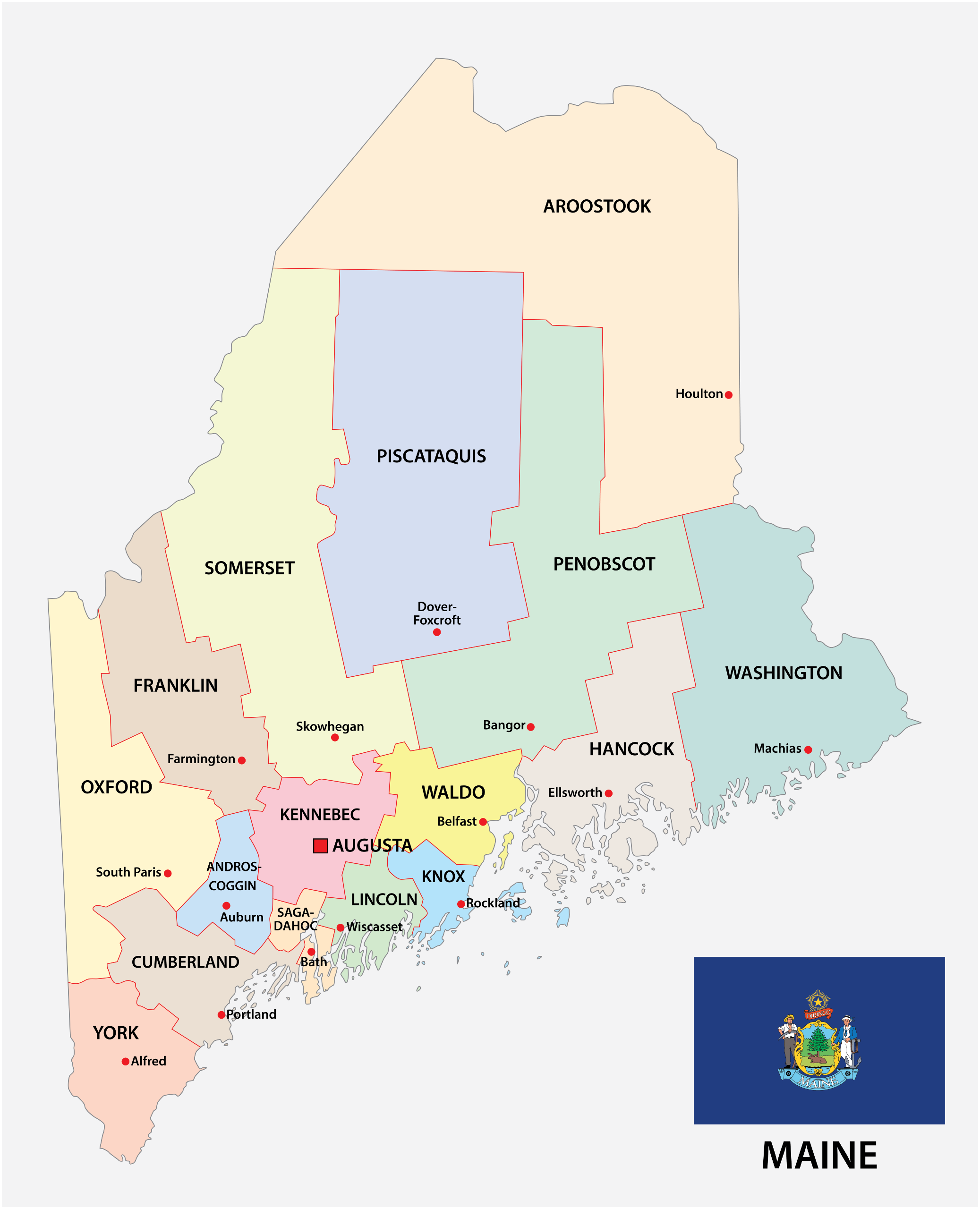
The state of Maine is organized into sixteen (16) counties. These counties serve as the primary administrative subdivisions, playing a vital role in state and local governance, as well as in how residents and visitors alike navigate and understand the state’s geography. From the bustling urban centers to the vast, sparsely populated northern territories, each county contributes a unique flavor to Maine’s identity.

These sixteen counties were established over the course of Maine’s history, from its early territorial days to its formal admission as a state in 1820. The process of county formation often reflected patterns of settlement, economic development, and the growing need for local administration and representation. As populations grew and new areas were settled, existing counties were sometimes subdivided to create new administrative units that could better serve their residents.
Exploring the Geographic Distribution of Maine’s Counties
The counties of Maine are spread across the state’s diverse landscapes, encompassing its Atlantic coastline, inland forests, and lake regions. This geographic distribution is not random but rather a reflection of the historical settlement patterns and the natural features that have shaped the state’s development.
- Coastal Counties: Several counties hug the extensive Maine coastline, characterized by their charming fishing villages, rocky shores, and access to the Atlantic Ocean. These areas have historically been centers of maritime activity, from fishing and shipbuilding to tourism.
- Inland Counties: Moving inland, the landscape transitions to rolling hills, dense forests, and numerous lakes and rivers. These counties are often associated with logging, agriculture, and outdoor recreation, offering vast opportunities for hiking, fishing, and hunting.
- Northern Territories: The northernmost counties of Maine are known for their rugged wilderness and expansive forests, often referred to as “The Great North Woods.” This region is largely undeveloped, offering unparalleled opportunities for those seeking solitude and immersion in nature.
Understanding this geographic distribution helps in planning travel routes, identifying regional characteristics, and appreciating the vastness and variety that Maine offers. Each county, though part of a larger state, possesses its own distinct atmosphere and attractions.
A Closer Look at Maine’s Counties: From South to North
While this article focuses on the number of counties, a brief acknowledgement of their existence and the diversity they represent adds depth to the understanding of Maine’s administrative structure. Each of the sixteen counties has its own history, its own county seat (the administrative center), and its own set of communities and landmarks.
For instance, in the southern part of the state, counties like York County are home to popular coastal destinations and a significant portion of Maine’s population. Moving northward, one encounters counties that represent the heart of Maine’s agricultural and forested interior, before reaching the vast wilderness of the northern counties.
The county seat in each instance serves as the local government hub, managing records, law enforcement, and other administrative functions for the surrounding area. These seats often have historical significance, frequently being among the earliest settlements in their respective counties.
Understanding County Significance for Visitors and Residents
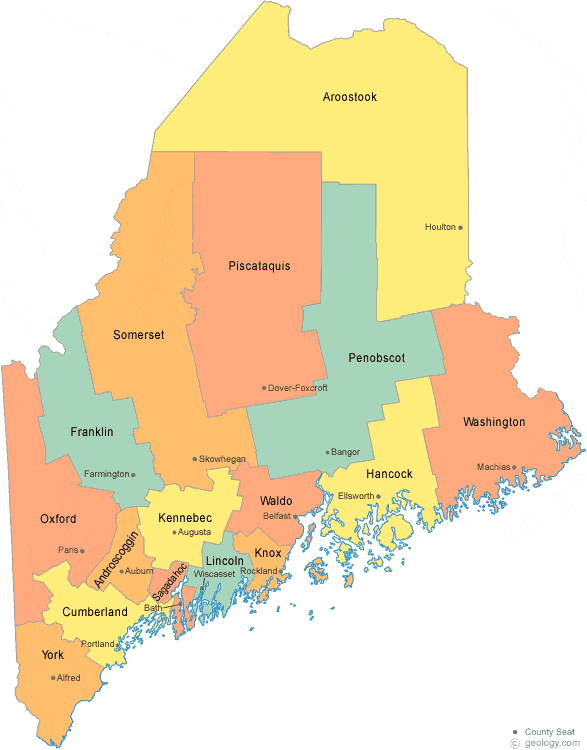
For visitors to Maine, knowing the counties can be an indirect guide to planning a trip. Different counties are known for different types of attractions. If one seeks a classic Maine seaside experience with lighthouses and lobster shacks, focusing on the coastal counties like Cumberland County or Hancock County would be a logical approach. For those drawn to the natural beauty of inland forests and the opportunities for outdoor adventure, exploring counties like Kennebec County or Penobscot County would be more fitting.
Residents, on the other hand, often have a deep connection to their specific county, understanding its local services, its political representation, and its unique community character. County lines also delineate areas for specific state services, such as law enforcement districts and public health initiatives.
The Sixteen Counties of Maine: A Comprehensive List
To provide a complete picture and to serve as a reference point, here is a list of the sixteen counties that comprise the state of Maine:
- Androscoggin County
- Aroostook County
- Cumberland County
- Franklin County
- Hancock County
- Kennebec County
- Knox County
- Lincoln County
- Oxford County
- Penobscot County
- Piscataquis County
- Sagadahoc County
- Somerset County
- Waldo County
- Washington County
- York County
This list represents the entirety of Maine’s administrative geography at the county level. Each of these counties has its own unique history, economic base, and cultural identity, contributing to the rich and varied experience of the state.
How County Information Enhances Travel Planning
When planning a journey through Maine, understanding the county structure can be an invaluable tool. For instance, if a traveler is interested in visiting Acadia National Park, they would find it primarily located within Hancock County, with a smaller portion extending into Bar Harbor. Similarly, those seeking to explore the historic lighthouses along the southern coast would be looking at counties like York County and Cumberland County.
Navigating Maine by county can also provide a sense of scale and distance. Aroostook County, the largest county in Maine by land area, spans a significant portion of the northern part of the state, bordering Canada. Its vastness underscores the wild and untamed nature of that region. In contrast, counties in the southern coastal region are more densely populated and feature a higher concentration of towns and cities.
For those interested in regional cuisine, knowing the counties can also offer clues. Coastal counties are renowned for their fresh seafood, particularly lobster, while inland counties might offer more opportunities for farm-to-table experiences with locally grown produce and meats.
The Evolution of Maine’s County System
The formation of counties in Maine has been a gradual process, evolving as the territory developed and its population grew. Initially, Maine was part of the Commonwealth of Massachusetts, and the administrative structures were established under Massachusetts governance. After Maine achieved statehood in 1820, the system of counties continued to develop, with new counties being formed from existing ones to accommodate population growth and to improve local administration.
For example, Aroostook County was one of the last counties to be fully organized, reflecting its later settlement and development compared to the more southern parts of the state. The process often involved petitions from residents of newly settled areas seeking their own administrative structure, separate from larger, more established counties.
The county system in Maine, as in other states, provides a layer of governance between the state government and individual municipalities. This structure facilitates the delivery of various public services, from judicial functions and law enforcement to land records and vital statistics. For any serious exploration of Maine, understanding its sixteen counties is a key piece of the puzzle, offering a framework for appreciating the state’s diverse geography, history, and culture.
LifeOutOfTheBox is a participant in the Amazon Services LLC Associates Program, an affiliate advertising program designed to provide a means for sites to earn advertising fees by advertising and linking to Amazon.com. Amazon, the Amazon logo, AmazonSupply, and the AmazonSupply logo are trademarks of Amazon.com, Inc. or its affiliates. As an Amazon Associate we earn affiliate commissions from qualifying purchases.