
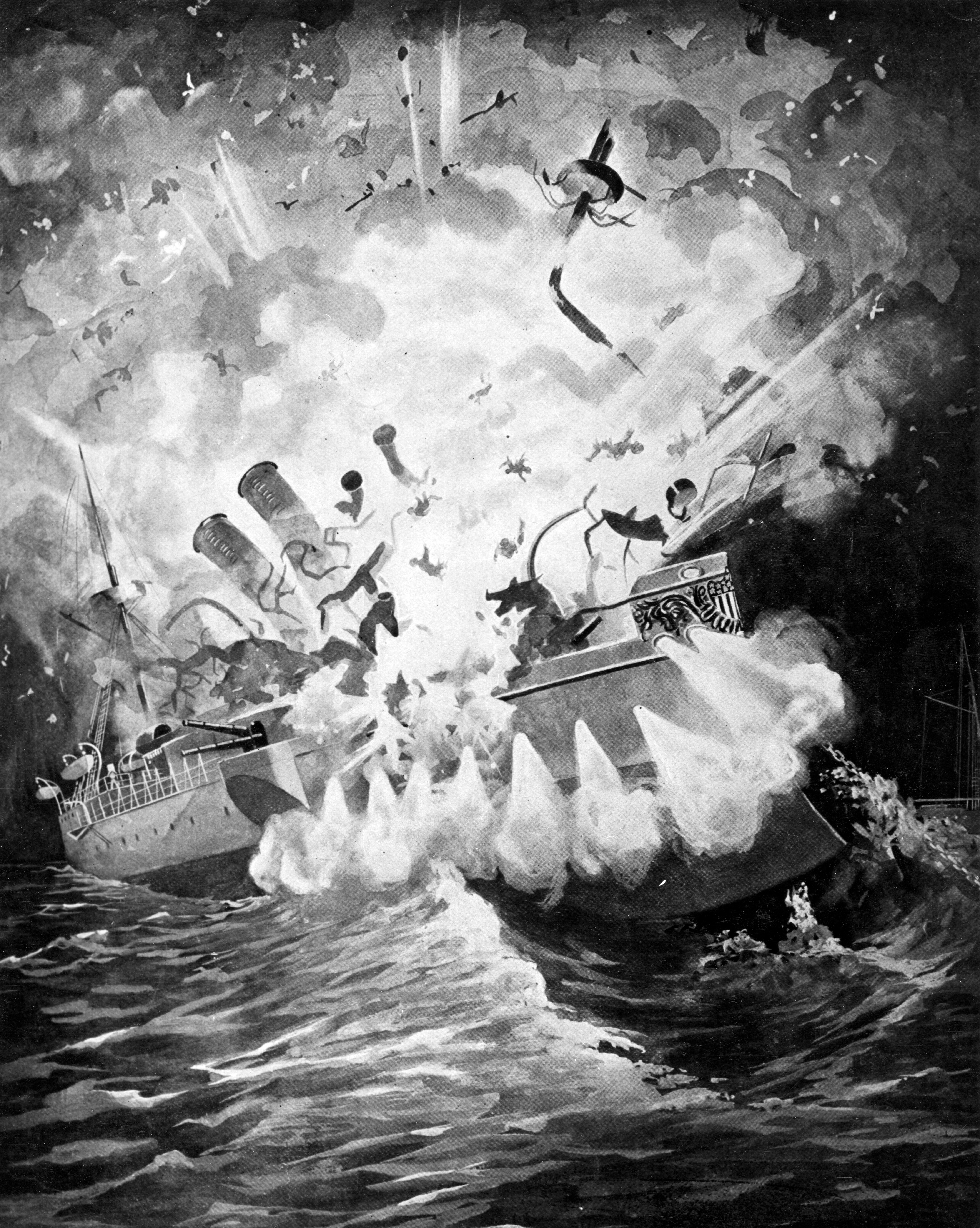
The sinking of the USS Maine in Havana Harbor on February 15, 1898, remains one of the most contentious and debated events in American history. The incident, which claimed the lives of 266 American sailors, served as a potent catalyst for the Spanish-American War. While the immediate aftermath saw widespread public outcry and a rush to assign blame, the true cause of the explosion has been the subject of intense historical scrutiny, official investigations, and a lingering popular fascination. This article delves into the historical context, the evidence, and the enduring mystery surrounding the demise of the USS Maine.
The Context: A Nation on the Brink
The late 19th century was a period of burgeoning American power and expansionist ambitions. Cuba, a Spanish colony, was embroiled in a brutal and protracted struggle for independence against Spain. The Cuban insurrection, marked by harsh suppression tactics employed by the Spanish colonial government, garnered significant attention and sympathy in the United States. A vocal segment of the American press, particularly newspaper magnates like [William Randolph Hearst](https://lifeoutofthebox.com/william-randolph- Hearst) and Joseph Pulitzer, engaged in sensationalist “yellow journalism,” fanning the flames of public opinion with lurid accounts of Spanish atrocities.
In this charged atmosphere, the deployment of the USS Maine to Havana Harbor in January 1898 was officially intended as a diplomatic gesture, a show of American concern and a means to protect American interests and citizens in Cuba. However, its presence was viewed with suspicion by Spanish authorities and, perhaps more importantly, was seized upon by those eager for a pretext for war. The explosion of the Maine provided precisely that pretext, igniting a fiery campaign for intervention that would irrevocably alter the course of both American and global history. The rallying cry, “Remember the Maine, to Hell with Spain!” became a powerful propaganda tool, driving the nation towards conflict.
Initial Investigations and the Court of Inquiry
In the immediate aftermath of the disaster, a court of inquiry was convened by the United States Navy. This court, comprising naval officers, was tasked with determining the cause of the explosion. The primary evidence available to them was the wreckage of the USS Maine itself and the testimonies of survivors.
The Finding of the Court of Inquiry
The court’s findings, released in March 1898, concluded that the sinking was caused by a marine mine, specifically an “unconditional explosion” of a mine located under the forward third of the Maine’s hull. While the court did not explicitly attribute blame to Spain, the implication was clear. The report stated that “the destruction of the Maine was not the result of voluntary action upon the part of any person on board.” This finding, heavily influenced by the prevailing public sentiment and political pressures, strongly pointed towards external sabotage. The sensationalized reporting in the American press amplified these conclusions, solidifying the narrative of Spanish treachery in the public consciousness.
Limitations of the First Investigation
However, the 1898 court of inquiry faced significant limitations. The salvage operations were rudimentary, and the recovery of critical evidence was hampered by the condition of the wreck and the technology available at the time. The examination of the hull fragments, for instance, was conducted without the benefit of modern forensic analysis techniques. Furthermore, the court’s composition, while composed of seasoned naval officers, may have been susceptible to the intense political climate and the strong anti-Spanish sentiment that pervaded the nation. The pressure to find a clear enemy and justification for war was palpable, potentially influencing the interpretation of the evidence.
Subsequent Investigations and Emerging Theories
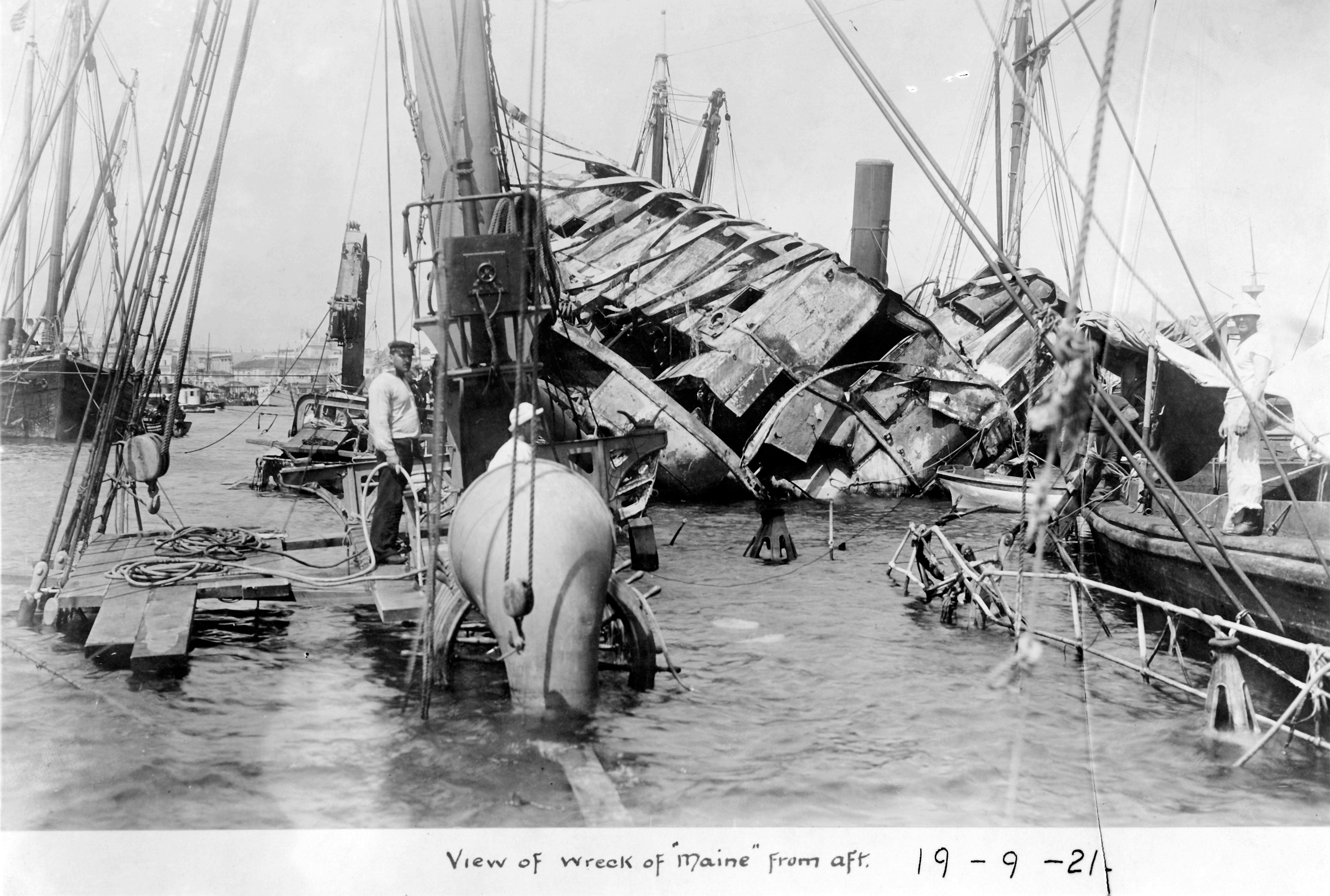
Over the decades, as historical perspectives evolved and new investigative techniques became available, the cause of the USS Maine explosion has been re-examined numerous times. These later investigations have introduced alternative theories, challenging the original conclusion of a Spanish mine.
The Bureau of Engineering’s Report (1911)
In 1911, with the impending construction of a new battleship named the USS Maine, a more thorough investigation was undertaken. A cofferdam was built around the sunken hull, allowing for its complete salvage and a more detailed examination. The Bureau of Engineering’s report concluded that the explosion originated in the ship’s forward magazine, where gunpowder was stored. While this report did not definitively assign blame, it strongly suggested an internal cause, specifically an accidental ignition of the stored explosives, potentially exacerbated by the spontaneous combustion of coal dust in nearby bunkers. This theory gained traction as it aligned with known vulnerabilities in naval engineering of the era.
The U.S. Naval Court of Inquiry (1976)
In 1976, Admiral Hyman Rickover, a renowned naval engineer and advocate for historical accuracy, commissioned yet another inquiry into the sinking of the USS Maine. This investigation utilized modern forensic analysis, including metallurgic studies and explosive residue testing. The 1976 court concluded that the evidence was more consistent with an internal explosion, likely due to the spontaneous combustion of stored coal dust igniting nearby black powder charges. This theory posited that the ship’s design, with volatile coal bunkers located close to the ammunition magazines, created a significant inherent risk. The report also suggested that the initial findings of the 1898 court might have been influenced by a misinterpretation of the damage patterns, which could have been caused by an internal blast propagating outwards.
The “Accidental Internal Explosion” Theory
The prevailing view among many historians and naval experts today leans towards the accidental internal explosion theory. This perspective suggests that the immense pressure and heat generated within the coal bunkers could have led to spontaneous combustion. The resulting fire and explosion, in turn, could have ignited the nearby ammunition stores, creating a catastrophic chain reaction. The damage to the hull, viewed from this angle, could be explained by the force of the internal blast expanding outwards, rather than a mine exploding from beneath. This theory offers a more scientifically plausible explanation, free from the political pressures that may have influenced earlier findings.
The Enduring Legacy and Unanswered Questions
Despite extensive investigations, the precise cause of the USS Maine’s explosion remains a subject of debate for some. However, the overwhelming consensus among modern experts points towards an internal accident. The initial conclusion of a mine explosion, while serving as a powerful propaganda tool to galvanize public support for war, is now widely seen as a misinterpretation or a politically motivated interpretation of events.
The Political Ramifications
Regardless of the true cause, the sinking of the USS Maine undeniably played a pivotal role in igniting the Spanish-American War. The war, though short, resulted in the United States acquiring territories such as Puerto Rico, Guam, and the Philippines, marking a significant turning point in America’s emergence as a global power. The event serves as a stark reminder of how national sentiment, fueled by media and political agendas, can lead to profound historical consequences.

A Symbol of Mystery and Memory
The wreck of the USS Maine was eventually raised and its salvaged remains were used to construct the USS Maine National Monument in Arlington National Cemetery, a solemn tribute to the fallen sailors. The story of its demise continues to captivate historians, researchers, and the public alike, a testament to the enduring power of historical mysteries and the profound impact of a single event on the trajectory of nations. While the definitive, universally accepted answer to “Why Did The USS Maine Explode?” may remain elusive for some, the journey to uncover it has illuminated crucial aspects of American history, naval engineering, and the complex interplay between fact, fiction, and political will.
LifeOutOfTheBox is a participant in the Amazon Services LLC Associates Program, an affiliate advertising program designed to provide a means for sites to earn advertising fees by advertising and linking to Amazon.com. Amazon, the Amazon logo, AmazonSupply, and the AmazonSupply logo are trademarks of Amazon.com, Inc. or its affiliates. As an Amazon Associate we earn affiliate commissions from qualifying purchases.