
Miami, a city synonymous with perpetual sunshine, turquoise waters, and vibrant tropical flora, rarely conjures images of winter wonderlands. The very notion of snowfall in this southeastern corner of Florida seems an oxymoron, a whimsical thought experiment rather than a meteorological possibility. Yet, the question, “Did Miami get snow?” has been posed, pondered, and even experienced, albeit in exceptionally rare and fleeting circumstances. This exploration delves into the climatic anomalies, historical curiosities, and the general unlikelihood of such an event, grounding it within the context of Miami’s unique geographical and atmospheric conditions.
Understanding Miami’s Climate: A Tropical Enigma
Miami’s climate is predominantly defined by its tropical monsoon classification. This means it experiences distinct wet and dry seasons, with temperatures remaining warm to hot year-round. The average annual temperature hovers around 77°F (25°C), with summer months often exceeding 90°F (32°C) and winter lows rarely dipping below 50°F (10°C). This consistent warmth is a direct result of its low latitude, proximity to the equator, and the moderating influence of the Atlantic Ocean.

The Role of Latitude and Ocean Currents
Miami’s position on the southern tip of Florida places it well within the tropics. Tropical regions are characterized by high solar insolation and a lack of significant seasonal temperature variation. The Gulf Stream, a powerful warm ocean current, flows along the coast of Miami, further contributing to its mild winters. This current acts like a giant radiator, preventing air masses from becoming significantly cold. For snow to form, temperatures need to drop to or below freezing point (32°F or 0°C) at ground level and within the atmospheric column where precipitation originates. In Miami, this confluence of conditions is exceptionally rare.
Prevailing Weather Patterns
The prevailing winds in Miami are predominantly easterly, originating from the Atlantic Ocean. These maritime winds carry moisture and are typically warm, contributing to the city’s high humidity and frequent rainfall during the summer. While cold fronts do push southward into Florida during the winter, they usually lack the sustained intensity and duration to bring temperatures down to freezing across the entirety of South Florida, especially along the immediate coast. When cold air does arrive, it is often accompanied by dry air, making snow formation less likely.
The Infamous “Snow Day” of 1977
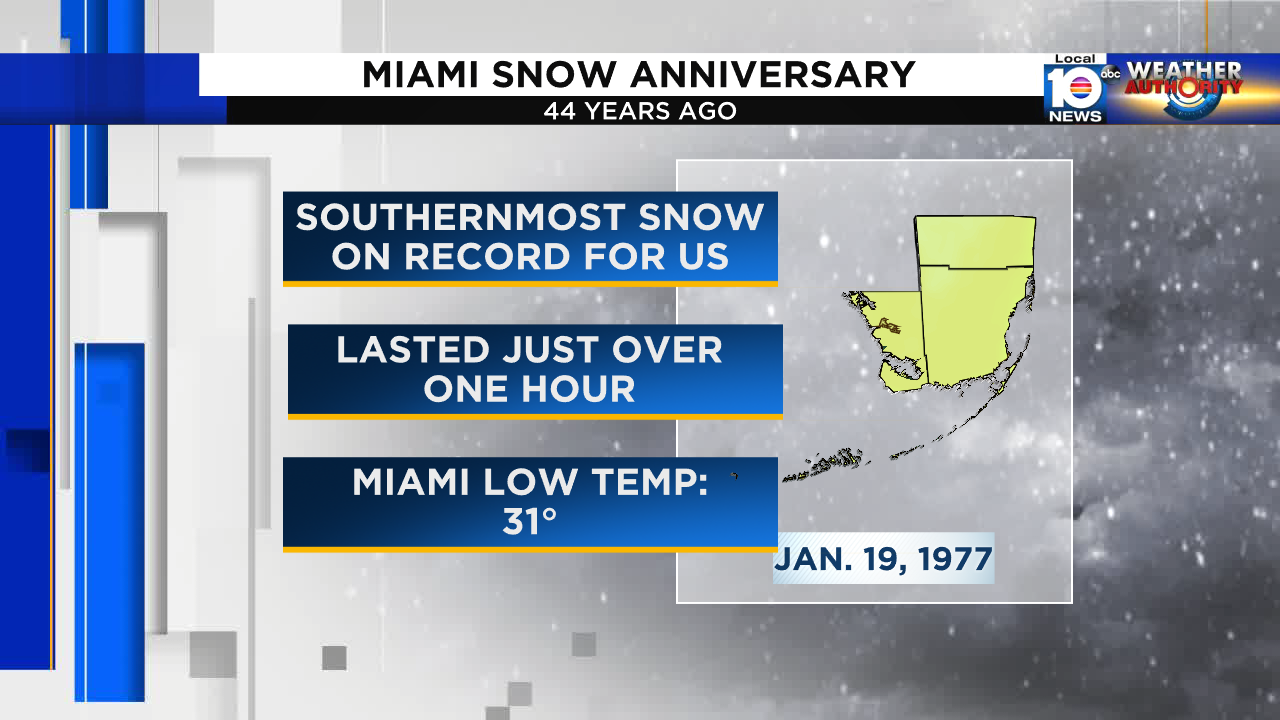
While the idea of snow in Miami might seem outlandish, there is one recorded instance that lends a modicum of credence to the question. On January 19, 1977, a significant cold wave swept across the United States, and exceptionally, its frigid tendrils reached all the way to South Florida. For a brief period, a dusting of snow, described as light and scattered, was reported in parts of Miami-Dade, Broward, and Palm Beach counties.
A Fleeting Phenomenon
Eyewitness accounts from that day paint a picture of disbelief and wonder. Snowflakes, small and delicate, were seen fluttering down, momentarily transforming the familiar palm trees and vibrant bougainvillea into something otherworldly. Children, accustomed to beach days and swimming pools, experienced the novel sensation of touching and seeing frozen precipitation. However, this “snowfall” was a fleeting phenomenon. The temperatures, while significantly colder than usual for Miami, remained just above freezing for much of the event. The snow that did fall melted almost as quickly as it arrived, leaving behind no lasting accumulation.
Historical Context and Significance
The January 1977 event remains etched in the memory of those who witnessed it, serving as a stark reminder of the unpredictable nature of weather, even in seemingly stable climates. It was a meteorological anomaly, a confluence of specific atmospheric conditions that aligned in a way that is statistically improbable. For Miami, a city that thrives on its tropical identity, the 1977 snow event is more of a historical curiosity than a recurring climatic feature. It highlights the extreme ends of the weather spectrum that can, on rare occasions, manifest even in the most unlikely locales.
Why Snow is Highly Unlikely in Modern Miami
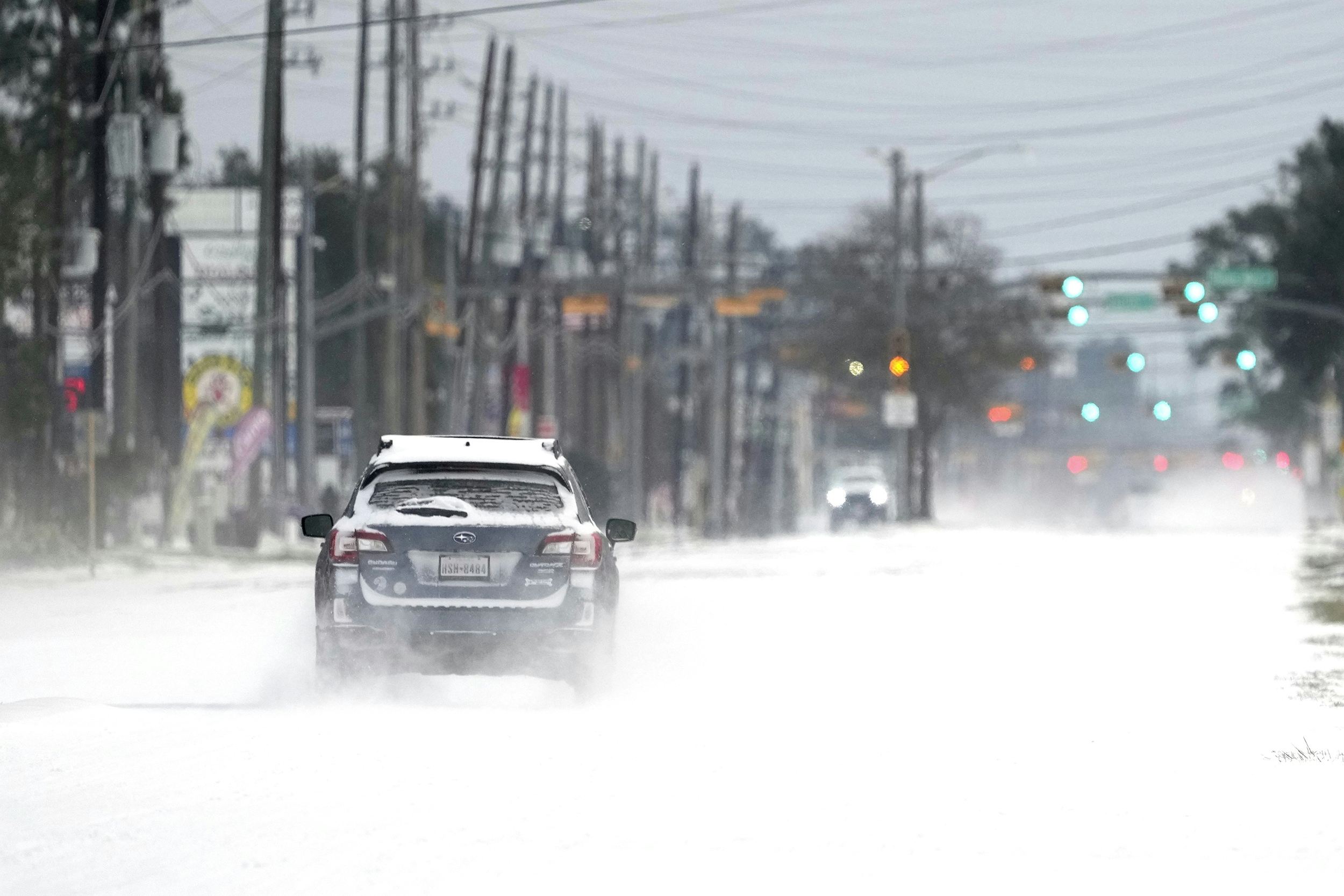
Despite the 1977 incident, the probability of Miami experiencing significant snowfall remains infinitesimally small. Several climatic and geographical factors contribute to this enduring unlikelihood.
Sustained Freezing Temperatures Required
For snow to accumulate, temperatures must remain at or below freezing for an extended period. This requires a deep, cold air mass to settle over the region, which is simply not characteristic of Miami’s subtropical climate. The ocean’s moderating influence is a constant buffer, ensuring that even during the coldest winter days, temperatures rarely plummet to the levels necessary for persistent snow.
Atmospheric Moisture and Cold Air Convergence
Snow formation requires the convergence of two key elements: moisture in the atmosphere and temperatures cold enough to allow ice crystals to form and grow. While Miami receives ample moisture, particularly during its wet season, the necessary cold temperatures, especially at lower altitudes, are seldom present during the winter months. Cold fronts that do penetrate South Florida are often dry, meaning they lack the significant atmospheric moisture needed to produce precipitation, let alone snow.
The Urban Heat Island Effect
The Miami metropolitan area, like many large cities, experiences the urban heat island effect. This phenomenon causes urban areas to be warmer than their surrounding rural areas due to the presence of buildings, roads, and other infrastructure that absorb and retain heat. While this effect is more pronounced during the summer, it can also contribute to slightly warmer temperatures in the city center during winter cold snaps, further diminishing the already slim chances of snow.
Miami’s Relationship with Winter: Beyond Snow
While the dream of a white Christmas in Miami is just that – a dream – the city does experience a distinct “winter” season, albeit one that would be considered a mild spring or autumn in many other parts of the world.
The “Cool” Season
From roughly December to February, Miami enjoys its coolest months. Temperatures typically range from the mid-60s to the low 70s Fahrenheit (18-23°C). This period offers a pleasant respite from the intense heat and humidity of summer, making it an ideal time for outdoor activities and for the city to welcome tourists seeking warmth. The skies are often clear, and the humidity levels are lower, creating a comfortable and inviting atmosphere.
Winter Activities and Attractions
The cooler weather in Miami opens up a plethora of tourism and leisure opportunities. Instead of building snowmen, locals and visitors can enjoy:
- Outdoor Excursions: Exploring the natural beauty of the Everglades National Park, taking a boat tour through the Biscayne Bay, or simply relaxing on the iconic shores of South Beach. The milder temperatures make these activities far more enjoyable than during the sweltering summer months.
- Cultural Events: Miami’s vibrant cultural scene remains active. Museums like the Pérez Art Museum Miami and the Phillip and Patricia Frost Museum of Science offer indoor escapes, while outdoor festivals and markets thrive in the agreeable climate.
- Sporting Events: The city hosts professional sports teams like the Miami Dolphins (NFL) and the Miami Heat (NBA), whose seasons often extend into the winter months. Attending a game becomes a comfortable and exciting experience.
- Culinary Delights: The cooler weather encourages al fresco dining and the enjoyment of Miami’s diverse culinary landscape, from fresh seafood to authentic Cuban cuisine.
In conclusion, while the question “Did Miami get snow?” has a historical footnote, the reality for this tropical metropolis is a consistent climate that embraces warmth and sunshine. The rare instances of snow serve not as a prediction of future winter wonderlands, but as a testament to the planet’s capacity for surprise. For those planning a visit, expect sun-drenched beaches, balmy evenings, and a vibrant city life, rather than snow-capped landscapes. Miami’s charm lies in its tropical identity, and its winters offer a delightful escape to perpetual mildness.
LifeOutOfTheBox is a participant in the Amazon Services LLC Associates Program, an affiliate advertising program designed to provide a means for sites to earn advertising fees by advertising and linking to Amazon.com. Amazon, the Amazon logo, AmazonSupply, and the AmazonSupply logo are trademarks of Amazon.com, Inc. or its affiliates. As an Amazon Associate we earn affiliate commissions from qualifying purchases.