
When planning a visit to the vibrant city of Minneapolis, understanding its weather patterns is paramount to ensuring an enjoyable and well-prepared experience. Nestled in the heart of the Midwest, Minneapolis experiences a distinct four-season climate, each offering its unique charm and set of considerations for travelers. From the brisk beauty of winter to the balmy warmth of summer, knowing what to expect will help you pack accordingly and make the most of the city’s numerous attractions.
Understanding Minneapolis’s Seasonal Climate
Minneapolis is characterized by a continental climate, meaning it experiences significant temperature variations between summer and winter. The city’s geographical location, far from moderating oceanic influences, contributes to these extremes. Summers are typically warm to hot and humid, while winters are notably cold with substantial snowfall. Spring and autumn offer transitional periods, often marked by unpredictable but generally pleasant weather.
Spring: A Gradual Thaw and Reawakening
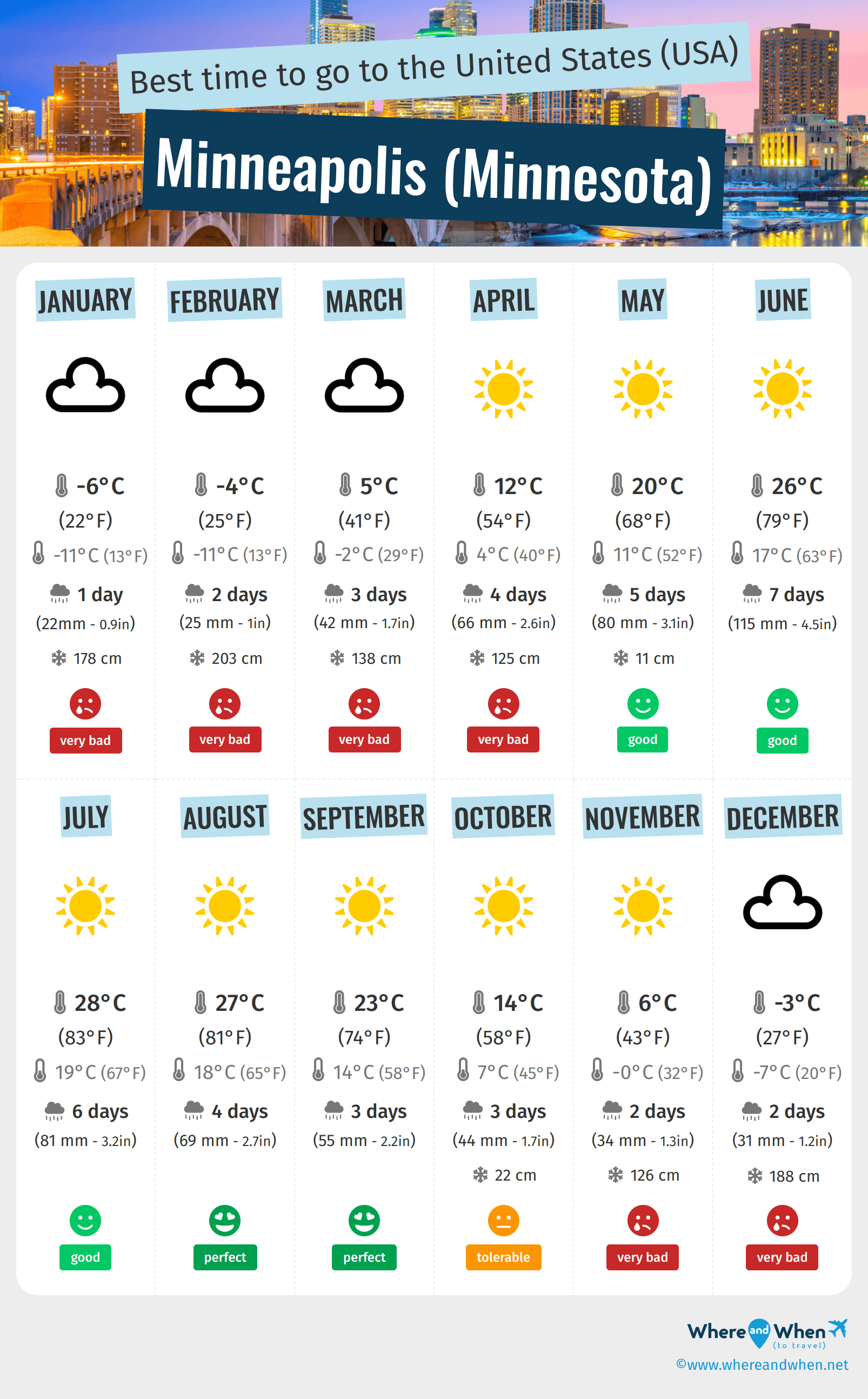
Spring in Minneapolis typically begins in late March and extends through May. This season is defined by a gradual transition from winter’s grip to summer’s embrace. Early spring can still be quite chilly, with average daytime temperatures hovering in the 40s Fahrenheit (4-9°C), and nighttime temperatures frequently dipping below freezing. Snowfall, while diminishing, can still occur in April.
As spring progresses into April and May, temperatures begin to rise more consistently. Average highs in May can reach the low 70s Fahrenheit (around 22°C), and the city bursts into a riot of color as trees bud and flowers bloom. However, spring weather in Minneapolis can be quite variable. You might experience a warm, sunny day followed by a cold snap or a significant rain shower. The shoulder months are excellent for enjoying outdoor activities like walking along the Mississippi River or exploring the numerous city parks, provided you pack layers. Expect average rainfall to increase during this period, and be prepared for potential thunderstorms.
Summer: Warmth, Sunshine, and Humidity
Summer in Minneapolis generally runs from June through August and is characterized by warm to hot temperatures and increasing humidity. July is typically the warmest month, with average daily highs in the mid-80s Fahrenheit (around 29°C), though temperatures can frequently soar into the 90s (32°C+) during heatwaves. Evenings offer a pleasant respite, with temperatures often cooling down into the comfortable 60s Fahrenheit (15-20°C).
This is prime time for outdoor adventures, from visiting Minnehaha Park to enjoying the lakes, such as Lake Harriet and Lake Calhoun (now known as [Bde Maka Ska](https://lifeoutofthebox.com/bde- maka-ska)), or attending outdoor concerts and festivals. Humidity can make the heat feel more intense, so staying hydrated and seeking out air-conditioned indoor attractions is advisable during the peak of the day. Thunderstorms are common during the summer months, often appearing in the late afternoon or evening and providing a welcome break from the heat. Packing light, breathable clothing, sunscreen, and a hat is essential for a comfortable summer visit.
Autumn: A Palette of Color and Crisp Air
Autumn in Minneapolis, from September to November, is a picturesque season. The humidity of summer dissipates, replaced by crisp, refreshing air and breathtaking fall foliage. September often feels like an extension of summer, with average highs in the comfortable low 70s Fahrenheit (around 22°C). However, as October progresses, temperatures begin to cool noticeably.
By November, average daytime highs are in the 40s Fahrenheit (4-9°C), and frost becomes a common occurrence. The fall colors, particularly in the city’s parks and along the Minnehaha Creek, are a major draw, offering stunning visual landscapes. This is an ideal time for exploring the Stone Arch Bridge and enjoying the city’s vibrant food scene. Layers are key for autumn visits, as you might experience warm, sunny days perfect for exploring the Mill City Museum followed by chilly evenings requiring a jacket or sweater. Light rain is possible, and the first snowflakes of the season can often arrive in late October or November.
Winter: The Embrace of Snow and Cold
Winter in Minneapolis, spanning December through February, is famously cold and snowy. Average daytime temperatures in January, the coldest month, hover around 15°F (-9°C), with nighttime temperatures often plummeting to 0°F (-18°C) or even colder. Wind chills can make these temperatures feel significantly more extreme, so understanding wind chill is crucial for outdoor safety.

Minneapolis receives an average of 54 inches of snow annually, and snow cover is typically present from late November through March. The city transforms into a winter wonderland, offering opportunities for ice skating on frozen lakes, cross-country skiing in the parks, and enjoying the cozy ambiance of the city’s many restaurants and museums, such as the renowned Minneapolis Institute of Arts. For those who brave the cold, there are numerous winter festivals and events. Essential packing for a winter visit includes a heavy, insulated coat, thermal base layers, waterproof boots, gloves, and a warm hat and scarf. The stark beauty of a snow-covered Minneapolis is a unique experience, but preparation for the cold is non-negotiable.
Preparing for Specific Weather Conditions
Precipitation Patterns
Minneapolis experiences precipitation year-round, though its form varies dramatically with the seasons. Summer thunderstorms can be intense, bringing heavy downpours and sometimes hail. Spring and autumn are generally wetter with more consistent rainfall. Winter is characterized by snowfall, which can range from light dustings to significant blizzards. Always check the forecast for potential precipitation, especially when planning outdoor activities.
Temperature Extremes and Wind Chill
The significant temperature swings between seasons, and even day-to-day, require careful attention to dressing in layers. During winter, the concept of “wind chill” is particularly important. Wind chill is the temperature it feels like to your skin when the wind is factored in. A temperature of 10°F (-12°C) with a strong wind can feel as cold as -20°F (-29°C) or even lower, significantly increasing the risk of frostbite. It is advisable to limit exposed skin during extreme cold and high winds.
Daylight Hours
Daylight hours also fluctuate significantly throughout the year. Summers boast long days, with sunset often occurring after 8:30 PM, allowing for extended exploration. Winters, conversely, have very short days, with sunset typically around 4:30 PM, requiring careful planning for any outdoor excursions. This stark contrast in daylight is another characteristic feature of the Minneapolis climate.
Packing Advice Based on Season
Spring and Autumn
- Layers are key: T-shirts, long-sleeved shirts, sweaters, and a waterproof/windproof jacket.
- Comfortable walking shoes: Suitable for potentially damp or cool conditions.
- A medium-weight coat: For cooler days and evenings.
- Umbrella: For unexpected rain showers.
Summer
- Lightweight, breathable clothing: Cotton and linen are good choices.
- Shorts and t-shirts.
- A light jacket or cardigan: For cooler evenings or air-conditioned interiors.
- Swimsuit: For enjoying the city’s lakes and pools.
- Sunscreen, sunglasses, and a hat: Essential for sunny days.

Winter
- Heavy, insulated, waterproof winter coat.
- Thermal base layers.
- Warm sweaters or fleece.
- Waterproof snow pants.
- Insulated, waterproof boots with good traction.
- Warm socks (wool or synthetic).
- Insulated gloves or mittens.
- Warm hat that covers the ears.
- Scarf or neck warmer.
- Lip balm and moisturizer: To combat dry, cold air.
By understanding and preparing for the diverse weather of Minneapolis, visitors can ensure their trip is comfortable, memorable, and filled with the best the city has to offer, regardless of the season.
LifeOutOfTheBox is a participant in the Amazon Services LLC Associates Program, an affiliate advertising program designed to provide a means for sites to earn advertising fees by advertising and linking to Amazon.com. Amazon, the Amazon logo, AmazonSupply, and the AmazonSupply logo are trademarks of Amazon.com, Inc. or its affiliates. As an Amazon Associate we earn affiliate commissions from qualifying purchases.