
The Lifeline of a Continent
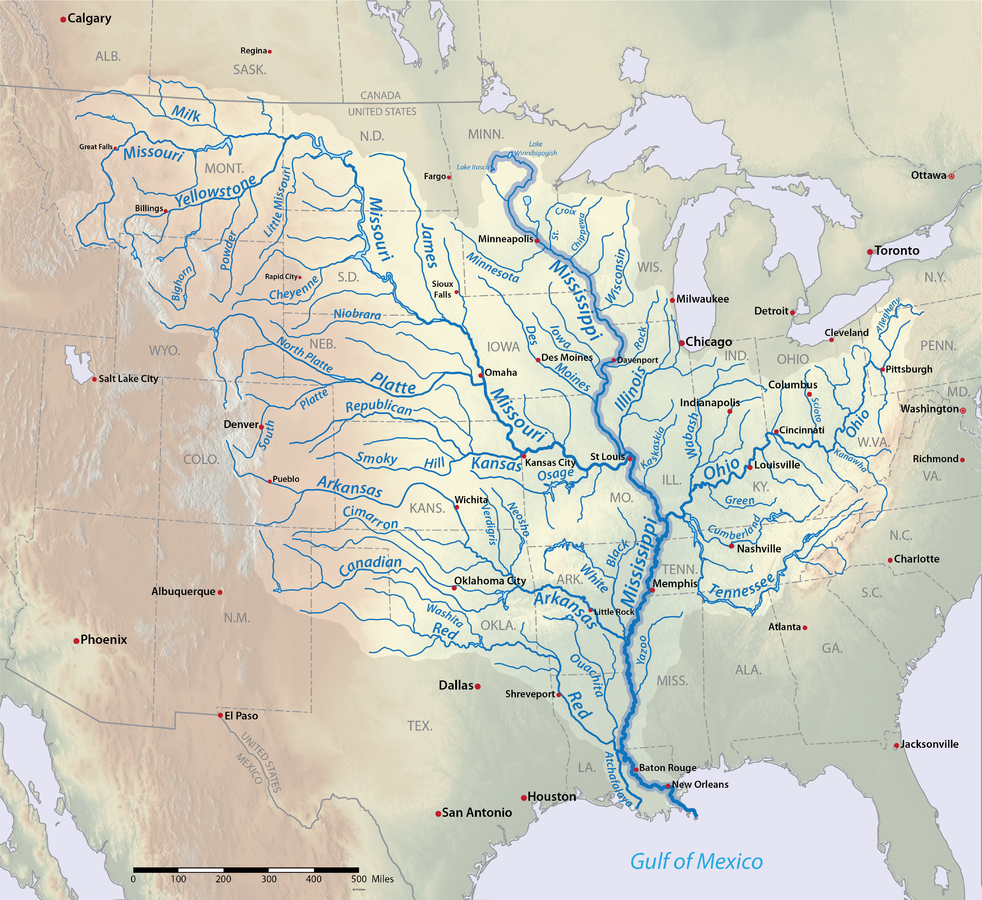
The Mississippi River is more than just a geographical feature; it is the very circulatory system of the North American continent, a monumental artery that has shaped its history, culture, and economy. From its humble beginnings as a trickle in the northern United States to its grand confluence with the Gulf of Mexico, this mighty river commands respect and awe. Its vast watershed, stretching across 32 U.S. states and two Canadian provinces, encompasses a significant portion of the continent’s landmass, making it one of the largest river systems in the world. Understanding the Mississippi River is to understand the essence of America’s heartland, its natural grandeur, and the enduring human endeavors it has witnessed and facilitated.
A Journey Through Geography
The origin of the Mississippi River is found in the pristine landscape of Minnesota, specifically at Lake Itasca. Here, the river begins its serpentine journey southwards, a nascent stream that gradually gathers strength and volume. Along its course, it is joined by numerous tributaries, most notably the Missouri River near St. Louis, which, in terms of length, is actually the longer of the two. When combined, they form the Mississippi River system, a colossal network that drains an area of approximately 1.15 million square miles.
The river’s path is a testament to the dynamic geological forces that have shaped the continent. It meanders through diverse landscapes, from the forests of the upper reaches to the fertile agricultural plains of the Midwest, and finally to the bayous and wetlands of the Deep South. Its characteristic meandering, marked by oxbow lakes and shifting sandbars, is a visual representation of its constant evolution. The river’s delta, a vast expanse of sediment deposited over millennia, is a testament to its power to both carve and create land, a crucial ecosystem for a multitude of species.
The Upper Mississippi: The Headwaters and Early Flow
The journey begins in the serene environment of Lake Itasca State Park, where visitors can literally walk across the nascent Mississippi River. The initial miles are characterized by a relatively shallow channel, clear waters, and a surrounding landscape of boreal forests and glacial topography. Towns like Bemidji and St. Cloud are among the first significant communities the river encounters. The river’s width is modest, and its flow is often gentle, reflecting its youth. Dams and locks begin to appear as it progresses southward, beginning the process of making the river navigable.
The Missouri River Confluence: A Transformative Union
The meeting of the Missouri River and the Mississippi River near St. Louis is a pivotal moment in the river’s journey. The Missouri, originating in the Rocky Mountains, is known for its sediment-laden, powerful flow. Its confluence with the Mississippi dramatically increases the latter’s volume and sediment load, transforming it into the much larger river recognized throughout the central and southern United States. This junction is a landmark, symbolizing the merging of two continental arteries, and a testament to the scale of the river system.
The Lower Mississippi: The Broad Sweep South
South of St. Louis, the Mississippi River enters its most expansive and iconic phase. It flows through the heart of the American South, passing through major cities like Memphis, Vicksburg, and New Orleans. Here, the river is wide, often more than a mile across, and its depth increases significantly. The surrounding landscape shifts to rich alluvial plains, historically crucial for agriculture. The river’s “Old Man River” persona truly emerges in this region, characterized by its slow, powerful current and its immense capacity. Levees are a prominent feature along this stretch, designed to control its mighty floods and protect the populated areas.
The Mississippi Delta: The Grand Finale
As the Mississippi River approaches the Gulf of Mexico, it fans out into a complex network of distributaries, marshes, and bayous known as the Mississippi River Delta. This dynamic region is a crucial ecological zone, supporting abundant wildlife, fisheries, and natural resources. The delta is a constant process of creation and erosion, with new land being formed by sediment deposition and coastal areas being reshaped by storms and rising sea levels. It represents the river’s final, vital contribution to the continent and the world.
A Cradle of History and Culture
The Mississippi River has been a silent witness to the ebb and flow of human civilization in North America. Long before European exploration, indigenous peoples relied on its waters for sustenance, transportation, and spiritual connection. Its banks were home to complex societies, such as the Cahokia Mounds civilization, which flourished near present-day St. Louis. The river’s presence was integral to their way of life, providing fertile land for agriculture and a vital highway for trade and communication.
Indigenous Lifeways and the River
For millennia, the Mississippi River served as a principal artery for numerous Native American tribes. These communities developed sophisticated methods of fishing, hunting, and agriculture, all intrinsically linked to the river’s cycles. They navigated its waters in dugout canoes, establishing trade routes that extended far beyond their immediate settlements. The river was not merely a resource but a sacred entity, deeply woven into their cosmologies and traditions. The rich archaeological evidence found along its banks, from pottery shards to burial mounds, speaks volumes about the enduring human connection to this waterway.
European Exploration and Settlement
The arrival of European explorers marked a new chapter in the river’s history. Hernando de Soto is credited with being the first European to encounter the river in 1541, though his expedition’s impact was largely destructive. Later, French explorers like Jacques Marquette and Louis Jolliet navigated its course, recognizing its immense strategic and economic potential. They established trading posts and forts, laying the groundwork for future settlements. The river quickly became a focal point for colonial expansion and competition between European powers, particularly France and Great Britain.
The French Influence: New France and Louisiana
The French were particularly adept at utilizing the Mississippi River for trade and exploration. They established the vast territory of Louisiana, named in honor of King Louis XIV. Cities like New Orleans, founded in 1718, were strategically located at the river’s mouth, designed to control access to its vast interior. This period saw the river become a critical conduit for the fur trade and other commodities, connecting the interior of the continent to the global marketplace.
The Spanish and American Eras
Control of the Mississippi River and its port at New Orleans was a constant source of tension. After a brief period of Spanish control, the United States, under President Thomas Jefferson, negotiated the Louisiana Purchase in 1803, doubling the size of the young nation and securing undisputed access to the river. This acquisition was a monumental turning point, paving the way for westward expansion and solidifying the Mississippi’s role as the linchpin of American commerce.
The River as a Cultural Icon
The Mississippi River has long captured the American imagination, inspiring countless works of literature, music, and art. Its immense scale, unpredictable nature, and role in connecting disparate regions have made it a powerful symbol of the nation’s identity. From the steamboat era to the blues music of the Delta, the river’s influence is deeply embedded in American culture.
Mark Twain and the Steamboat Age
The 19th century saw the zenith of the steamboat era on the Mississippi River. These magnificent vessels transformed river travel and commerce, making the river a bustling highway of commerce and human interaction. Mark Twain, a former riverboat pilot himself, immortalized this era in his classic novels, most notably The Adventures of Huckleberry Finn and Life on the Mississippi. His vivid descriptions captured the romance, danger, and sheer vitality of life on the river, shaping the popular perception of the Mississippi for generations. The cities along its banks, from St. Louis to New Orleans, became vibrant hubs of trade, culture, and Southern charm.
Music and the Blues
The fertile Crescent and the surrounding Delta region, intrinsically tied to the Mississippi River, are the birthplace of the blues and a significant contributor to jazz and rock and roll. The river’s influence can be heard in the rhythms and melodies of this music, often reflecting the hardships, hopes, and resilience of the people who lived and worked along its shores. Cities like Memphis and Clarksdale remain legendary centers for American music, with the river’s spirit permeating their cultural landscape.
The Engine of Commerce and Conservation
Beyond its historical and cultural significance, the Mississippi River is a vital economic engine for the United States. Its navigability, enhanced by a system of locks and dams, allows for the efficient transport of bulk commodities, making it one of the world’s busiest inland waterways. Simultaneously, the river’s ecological importance is increasingly recognized, leading to ongoing efforts in conservation and management to protect its diverse habitats and the species that depend on them.
Navigation and Transportation
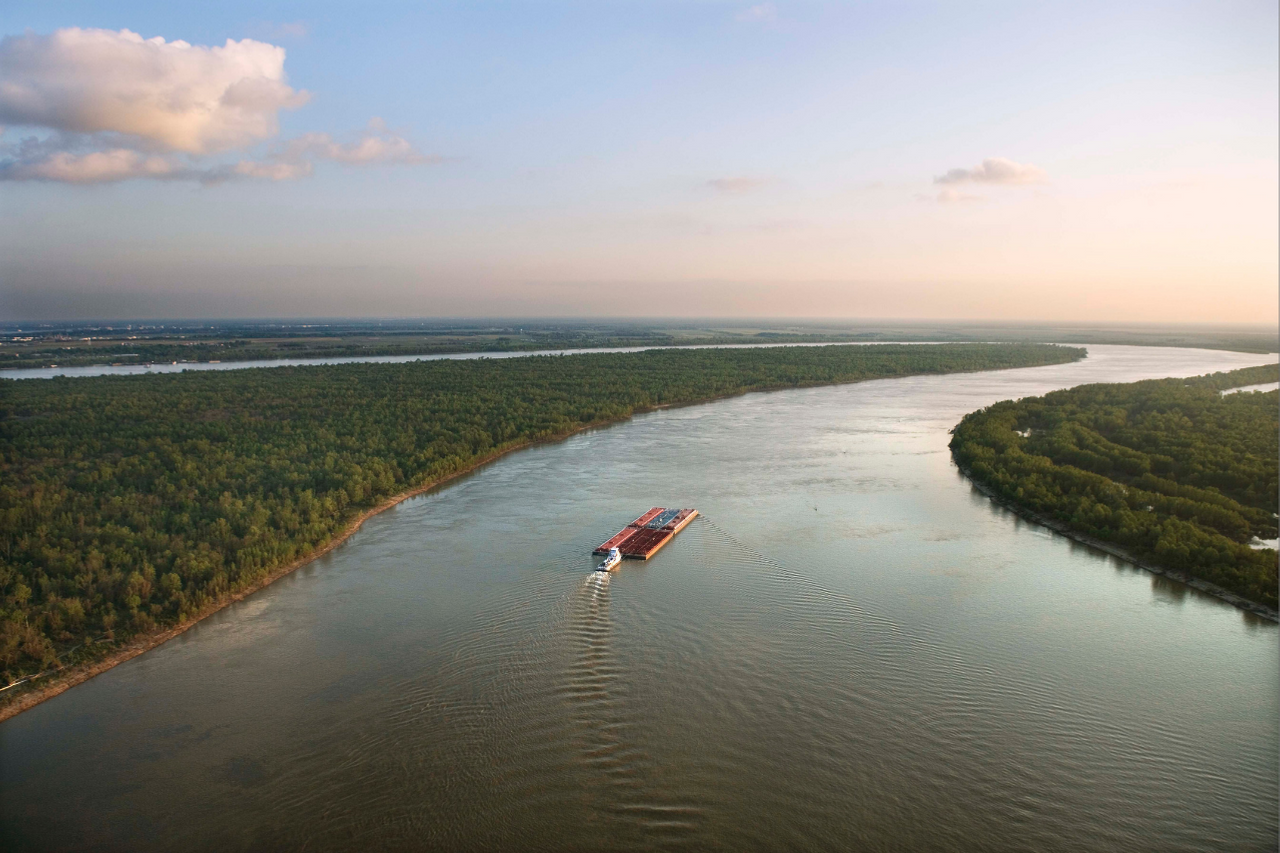
The ability to navigate the Mississippi River has been paramount to its economic importance. From the early days of canoes and keelboats to the mighty steamboats and modern towboats pushing barges, the river has facilitated the movement of goods and people. The U.S. Army Corps of Engineers has played a critical role in maintaining and improving the river’s navigability through the construction and operation of a comprehensive system of locks and dams, particularly on the upper river. This infrastructure ensures a reliable nine-foot channel, capable of handling massive shipments of grain, coal, petroleum, and other essential commodities. Barges on the Mississippi can carry the equivalent of hundreds of railcars or thousands of trucks, making it an incredibly efficient and cost-effective mode of transportation.
The Mississippi River System: Locks and Dams
The system of locks and dams on the upper Mississippi River is an engineering marvel designed to overcome the river’s natural variations in depth and flow. These structures create slackwater pools, effectively turning the river into a series of navigable staircases. Barges and towboats enter a lock chamber, the gates close, and the water level is adjusted to match the next pool upstream or downstream, allowing vessels to ascend or descend the river. This infrastructure is crucial for maintaining consistent, reliable navigation and supporting the agricultural and industrial economies of the Midwest.
The Port of New Orleans: Gateway to the World
At the southern end of the system, the Port of New Orleans stands as one of the busiest and most important ports in the United States, and indeed the world. Its strategic location at the mouth of the Mississippi River allows it to serve as a critical nexus for both domestic and international trade. The port handles an enormous volume of cargo, connecting the agricultural heartland of America to global markets and facilitating the import of goods into the continent.
Environmental Stewardship and Challenges
The immense ecological value of the Mississippi River and its watershed is undeniable. This vast system supports an incredible diversity of life, from migratory birds and fish to unique wetland species. However, the river faces significant environmental challenges, including pollution from agricultural runoff and industrial discharge, habitat degradation, and the impacts of climate change.
Biodiversity and Ecosystems
The Mississippi River basin is home to an astonishing array of biodiversity. The river itself supports numerous species of fish, mussels, and aquatic invertebrates. Its extensive wetlands and bottomland hardwood forests provide critical habitat for countless migratory birds, waterfowl, and other wildlife. The Mississippi Delta, in particular, is a globally significant ecological region, vital for the health of the Gulf of Mexico and serving as a crucial stopover point for millions of migratory birds.

Conservation Efforts and Future Outlook
Recognizing the river’s environmental significance, numerous organizations and government agencies are engaged in conservation efforts. These initiatives focus on reducing pollution, restoring degraded habitats, managing invasive species, and promoting sustainable land and water use practices. The challenge is immense, requiring a coordinated approach across multiple states and stakeholders. Protecting the Mississippi River is not just about preserving natural beauty; it is about safeguarding a vital resource that supports biodiversity, sustains economies, and enriches the lives of millions. The future of this magnificent river depends on our continued commitment to understanding its complexities and acting as responsible stewards of its precious waters.
LifeOutOfTheBox is a participant in the Amazon Services LLC Associates Program, an affiliate advertising program designed to provide a means for sites to earn advertising fees by advertising and linking to Amazon.com. Amazon, the Amazon logo, AmazonSupply, and the AmazonSupply logo are trademarks of Amazon.com, Inc. or its affiliates. As an Amazon Associate we earn affiliate commissions from qualifying purchases.