
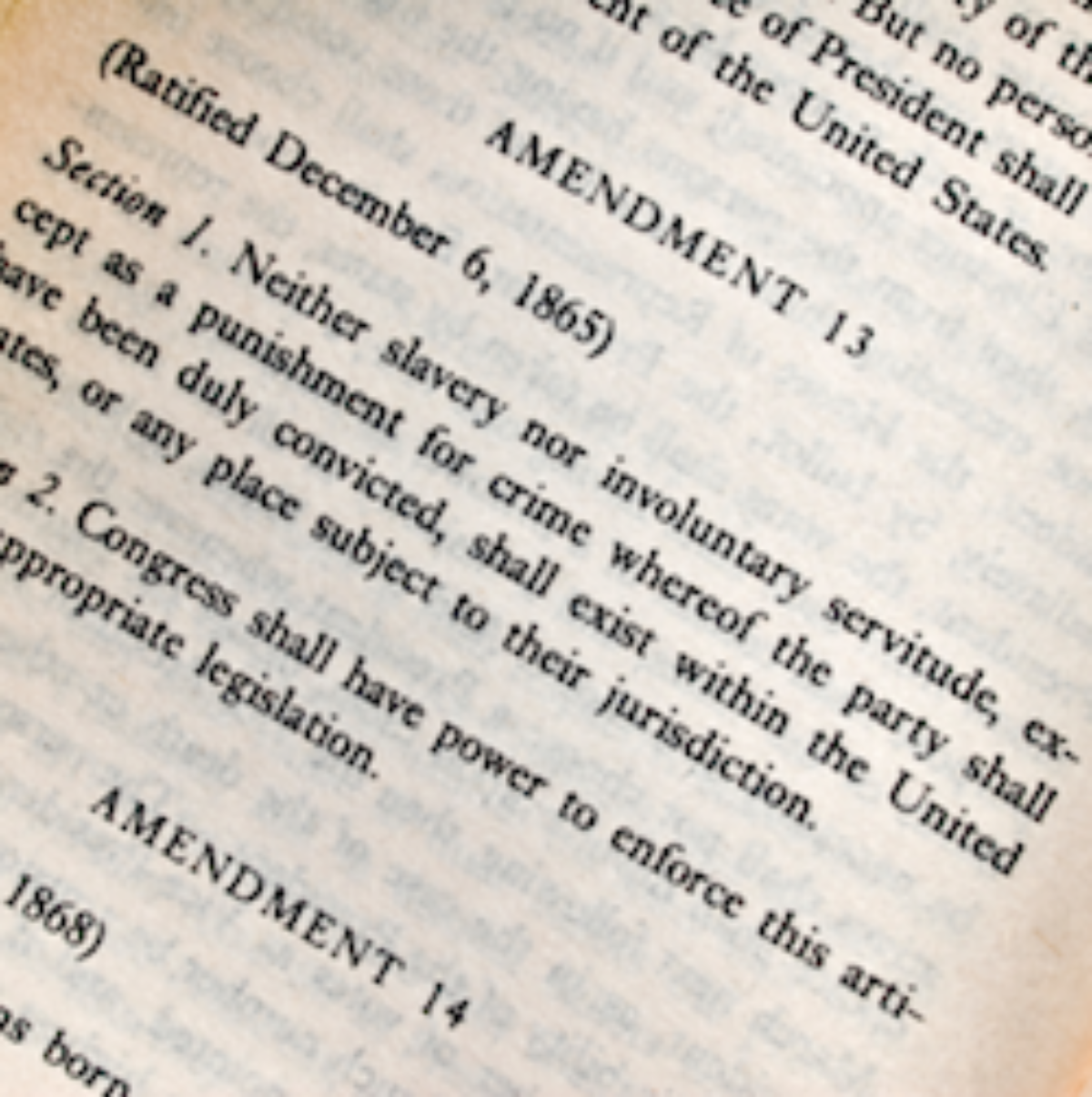
The historical significance of the 13th Amendment to the United States Constitution cannot be overstated. It formally abolished slavery and involuntary servitude throughout the nation, a monumental step towards fulfilling the ideals of freedom and equality. While its nationwide adoption in 1865 marked a pivotal moment, the process of ratification was complex and protracted for many states. Understanding the timeline of these ratifications offers a deeper insight into the lingering divisions and the eventual, albeit imperfect, reconciliation that followed the Civil War. Among the states whose ratification process was particularly noteworthy is Mississippi, a state deeply intertwined with the history of slavery. The question of when Mississippi ratified the 13th Amendment is not merely an academic inquiry; it is a vital piece of the narrative of American progress and its ongoing struggle for justice.
The Context of the 13th Amendment
The 13th Amendment, proposed by Congress in January 1865 and ratified by the necessary three-fourths of the states by December 1865, fundamentally altered the legal landscape of the United States. Its passage was a direct consequence of the Civil War, a conflict largely fought over the issue of slavery. President Abraham Lincoln‘s Emancipation Proclamation, issued in 1863, had declared slaves in Confederate-held territory to be free, but it did not abolish slavery in the border states that remained loyal to the Union nor did it prevent its re-establishment after the war. The 13th Amendment aimed to provide a permanent and constitutional solution, extending freedom to all enslaved people and prohibiting any future attempts to reinstate the institution.
The Road to Abolition
The journey to proposing and ratifying the 13th Amendment was fraught with political maneuvering and moral debate. Abolitionist movements had long advocated for an end to slavery, gaining momentum throughout the antebellum period. The outbreak of the Civil War provided a critical juncture, transforming the conflict from a struggle to preserve the Union into a fight for human freedom. As the Union war effort gained strength, the political will to abolish slavery solidified, leading to the introduction of the amendment in Congress. The ratification process required the approval of three-fourths of the states, a threshold that presented challenges, particularly in states still grappling with the aftermath of secession and the war.
Mississippi’s Delayed Ratification
Mississippi stands out in the history of the 13th Amendment’s ratification due to its exceptionally late adoption. As a state that had been a cornerstone of the Confederacy and heavily reliant on enslaved labor, its post-war political landscape was profoundly shaped by its defeat and the subsequent federal Reconstruction efforts. The process of reintegrating Mississippi into the Union was gradual and contentious, marked by resistance to federal authority and the ongoing struggle to redefine the social and economic order.
Reconstruction and Resistance
Following the Civil War, Mississippi was placed under military rule as part of Presidential Reconstruction and later Congressional Reconstruction. During these periods, federal authorities sought to establish new state governments, enfranchise African Americans, and ensure the protection of their rights. However, white supremacist elements within Mississippi actively resisted these changes. The state’s political leadership and a significant portion of its white population were deeply opposed to the notion of racial equality and the abolition of slavery, viewing it as an assault on their way of life and economic interests. This resistance manifested in various forms, including the passage of restrictive Black Codes, intimidation, and violence.
The Gradual Acceptance of Federal Authority

Despite the pervasive resistance, the federal government, under the authority of Reconstruction Acts, mandated that states seeking to rejoin the Union must ratify the 13th Amendment. This was a prerequisite for regaining full representation in Congress and the restoration of statehood. For Mississippi, this meant a protracted period of negotiation and eventual capitulation to federal demands. The state’s constitution was revised to align with federal requirements, including the ratification of the 13th Amendment. However, the actual formal act of ratification by the state legislature did not occur until many years after the amendment had become law nationwide.
The Exact Timeline of Mississippi’s Ratification
While the 13th Amendment was officially ratified by the required number of states on December 6, 1865, and proclaimed on December 18, 1865, Mississippi’s official legislative act of ratification came much later. The state’s initial refusal or inability to ratify the amendment was a direct consequence of its post-war political turmoil and the ongoing power struggle between federal authorities and local resistance.
The 1870 Constitutional Convention
Mississippi finally ratified the 13th Amendment on January 21, 1870. This action took place during a Constitutional Convention held in Jackson. The convention was convened as part of the broader efforts under Congressional Reconstruction to bring the Southern states back into full compliance with federal law and to ensure their representation in Congress. The adoption of the 13th Amendment, alongside the 14th Amendment, was a condition for the readmission of Mississippi and other former Confederate states into the Union. This was a significant shift from the state’s earlier stance, reflecting the undeniable power of the federal government and the enduring legacy of the Civil War.
The Significance of the 1870 Date
The date of January 21, 1870, is thus the definitive answer to when Mississippi officially ratified the 13th Amendment. This date highlights a crucial aspect of the Reconstruction era: the process of reconciliation and reintegration was not a smooth or immediate one. It involved overcoming deep-seated resistance and enforcing federal mandates. The ratification in 1870, nearly five years after the amendment’s national adoption, underscores the long and arduous path towards the full realization of its principles, even within the framework of constitutional law.
The Enduring Legacy and Interpretation
The delayed ratification of the 13th Amendment by Mississippi serves as a potent reminder that legal pronouncements do not always translate into immediate social and practical realities. The abolition of slavery was a legal act, but the fight for racial equality and the dismantling of discriminatory systems that persisted long after 1870 continued for generations. Understanding this historical timeline offers valuable lessons about the complexities of constitutional change, the nature of political resistance, and the ongoing evolution of American society.

Lessons from the Past
The story of Mississippi’s ratification of the 13th Amendment is more than just a historical footnote; it is a case study in the challenges of achieving true national unity and equality. It demonstrates that progress can be slow, often met with fierce opposition, and that the enforcement of fundamental rights can be a protracted struggle. The events of the Reconstruction era, including the delayed ratifications, continue to inform discussions about civil rights, federalism, and the responsibilities of states in upholding constitutional guarantees. For anyone interested in the historical development of the United States, understanding these intricate timelines is essential for a comprehensive grasp of the nation’s journey towards a more perfect union.
LifeOutOfTheBox is a participant in the Amazon Services LLC Associates Program, an affiliate advertising program designed to provide a means for sites to earn advertising fees by advertising and linking to Amazon.com. Amazon, the Amazon logo, AmazonSupply, and the AmazonSupply logo are trademarks of Amazon.com, Inc. or its affiliates. As an Amazon Associate we earn affiliate commissions from qualifying purchases.