
The Mississippi River, a colossal artery of the United States, is more than just a geographical feature; it’s a historical titan, an economic powerhouse, and a cradle of American culture. Understanding its vast expanse and its place on any US map is fundamental to grasping the nation’s identity and its developmental trajectory. From its humble beginnings to its majestic convergence with the Gulf of Mexico, the Mississippi offers a journey through the heartland, a narrative etched in water and land.
The Source and Northern Reaches
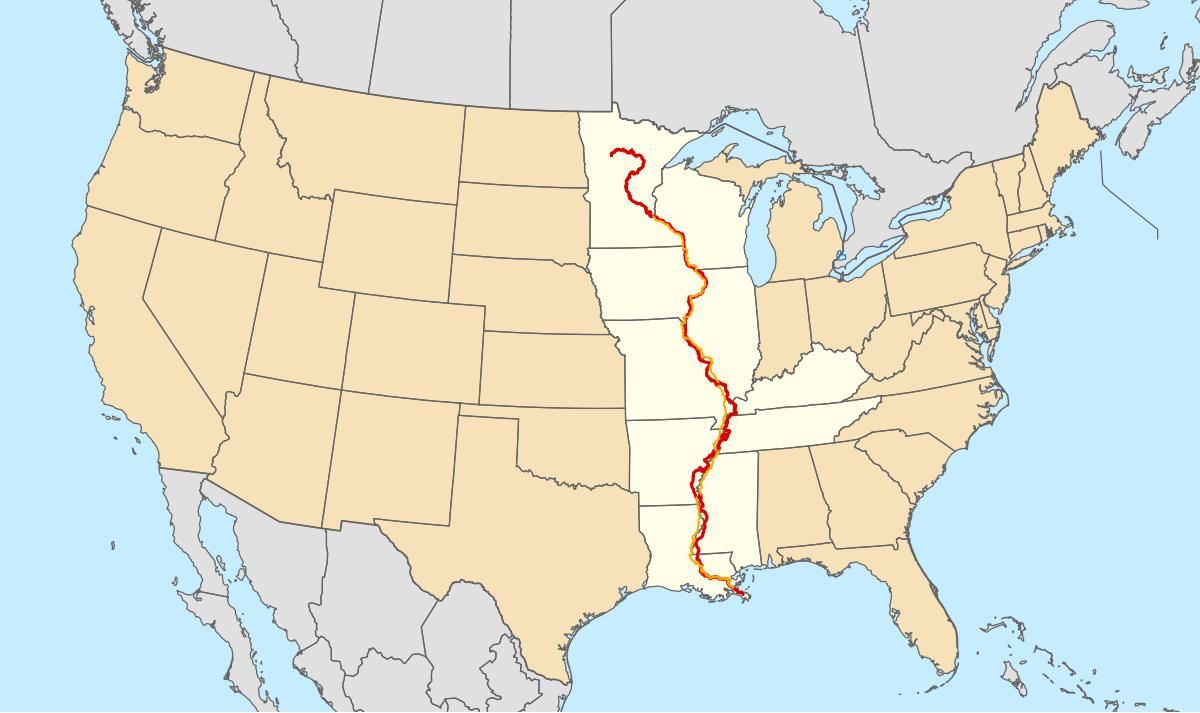
The Mississippi River’s story begins in the pristine wilderness of northern Minnesota. Its official source is Lake Itasca, a small, clear lake within the Itasca State Park. This is where the mighty river, still a mere stream, embarks on its southward odyssey. The initial stretches of the Mississippi are characterized by tranquil lakes, dense forests, and a slow, meandering course. The landscape here is a testament to the raw, untamed beauty of the American North, a stark contrast to the bustling metropolises it will eventually nourish.
Navigating the Headwaters
The headwaters region is a sanctuary for wildlife and a popular spot for those seeking a connection with nature. Visitors can explore the origins of the river, even walking across the emerging stream at Lake Itasca. The area is dotted with numerous smaller lakes and streams that feed into the developing river, contributing to its growing volume. This northern segment, while less renowned than its southern counterpart, is crucial to the river’s hydrological system, collecting water from a vast watershed before it gains momentum.
The Central Corridor: A Flow Through the Heartland
As the Mississippi River winds its way south, it traverses the agricultural heartland of the United States. Here, the river widens, and its banks become lined with fertile plains, giving rise to the nation’s breadbasket. Major cities, steeped in history and economic significance, mark its passage.
The Twin Cities and Beyond
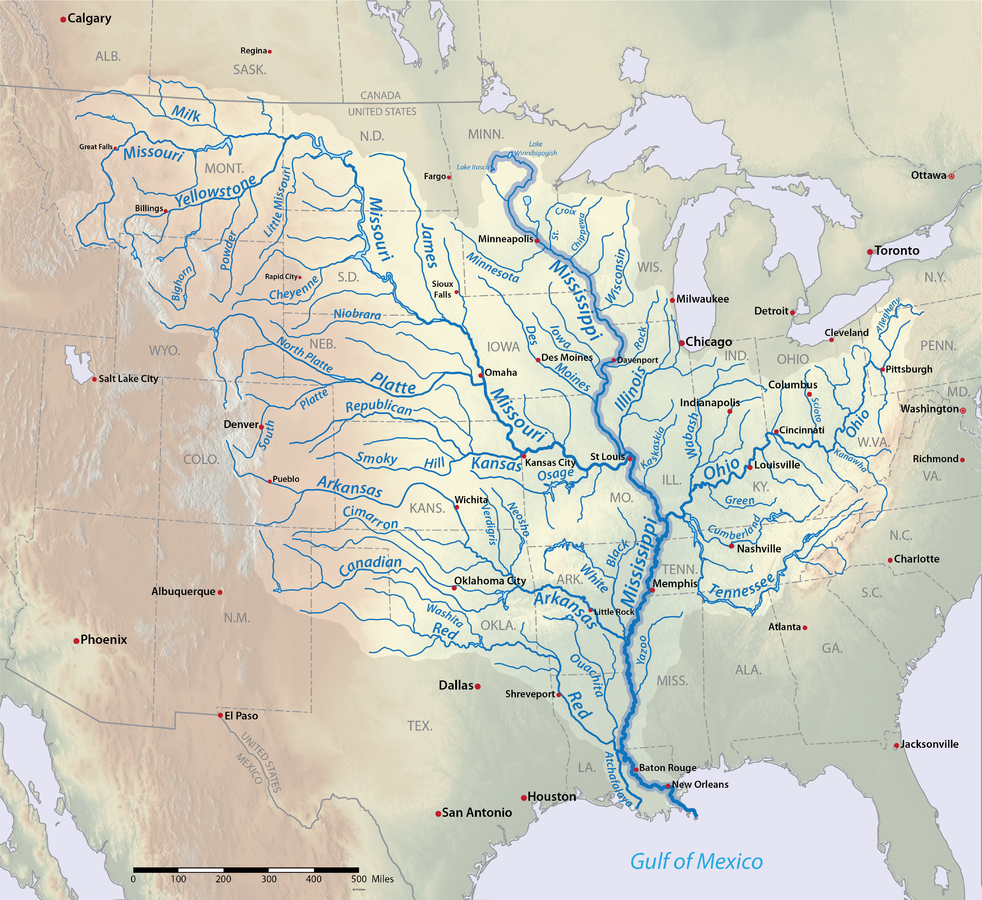
The first significant urban centers encountered are the Twin Cities of Minneapolis and Saint Paul, Minnesota. The river flows directly between these two influential cities, shaping their development and providing a vital waterway for commerce. Further downstream, the Mississippi carves through states like Iowa, Illinois, and Missouri, becoming a broader and more powerful force.
Gateway to the West: St. Louis
Perhaps one of the most iconic cities on the Mississippi is St. Louis, Missouri. It was famously known as the “Gateway to the West,” a pivotal point for westward expansion and exploration. The magnificent Gateway Arch, a symbol of this pioneering spirit, stands proudly on the riverfront, commemorating the journey of explorers like Meriwether Lewis and William Clark. The confluence with the Missouri River, the longest river in North America, significantly increases the Mississippi’s volume and sediment load, transforming it into a truly formidable waterway.
The Lower Mississippi: A Deltaic Majesty
South of St. Louis, the Mississippi River enters its final, grand phase, flowing through the deep South and eventually forming a vast delta before emptying into the Gulf of Mexico. This region is characterized by its lush, subtropical climate, rich cultural heritage, and unique ecosystems.
Through the Cotton Belt and Beyond
The river snakes through states like Arkansas, Tennessee, Mississippi, and Louisiana. Cities like Memphis, Tennessee, and Vicksburg, Mississippi, hold significant historical importance, particularly concerning the Civil War. The river’s presence has shaped the economies and cultures of these regions, influencing everything from agriculture to music.
The Crescent City and the Delta
The journey culminates in New Orleans, Louisiana, famously situated in a crescent bend of the river. This vibrant metropolis, a melting pot of cultures, owes its existence and character to the Mississippi. Here, the river is at its widest and most powerful, a testament to its immense journey. Beyond New Orleans, the river fans out into a complex delta, a labyrinth of channels, bayous, and wetlands. This Mississippi River Delta is a vital ecological zone, teeming with diverse flora and fauna, and a crucial part of the United States coastal ecosystem. The delta’s formation is a continuous process, driven by the river’s sediment deposition, constantly reshaping the coastline.
The Mississippi’s Enduring Significance
The location of the Mississippi River on the US map is not merely a cartographical fact but a narrative of the nation’s development. It has served as a natural boundary, a vital transportation network, a source of sustenance, and an inspiration for art, literature, and music.
Economic and Ecological Lifeline
Economically, the Mississippi is one of the world’s most important commercial waterways. Barges carrying goods from the Great Plains to the Gulf of Mexico rely on its navigable channels. Ecologically, it supports an incredible diversity of life, from migratory birds to fish populations. The health of the river and its delta is intrinsically linked to the health of the surrounding environment and the well-being of communities along its banks.

A Cultural Tapestry
Culturally, the Mississippi is woven into the fabric of American identity. Its banks have witnessed centuries of human history, from the indigenous tribes who first inhabited its shores to the European explorers, the enslaved populations, and the waves of immigrants who have shaped its diverse societies. The sounds of blues music echoing from Clarksdale, Mississippi, the rich culinary traditions of New Orleans, and the literary landscapes described by authors like Mark Twain all draw inspiration from the grandeur and mystery of this iconic river. Understanding where the Mississippi River lies on the US map is to understand a fundamental element of the American story.
LifeOutOfTheBox is a participant in the Amazon Services LLC Associates Program, an affiliate advertising program designed to provide a means for sites to earn advertising fees by advertising and linking to Amazon.com. Amazon, the Amazon logo, AmazonSupply, and the AmazonSupply logo are trademarks of Amazon.com, Inc. or its affiliates. As an Amazon Associate we earn affiliate commissions from qualifying purchases.