
Nebraska, often perceived as a landscape of rolling plains and agricultural bounty, holds a more dynamic and dramatic weather reputation than many might initially assume. While it may not be the first state that springs to mind when discussing extreme weather events, the answer to “Does Nebraska have tornadoes?” is a resounding yes. In fact, the Sunflower State is situated squarely within what is colloquially known as Tornado Alley, a region notorious for its frequent and often powerful tornado outbreaks. Understanding Nebraska’s relationship with these powerful natural phenomena is crucial for anyone considering a visit, planning an event, or simply seeking to appreciate the diverse climatic tapestry of the American heartland.
Nebraska’s Place in Tornado Alley
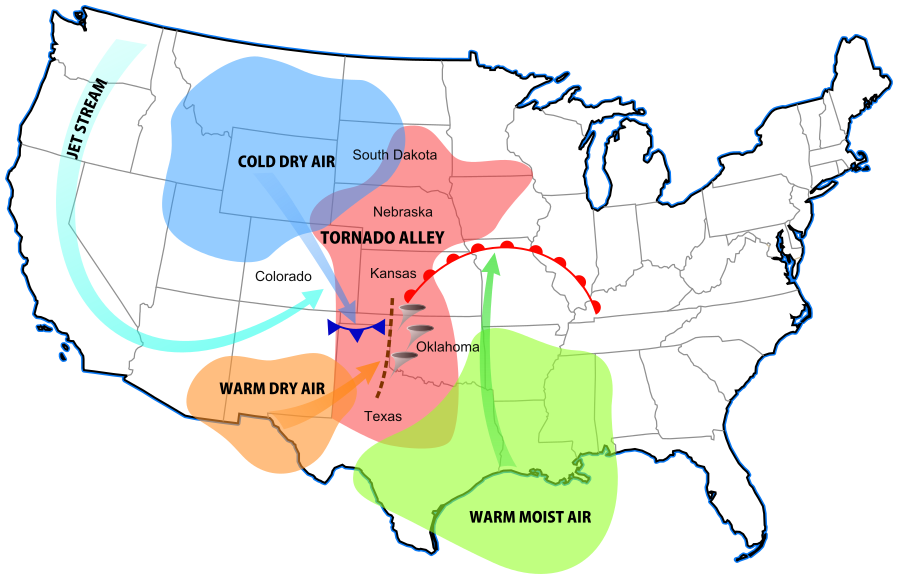
Tornado Alley is not a precisely defined geographical boundary but rather a corridor across the central United States where atmospheric conditions are particularly conducive to the formation of severe thunderstorms that can spawn tornadoes. This region typically encompasses states like Texas, Oklahoma, Kansas, Missouri, and parts of surrounding states. Nebraska, with its location in the northern Great Plains, is an integral part of this climatological phenomenon.
Atmospheric Conditions for Tornado Formation
The convergence of specific atmospheric ingredients in Nebraska creates a perfect storm for tornado development. These include:
- Warm, Moist Air from the Gulf of Mexico: During the spring and summer months, warm, humid air masses frequently move northward from the Gulf of Mexico. This moisture provides the fuel for powerful thunderstorms.
- Cool, Dry Air from the Rocky Mountains: Simultaneously, dry, cool air often sweeps eastward from the Rocky Mountains. The clash between these contrasting air masses creates instability in the atmosphere.
- Jet Stream Influence: The jet stream, a fast-flowing current of air in the upper atmosphere, plays a critical role. When the jet stream dips southward across the United States, it can help to lift the warm, moist air and enhance the rotation within thunderstorms.
- Wind Shear: A key ingredient for tornado formation is significant wind shear, which is a change in wind speed and/or direction with increasing height. This shear can cause a thunderstorm to rotate, forming a mesocyclone, the precursor to many tornadoes.
When these conditions align over Nebraska, particularly during the spring and early summer months (April through June), the state becomes a prime location for severe weather, including tornadoes. The open plains of Nebraska provide an unobstructed path for these developing storm systems, allowing them to grow and intensify.
Tornado Frequency and Intensity in Nebraska
While states like Oklahoma and Texas might experience a higher absolute number of tornadoes due to their larger landmass and position further south in Tornado Alley, Nebraska experiences a significant number relative to its population and size. The state averages around 40-50 tornadoes per year, though this number can fluctuate considerably from year to year.
The intensity of tornadoes in Nebraska can range from weaker F0/EF0 or F1/EF1 twisters that cause minor damage to powerful F4/EF4 or F5/EF5 tornadoes capable of widespread devastation. Historically, Nebraska has experienced some notable and destructive tornadoes. One of the most infamous was the 1953 Waco tornado, which, though it struck Texas, is often cited in broader discussions of Tornado Alley’s power. Within Nebraska, the 1979 path of destruction through Omaha serves as a stark reminder of the potential for severe damage and loss of life. More recently, tornadoes have impacted communities across the state, highlighting the persistent threat.
Experiencing Nebraska: Safety and Preparedness for Travelers
For travelers and tourists considering a visit to Nebraska, particularly during the tornado season, understanding and respecting the potential for severe weather is paramount. While the vast majority of trips to Nebraska are uneventful and filled with pleasant experiences, a proactive approach to weather awareness can ensure a safe and enjoyable journey.

Planning Your Visit
- Timing: If your itinerary is flexible, consider visiting Nebraska outside the peak tornado season (typically April-June). The late summer and fall months generally offer calmer weather patterns. However, it’s important to note that severe weather can occur at other times of the year.
- Destination Choice: While tornadoes can occur anywhere in the state, central and eastern Nebraska are often more prone to activity due to their position in Tornado Alley. However, vigilance is necessary across all regions.
- Accommodation Selection: When booking accommodations, particularly in cities like Omaha, Lincoln, or smaller towns, inquire about their severe weather safety protocols. Hotels and larger lodging facilities often have designated storm shelters or basements. If staying in a rental property, familiarize yourself with the safest location within the building.
Staying Informed During Your Trip
- Weather Alerts: The most critical aspect of staying safe is staying informed. Utilize multiple sources for weather updates:
- Local News Channels: Tune into local television and radio stations. They will provide real-time updates and warnings.
- NOAA Weather Radio: Invest in a NOAA Weather Radio. These devices broadcast weather alerts directly from the National Weather Service and are essential for receiving warnings even when cell service is unavailable.
- Smartphone Apps: Many reputable weather apps offer push notifications for severe weather alerts in your immediate area. Ensure location services are enabled for accurate tracking.
- Emergency Alerts: Pay attention to Wireless Emergency Alerts (WEAs) sent to your mobile device.
- Understanding Warnings vs. Watches:
- Tornado Watch: This means that conditions are favorable for tornadoes to develop in and near the watch area. It’s a time to be prepared and stay informed, but not yet to take shelter.
- Tornado Warning: This means a tornado has been sighted or indicated by radar. It is time to take immediate shelter.
Tornado Safety Protocols
When a tornado warning is issued for your location:
- Seek Shelter Immediately:
- Best Option: An underground shelter, basement, or storm cellar offers the best protection.
- If No Basement: Go to an interior room on the lowest floor of a sturdy building, away from windows and doors. Bathrooms or closets are often good choices.
- Mobile Homes and Vehicles: These are extremely dangerous during a tornado and should be evacuated immediately for more secure shelter.
- Protect Yourself:
- Get under a sturdy piece of furniture, such as a heavy table or desk.
- Cover your head and neck with your arms or a blanket to protect against flying debris.
- If you have a helmet, wear it.
- Rural Areas: In open rural areas, if shelter is not immediately available, lie flat in a ditch or other low-lying area and cover your head with your arms. Be aware of potential flooding.
- Outdoor Activities: If you are outdoors and a warning is issued, try to get to a sturdy building as quickly as possible. If that is not an option, follow the advice for rural areas.
Nebraska’s Weather Wonders Beyond the Storm
While it’s essential to be aware of tornado risks, it’s equally important not to let this aspect overshadow the many other natural wonders and attractions that Nebraska has to offer. The state’s landscape is diverse, moving beyond the stereotype of endless cornfields to include unique geological formations, vast prairie ecosystems, and significant waterways.
Natural Attractions
- Chimney Rock National Historic Site: This iconic geological formation, a solitary spire rising from the prairie, served as a vital landmark for pioneers traveling the Oregon Trail, the California Trail, and the Mormon Trail. Its presence is a testament to the erosive power of nature and a significant piece of American westward expansion history.
- Scotts Bluff National Monument: Another striking geological feature, Scotts Bluff is a series of sandstone bluffs that also guided westward travelers. The monument offers hiking trails and interpretive centers that delve into the natural and human history of the region.
- Platte River: Known as the “Mighty Mo” in some contexts, the Platte River is a vital artery of the state, offering crucial habitat for migratory birds. During the spring, the Sandhills region near the Platte River becomes a critical stopover point for millions of sandhill cranes, creating one of North America’s most spectacular wildlife viewing events.
- Nebraska National Forest at Halsey: This is the largest hand-planted forest in the United States, a remarkable achievement in combating desertification and creating a vital ecological resource in the heart of the plains. It offers opportunities for hiking, camping, and enjoying a unique forested environment.

Seasonal Beauty
Beyond specific landmarks, Nebraska’s beauty unfolds with the seasons. Spring brings a vibrant green to the landscape, followed by the golden hues of wheat and cornfields in the summer. Autumn offers a spectacular display of changing leaf colors in the state’s wooded areas, while winter can transform the plains into a serene, snow-covered tableau. Each season presents a different perspective on the state’s natural allure, making it a destination worthy of exploration year-round, provided one is mindful of the atmospheric conditions.
In conclusion, while Nebraska’s presence in Tornado Alley is an undeniable facet of its climate, it is merely one piece of a larger, more complex picture. The state offers a rich tapestry of history, culture, and natural beauty that rewards the curious traveler. By understanding its weather patterns and prioritizing safety, visitors can fully embrace the unique experiences that await them in the Cornhusker State.
LifeOutOfTheBox is a participant in the Amazon Services LLC Associates Program, an affiliate advertising program designed to provide a means for sites to earn advertising fees by advertising and linking to Amazon.com. Amazon, the Amazon logo, AmazonSupply, and the AmazonSupply logo are trademarks of Amazon.com, Inc. or its affiliates. As an Amazon Associate we earn affiliate commissions from qualifying purchases.