
Nevada’s employment landscape is often characterized by its dynamic and sometimes surprising nature, much like the very state it inhabits. Visitors and potential residents alike often encounter discussions about employment rights and workplace regulations. A fundamental aspect of understanding these regulations is the concept of “at-will” employment, a legal doctrine that governs the employer-employee relationship in many jurisdictions. For those considering a move to the Silver State, or for businesses operating within its borders, a clear understanding of whether Nevada adheres to this doctrine is crucial. This article delves into the specifics of Nevada’s employment laws, clarifying its position on at-will employment and exploring the nuances that define the professional environment across its diverse cities like Las Vegas and Reno.
Understanding At-Will Employment
The doctrine of at-will employment, at its core, signifies that an employer can terminate an employment relationship for any reason, or for no reason at all, as long as the reason is not illegal. Similarly, an employee is free to leave their job at any time, for any reason, or no reason at all. This doctrine is a common law principle that has been adopted by most U.S. states.
The Core Principles
The fundamental principle of at-will employment is rooted in the idea of mutual freedom in the employment contract. Neither party is bound to continue the relationship indefinitely. This means that an employer doesn’t need to provide a reason, such as poor performance or misconduct, to terminate an employee. Conversely, an employee doesn’t need to offer a notice period if they choose to resign.
Historical Context
The at-will doctrine has its origins in 19th-century American jurisprudence. It emerged as a departure from earlier common law principles that often required employers to show “cause” for dismissal, reflecting a shift towards a more fluid and less contractually rigid labor market. This doctrine became deeply embedded in U.S. labor law, shaping the dynamics between employers and employees for over a century.
Implications for Employers and Employees
For employers, at-will employment offers flexibility. It allows for swift adjustments to staffing based on business needs or performance issues without the procedural hurdles that might exist in other employment systems. For employees, it means they can seek better opportunities or leave unsatisfactory work situations without the obligation to remain in a position they no longer desire. However, this flexibility comes with a significant caveat: the absence of protection against arbitrary dismissal, provided the dismissal isn’t based on a legally protected characteristic or activity.
Nevada’s Stance on At-Will Employment
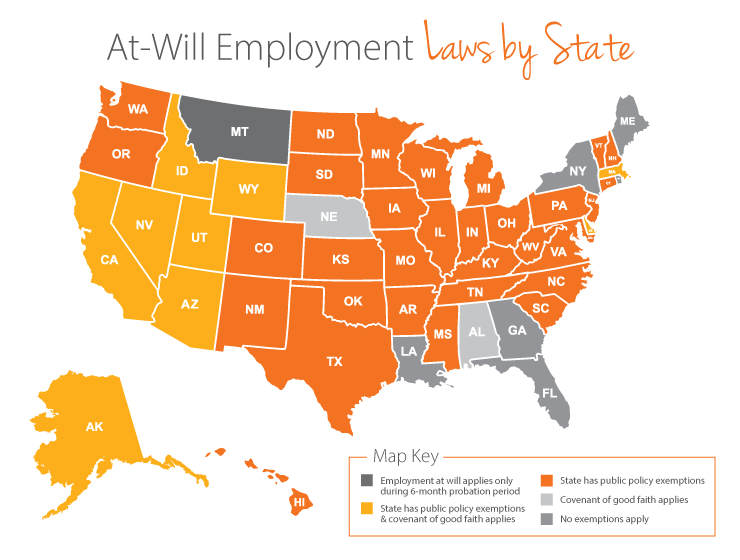
Nevada is indeed an at-will state. The Nevada Revised Statutes (NRS) explicitly uphold the principle of at-will employment. This means that, by default, employment relationships in Nevada are presumed to be at-will unless specific exceptions or agreements modify this status.
Statutory Recognition
While not explicitly codified in a single, standalone statute labeled “At-Will Employment,” the principle is deeply ingrained in Nevada’s legal framework governing employment. Courts in Nevada have consistently interpreted employment contracts and statutory provisions in alignment with the at-will doctrine. The absence of specific statutory provisions that would negate at-will employment in most circumstances solidifies its standing.
Court Precedents
Numerous court decisions in Nevada have affirmed the at-will nature of employment. These precedents reinforce the idea that employers can terminate employees for any reason or no reason, as long as it does not violate public policy or specific anti-discrimination laws. These judicial interpretations are crucial in understanding the practical application of the at-will doctrine in the state.
The Default Assumption
When an employer hires an individual in Nevada, the default assumption is that the employment is at-will. This means that unless there is a written employment contract specifying a fixed term of employment, or an implied contract that suggests otherwise, the at-will presumption holds. This is a critical point for both employers and employees to acknowledge and understand from the outset of an employment relationship.

Exceptions to the At-Will Doctrine in Nevada
While Nevada operates under the at-will employment doctrine, it is not absolute. There are significant exceptions that protect employees from wrongful termination. These exceptions are vital for ensuring fair treatment in the workplace and align with broader federal and state anti-discrimination and public policy considerations.
Public Policy Exception
One of the most significant exceptions to the at-will doctrine is the public policy exception. This exception prohibits employers from terminating an employee for reasons that violate a clear mandate of public policy. Examples include firing an employee for refusing to commit an illegal act, for reporting illegal or unethical activities (whistleblowing), for exercising a legal right (like filing a workers’ compensation claim), or for serving on a jury. This exception is crucial for upholding societal values and ensuring that employees are not penalized for acting in accordance with the law or for the benefit of the public good.
Contractual Agreements
An employment contract that specifies a definite term of employment or outlines specific conditions for termination can override the at-will presumption. If an employer and employee enter into a written contract that guarantees employment for a certain period, the employer generally cannot terminate the employee before that period ends without breaching the contract, unless the contract specifies grounds for earlier termination. Similarly, an employee handbook or company policy, under certain circumstances, could be interpreted as creating an implied contract, though this is often a complex legal argument.
Implied Contracts
In some cases, an implied contract may exist, even without a formal written document. This can arise from statements made by the employer, company policies, or practices that suggest job security or a promise of employment beyond the at-will status. However, proving an implied contract can be challenging, and courts often look for clear evidence of intent to create a binding agreement beyond the at-will framework.
Anti-Discrimination Laws
Federal and state anti-discrimination laws are perhaps the most widely recognized exceptions to at-will employment. Employers are prohibited from terminating an employee based on protected characteristics such as race, religion, gender, national origin, age, disability, or genetic information. Nevada has its own robust anti-discrimination statutes, mirroring federal protections, which provide a strong safeguard against discriminatory firings. Any termination that can be proven to be motivated by discrimination is considered illegal and actionable.
Navigating Employment in Nevada
For individuals seeking employment or considering a career change in Nevada, understanding the at-will doctrine and its exceptions is paramount. It empowers employees to understand their rights and protections, and it guides employers in establishing compliant and ethical employment practices.
For Employees
- Understand Your Rights: Be aware that unless you have a specific contract stating otherwise, your employment in Nevada is likely at-will. This means you can be terminated for reasons not explicitly illegal.
- Seek Clarity on Contracts: If offered a contract, review it carefully with legal counsel to understand any provisions that might alter your at-will status.
- Document Everything: Keep records of your employment, including performance reviews, communications with supervisors, and any instances of potential discrimination or retaliation. This documentation can be crucial if you believe you have been wrongfully terminated.
- Know Your Protections: Familiarize yourself with Nevada’s anti-discrimination laws and public policy exceptions. If you believe you have been terminated in violation of these protections, consult with an employment lawyer promptly.
- Consider Union Representation: If you are part of a union, your employment terms will likely be governed by a collective bargaining agreement, which often provides more protections than at-will employment.
For Employers
- Develop Clear Policies: Implement comprehensive employee handbooks that clearly define employment policies and explicitly state the at-will nature of employment, while also outlining non-discrimination policies and grievance procedures.
- Ensure Consistent Practices: Apply employment policies consistently across all employees to avoid claims of discrimination or unfair treatment.
- Document Performance Issues: If an employee’s performance is unsatisfactory, document the issues thoroughly, provide feedback and opportunities for improvement, and follow established disciplinary procedures. This can be vital in defending against wrongful termination claims.
- Train Managers: Ensure that all managers and supervisors are well-trained on employment laws, company policies, and the proper procedures for hiring, discipline, and termination.
- Consult Legal Counsel: Regularly consult with employment legal counsel to stay updated on relevant laws and to ensure that your employment practices are compliant and mitigate legal risks. This is especially important when making difficult termination decisions.
Nevada’s Dynamic Employment Environment
Nevada’s economy is diverse, ranging from the bustling entertainment and hospitality sectors in Las Vegas and the gaming industry to growing technology and logistics hubs in areas like Reno and the Henderson metropolitan area. This economic dynamism, coupled with its at-will employment framework, creates a unique professional landscape. Whether you’re considering a career in the vibrant tourism industry, seeking opportunities in burgeoning tech sectors, or managing a business, understanding the legal underpinnings of employment is essential. The at-will doctrine, with its inherent flexibility and crucial exceptions, forms the bedrock of employment relationships in the Silver State, shaping interactions and expectations within its professional communities.
LifeOutOfTheBox is a participant in the Amazon Services LLC Associates Program, an affiliate advertising program designed to provide a means for sites to earn advertising fees by advertising and linking to Amazon.com. Amazon, the Amazon logo, AmazonSupply, and the AmazonSupply logo are trademarks of Amazon.com, Inc. or its affiliates. As an Amazon Associate we earn affiliate commissions from qualifying purchases.