
Forming a Limited Liability Company (LLC) in New Mexico is a strategic move for entrepreneurs seeking to protect their personal assets while enjoying the flexibility and tax advantages of a pass-through entity. The Land of Enchantment offers a business-friendly environment, making the process of establishing an LLC relatively straightforward. This guide will walk you through the essential steps, from initial planning to post-formation compliance, ensuring your venture in New Mexico is set up for success.
Understanding the LLC Structure
An LLC is a hybrid business structure that combines the pass-through taxation of a partnership or sole proprietorship with the limited liability of a corporation. This means that the owners, known as members, are generally not personally liable for the company’s debts or legal obligations. Instead, the business is liable. This crucial distinction shields personal assets, such as homes and savings accounts, from business-related lawsuits or financial distress.
Benefits of an LLC
- Limited Liability Protection: As mentioned, this is the primary advantage. Your personal assets are protected from business liabilities.
- Pass-Through Taxation: Profits and losses are passed through to the members’ personal income tax returns, avoiding the double taxation often associated with C-corporations. Members can choose to be taxed as a sole proprietorship, partnership, S-corporation, or C-corporation, offering significant tax flexibility.
- Management Flexibility: LLCs can be managed by their members (member-managed) or by designated managers (manager-managed). This allows for a structure that best suits the company’s operational needs.
- Fewer Formalities: Compared to corporations, LLCs typically have fewer ongoing compliance requirements, such as mandatory annual meetings and extensive record-keeping.
- Credibility: Operating as an LLC can lend an air of legitimacy and professionalism to your business, which can be beneficial when dealing with clients, suppliers, and lenders.
Considerations Before Formation
Before diving into the formation process, it’s essential to consider a few key aspects:
- Business Name: Your chosen name must be unique and distinguishable from other registered business names in New Mexico. You’ll need to conduct a name search to ensure availability.
- Registered Agent: An LLC must designate a registered agent who will receive official legal and tax documents on behalf of the business. This agent must have a physical street address in New Mexico.
- Operating Agreement: While not always legally required by the state, an operating agreement is highly recommended. This internal document outlines the ownership structure, member responsibilities, profit and loss distribution, and operational procedures of the LLC. It serves as a roadmap for your business and can prevent future disputes.
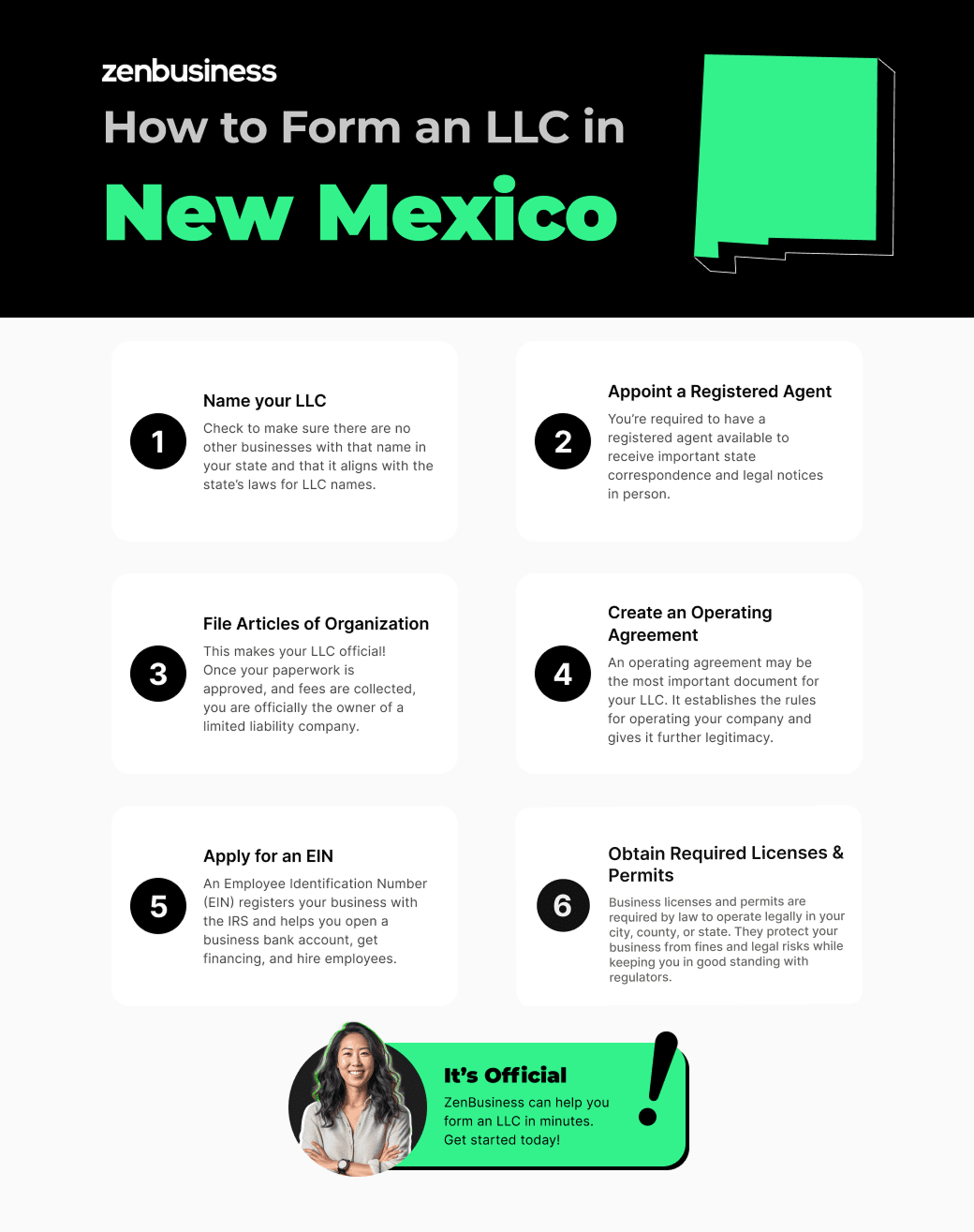
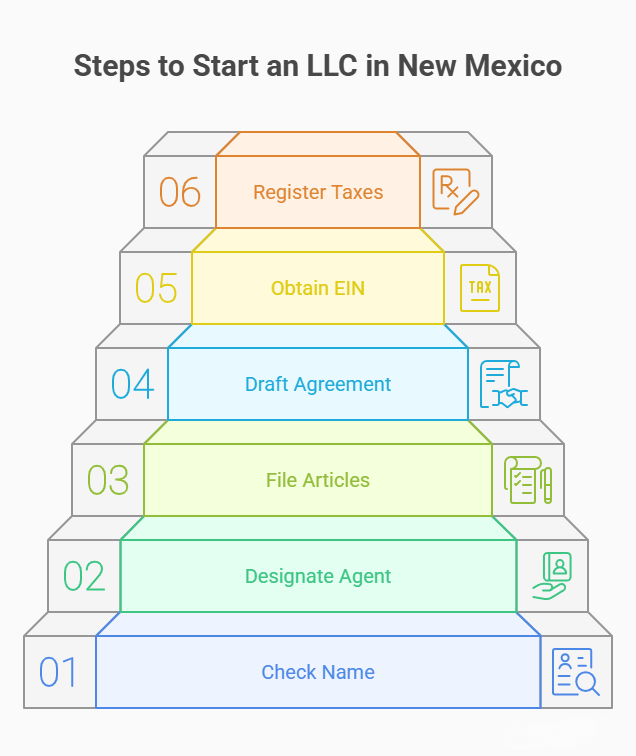
Step-by-Step Guide to Forming Your LLC in New Mexico
The process of forming an LLC in New Mexico involves several distinct steps, managed primarily through the New Mexico Secretary of State (NMSOS).
Step 1: Choose a Business Name
Your business name is crucial for branding and legal identification. It must comply with New Mexico state naming requirements.
Naming Requirements
- The name must contain the words “Limited Liability Company,” or the abbreviation “LLC” or “L.L.C.”
- The name must be distinguishable from all other business entity names currently on file with the New Mexico Secretary of State.
- The name cannot imply that the company is organized for a purpose for which it is not authorized.
- Certain words may be restricted or require special approval (e.g., “bank,” “insurance,” “trust”).
Checking Name Availability
Before filing any documents, it’s vital to check if your desired business name is available. You can do this by performing a business name search on the New Mexico Secretary of State website. This search will reveal if any other registered entities are using a similar name. If your name is available, consider reserving it for up to 120 days by filing an application for reservation of name with the NMSOS. This prevents others from taking your chosen name while you complete the formation process.
Step 2: Appoint a Registered Agent
A registered agent is a vital component of your LLC’s legal standing. They are the point of contact for official communications from the state and other legal entities.
Who Can Be a Registered Agent?
- An individual resident of New Mexico (must be over 18 years old).
- A domestic or foreign business entity authorized to do business in New Mexico.
The registered agent must have a physical street address in New Mexico (a P.O. Box is not sufficient) and be available during normal business hours to accept service of process, legal notices, and official government correspondence. You can choose to be your own registered agent if you meet these criteria, or you can hire a professional registered agent service. Professional services offer convenience and ensure that you won’t miss important legal documents, especially if you travel frequently or have an unpredictable schedule.
Step 3: File Articles of Organization
The Articles of Organization (sometimes called a Certificate of Formation) is the primary document that legally creates your LLC in New Mexico. This document is filed with the New Mexico Secretary of State.
Key Information Required
The Articles of Organization typically require the following information:
- Name of the LLC: The exact business name you’ve chosen and confirmed as available.
- Name and Address of the Registered Agent: The name and physical New Mexico street address of your designated registered agent.
- Principal Office Address: The street address of the LLC’s principal place of business. This is where the main operations of the business will be conducted.
- Management Structure: Whether the LLC will be member-managed or manager-managed.
- Organizer’s Name and Address: The name and address of the person filing the Articles of Organization. This person doesn’t have to be a member of the LLC.
Filing Process
The Articles of Organization can be filed online through the New Mexico Secretary of State website, by mail, or in person. There is a filing fee associated with this document, which can change, so it’s always best to check the NMSOS website for current fees. Once filed and approved, the NMSOS will issue a confirmation of filing, signifying that your LLC is officially recognized by the state.
Step 4: Create an Operating Agreement
While not a state-filed document, a robust operating agreement is critical for the internal governance and smooth operation of your LLC. It’s a legally binding contract among the members of the LLC.
Purpose of the Operating Agreement
- Defines Ownership: Clearly outlines the percentage of ownership each member holds in the LLC.
- Specifies Member Contributions: Details the initial capital contributions made by each member and any future contribution requirements.
- Outlines Profit and Loss Distribution: Establishes how profits and losses will be allocated among members, which may or may not be proportional to ownership.
- Details Management and Voting Rights: Clarifies how decisions will be made, the voting powers of members (and managers, if applicable), and the responsibilities of each member or manager.
- Establishes Procedures for Adding or Removing Members: Sets forth the process for bringing new members into the LLC or for existing members to leave or be removed.
- Addresses Dissolution: Outlines the procedures for dissolving the LLC.
A well-drafted operating agreement can prevent disputes, clarify expectations, and provide a framework for managing the LLC effectively, especially as the business grows or if members’ relationships change.
Step 5: Obtain an Employer Identification Number (EIN)
An Employer Identification Number (EIN), also known as a Federal Tax Identification Number, is like a Social Security number for your business. It’s issued by the Internal Revenue Service (IRS) and is required for most businesses, especially if you plan to hire employees, open a business bank account, or file certain tax returns.
How to Get an EIN
You can apply for an EIN online directly from the IRS website. The process is free and usually takes only a few minutes. You will need to provide information about your business, including your LLC’s name and address, and the names and Social Security numbers of the principal members.
Step 6: Understand Ongoing Compliance Requirements
Forming an LLC is just the beginning. To maintain good standing with the state of New Mexico and avoid penalties, you must adhere to ongoing compliance obligations.
Annual Reports
New Mexico requires all registered entities, including LLCs, to file an annual report with the New Mexico Secretary of State. This report updates the state on your business information, such as the registered agent’s details and principal office address. Failure to file annual reports on time can result in administrative dissolution of your LLC.
Business Licenses and Permits
Depending on your industry and location within New Mexico, you may need to obtain specific business licenses and permits at the federal, state, or local level. Research the requirements for your particular business operations. For example, a restaurant in Santa Fe will have different licensing needs than a software company operating remotely.
Tax Obligations
As an LLC, you have federal, state, and potentially local tax obligations. The specific taxes you’ll need to pay depend on your business structure election and activities. If you’ve elected to be taxed as an S-corporation or C-corporation, there will be specific corporate tax filings. Even with pass-through taxation, members will be responsible for reporting their share of the LLC’s income and losses on their personal tax returns. Consult with a tax professional to ensure you’re meeting all your tax obligations accurately and on time.
Maintaining Your LLC
Once your LLC is established, consistent attention to its legal and financial health is paramount. This includes regular review of your operating agreement, maintaining accurate financial records, and staying informed about any changes in New Mexico business law.
Regular Financial Review
Maintaining meticulous financial records is not only a good business practice but also essential for tax compliance and informed decision-making. Keep track of all income, expenses, assets, and liabilities. This will simplify tax preparation and provide valuable insights into your business’s performance, helping you identify areas for improvement or growth.
Annual Operating Agreement Review
It’s advisable to review your operating agreement annually, or whenever significant changes occur within the LLC (e.g., new members joining, changes in management roles, expansion of services). This ensures the agreement remains relevant and continues to reflect the current operational realities and intentions of the members.
Staying Informed
Business laws and regulations can change. Staying informed about updates from the New Mexico Secretary of State and relevant federal agencies will help you maintain compliance and avoid potential legal issues. Subscribing to relevant newsletters or engaging with business organizations can be beneficial.
Forming an LLC in New Mexico is a foundational step for many entrepreneurs. By understanding the process, fulfilling all legal requirements, and committing to ongoing compliance, you can establish a strong and protected business entity ready to thrive in the dynamic landscape of New Mexico.
LifeOutOfTheBox is a participant in the Amazon Services LLC Associates Program, an affiliate advertising program designed to provide a means for sites to earn advertising fees by advertising and linking to Amazon.com. Amazon, the Amazon logo, AmazonSupply, and the AmazonSupply logo are trademarks of Amazon.com, Inc. or its affiliates. As an Amazon Associate we earn affiliate commissions from qualifying purchases.