
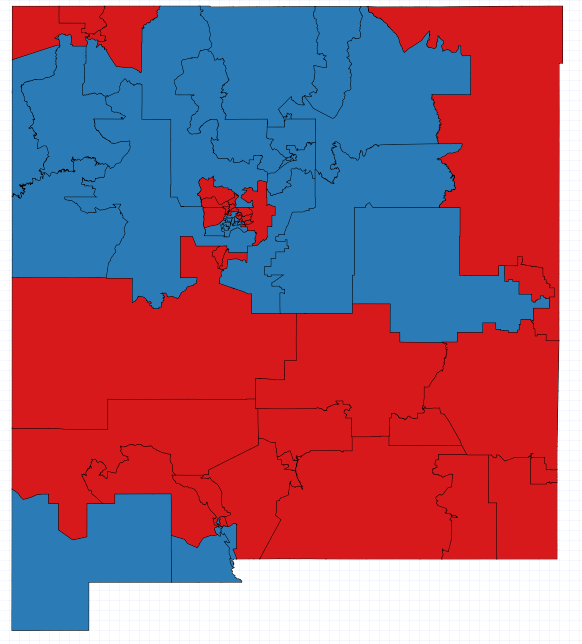
New Mexico, often heralded as the “Land of Enchantment,” is a state that defies simple categorization. This is true not only in its political landscape, which can indeed shift between “blue” (Democratic) and “red” (Republican) affiliations, but also in its vibrant cultural tapestry, its breathtaking natural beauty, and the distinct character of its cities and towns. Understanding New Mexico’s identity requires looking beyond simplistic color-coding and delving into the multifaceted experiences that draw travelers to its unique terrain. This exploration will guide you through the essence of New Mexico, revealing why it resonates with such a broad spectrum of interests, from the art aficionado to the outdoor adventurer.

A Spectrum of Experiences: Beyond Political Hues
While the political leanings of a state might offer a superficial glimpse, the true spirit of New Mexico is painted in a far richer palette. Its identity is a confluence of Indigenous heritage, Spanish colonial history, and a dynamic modern culture that embraces innovation alongside tradition. This rich layering creates an unparalleled travel destination.
Indigenous Roots and Colonial Legacies
The story of New Mexico is deeply intertwined with its Indigenous peoples. Centuries of history are preserved within the ancient pueblos, offering visitors a profound connection to the land and its original stewards. Exploring places like Taos Pueblo, a UNESCO World Heritage site, provides an immersive experience into a living culture that has thrived for over a millennium. The intricate adobe architecture, the enduring traditions, and the spiritual significance of these ancestral homes are profoundly moving.
Following the arrival of the Spanish in the 16th century, a new layer of history was etched onto the landscape. The remnants of this era are evident in the ubiquitous Spanish colonial architecture, the enduring Catholic faith, and the Spanish language that still echoes through many communities. Santa Fe, the state capital, is a prime example, with its historic Plaza, the Palace of the Governors, and the Loretto Chapel, all bearing testament to its rich colonial past. The blend of Indigenous and Spanish influences is not merely historical; it’s a living, breathing aspect of New Mexico’s identity, evident in its art, its food, and its festivals.
Artistic Expression and Cultural Fusion
New Mexico is a renowned haven for artists, drawn by its dramatic light, inspiring landscapes, and unique cultural milieu. Santa Fe and Taos are particularly celebrated art colonies, boasting an astonishing number of galleries, studios, and museums. Canyon Road in Santa Fe is an internationally acclaimed art district, where visitors can wander through dozens of galleries showcasing everything from traditional Native American pottery and jewelry to contemporary paintings and sculptures.
The Georgia O’Keeffe Museum in Santa Fe is a must-visit for anyone interested in American art, offering an intimate look at the life and work of the “Mother of Modernism,” whose iconic depictions of New Mexico’s landscapes defined a generation. Beyond the visual arts, New Mexico’s cultural fusion thrives in its music, dance, and culinary traditions. The vibrant rhythms of mariachi music, the intricate steps of traditional Spanish dances, and the complex flavors of New Mexican cuisine all tell a story of cultural exchange and adaptation.
Culinary Delights: A Taste of Enchantment
New Mexican cuisine is a distinct culinary tradition, celebrated for its bold flavors and unique ingredients, most notably the indigenous chiles. The state’s unofficial motto, “Red or Green?” – referring to the choice between red chile sauce, green chile sauce, or “Christmas” (both) – hints at the central role these fiery pods play in the local diet. From breakfast burritos smothered in chile to enchiladas and tamales, the chile is king.
Exploring the culinary scene offers an adventure in itself. Albuquerque, the state’s largest city, offers a diverse range of dining experiences, from casual diners serving up authentic New Mexican fare to upscale restaurants that put a contemporary spin on regional ingredients. Don’t miss the chance to try biscochitos, the official state cookie, a sweet and spiced pastry that perfectly complements the savory heat of the chiles. Food festivals and farmers’ markets provide further opportunities to savor the authentic tastes of New Mexico, connecting visitors directly with the local producers and chefs.
Natural Wonders: A Landscape of Contrasts
New Mexico’s geography is as diverse as its culture, offering a breathtaking array of landscapes that beckon outdoor enthusiasts and nature lovers. From arid deserts to towering mountain ranges, the state provides a stunning backdrop for adventure and contemplation.
The Enchanting Deserts and Mesas
The iconic desert landscapes of New Mexico are perhaps its most recognizable feature. The vast, open expanses of the Chihuahuan Desert, dotted with cacti and hardy desert flora, create a sense of serene solitude. White Sands National Park, a surreal expanse of gypsum dunes, offers a unique and unforgettable experience. Visitors can hike among the shimmering white sands, sled down the dunes, or simply marvel at the ethereal beauty of the landscape, especially at sunrise or sunset.
The mesas, with their flat tops and sheer sides, are another defining feature of the New Mexican topography. These geological formations, often imbued with spiritual significance by Indigenous cultures, provide dramatic vistas and opportunities for exploration. The Bisti/De-Na-Zin Wilderness, with its otherworldly hoodoos and petrified forests, is a prime example of the unique geological wonders found in these desert regions.

Majestic Mountains and Lush Forests
In stark contrast to its arid expanses, New Mexico also boasts impressive mountain ranges, including the Sangre de Cristo Mountains, the Gila Wilderness, and the Jemez Mountains. These higher elevations offer cooler temperatures, dense forests, and abundant opportunities for outdoor recreation. Skiing and snowboarding are popular winter activities in resorts like Taos Ski Valley and Ski Santa Fe.
In warmer months, the mountains transform into a hiker’s paradise, with trails winding through pine and aspen forests, leading to alpine lakes and panoramic overlooks. The Gila Wilderness, the first designated wilderness area in the United States, offers a remote and rugged experience for backpackers and experienced hikers. The Jemez Mountains, known for their hot springs and volcanic history, provide a unique blend of natural beauty and geological interest.
Unique Geological Formations and Astronomical Wonders
New Mexico’s geological diversity extends to several unique natural attractions. The Petrified Forest National Park (though technically in Arizona, its geological similarities and visitor proximity often link it in discussions of the Southwest) showcases ancient fossilized trees, while New Mexico itself boasts significant petrified wood sites within its wilderness areas. The Carlsbad Caverns National Park, a labyrinth of underground chambers adorned with spectacular stalactites and stalagmites, offers a glimpse into a subterranean world.
Furthermore, New Mexico’s clear skies and high altitude make it an ideal location for stargazing. The International Dark Sky Association has designated several areas in New Mexico as Dark Sky Preserves, offering unparalleled views of the cosmos. The Very Large Array (VLA), a radio astronomy observatory, is not only a scientific marvel but also a striking visual landmark set against the vast plains.
Cities and Towns: Jewels of the Southwest
New Mexico’s urban centers and charming towns each possess a distinct character, reflecting the state’s diverse influences and offering unique travel experiences. Whether you seek vibrant cultural hubs or serene, artistic enclaves, New Mexico has a settlement to capture your imagination.
Santa Fe: The City Different
Santa Fe is often called “The City Different,” a moniker that perfectly encapsulates its unique blend of history, art, and culture. As the oldest capital city in the United States, it boasts a rich architectural heritage, with the Pueblo Revival style dominating its charming streets. The Plaza, at the heart of the city, is a focal point for shopping, dining, and cultural events. The Cathedral Basilica of Saint Francis of Assisi, a magnificent Romanesque Revival structure, stands as a testament to the city’s religious history.
Beyond its historical landmarks, Santa Fe is a global art destination. Visitors can spend days exploring its world-class museums, including the New Mexico Museum of Art and the Museum of Indian Arts and Culture, alongside its countless galleries. The city’s culinary scene is equally impressive, offering a sophisticated take on traditional New Mexican flavors.
Albuquerque: A Blend of Old and New
Albuquerque, the largest city in New Mexico, offers a dynamic mix of contemporary urban life and deeply rooted traditions. The historic Old Town, with its adobe buildings, artisan shops, and charming courtyards, provides a step back in time. The Indian Pueblo Cultural Center offers an in-depth look at the history and traditions of the 19 Pueblos of New Mexico.
The city is also a hub for innovation and technology, evident in its modern architecture and thriving business districts. The annual Albuquerque International Balloon Fiesta, held every October, transforms the sky into a kaleidoscope of colorful hot air balloons, a truly unforgettable spectacle. The Sandia Peak Tramway offers breathtaking views of the city and surrounding landscape.
Taos: Artistic Soul and Spiritual Haven
Nestled in the northern mountains, Taos is renowned for its vibrant arts community and its spiritual atmosphere. Taos Pueblo, a UNESCO World Heritage site, is a living testament to the enduring culture of the Tiwa people. The town itself is a charming maze of adobe buildings, art galleries, and unique shops.
Taos Ski Valley is a popular destination for winter sports enthusiasts, while the surrounding natural beauty draws hikers and nature lovers year-round. The Rio Grande Gorge Bridge, one of the highest bridges in the United States, offers dramatic views of the powerful river below. The blend of artistic creativity, historical significance, and natural splendor makes Taos a truly enchanting destination.
In conclusion, the question of whether New Mexico is blue or red is a simplistic one. The state is a rich, complex mosaic of colors, cultures, and experiences. From its ancient Indigenous heritage and Spanish colonial past to its burgeoning art scene and breathtaking natural landscapes, New Mexico offers a journey that is both profound and exhilarating. Its appeal lies not in a single hue, but in the vibrant spectrum of enchantment it provides to every visitor.
LifeOutOfTheBox is a participant in the Amazon Services LLC Associates Program, an affiliate advertising program designed to provide a means for sites to earn advertising fees by advertising and linking to Amazon.com. Amazon, the Amazon logo, AmazonSupply, and the AmazonSupply logo are trademarks of Amazon.com, Inc. or its affiliates. As an Amazon Associate we earn affiliate commissions from qualifying purchases.