
The shimmering sapphire waters of the Pacific Ocean embrace a chain of volcanic islands, each a jewel in the crown of Polynesia. This is Hawaii, a name synonymous with paradise, aloha spirit, and breathtaking natural beauty. For countless travelers, Hawaii represents the ultimate dream destination, offering everything from pristine beaches and lush rainforests to vibrant cultural experiences and world-class accommodation. Yet, beneath its idyllic surface lies a rich and complex history, one that saw this sovereign nation transform into the 50th state of the United States. The question, “When did Hawaii become a state of America?” opens a fascinating chapter of both global and local significance, revealing the intertwined destinies of a unique island kingdom and a burgeoning world power.
Understanding Hawaii’s journey to statehood is not just about a date on a calendar; it’s about appreciating the resilience of a people, the strategic importance of a geographical location, and the profound impact of political decisions on culture and identity. From its ancient roots as a unified kingdom to its present-day status as a premier tourist hotspot, Hawaii’s narrative is a compelling blend of conquest, diplomacy, cultural preservation, and economic evolution.
A Journey Through Time: Hawaii’s Path to Statehood
The path to statehood for Hawaii was a long and winding one, marked by dramatic shifts in power, international intrigue, and persistent internal debates. Far from being a simple administrative decision, it was the culmination of more than a century of interaction with Western powers, primarily the United States.
From Kingdom to Territory: The Early Years
Before the arrival of European explorers, the Hawaiian Islands were home to a sophisticated Polynesian civilization, unified under the rule of King Kamehameha I by 1810. The Kingdom of Hawaii maintained its sovereignty for much of the 19th century, developing trade relationships and navigating the complex geopolitics of the era. However, increasing Western influence, particularly from American missionaries and businessmen who established lucrative sugar plantations, gradually began to erode the kingdom’s independence.
By the late 19th century, American economic and political interests in Hawaii had grown substantially. The strategic location of the islands in the central Pacific Ocean was invaluable for naval and commercial purposes, especially as the United States sought to expand its influence across the ocean. This growing interest ultimately led to a controversial turning point in Hawaiian history.
The Road to Annexation and Beyond
In 1893, American and European residents, supported by the United States military, orchestrated the overthrow of Queen Liliuokalani, Hawaii’s last reigning monarch. This illegal act led to the establishment of a provisional government and, later, the Republic of Hawaii. Despite strong opposition from many native Hawaiians who vehemently protested the loss of their sovereignty, the United States officially annexed Hawaii in 1898, transforming it into a U.S. territory.
For the next six decades, Hawaii existed as a U.S. territory, its people living under American law but without full representation in the federal government. The territorial period saw significant economic development, particularly in agriculture and military installations, with the naval base at Pearl Harbor on Oahu becoming a critical strategic asset. World War II underscored Hawaii’s vital role in American defense and further strengthened arguments for statehood. The bombing of Pearl Harbor on December 7, 1941, brought the United States into the war and cemented Hawaii’s place in the American consciousness. Following the war, the push for full statehood intensified, driven by both local politicians and residents who sought equal rights and representation.

August 21, 1959: The Day Hawaii Joined the Union
The answer to our central question lies in the mid-20th century, a period of significant geopolitical change and domestic social movements in the United States.
The Statehood Act and its Ratification
After decades of petitions, referendums, and lobbying efforts, the U.S. Congress finally passed the Hawaii Admission Act in March 1959. This landmark legislation, signed into law by President Dwight D. Eisenhower, paved the way for Hawaii to become a state. However, the final step required a plebiscite, a direct vote by the people of Hawaii, to ratify the act. On June 27, 1959, Hawaiian residents overwhelmingly voted in favor of statehood, with an astounding 94.3% in support. This decisive mandate demonstrated the widespread desire among the territory’s diverse population for full integration into the United States.
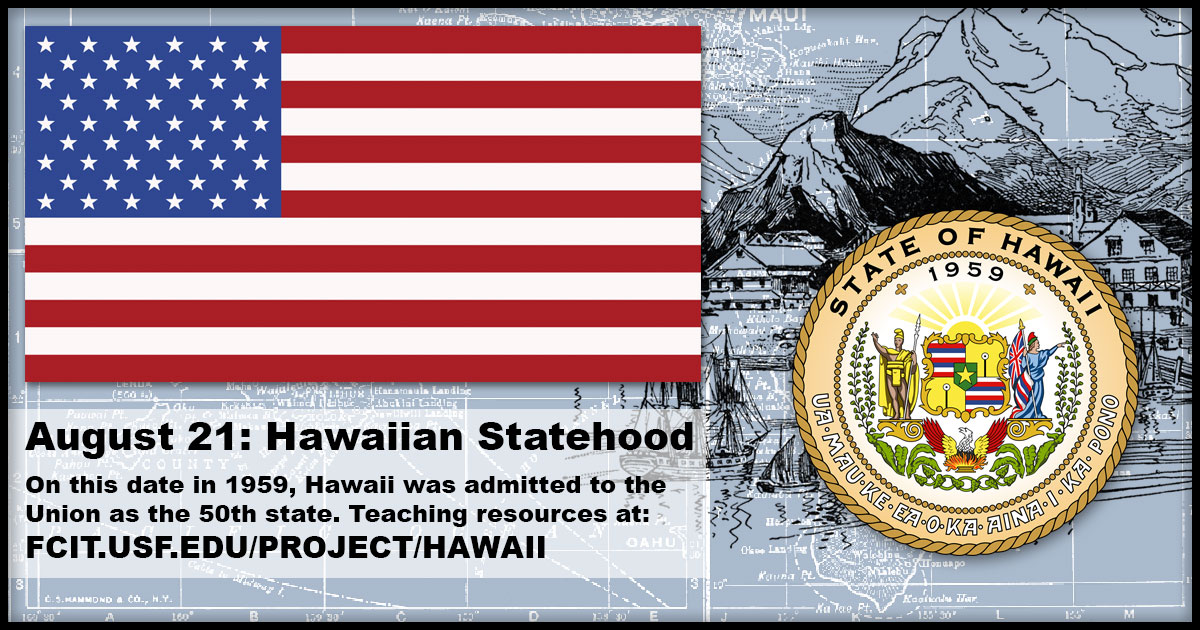
With the plebiscite results confirmed, President Eisenhower officially proclaimed Hawaii the 50th state of the United States on August 21, 1959. This date forever altered the political landscape of both Hawaii and the United States, marking the culmination of a journey that began with ancient Polynesian voyagers and progressed through monarchy, annexation, and territorial status.
Celebrations and the New Era
The declaration of statehood was met with widespread celebrations across the islands. Parades, luaus, and joyous gatherings marked the historic occasion, as residents embraced their new status as full-fledged American citizens. The admission of Hawaii was not just a political event; it was a cultural milestone. It represented the inclusion of a truly unique, multicultural society, with deep Polynesian roots and significant influences from Asia and other parts of the world, into the American fabric.
The first official act of the new state was to elect its congressional representatives and state officials, marking the formal establishment of its government. The capital, Honolulu on the island of Oahu, became the heart of this new political entity, ready to navigate the opportunities and challenges that statehood would bring.
Hawaii Transformed: Statehood’s Enduring Impact
Statehood profoundly reshaped Hawaii, impacting its economy, infrastructure, social structure, and its perception on the global stage. While the change was not without its complexities and ongoing debates, especially concerning native Hawaiian sovereignty, it undeniably ushered in a new era of growth and development.
Economic Growth and Tourism Boom
Perhaps the most significant and visible impact of statehood was the dramatic boom in tourism. Prior to 1959, travel to Hawaii was primarily by ship, a luxury enjoyed by relatively few. With statehood, improved air travel, and the perception of Hawaii as a domestic destination, visitor numbers skyrocketed. Tourists from the mainland United States, Canada, and increasingly from Asia and Australia, flocked to the islands, eager to experience its renowned beauty and the unique aloha spirit.
This surge in tourism transformed Hawaii’s economy from one based primarily on agriculture (sugar and pineapple) and military spending to one heavily reliant on visitor spending. Hotels and resorts proliferated, particularly along the famous Waikiki Beach on Oahu and in emerging resort areas like Wailea on Maui and Poipu on Kauai. This created numerous jobs, stimulated infrastructure development (roads, airports, utilities), and diversified the service sector. The lifestyle of many Hawaiians also shifted, with more opportunities in hospitality, retail, and related industries.
Preserving Culture and Natural Wonders
While statehood brought economic prosperity, it also intensified concerns about the preservation of Hawaiian culture and the protection of its fragile ecosystems. The influx of visitors and new residents put pressure on land, resources, and traditional ways of life. In response, there has been a significant push to recognize, revitalize, and protect native Hawaiian language, practices, and historical sites. Efforts to steward Hawaii’s incredible natural landscapes—from volcanic national parks to coral reefs—also gained momentum, leading to the establishment of numerous protected areas and sustainable tourism initiatives.
Today, many organizations and community groups are dedicated to teaching the Hawaiian language, preserving ancient hula traditions, supporting local farmers and artisans, and advocating for responsible tourism practices. This balance between economic development and cultural/environmental preservation remains a central theme in modern Hawaii, reflecting the deep respect for the land and its heritage inherent in the aloha spirit.
Experiencing Modern Hawaii: A Premier Travel Destination
The legacy of statehood, coupled with its intrinsic allure, has solidified Hawaii’s reputation as one of the world’s most coveted travel destinations. Each island offers its own unique charm and a plethora of experiences for every type of traveler.
Iconic Landmarks and Must-Visit Attractions
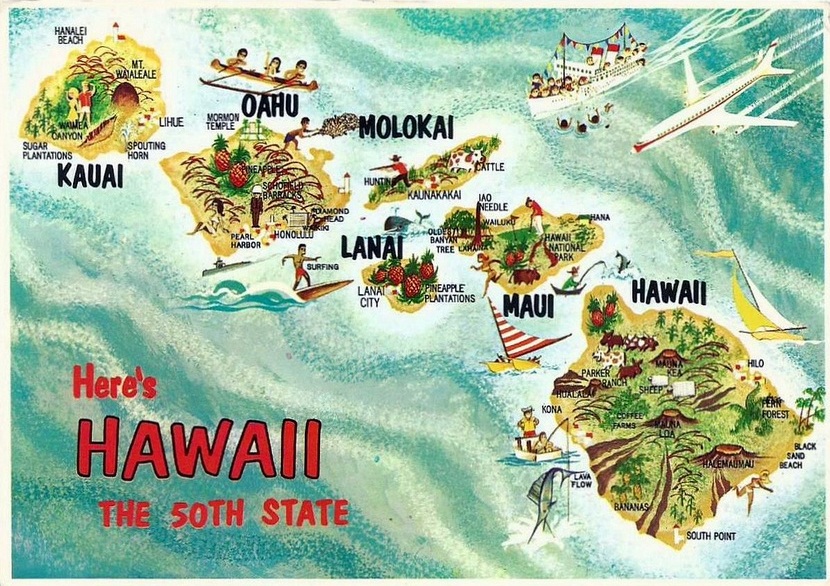
Oahu, often called “The Gathering Place,” is home to the state capital, Honolulu, and iconic sites like Waikiki Beach, renowned for its vibrant energy, surf lessons, and an array of hotels from budget-friendly apartments to luxurious resorts like The Royal Hawaiian or Moana Surfrider, A Westin Resort & Spa, Waikiki Beach. Visitors can hike to the summit of Diamond Head for panoramic views, delve into history at the Pearl Harbor National Memorial, or explore the Iolani Palace, the only official residence of royalty in the United States. The North Shore beckons surfers with its legendary waves, while the Dole Plantation offers a sweet taste of Hawaii’s pineapple history. For shopping and dining, the Ala Moana Center provides a sprawling experience, and for families, Disney’s Aulani Resort in Ko Olina offers a magical stay.
Maui, “The Valley Isle,” captivates with its diverse landscapes. Watch a breathtaking sunrise from the peak of Haleakala National Park, drive the winding and scenic Road to Hana, or simply relax on the golden sands of Kaanapali Beach. The historic whaling town of Lahaina offers charm and history, while the upscale resorts of Wailea and Kapalua, such as the Four Seasons Resort Maui at Wailea, provide unparalleled luxury and amenities.
Kauai, “The Garden Isle,” is a verdant paradise known for its dramatic cliffs and lush rainforests. The majestic Na Pali Coast, best viewed by boat or helicopter, is an unforgettable sight, as is the vast canyon known as the “Grand Canyon of the Pacific,” Waimea Canyon. Resorts like Grand Hyatt Kauai Resort & Spa in Poipu offer luxurious stays amidst this natural splendor.
Hawaii Island, “The Big Island,” is truly a land of contrasts. Home to Hawaii Volcanoes National Park, where visitors can witness active volcanoes and ever-changing landscapes, it also boasts the snow-capped summit of Mauna Kea, a world-class astronomical observatory. The island offers black sand beaches, lush coffee farms in Kona, and vibrant waterfalls near Hilo.
Luxury and Local Experiences: Accommodation and Lifestyle
Hawaii’s appeal lies not only in its natural wonders but also in the diverse range of experiences and accommodations it offers. Whether planning a luxury getaway, a budget-friendly family trip, or a business stay at the Hawaii Convention Center, the islands cater to all. From five-star resorts and boutique hotels to charming vacation rentals and long-term stay apartments, the options are extensive. Upscale properties like The Kahala Hotel & Resort on Oahu and Koloa Landing Resort at Poipu, Autograph Collection on Kauai offer world-class amenities and services, providing an indulgent lifestyle experience.
Beyond the resorts, Hawaii offers immersive cultural tourism, allowing visitors to engage with local communities, sample authentic Hawaiian cuisine (from poke to kalua pig), and participate in traditional activities. Adventure seekers can enjoy surfing, snorkeling, diving, hiking, and ziplining, while those seeking relaxation can unwind on secluded beaches or indulge in spa treatments. The unique blend of American familiarity with exotic Polynesian culture makes Hawaii a fascinating and accessible destination for travelers from San Francisco, California, and beyond.
In conclusion, Hawaii officially became the 50th state of the United States on August 21, 1959. This pivotal moment in history not only cemented Hawaii’s place within the American union but also set the stage for its emergence as a global travel icon. Today, the islands continue to enchant visitors with their unparalleled beauty, vibrant culture, and the enduring spirit of aloha, making every trip an unforgettable experience.
LifeOutOfTheBox is a participant in the Amazon Services LLC Associates Program, an affiliate advertising program designed to provide a means for sites to earn advertising fees by advertising and linking to Amazon.com. Amazon, the Amazon logo, AmazonSupply, and the AmazonSupply logo are trademarks of Amazon.com, Inc. or its affiliates. As an Amazon Associate we earn affiliate commissions from qualifying purchases.