
Idaho, often celebrated as the Gem State, is a land of stunning natural beauty, from the rugged peaks of the Rocky Mountains to the serene shores of its countless lakes and rivers. Its diverse landscapes draw adventurers, nature lovers, and those seeking tranquil escapes. However, beyond its scenic vistas and vibrant cities, Idaho presents a unique geographical quirk that is crucial for anyone planning to visit or reside there: it spans two distinct time zones. This isn’t just a minor detail; understanding Idaho’s dual time zone system is fundamental for seamless travel, efficient business operations, and a harmonious experience of local life and culture.
For travelers mapping out their itineraries, anticipating the shift in time is as important as packing the right gear for a hike through the Sawtooth Mountains or a scenic drive along the Snake River Plain. Whether booking accommodation, scheduling attractions, or simply coordinating with friends and family, the time zone boundary can significantly impact your plans. This guide will delve into the specifics of Idaho’s time zones, their historical context, and practical implications, ensuring you’re well-prepared for your next adventure in this remarkable United States state.
The Dual Nature of Idaho’s Time Zones
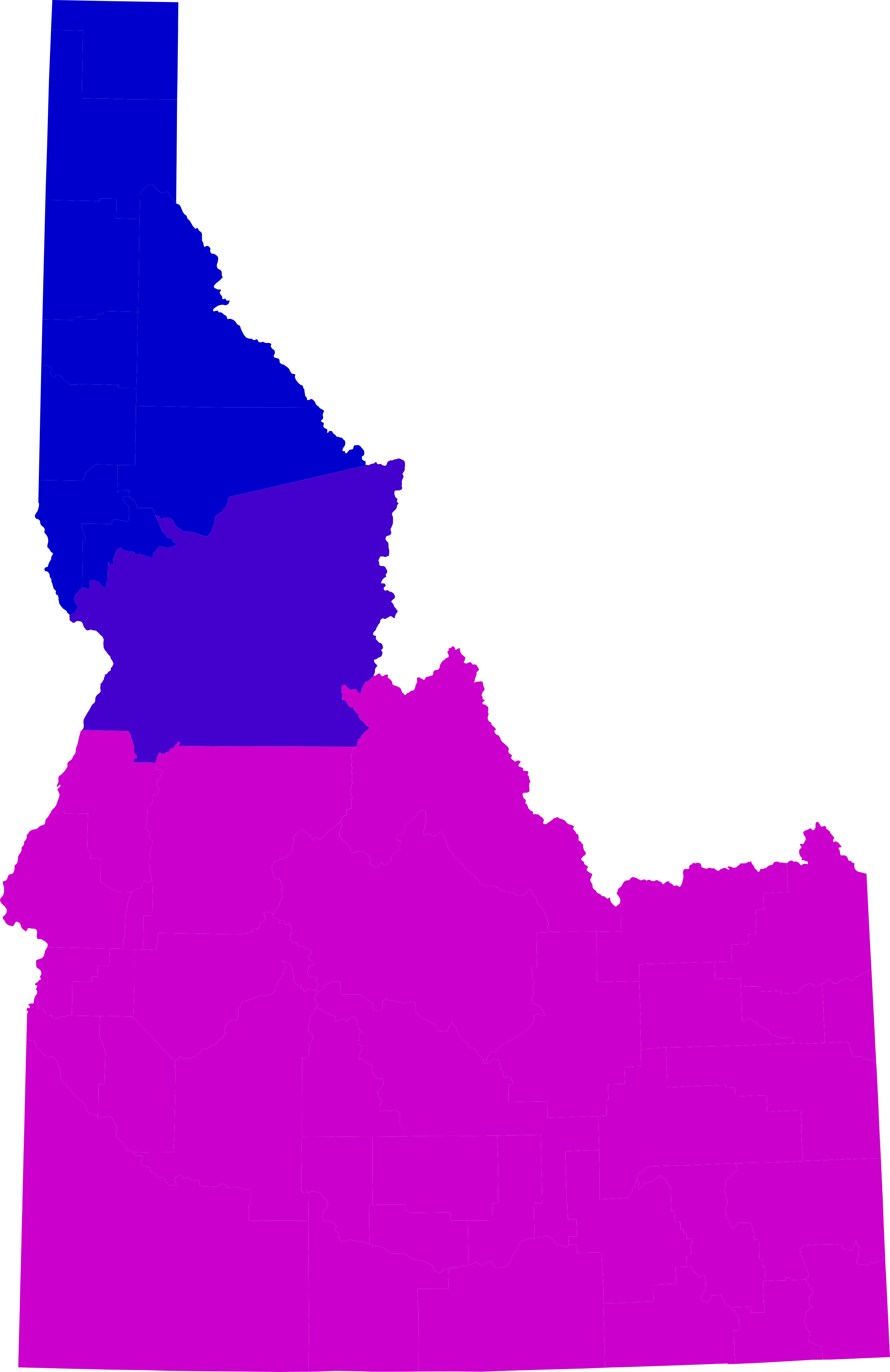
The state of Idaho is uniquely divided into two primary time zones: the Pacific Time Zone (PT) and the Mountain Time Zone (MT). This geographical split can initially seem confusing, but it’s rooted in practicality and the state’s elongated north-south orientation, as well as its historical and economic ties to neighboring states. The delineation creates a fascinating patchwork across the state, with significant implications for anyone traveling or conducting business within Idaho.
Pacific Time Zone in the Panhandle
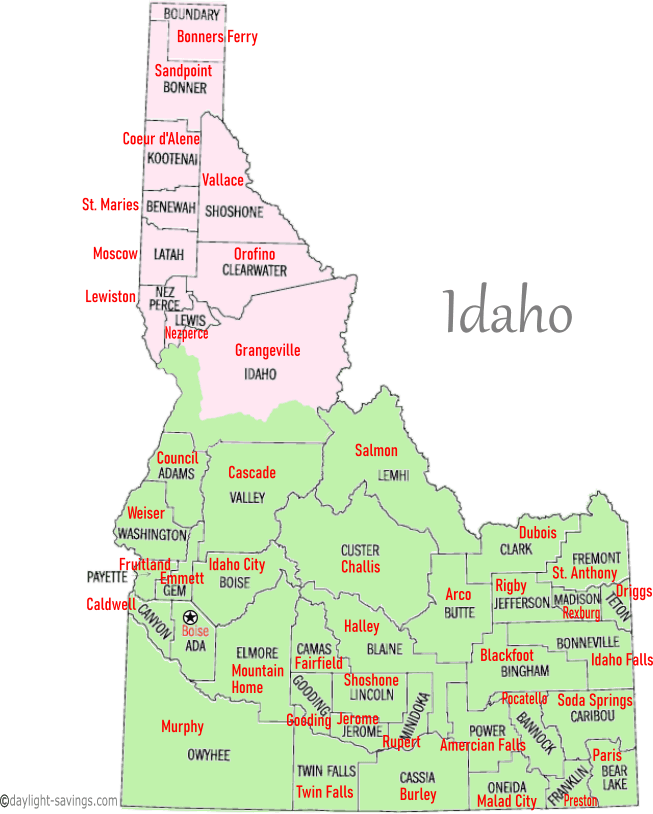
The northernmost section of Idaho, often referred to as the Idaho Panhandle, operates on Pacific Time. This region includes popular destinations such as Coeur d’Alene, Sandpoint, and Lewiston. The reason for this alignment is largely due to its geographical and economic proximity to Washington State, particularly the metropolitan area of Spokane. Many residents in the Idaho Panhandle commute to Spokane for work, shopping, or air travel, making a shared time zone a logical choice for seamless daily life and commerce.
When Daylight Saving Time is in effect, this area observes Pacific Daylight Time (PDT). During standard time, it switches to Pacific Standard Time (PST). This consistency with its western neighbor ensures that travel across the border, whether for a flight from Spokane International Airport or a visit to the shops in Coeur d’Alene, is simplified without the constant need to adjust watches. Major transportation arteries like Interstate 90 and U.S. Route 95 traverse this region, connecting communities within the Pacific Time Zone and reinforcing the common rhythm.
Mountain Time Zone Across Most of the State
The vast majority of Idaho, including its capital city Boise, along with other major hubs like Sun Valley, Idaho Falls, and Pocatello, falls within the Mountain Time Zone. This eastern two-thirds of the state aligns with its eastern neighbors such as Montana, Wyoming, and Utah, reflecting similar historical and economic ties. Many residents in eastern Idaho have strong connections to these states, including access to major airports and national parks like Yellowstone National Park and Grand Teton National Park.
When Daylight Saving Time is active, this expansive region observes Mountain Daylight Time (MDT). During the remainder of the year, it operates on Mountain Standard Time (MST). This means that during Daylight Saving Time, the Mountain Time Zone is one hour ahead of the Pacific Time Zone, and this one-hour difference persists throughout the year as both zones observe Daylight Saving Time. For example, when it’s 10:00 AM in Coeur d’Alene (Pacific), it’s 11:00 AM in Boise (Mountain).
The Time Zone Line: Where the Clocks Change
The dividing line between the Pacific and Mountain Time Zones in Idaho is primarily defined by the Salmon River. North of the Salmon River, most areas fall into the Pacific Time Zone. Specifically, the counties of Benewah County, Kootenai County, Shoshone County, Boundary County, Bonner County, Latah County, Clearwater County, Nez Perce County, and Lewis County operate on Pacific Time. Idaho County is a bit unique; a small portion of it north of the Salmon River adheres to Pacific Time, while the bulk of the county, south of the river, is in the Mountain Time Zone. All other counties in the state are firmly in the Mountain Time Zone.
The federal government, specifically the US Department of Transportation, sets these time zone boundaries. While historical ties to neighboring states influenced the initial choices, the convenience for commerce, transportation, and communication plays a critical role in maintaining this division. The Salmon River provides a natural and easily identifiable demarcation, making it easier for locals and travelers alike to determine which time zone they are in.
Navigating Time Zones as a Traveler
Understanding Idaho’s time zones is paramount for any traveler. Failing to account for the one-hour shift can lead to missed appointments, delayed departures, or simply unnecessary stress. From booking flights to planning local excursions, every aspect of your travel experience can be influenced by which side of the time zone divide you find yourself on.
Planning Your Idaho Itinerary: A Time-Sensitive Endeavor
When meticulously crafting your Idaho travel itinerary, the time zone boundary demands careful consideration. Imagine flying into Spokane International Airport (Pacific Time) for a road trip that starts in Coeur d’Alene (Pacific Time) but eventually leads you to Boise (Mountain Time) or Sun Valley (Mountain Time). You’ll gain an hour when heading east and lose an hour when heading west. This can impact everything from your arrival time at a scheduled tour to your dinner reservations.
For example, if you plan to visit Silverwood Theme Park in Athol (Pacific Time) and then drive south to McCall (Mountain Time) for a lakeside retreat, remember that McCall will be an hour ahead. What might seem like a short afternoon drive could feel shorter if you forget to adjust your clock, potentially causing you to arrive late for a pre-booked activity like white-water rafting on the Payette River. Always double-check event times, attraction opening hours, and transportation schedules, noting the specific time zone they operate in.
Accommodation and Bookings Across the Divide
Booking hotels, resorts, or any form of accommodation requires vigilance regarding time zones. Check-in and check-out times are strictly adhered to, and arriving an hour late because of a forgotten time change can be frustrating, especially after a long day of travel. A hotel reservation made in Post Falls (Pacific Time) for 3:00 PM will be an hour earlier than 3:00 PM if you’re driving from Boise (Mountain Time).
For those indulging in luxury travel, booking a spa treatment at The Coeur d’Alene Resort in Coeur d’Alene requires adherence to Pacific Time. Conversely, if your itinerary includes a stay at a charming inn near Sun Valley, you’ll be operating on Mountain Time. Always confirm the local time zone of your booking location, especially when dealing with online travel agencies that might default to your current location’s time. This vigilance extends to any pre-booked experiences, from guided fishing trips on Lake Pend Oreille to lift tickets at Bogus Basin Mountain Recreation Area.

Daylight Saving Time in Idaho
Both the Pacific Time Zone and the Mountain Time Zone within Idaho observe Daylight Saving Time. This means that in the spring, clocks “spring forward” an hour, and in the fall, they “fall back” an hour. Crucially, the one-hour difference between the two zones remains constant throughout the year.
- Spring Forward: When Daylight Saving Time begins (typically the second Sunday in March), Pacific Standard Time (PST) becomes Pacific Daylight Time (PDT), and Mountain Standard Time (MST) becomes Mountain Daylight Time (MDT). The difference remains one hour.
- Fall Back: When Daylight Saving Time ends (typically the first Sunday in November), PDT reverts to PST, and MDT reverts to MST. The difference remains one hour.
This consistency simplifies things in one regard: you don’t have to worry about the time difference between the zones changing with the seasons. However, you still need to be aware of the overall shift in time relative to other parts of the United States or the world, especially if you’re coordinating with people outside of Idaho. Most modern smartphones and devices automatically adjust to local time, but it’s always wise to manually confirm, especially after crossing the time zone boundary in Idaho.
Impact on Tourism and Lifestyle
The dual time zone system in Idaho extends its influence beyond mere travel logistics, subtly shaping the tourism landscape and the daily rhythms of local life. Understanding these nuances can enrich your appreciation of Idaho’s distinct regional identities and help you immerse yourself more fully in its local culture.
Experiences and Attractions in Each Time Zone
Idaho’s diverse attractions are spread across both time zones, each offering unique experiences tailored to its geography and cultural ties. In the Pacific Time Zone, the Idaho Panhandle boasts attractions like the pristine waters of Lake Coeur d’Alene and the world-class skiing at Schweitzer Mountain Resort near Sandpoint. Visitors might explore the deep gorges of Hells Canyon from Lewiston or delve into history at Old Mission State Park near Cataldo. For family trips, Silverwood Theme Park is a major draw. When planning visits to these landmarks, always ensure your timing aligns with their Pacific Time operating hours.
Moving into the much larger Mountain Time Zone, the possibilities for exploration expand dramatically. In Boise, you can explore the World Center for Birds of Prey or catch a game at Boise State University. Eastward, in Idaho Falls, the Museum of Idaho offers insights into the region’s past, while Pocatello is home to Zoo Idaho and Idaho State University. Natural wonders abound, from the dramatic lava flows of Craters of the Moon National Monument to the majestic Shoshone Falls near Twin Falls, or the unique geological formation of Balanced Rock in Castleford. For those on a luxury travel budget, the famed ski slopes and upscale amenities of Sun Valley operate on Mountain Time.
Coordination for multi-region tours, such as a drive from the Idaho Panhandle National Forests to a camping trip in Ponderosa State Park near McCall, will inevitably involve a time change. Being aware of this ensures that your experience remains smooth, allowing you to maximize your time exploring Idaho’s rich array of attractions.
Local Culture and Daily Rhythms
The time zone division also subtly influences local culture and daily rhythms. Businesses, schools, and government offices operate according to their respective local times, affecting everything from communication patterns to event scheduling. For residents, particularly those who live near the time zone boundary in Idaho County or those with family and business ties across the divide, constantly being aware of the time difference is a part of everyday life. This means that a casual phone call between Lewiston (Pacific) and Boise (Mountain) requires a quick mental calculation.
For visitors, observing these local patterns can be part of the immersive experience. Understanding why a local diner in Grangeville (Mountain Time) might close later than one in Orofino (Pacific Time, just across the Clearwater River from Idaho County) in terms of daylight hours can offer insights into the lifestyle adaptations within each zone. Whether you’re planning a family trip with specific meal times or a business stay requiring timely conference calls, the local time zone dictates the pace.
This dual system also highlights Idaho’s unique geographical position, bridging the westernmost Pacific states like Oregon and Washington with the inner Mountain West states like Wyoming, Montana, and Utah, and even Nevada. This transitional identity is part of what makes Idaho such a diverse and intriguing destination, with its distinct time zones serving as a daily reminder of its multifaceted connections.
In conclusion, while the dual time zone system in Idaho might seem like an extra detail to remember, it’s an integral part of understanding the state’s geography, economy, and culture. For travelers, hotels, and tourism providers, a keen awareness of whether you are in Pacific Time or Mountain Time is crucial for a smooth and enjoyable experience. By keeping this in mind, you can navigate Idaho’s breathtaking landscapes and vibrant communities without missing a beat, ensuring your adventure is timed to perfection.
LifeOutOfTheBox is a participant in the Amazon Services LLC Associates Program, an affiliate advertising program designed to provide a means for sites to earn advertising fees by advertising and linking to Amazon.com. Amazon, the Amazon logo, AmazonSupply, and the AmazonSupply logo are trademarks of Amazon.com, Inc. or its affiliates. As an Amazon Associate we earn affiliate commissions from qualifying purchases.