
Perched majestically on Fifth Avenue in the heart of Manhattan, Trump Tower stands as an indelible landmark in the iconic New York City skyline. More than just a skyscraper, it represents a multifaceted narrative of luxury, ambition, and a complex ownership structure that often sparks curiosity. For travelers exploring New York City’s renowned architectural marvels, discerning the true ownership of such an prominent edifice offers a deeper appreciation for the city’s intricate real estate landscape.
Beyond its status as a tourist attraction, Trump Tower encapsulates various facets of urban life relevant to our interests: from its opulent suites and unique accommodation options to its role as a hub for business and a testament to luxury lifestyle. This article delves into the intriguing question of who truly owns Trump Tower, exploring its history, its distinct design, and its enduring presence as a global symbol in one of the world’s most dynamic cities. Understanding its ownership is key to appreciating this landmark’s enduring legacy and its place within the fabric of New York City life.

The Genesis and Grandeur of an Iconic Landmark
Before delving into the intricacies of its ownership, it’s essential to understand the vision that brought Trump Tower to life and the architectural features that have made it instantly recognizable. Its origin story is as compelling as its shimmering facade, rooted in the ambitious aspirations of its developer.
A Vision Realized: Donald Trump’s Ambitious Project
The story of Trump Tower begins in the early 1980s, conceived by real estate magnate Donald Trump. At the time, Donald Trump was rapidly building his empire, and this project was designed to be a definitive statement of luxury and power. Constructed on the site of the former Bonwit Teller department store, the development faced several challenges, including the demolition of historic Art Deco reliefs that drew considerable public criticism. Nevertheless, construction forged ahead, culminating in the building’s completion in 1983.
Situated at 721-725 Fifth Avenue, the tower’s prime location placed it amidst some of the most prestigious retail and commercial establishments in the world, making it an immediate focal point. From its inception, Trump Tower was envisioned as a mixed-use development, a revolutionary concept for its time, combining high-end retail spaces, commercial offices, and ultra-luxury residential condominiums. This innovative approach allowed for a diverse range of occupants and revenue streams, setting a precedent for future urban developments and contributing to its unique ownership structure. It wasn’t merely a residential building or an office block; it was a vertical village, designed to cater to an elite clientele seeking unparalleled convenience and status.

Architectural Grandeur and Design
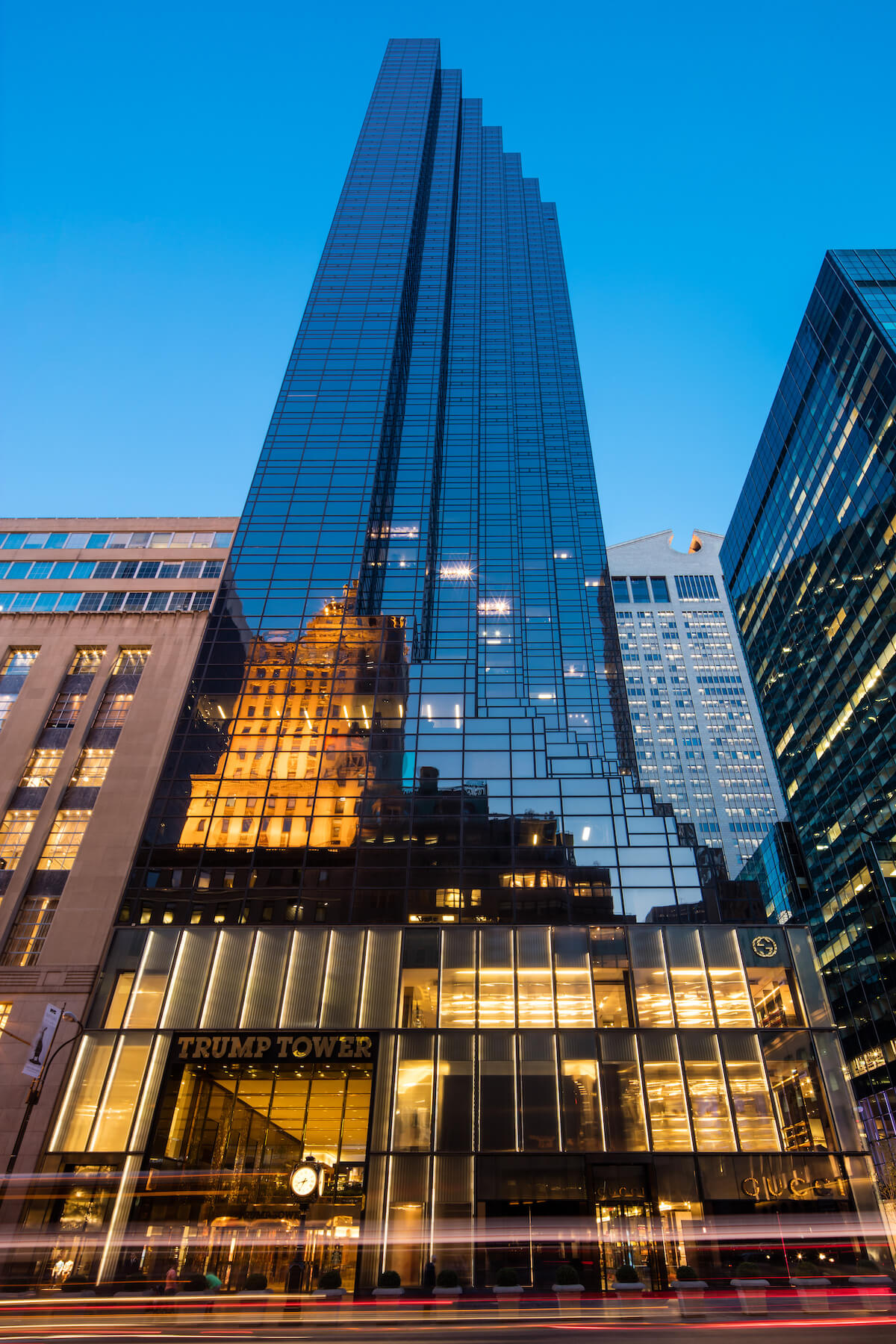
The architectural design of Trump Tower is undeniably distinctive, characterized by its dark, bronzed-glass facade and a series of dramatic setbacks that ascend to its peak. Designed by Der Scutt of Swanke Hayden Connell Architects, the building reaches a height of 664 feet (202 meters) and comprises 58 stories, although it is often marketed as having 68 floors due to a re-numbering scheme that skips several intermediate floor numbers. This impressive stature ensures it remains a significant presence on the New York City skyline, standing out even amongst a forest of skyscrapers.
Upon entering, visitors are greeted by a breathtaking five-story atrium, an interior spectacle featuring shimmering pink-orange marble, polished brass, and a dramatic 60-foot waterfall cascading into a reflecting pool. This lavish public space, accessible from Fifth Avenue, serves as both a welcoming entrance and a luxury retail destination, housing boutiques that cater to the most discerning shoppers. The use of premium materials and meticulous attention to detail throughout the common areas sets a precedent for the luxury experienced within its residential and office spaces. The design successfully marries a sense of classical grandeur with modern amenities, offering a lavish experience that defines the luxury lifestyle often sought in New York City. This blend of public accessibility and private exclusivity is a hallmark of Trump Tower, making it a truly unique landmark.
Unraveling the Ownership Structure of Trump Tower
The question of “who owns Trump Tower?” doesn’t have a simple, single answer. Unlike a conventional single-owner property, Trump Tower operates as a condominium, a complex legal structure that distributes ownership across multiple entities and individuals. This model is common in high-value, mixed-use developments, allowing for diverse investment and private ownership within a unified physical structure.
A Condominium Complex: Diverse Ownership
At its core, Trump Tower is a condominium association, meaning different sections and individual units within the building are owned independently. This decentralized ownership is crucial to understanding its financial and operational dynamics. It’s not a single entity that possesses the entire building; rather, it’s a mosaic of owners, each holding title to a specific part of the edifice. This structure allows for a blend of residential, commercial, and retail uses, each segment potentially having a different owner or set of owners.
The ownership spectrum within Trump Tower can be broadly categorized into three main types:
- The Trump Organization: This entity, owned by Donald Trump and his family, retains significant portions of the tower. This includes the valuable street-level retail spaces, which command some of the highest rents on Fifth Avenue, several floors of office space, and the opulent penthouse that served as Donald Trump’s primary residence before and during his presidency. These holdings represent a substantial portion of the building’s overall value and strategic control. The retail spaces, in particular, are key assets, hosting luxury brands and drawing considerable foot traffic, directly contributing to the tower’s prestige and economic viability.
- Individual Unit Owners: The majority of the residential apartments in Trump Tower are privately owned by individuals or corporations. These units range from luxurious studios to expansive multi-bedroom suites, each purchased and managed by its respective owner. Over the years, many high-profile celebrities, business executives, and international dignitaries have owned or resided in these exclusive condominiums, contributing to the building’s allure and a sense of an elite community. The residential portion is a true testament to luxury accommodation in New York City, offering residents unparalleled views, privacy, and upscale amenities.
- Commercial Tenants: Beyond the spaces owned by The Trump Organization or private individuals, various companies lease office space within the tower. These tenants represent a diverse array of industries, from financial services to media companies, further cementing Trump Tower’s status as a vibrant commercial hub. These leased spaces contribute significantly to the building’s operational income and ensure a steady stream of activity throughout the weekdays.
This layered ownership structure means that while The Trump Organization remains deeply associated with the building and holds substantial assets within it, it does not own every square foot. Instead, it coexists with a multitude of private owners and commercial lessees, all contributing to the building’s dynamic ecosystem.
The Role of The Trump Organization
Despite the fragmented ownership, The Trump Organization plays a pivotal and overarching role in the management and operations of Trump Tower. Through its various subsidiaries and management arms, it is responsible for the day-to-day running of the building, including maintenance, security, and the enforcement of condominium rules and regulations. This management role extends to all common areas and ensures a consistent level of service and luxury for all residents and tenants, regardless of who owns their specific unit.
The organization’s continued involvement is crucial for maintaining the tower’s prestigious image and high standards. From the immaculate upkeep of the atrium to the sophisticated security systems, The Trump Organization oversees the operational aspects that uphold Trump Tower’s reputation as a premier address. This centralized management provides a unified experience for residents and visitors, despite the multiple property owners within the building. Furthermore, its ownership of significant income-generating assets, such as the retail arcade and prime office floors, gives The Trump Organization a strong vested interest in the tower’s overall success and profitability. The brand association itself also adds considerable value, drawing both high-end tenants and luxury travelers interested in its legacy.
Trump Tower as a Landmark and Accommodation Destination
Beyond its complex ownership, Trump Tower transcends its physical form to become a cultural landmark and a symbol of luxury lifestyle in New York City. Its strategic location and historical significance make it a point of interest for both local residents and global travelers.
Beyond Ownership: A Symbol on Fifth Avenue
Trump Tower’s status as a New York City landmark is undeniable. Its prime position on Fifth Avenue, directly across from the iconic Tiffany & Co. flagship store and a short walk from Central Park and Rockefeller Center, ensures it’s perpetually in the public eye. For many, it represents the audacious spirit of 1980s real estate development and the enduring allure of New York City luxury.
Its political significance grew exponentially when Donald Trump launched his presidential campaign from the building and subsequently maintained it as a key residence and headquarters. This period transformed Trump Tower from merely a luxury building into a site of global political interest, drawing protesters, supporters, and media from around the world. Even after his presidency, the building remains a focal point for public discourse and an enduring symbol of a particular era in American politics. This public visibility and historical weight have cemented its place in the pantheon of New York City’s most recognized structures, making it a destination that sparks conversations and curious glances from passersby.
Residential Living and Luxury Lifestyle
For those seeking an embodiment of luxury travel and an opulent lifestyle, Trump Tower’s residential offerings are among the most exclusive in New York City. The condominiums within the tower are renowned for their spacious layouts, high ceilings, panoramic city views (including glimpses of Central Park), and top-tier finishes. Residents enjoy access to a suite of premium amenities, which typically include a dedicated concierge service, round-the-clock security, a modern fitness center, and sometimes even private dining options or valet parking.
Living in Trump Tower is synonymous with a certain lifestyle—one of convenience, prestige, and unparalleled access to Manhattan’s best. While direct short-term rentals in private units might be subject to strict condominium rules, the overall ambiance aligns perfectly with the expectations of discerning travelers or business professionals seeking long-term luxury accommodation in the city. The blend of high-end retail, corporate offices, and lavish homes within a single building creates a self-contained, upscale environment that appeals to those who value exclusivity and impeccable service. It truly represents the pinnacle of urban luxury living, making it an aspirational address for many.
Visiting Trump Tower: A Guide for Travelers
For visitors to New York City, Trump Tower offers more than just a glimpse of a famous building; it provides an opportunity to experience a piece of the city’s unique cultural and commercial tapestry. While access to residential or private office floors is restricted, the public areas are openly welcoming, inviting exploration.
Exploring the Public Spaces
The ground floor and lower levels of Trump Tower feature a publicly accessible atrium, which is a key highlight for visitors. This magnificent space, with its signature pink marble and indoor waterfall, offers a luxurious reprieve from the bustling streets of Fifth Avenue. Within the atrium, visitors can browse a selection of high-end boutiques, although many of the original luxury stores have changed over time. There are also cafes and eateries where one can pause for a coffee or a light meal, soaking in the opulent surroundings.
Tips for visiting include:
- Security: Due to its past as a presidential residence and its high-profile status, security at Trump Tower is exceptionally tight. Expect visible security personnel and potentially bag checks. Respect their directives for a smooth visit.
- Accessibility: The atrium is fully accessible during business hours, making it an easy stop on any Fifth Avenue walking tour.
- Photography: Photography is generally permitted in the public atrium, allowing visitors to capture the unique architectural details and opulent decor.
Its proximity to other major New York City attractions further enhances its appeal as a stop on a travel itinerary. Just a few blocks away, you’ll find St. Patrick’s Cathedral, Rockefeller Center, and the luxury shopping mecca of Fifth Avenue, featuring flagship stores like Louis Vuitton and Gucci. Incorporating Trump Tower into a wider exploration of Midtown Manhattan provides a comprehensive view of the city’s iconic landmarks and vibrant commercial heart.
Nearby Accommodation and Experiences
While Trump Tower itself primarily offers privately owned residences rather than a traditional hotel, the surrounding area boasts some of New York City’s most prestigious hotels, catering to those who wish to experience the epitome of luxury travel. For travelers seeking an upscale stay in close proximity, options abound.
Renowned establishments such as The Peninsula New York, St. Regis New York, and the Plaza Hotel are all within a short walking distance. These hotels offer lavish suites, world-class amenities, gourmet dining, and impeccable service, providing an ideal base for exploring Midtown Manhattan‘s attractions. Each offers a unique blend of historical charm and modern luxury, ensuring a memorable accommodation experience.
Beyond hotels, the neighborhood around Trump Tower is a veritable playground for luxury lifestyle experiences. From Michelin-starred restaurants to high-end department stores and exclusive art galleries, visitors can immerse themselves in New York City’s finest offerings. Attending a Broadway show, strolling through Central Park, or visiting world-class museums like the Museum of Modern Art are all easily accessible, making the area around Trump Tower a prime destination for a truly unforgettable New York City experience. Whether you’re interested in shopping, dining, or simply soaking in the vibrant atmosphere, this district promises an enriching journey.
Conclusion
The question “Who owns Trump Tower in New York?” reveals a tapestry far more intricate than a simple single proprietor. It’s a condominium complex where significant portions, including key retail spaces and office floors, are held by The Trump Organization, while numerous individual owners and corporations possess the luxurious residential apartments and other commercial units. The Trump Organization further maintains a crucial role in the building’s management and operational upkeep, ensuring its status as a premier address.
More than just a property, Trump Tower stands as a prominent New York City landmark, a beacon of luxury lifestyle, and a testament to ambitious architectural vision. Its striking design, opulent interiors, and strategic location on Fifth Avenue make it a captivating destination for travelers and a symbol of Manhattan’s enduring allure. Whether viewed as an architectural marvel, a political touchstone, or a hub of high-end living, Trump Tower continues to be an integral and fascinating component of the vibrant urban landscape, inviting curiosity and admiration from all who encounter it. Its complex ownership structure only adds another layer to the story of this iconic New York City edifice.
LifeOutOfTheBox is a participant in the Amazon Services LLC Associates Program, an affiliate advertising program designed to provide a means for sites to earn advertising fees by advertising and linking to Amazon.com. Amazon, the Amazon logo, AmazonSupply, and the AmazonSupply logo are trademarks of Amazon.com, Inc. or its affiliates. As an Amazon Associate we earn affiliate commissions from qualifying purchases.