
Nestled between the shimmering waters of Puget Sound and the lush evergreen forests of the Pacific Northwest, Seattle stands today as a vibrant hub of technology, culture, and breathtaking natural beauty. Its skyline, famously punctuated by the iconic Space Needle, hints at a city that constantly looks towards the future. Yet, to truly understand the spirit of Seattle, one must delve into its rich, often tumultuous, past. The story of Seattle’s founding is not just a historical account; it’s a narrative that shapes its unique character, influences its urban landscape, and provides a compelling backdrop for any traveler’s experience. From the intrepid pioneers who first set foot on its shores to the tech giants that define its modern economy, the journey of Seattle is a testament to resilience, innovation, and an unwavering connection to its natural surroundings.
The question “When was Seattle founded?” opens a window into an era of bold exploration and the determined establishment of new communities in the vast expanse of the then-uncharted American West Coast. For those planning a visit, understanding this historical foundation enriches every aspect of the travel experience, from appreciating the architecture of Pioneer Square to savoring the local cuisine in districts that once housed nascent industries. It’s a story of transformation, from a small logging settlement to a global city, profoundly impacted by indigenous heritage, economic booms, and a pioneering spirit that continues to define its lifestyle.
The Pioneer Spirit: The Early Days of Seattle
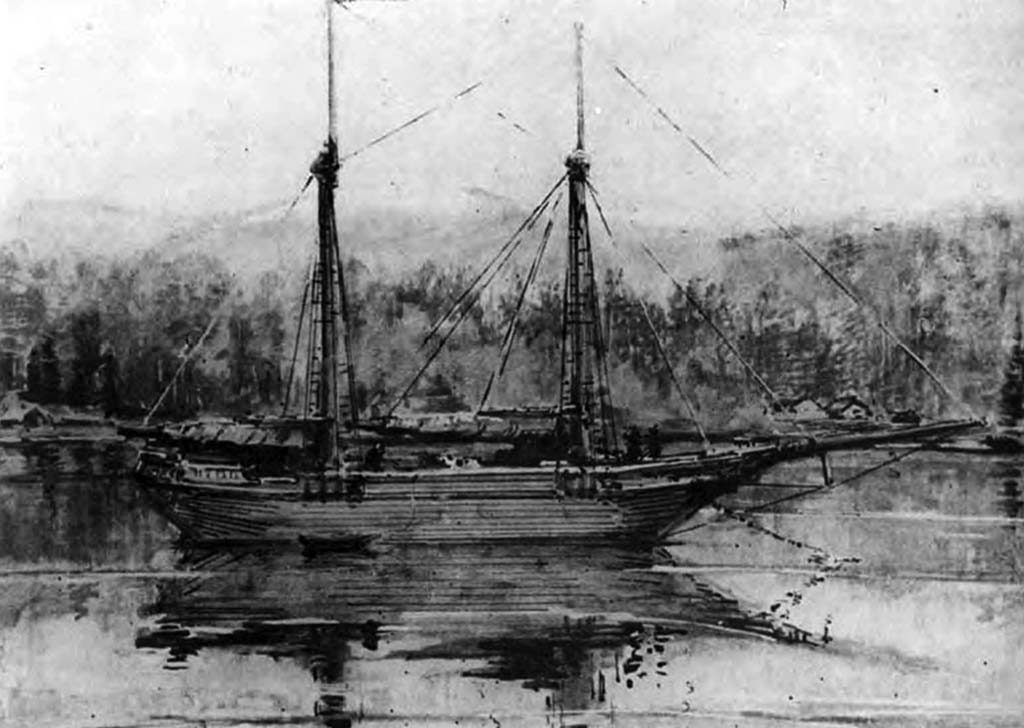
The official founding of Seattle can be traced back to the arrival of the Denny Party on November 13, 1851. This small group of American pioneers, having journeyed across the continent and down the West Coast from Illinois and Oregon, landed at Alki Point, a small peninsula jutting into Elliott Bay. Their initial landing spot, known affectionately as “New York-Alki” (with “Alki” being a Chinook Jargon word meaning “by and by” or “eventually”), was intended to be the site of a great city. However, the shallow waters at Alki Point proved unsuitable for the deep-water port they envisioned, which was crucial for their plans to establish a timber industry.
Their arrival marked a pivotal moment in the history of what would become Washington State. Before the Denny Party, the area was, of course, already inhabited for thousands of years by various indigenous peoples, most notably the Suquamish and Duwamish tribes. Their presence and deep connection to the land are integral to Seattle’s identity and history, a legacy honored through various cultural institutions and preserved natural spaces that tourists can explore today. Understanding this pre-colonial history enriches the experience of visiting Seattle, allowing travelers to connect with the land’s enduring heritage.
The Arrival of the Denny Party
The journey of the Denny Party was typical of the pioneering spirit that defined the expansion of the United States in the 19th century. Driven by the promise of fertile land and new opportunities, they endured significant hardships to reach their destination. Among the key members were Arthur A. Denny, David T. Denny, Charles Terry, and the families accompanying them. Upon their arrival at Alki Point, they quickly set about building rudimentary shelters, battling the elements and the isolation of the frontier. The harsh realities of pioneer life meant that initial accommodation was basic, a stark contrast to the luxurious hotels and comfortable suites available to modern travelers in Seattle.
This initial settlement period, though brief at Alki Point, laid the groundwork for the future city. Travelers interested in this foundational era can visit Alki Beach Park today, where a monument commemorates the landing of the Denny Party. It’s a popular spot for leisure, offering stunning views of the Seattle skyline and Puget Sound – a tangible link between the city’s humble beginnings and its modern grandeur. This area exemplifies how historical landmarks can be seamlessly integrated into modern travel experiences, offering both educational value and recreational enjoyment.
From Duwamps to Seattle: A City Takes Shape
Recognizing the limitations of Alki Point, a portion of the Denny Party, led by Arthur A. Denny and his family, moved across Elliott Bay in the spring of 1852 to the deep-water harbor on the eastern shore. This new location, with its ideal natural port and abundant timber resources, became the true birthplace of modern Seattle. Initially, the nascent settlement was referred to as “Duwamps” or “Duwamish,” referencing the indigenous Duwamish River and tribe.
However, a more lasting name soon emerged. In 1852 or 1853, after discussions with the local Duwamish and Suquamish tribal leader, the settlers chose to honor Chief Seattle (Si’ahl), a respected figure known for his wisdom and advocacy for his people. This decision, influenced by settler David S. Maynard, was a gesture of respect and, perhaps, a strategic move to foster better relations between the settlers and the indigenous population. The name “Seattle” stuck, forever linking the city’s identity to its native heritage. This is a crucial piece of local culture that modern tourism emphasizes, encouraging visitors to learn about the rich history of the land’s original inhabitants. Today, various tours and cultural centers offer insights into Chief Seattle’s legacy and the enduring culture of the Suquamish and Duwamish tribes, enriching the travel experience beyond mere sightseeing.
Milestones and Metamorphosis: Seattle’s Growth Story
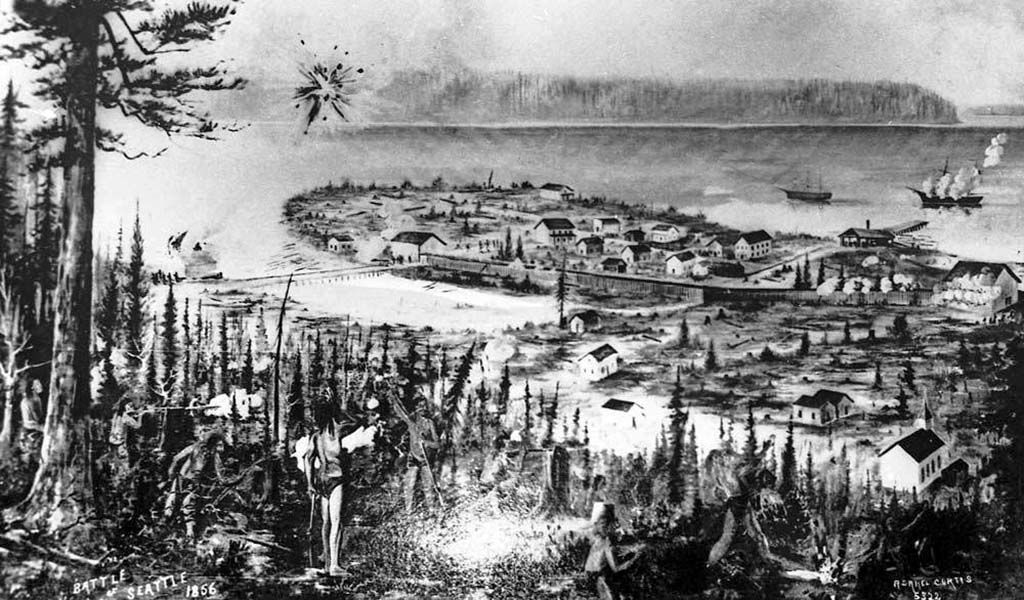
The initial years were challenging, marked by hard work, resourcefulness, and occasional conflicts, such as the Seattle Indian War and the Battle of Seattle in 1855-1856. Yet, the strategic location and rich natural resources ensured Seattle’s survival and eventual prosperity. The city quickly established itself as a crucial port and logging center, attracting more settlers and businesses. This period of rapid expansion laid the economic and physical foundations for the metropolitan area we know today, creating many of the landmarks and historic districts that are now popular tourist attractions.
Understanding these formative years provides context for Seattle’s resilience and its ability to reinvent itself time and again. It’s a narrative that appeals to those interested in the history of industry, urban development, and the human capacity for growth. Travelers exploring Pioneer Square can literally walk through the layers of this history, experiencing the architectural legacy of a city built and rebuilt with ambition.
Fueling the Future: Early Industries and Economic Boom
Seattle’s early economy was built on the vast timber resources of the surrounding region. The establishment of Henry Yesler’s steam-powered sawmill in 1853 was a game-changer, providing employment and attracting further investment. Lumber was shipped down the West Coast to rapidly growing cities like San Francisco in California, fueling Seattle’s growth. Coal mining also emerged as a significant industry, with discoveries near Lake Washington providing another vital commodity for export.
The most transformative event for Seattle’s economic boom, however, was the Klondike Gold Rush of 1897. While the gold itself was in Alaska and the Yukon Territory of Canada, Seattle strategically positioned itself as the primary outfitting and transportation hub for prospectors heading north. The city’s newspapers, particularly the Seattle Post-Intelligencer, famously sensationalized the gold discovery, luring thousands through its port. Businesses boomed, offering everything from supplies and provisions to lodging and transport services. This period of rapid wealth and population influx fundamentally reshaped the city, leaving behind a legacy of grand architecture and a robust commercial district.
For tourists, the impact of the Klondike Gold Rush is still very much alive. The Klondike Gold Rush National Historical Park in Pioneer Square offers fascinating exhibits detailing Seattle’s role in this epic event. Exploring this landmark is a deep dive into American history, appealing to those who appreciate stories of adventure and fortune-seeking. Many boutique hotels and charming bed-and-breakfasts in and around Pioneer Square offer a taste of historical accommodation, blending classic charm with modern amenities, perfect for travelers seeking an authentic local experience.
A City Reborn: The Great Seattle Fire and Reconstruction
Just before the economic explosion of the Klondike Gold Rush, Seattle faced a catastrophic event that, paradoxically, led to its modernization. On June 6, 1889, the Great Seattle Fire engulfed much of the downtown area, destroying over 25 city blocks, including the entire business district and most of its wooden structures. While a devastating blow, the fire also presented an unprecedented opportunity for rebuilding and urban planning.
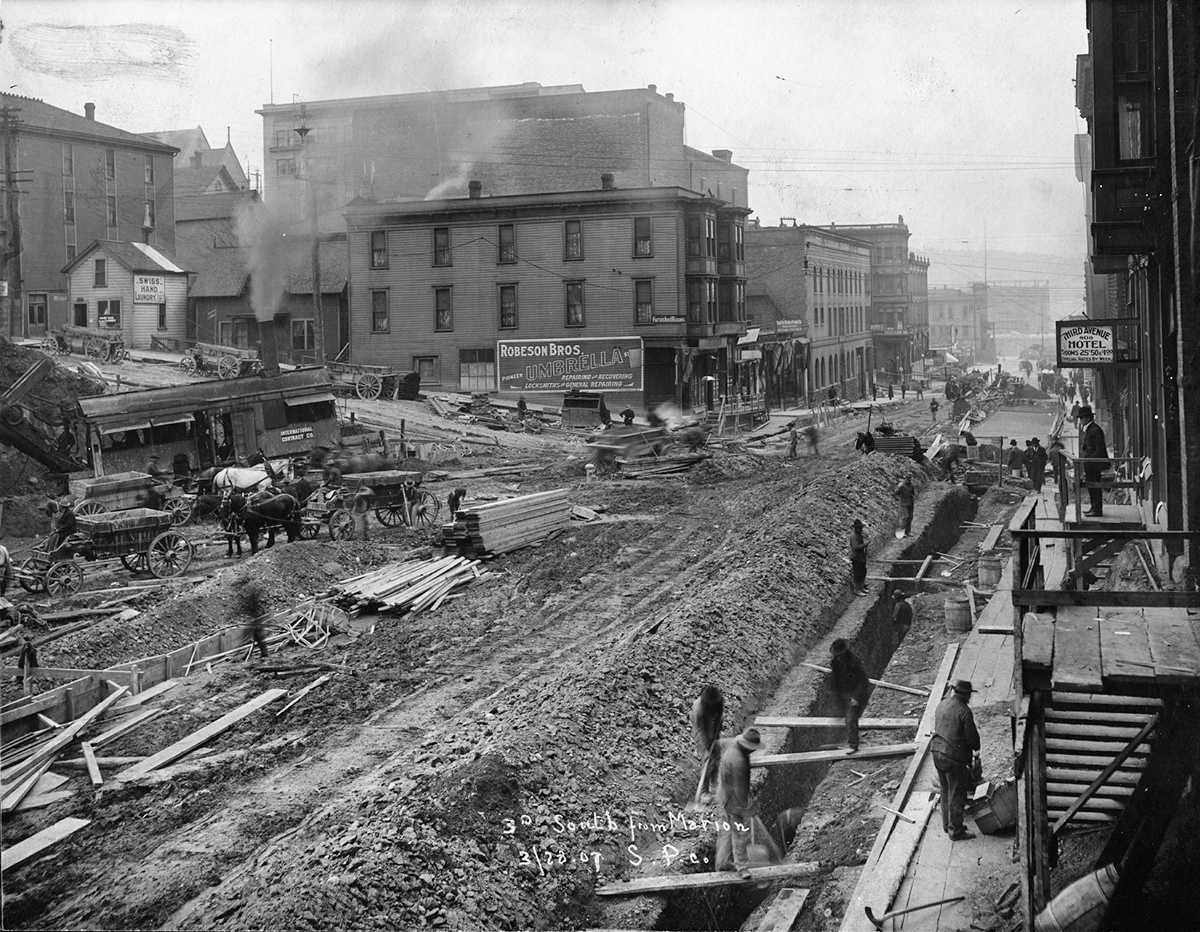
The city seized this chance to reconstruct with brick and stone, mandate wider streets, and implement a significant regrading project that literally raised parts of the city above the original, often muddy, street level. This ambitious undertaking resulted in the creation of the famous Seattle Underground, where entire storefronts and sidewalks were buried to create a new, higher street level. Today, the Seattle Underground Tour is one of the city’s most popular attractions, allowing visitors to walk through these subterranean passages and witness the ingenuity and determination of a city determined to rebuild better. It’s a unique blend of history and adventure, offering a distinctive landmark experience that combines education with an intriguing peek into the past. This attraction is a must-do for any tourism itinerary, highlighting Seattle’s capacity for resilience and innovation.
Seattle Today: A Legacy of Innovation and Exploration
From its humble beginnings as a logging camp, Seattle has grown into a global metropolis renowned for its technological advancements, vibrant arts scene, and stunning natural surroundings. The spirit of innovation that drove its early settlers to create a thriving port city continues to fuel its modern industries, from aviation (Boeing) to software (Microsoft), e-commerce (Amazon), and coffee (Starbucks). These contemporary giants, while not directly tied to the 1851 founding, are inheritors of the city’s pioneering and forward-thinking lifestyle.
The city’s history is not just confined to museums or old buildings; it’s woven into the fabric of everyday life. The historic districts offer a contrast to the modern skyscrapers, creating a dynamic urban landscape that is a joy to explore. For travelers, this means a diverse range of experiences, from immersing oneself in the past to enjoying cutting-edge entertainment and cuisine.
Exploring Historical Landmarks and Modern Attractions
A trip to Seattle offers an incredible blend of historical immersion and contemporary enjoyment. Start your historical journey in Pioneer Square, the city’s first neighborhood, where late 19th-century Romanesque Revival architecture predominates. Here, you can marvel at the Smith Tower, one of the oldest skyscrapers on the [West Coast](https://lifeoutofthebox.com/west Coast), which offers panoramic views and a glimpse into Seattle’s early ambition. Don’t miss the chance to explore the previously mentioned Klondike Gold Rush National Historical Park and, of course, embark on the unique Seattle Underground Tour.
Beyond the city center, sites like Alki Point offer a serene retreat and a tangible connection to the Denny Party’s landing. For those interested in indigenous history, the Duwamish Longhouse and Cultural Center provides invaluable insights into the traditions and contemporary life of the Duwamish people.
Yet, Seattle is also defined by its more recent history and forward-looking vision. The Space Needle, built for the 1962 Century 21 Exposition (World’s Fair), remains an iconic landmark offering breathtaking views of the city, Mount Rainier, and the surrounding waters. Nearby, the Museum of Pop Culture and Chihuly Garden and Glass offer world-class artistic and cultural experiences, showcasing Seattle’s commitment to contemporary arts and innovation. No visit to Seattle would be complete without experiencing the bustling atmosphere of Pike Place Market, a historic farmers’ market established in 1907 that perfectly blends local culture, food, and vibrant community life.
Planning Your Historic Seattle Getaway
For travelers seeking to immerse themselves in Seattle’s past while enjoying modern comforts, the city offers a wide array of accommodation options. Historic hotels in Pioneer Square or downtown provide charming stays with architectural character, often within walking distance of major landmarks. Many of these establishments have been beautifully restored, offering a blend of old-world elegance and contemporary amenities, catering to a lifestyle of luxury travel or those seeking unique, authentic experiences. For those preferring a more modern aesthetic, waterfront resorts or suites in the burgeoning tech districts provide sleek designs and state-of-the-art facilities.
Consider staying in hotels that reflect the city’s heritage, perhaps a boutique hotel known for its historical significance, or a stylish apartment in a renovated turn-of-the-century building. For a truly immersive experience, seek out accommodations that offer unique amenities like guided historical tours or easy access to local culinary experiences that highlight Seattle’s diverse food scene – a scene that grew from its maritime and immigrant past. Budget travelers can also find cozy hostels or long-term stay options that still place them within reach of these historical treasures.
To fully appreciate Seattle’s story, consider guided walking tours of Pioneer Square, or ferry trips across Puget Sound that offer perspectives on the city from the water, much as the early settlers would have seen it. These experiences allow travelers to connect with the city’s profound history, from the moment the Denny Party first arrived to its current status as a beacon of innovation. Ultimately, the founding of Seattle in 1851 is not just a date on a calendar; it’s the genesis of a dynamic city whose past continues to shape its present and inspire its future, making it an endlessly fascinating destination for any explorer.
LifeOutOfTheBox is a participant in the Amazon Services LLC Associates Program, an affiliate advertising program designed to provide a means for sites to earn advertising fees by advertising and linking to Amazon.com. Amazon, the Amazon logo, AmazonSupply, and the AmazonSupply logo are trademarks of Amazon.com, Inc. or its affiliates. As an Amazon Associate we earn affiliate commissions from qualifying purchases.