
The story of Texas joining the United States Of America is not just a dry historical fact; it’s an epic tale of revolution, independence, political intrigue, and ultimately, a transformative union that shaped the destiny of a continent. For travelers, history buffs, and anyone seeking an unforgettable experience, understanding this pivotal moment unlocks a deeper appreciation for the unique culture, resilient spirit, and diverse landscapes that define the Lone Star State today. From its stunning historical landmarks to its vibrant modern cities, Texas offers a journey through time, a testament to the complex path it took to become the 28th state.
The precise date Texas officially became part of the United States is December 29, 1845. However, to truly grasp the significance of this date, one must journey back through decades of exploration, conflict, and the forging of an independent nation. This isn’t merely a point on a timeline; it’s the culmination of a dramatic saga that profoundly influences the travel experiences and cultural encounters awaiting visitors across Texas, from its bustling urban centers to its serene natural parks.
A Republic Forged in Revolution: The Road to Independence
Before it could join the United States, Texas first had to carve its own path to independence. This period, rich with pivotal battles, heroic figures, and profound sacrifices, laid the groundwork for the state’s fiercely independent identity and left an indelible mark on its historical attractions.
Early Encounters and Colonial Aspirations
The land that would become Texas was initially a vast, sparsely populated frontier, claimed first by Spain and later by Mexico after its own independence in 1821. Seeking to develop the region and provide a buffer against potential invasions, Mexico invited Anglo-American settlers, primarily from the southern United States, to colonize the area. Led by figures like Stephen F. Austin, often revered as the “Father of Texas,” these settlers established communities under specific conditions, including allegiance to Mexico and conversion to Catholicism.
However, cultural differences, the issue of slavery (which Mexico had abolished), and growing autocratic tendencies in the Mexican government under General Antonio López de Santa Anna led to increasing friction. The distant Mexican government struggled to enforce its laws and maintain control over the burgeoning Anglo population, whose loyalty to Mexico waned as their ties to American culture and ideals strengthened.
The Fight for Freedom
Tensions escalated into outright rebellion in 1835. The first shot of the Texas Revolution is famously linked to the Battle of Gonzales, where Texans resisted Mexican attempts to reclaim a cannon. What followed was a series of iconic clashes that etched themselves into the annals of history and continue to draw millions of visitors annually.
The most famous of these is undoubtedly the Battle of the Alamo. In March 1836, a small group of Texan defenders, including legendary figures like Davy Crockett and Jim Bowie, held out for 13 days against thousands of Mexican troops commanded by Santa Anna in San Antonio. Though ultimately defeated with all defenders killed, “Remember the Alamo!” became a rallying cry that fueled the revolutionary spirit. Today, The Alamo stands as a sacred shrine, a must-visit landmark offering a poignant glimpse into this heroic last stand. Its hallowed grounds, located in the heart of modern San Antonio, invite contemplation and respect, embodying the enduring Texan spirit. Nearby, the famous San Antonio River Walk provides a beautiful contrast, a vibrant hub of culture and tourism built around the city’s historical foundations.

Another tragic but equally significant event was the Goliad Massacre, where hundreds of Texan prisoners of war were executed by Mexican forces. These atrocities, rather than crushing the rebellion, solidified the Texans’ resolve.
Just weeks after the fall of The Alamo, on March 2, 1836, a convention of delegates at Washington-on-the-Brazos declared Texas an independent republic. The newly formed provisional government, with Sam Houston appointed commander-in-chief of the Texan army, then faced the daunting task of securing that independence on the battlefield. The decisive moment came on April 21, 1836, at the Battle of San Jacinto, near present-day Houston. In a stunning victory that lasted mere minutes, Houston’s forces routed Santa Anna’s army, capturing the Mexican general himself. This triumph effectively secured Texas’s independence.
The Lone Star Republic: A Decade of Sovereignty
With independence won, Texas embarked on a nearly ten-year journey as an independent nation, the Republic of Texas. This period was characterized by both the triumphs of nation-building and the significant challenges that ultimately led to annexation.
Forging a Nation
From 1836 to 1845, the Republic of Texas functioned as a sovereign state, complete with its own government, currency, and foreign policy. Sam Houston became its first president, serving two non-consecutive terms. The capital moved several times before settling in the city now known as Austin, named in honor of Stephen F. Austin. The challenges were immense: maintaining peace with Mexico, managing relations with Native American tribes, attracting settlers, and most critically, stabilizing its economy and fending off crippling debt.
Presidents like Mirabeau B. Lamar, Sam Houston, and Anson Jones wrestled with these issues, often pursuing differing policies regarding land, Native Americans, and the crucial question of annexation by the United States. This era of self-governance profoundly shaped the Texan character – a blend of rugged individualism, self-reliance, and an enduring pride in its unique history. Visitors to Austin can still feel the echoes of this era, particularly when exploring the impressive State Capitol Building, an architectural marvel that symbolizes the state’s storied past and enduring political significance.
Annexation Debates and Delays
From its very inception, the idea of Texas joining the United States was a prominent, though contentious, aspiration for many Texans. However, American domestic politics and international relations created significant hurdles.
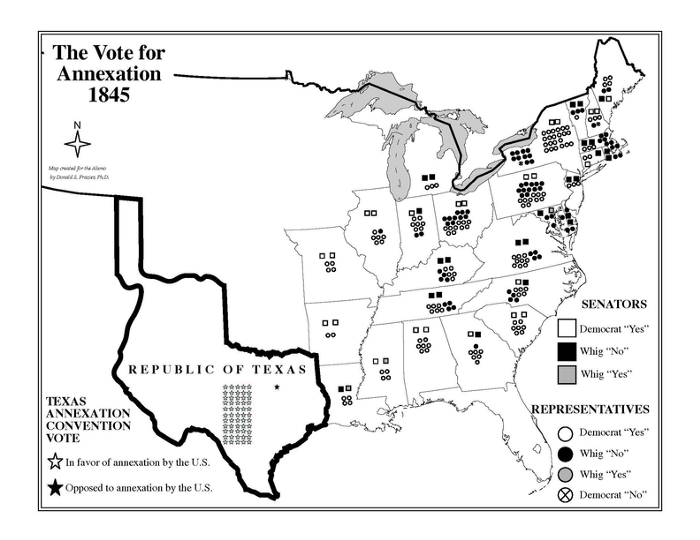
The primary obstacle was slavery. The addition of another large, slave-holding state like Texas would upset the delicate balance of power between free and slave states in the U.S. Congress. Abolitionists and Northern politicians vehemently opposed annexation, fearing it would strengthen the institution of slavery and lead to an expansion of its territory.
Another major concern was the potential for war with Mexico. Mexico still considered Texas a rebellious province and had never formally recognized its independence. Annexation by the United States would almost certainly provoke a conflict, something many American leaders wished to avoid.
Despite these challenges, the idea of “Manifest Destiny” – the belief in America’s divinely ordained right to expand westward – gained traction. Texas itself faced ongoing threats from Mexico and struggled with financial instability, making the stability and protection offered by the United States increasingly attractive. The annexation debate became a central issue in American politics, dominating presidential elections and public discourse for years.
The Moment of Union: Texas Becomes a State
After years of diplomatic maneuvering, political wrangling, and public debate, the path to annexation finally cleared. The election of President James K. Polk in 1844, on a platform that explicitly endorsed westward expansion and the annexation of Texas and Oregon, provided the final impetus.
The Annexation Resolution
Outgoing U.S. President John Tyler, eager to complete the annexation before leaving office, pursued a joint resolution of Congress rather than a treaty, as a treaty would require a two-thirds majority in the Senate, which seemed unlikely. A joint resolution, requiring only a simple majority in both houses, was passed on February 28, 1845. This resolution offered Texas terms for annexation, including permission to retain its public lands (a crucial provision that differentiates Texas from other states) and the option to divide into up to four additional states in the future.
The Republic of Texas then had to accept these terms. President Anson Jones, often referred to as the “Architect of Annexation,” formally presented the U.S. proposal to the Texan Congress. Despite lingering hopes for an independent future and even a last-minute attempt by Great Britain and France to broker a deal that would preserve Texan independence (in exchange for Mexico’s recognition), the vast majority of Texans favored joining the United States.
December 29, 1845: The Official Date
On October 13, 1845, the citizens of Texas overwhelmingly ratified the annexation ordinance and a new state constitution. The final step occurred on December 29, 1845, when U.S. President James K. Polk signed the act officially making Texas the 28th state of the United States Of America.
The transfer of power, marked by the lowering of the Lone Star flag and the raising of the American flag over the capitol in Austin on February 19, 1846, was a momentous occasion. This act, however, did immediately lead to the feared consequence: the Mexican-American War, which officially began in the spring of 1846. The war, fought largely over the disputed border between Texas and Mexico (with Texas claiming the Rio Grande and Mexico the Nueces River), ultimately ended in 1848 with the Treaty of Guadalupe Hidalgo, solidifying the Rio Grande as the boundary and further expanding American territory westward.
Texas Today: A Legacy of Independence and Growth
The historical journey of Texas from a Spanish province to an independent republic and finally to a U.S. state is central to its identity. This rich past informs everything from its vibrant local culture to its iconic landmarks, making it an unparalleled destination for travelers.
Exploring Texas’s Rich Heritage
For anyone planning a trip to Texas, its history is not merely confined to museums but is woven into the very fabric of its cities and landscapes. Travel through Texas is a continuous exploration of this legacy:
- San Antonio: Beyond The Alamo, explore the other four Spanish colonial missions that form the San Antonio Missions National Historical Park, a UNESCO World Heritage Site. The San Antonio River Walk offers a picturesque setting for enjoying the city’s unique blend of Tejano and American culture, with countless accommodation options from charming boutique hotels to luxury resorts.
- Austin: The capital city, nicknamed the “Live Music Capital of the World,” also boasts significant historical sites. A visit to the majestic State Capitol Building offers insight into Texan governance and architectural grandeur. The city is a hub for lifestyle travel, offering everything from luxury hotels to budget-friendly stays, alongside a thriving food scene and outdoor activities.
- Houston: While famed for its association with space exploration (Space Center Houston at the NASA Johnson Space Center), Houston also holds historical significance related to the Battle of San Jacinto. The San Jacinto Monument and Museum offers panoramic views and extensive exhibits on the battle that won Texas’s independence. Houston provides a full spectrum of accommodation, from upscale hotels in the Galleria area to comfortable family suites.
- Dallas & Fort Worth: These twin cities in North Texas offer a glimpse into the state’s cowboy heritage and economic boom. Fort Worth’s Stockyards National Historic District transports visitors back to the cattle drives of old, while Dallas showcases its modern art scene and historical points of interest like the Sixth Floor Museum at Dealey Plaza. Both cities are prime destinations for luxury travel, offering world-class hotels and diverse culinary experiences.
Modern Texas: A Hub for Travel and Lifestyle
Today, Texas embodies the spirit of its dramatic past: vast, diverse, and unapologetically bold. Its status as the second-largest state by both area and population means there’s an endless array of experiences for every type of traveler.
- Destinations & Attractions: From the Gulf Coast beaches of Galveston and South Padre Island to the rugged mountains of Big Bend National Park (often compared to the Grand Canyon in its majesty), Texas offers unparalleled natural beauty. The Texas Hill Country mesmerizes with its rolling landscapes, vineyards, and charming small towns like Fredericksburg, perfect for a scenic road trip or a relaxing weekend getaway.
- Accommodation & Hotels: The state caters to all budgets and styles. You can find sprawling resorts with championship golf courses in Grapevine, historic hotels in San Antonio, chic boutique hotels in Austin, and comfortable, family-friendly suites near major attractions. Vacation rentals, from rustic cabins to elegant villas, are also abundant, offering diverse long-term stay options.
- Tourism & Local Culture: Texan culture is a rich tapestry woven from its Native American, Spanish, Mexican, and American influences. This is evident in its world-famous Tex-Mex cuisine, legendary barbecue, and vibrant music scenes. From rodeos and country music festivals to art galleries and space exploration centers, Texas offers a unique blend of authentic experiences. Tips for travelers often include embracing the local hospitality, trying traditional dishes, and exploring the lesser-known small towns that dot the landscape.
- Lifestyle: Whether you’re seeking luxury travel with high-end shopping and fine dining, budget travel exploring state parks and roadside diners, or family trips to theme parks and historical sites, Texas accommodates every lifestyle. The state’s economy, fueled by oil, technology, and agriculture, contributes to a dynamic atmosphere that blends old-world charm with modern innovation.
The question “When did Texas join the United States Of America?” is more than just a date; it’s an invitation to explore a state born from struggle and defined by resilience. Its history is its greatest asset, providing a captivating backdrop for an unforgettable travel adventure. So, as you plan your next destination, remember the extraordinary journey of Texas and prepare to discover a state where history comes alive at every turn.
LifeOutOfTheBox is a participant in the Amazon Services LLC Associates Program, an affiliate advertising program designed to provide a means for sites to earn advertising fees by advertising and linking to Amazon.com. Amazon, the Amazon logo, AmazonSupply, and the AmazonSupply logo are trademarks of Amazon.com, Inc. or its affiliates. As an Amazon Associate we earn affiliate commissions from qualifying purchases.