
Albuquerque, New Mexico, nestled in the heart of the high desert, offers a dynamic and often surprising climate. Known for its abundant sunshine and dramatic seasonal shifts, the “Land of Enchantment” provides a unique meteorological tapestry for residents and visitors alike. Understanding Albuquerque’s weather patterns is key to planning a visit that embraces its distinctive outdoor allure, from the vibrant hues of autumn to the sun-drenched days of summer. This guide delves into the nuances of Albuquerque’s climate, offering insights into what travelers can expect throughout the year.
Understanding Albuquerque’s High Desert Climate
Albuquerque’s location at an elevation of approximately 5,312 feet (1,619 meters) above sea level significantly influences its weather. This high altitude contributes to a semi-arid climate characterized by low humidity, intense solar radiation, and considerable diurnal temperature variations – meaning the difference between daytime highs and nighttime lows can be substantial. The city is situated in a high desert environment, a region that experiences four distinct seasons, each with its own set of weather characteristics. The Rocky Mountains to the north and west provide some protection, but also influence weather patterns, sometimes bringing cooler air masses. The presence of the Sandia Mountains to the east also plays a role, creating rain shadows and influencing local wind patterns.
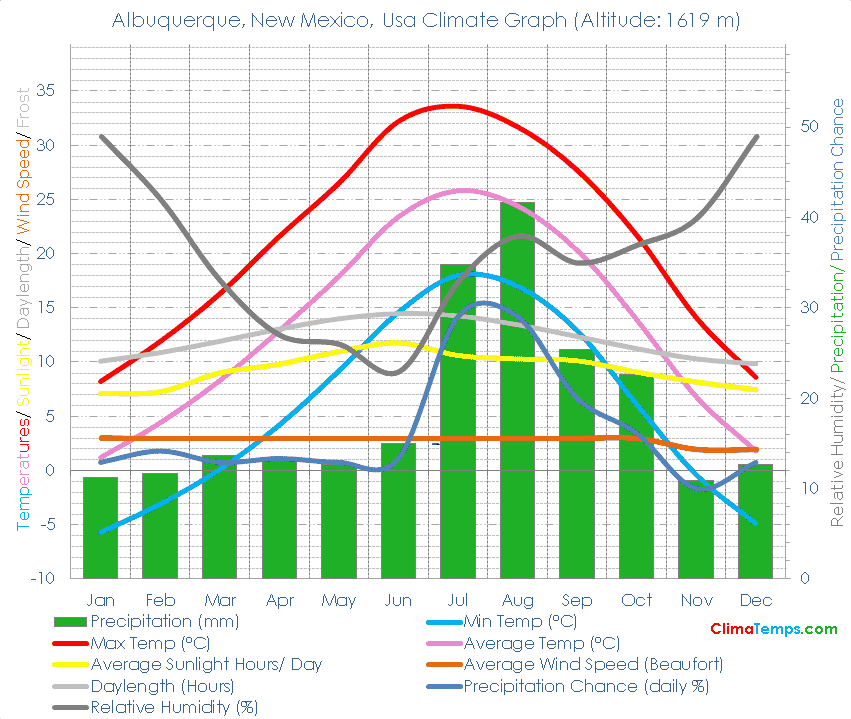
The average annual precipitation in Albuquerque is relatively low, around 10 inches (25 cm), with most of it falling during the summer monsoon season and a smaller amount in winter. Snowfall is infrequent but can occur, especially in the higher elevations surrounding the city. Sunshine is a dominant feature, with Albuquerque boasting over 300 days of sun per year, making it an ideal destination for those who appreciate clear skies and bright conditions.
Seasonal Breakdown of Albuquerque’s Weather
The four seasons in Albuquerque present distinct weather profiles, each offering a different experience of the city.
Spring (March – May)
Spring in Albuquerque is a period of transition. While it marks the end of winter’s chill, it can also bring unpredictable weather. Early spring often sees lingering cold snaps, with temperatures that can fluctuate significantly. However, as spring progresses, temperatures begin to climb steadily. Days become longer and warmer, encouraging outdoor activities.
- Temperatures: Daytime temperatures typically range from the 50s to the 70s Fahrenheit (10-25°C) in March and April, climbing into the 70s and 80s Fahrenheit (25-30°C) by May. Nights can still be cool, often dropping into the 30s and 40s Fahrenheit (0-10°C), so layers are essential.
- Precipitation: Spring precipitation is generally light and sporadic. While rain showers are possible, they are not a dominant feature. Dust storms, known locally as haboobs, can occur during windy spring days, particularly in April and May, carrying fine desert sand.
- Sunshine: Sunshine remains abundant, though it may be occasionally interrupted by passing storm systems. The increased daylight hours make it an excellent time to explore the city’s outdoor attractions, such as the ABQ BioPark or take a ride on the Sandia Peak Tramway.
Summer (June – August)
Summer in Albuquerque is characterized by warm to hot temperatures and the arrival of the monsoon season. June often feels like an extension of spring, with warm days and pleasant evenings. However, July and August bring higher temperatures and increased humidity due to the monsoon.
- Temperatures: Daytime highs frequently reach the 80s and 90s Fahrenheit (27-35°C), with occasional heatwaves pushing temperatures into the triple digits. Evenings offer some relief, typically cooling into the 60s Fahrenheit (15-20°C).
- Precipitation: The monsoon season, typically from July to September, brings a dramatic shift in precipitation patterns. Afternoon thunderstorms become a regular occurrence, characterized by dramatic lightning displays and brief, intense downpours. These storms can cause flash flooding in arroyos and low-lying areas, so it’s important to be aware of weather alerts. While the rain is often brief, it can significantly cool down the air and contribute to the lushness of the desert flora.
- Sunshine: Despite the afternoon storms, Albuquerque still enjoys plenty of sunshine in the summer, particularly in the mornings. These sunny periods are ideal for exploring attractions like Old Town Albuquerque or enjoying outdoor dining.
Autumn (September – November)
Autumn is widely considered one of the most beautiful seasons in Albuquerque, offering mild temperatures and stunning natural scenery. The intense heat of summer dissipates, replaced by crisp, clear days and cool evenings.
- Temperatures: September can still feel like summer, but by October, daytime temperatures comfortably hover in the 60s and 70s Fahrenheit (15-25°C). November brings cooler weather, with highs in the 50s Fahrenheit (10-15°C). Nighttime temperatures become progressively colder, often dropping below freezing in late November.
- Precipitation: Autumn is typically the driest season, with minimal rainfall. The monsoon rains have ceased, and winter precipitation has not yet begun. This makes it an ideal time for extensive outdoor exploration without the threat of heavy storms.
- Sunshine: Autumn boasts exceptionally clear skies and brilliant sunshine, which brilliantly illuminates the changing foliage in the surrounding mountains and provides a picturesque backdrop for the city. This season is perfect for hiking in the Petroglyph National Monument or enjoying the vibrant colors of the International Balloon Fiesta in October.
Winter (December – February)
Winter in Albuquerque is generally mild and dry, characterized by cold nights and crisp, sunny days. Snowfall is infrequent but not unheard of.

- Temperatures: Daytime temperatures often range from the 40s to the 50s Fahrenheit (5-15°C), making outdoor activities still feasible. However, nights are cold, frequently dropping below freezing, with average lows in the 20s Fahrenheit (-5 to 0°C). Frost is common, and ice can form on roads in the early mornings.
- Precipitation: Winter precipitation is scarce, typically consisting of light snow or freezing rain. When snow does fall, it rarely accumulates for long periods, especially at lower elevations. The higher peaks of the Sandia Mountains often receive more significant snowfall, providing opportunities for winter sports.
- Sunshine: Winter days are often bright and sunny, with clear blue skies that are characteristic of the high desert. This sunshine provides a welcome warmth during the day, despite the cold temperatures. It’s a great time to visit historical sites like Indian Pueblo Cultural Center or enjoy the winter ambiance of Old Town Albuquerque.
Factors Influencing Albuquerque’s Weather
Several geographical and atmospheric factors contribute to Albuquerque’s unique climate.
Altitude and Topography
As mentioned, Albuquerque’s high elevation is a primary driver of its climate. The thin air at this altitude means that solar radiation is more intense, leading to warmer daytime temperatures. Conversely, the thin atmosphere also allows heat to escape more rapidly at night, resulting in significant temperature drops. The surrounding topography, including the Sandia Mountains to the east and the Jemez Mountains to the northwest, plays a crucial role in shaping weather patterns. These mountain ranges can act as barriers, influencing wind direction and precipitation. For instance, the Sandia Mountains create a rain shadow effect, contributing to Albuquerque’s generally arid conditions.
The Monsoon Effect
The North American Monsoon, a seasonal shift in wind patterns that brings moisture from the Gulf of California and the Pacific Ocean, significantly impacts Albuquerque’s summer weather. From roughly July to September, the prevailing southerly winds deliver increased humidity and trigger the formation of towering cumulonimbus clouds. These clouds are responsible for the characteristic afternoon thunderstorms that are a hallmark of Albuquerque summers. While these storms can be spectacular, they also pose risks, including lightning, flash floods, and strong winds.
Prevailing Winds
Winds in Albuquerque can vary depending on the season and specific weather systems. During spring, strong westerly winds can sometimes lead to dust storms. In the summer, the monsoon brings a shift to southerly winds. These winds can carry moisture inland, contributing to the possibility of storms. Understanding prevailing wind patterns can also be helpful for anticipating air quality conditions, as winds can sometimes blow pollutants from industrial areas or dust from surrounding regions into the city.
Preparing for Albuquerque’s Weather
Given the variability of Albuquerque’s weather, preparation is key to enjoying a comfortable and safe visit.
Packing Essentials
The most crucial advice for packing for Albuquerque is to layer. Even during warm months, evenings can be cool, and a sudden thunderstorm can bring a dramatic temperature drop.
- Clothing: Pack lightweight, breathable clothing for daytime, but also include sweaters, fleeces, and a light to medium-weight jacket for cooler mornings and evenings. For winter visits, warmer outerwear, gloves, and a hat are essential.
- Footwear: Comfortable walking shoes are a must for exploring the city’s many attractions. If planning to hike in the surrounding areas, sturdy hiking boots are recommended.
- Sun Protection: Albuquerque experiences intense sunshine year-round. Sunscreen, a wide-brimmed hat, and sunglasses are essential, even on cloudy days.
- Hydration: Due to the dry air and high altitude, dehydration is a common concern. Carrying a reusable water bottle and drinking plenty of water is crucial, regardless of the season.
Staying Informed
It is always advisable to check the local weather forecast before and during your trip to Albuquerque. Local weather services and apps can provide up-to-date information on temperature, precipitation, and potential severe weather events like thunderstorms or dust storms. Being aware of weather alerts, especially during the monsoon season, can help ensure your safety and allow you to adjust your plans accordingly. For those visiting during major events like the International Balloon Fiesta, early morning forecasts are particularly important for optimal viewing conditions.

Adapting to Altitude
For visitors not accustomed to high altitudes, it’s wise to take precautions to avoid altitude sickness. This includes staying well-hydrated, avoiding strenuous activity on your first day, and limiting alcohol consumption. Symptoms can include headaches, nausea, and fatigue. Most visitors find that these symptoms subside within a day or two as their bodies adjust to the elevation.
In conclusion, Albuquerque, New Mexico, offers a climate that is as captivating as its landscapes. From the sun-drenched days and monsoon storms of summer to the crisp, clear air of autumn and the mild, sunny winters, each season presents a unique opportunity to experience the charm of this high desert city. By understanding its meteorological nuances and preparing accordingly, travelers can fully embrace the diverse and enchanting weather that defines Albuquerque.
LifeOutOfTheBox is a participant in the Amazon Services LLC Associates Program, an affiliate advertising program designed to provide a means for sites to earn advertising fees by advertising and linking to Amazon.com. Amazon, the Amazon logo, AmazonSupply, and the AmazonSupply logo are trademarks of Amazon.com, Inc. or its affiliates. As an Amazon Associate we earn affiliate commissions from qualifying purchases.