
The enforceability of non-compete agreements in New York has long been a subject of debate and legal scrutiny. These clauses, often included in employment contracts, aim to prevent former employees from joining a competitor or starting a competing business within a certain geographic area and time frame after their departure. While the intent is to protect a company’s legitimate business interests, such as trade secrets and client relationships, their broad application has often been criticized for stifling employee mobility and entrepreneurship. In New York, the legal landscape surrounding non-competes is nuanced, with courts balancing the employer’s need for protection against the employee’s right to earn a livelihood.

Understanding Non-Compete Agreements in New York
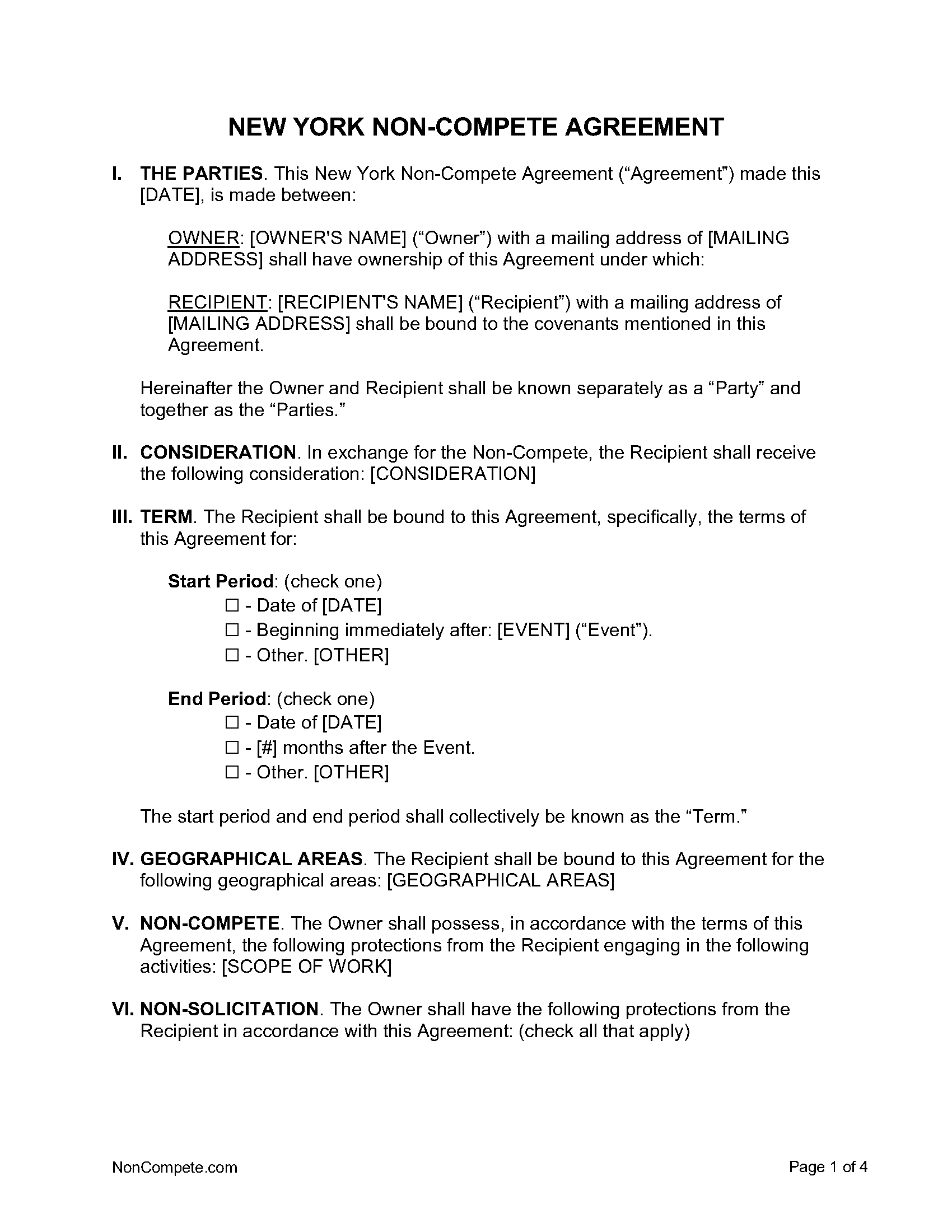
At their core, non-compete agreements are restrictive covenants designed to limit post-employment competition. In New York, as in many other jurisdictions, for a non-compete to be considered enforceable, it must meet several key criteria. It cannot be broader than necessary to protect the employer’s legitimate business interests. This includes safeguarding confidential information, trade secrets, and substantial customer relationships that the employee developed through their work for the employer.
The “Legitimate Business Interest” Standard
The concept of a “legitimate business interest” is crucial. Simply preventing competition is generally not considered a legitimate interest. Instead, employers must demonstrate that the employee possesses unique or extraordinary knowledge or skills that, if used for a competitor, would cause irreparable harm to the original employer. This might involve access to proprietary algorithms, sensitive client lists, or strategic business plans. The courts will scrutinize whether the non-compete is truly necessary to prevent the misuse of such information or relationships, or if it’s merely an attempt to lock down talent.
Reasonableness in Scope, Duration, and Geography
Even if a legitimate business interest exists, the scope, duration, and geographic limitations of the non-compete agreement must be reasonable.
Scope of Restricted Activities
The agreement should clearly define the specific activities that the former employee is prohibited from engaging in. Overly broad restrictions that encompass a wide range of unrelated roles or industries are likely to be deemed unenforceable. For example, a non-compete that prevents a software engineer from working in any capacity within the tech industry nationwide would likely be too broad.
Duration of Restriction
The period during which the employee is restricted from competing also comes under judicial review. While there’s no set rule, typically, durations of six months to two years are more likely to be considered reasonable, depending on the industry and the nature of the employee’s role. Longer durations are more difficult to justify.
Geographic Limitations
The geographical scope of the restriction must be narrowly tailored to the area where the employer actually conducts business and where the employee had significant client contact or access to sensitive information. A nationwide or global restriction is rarely enforceable for most roles, unless the business is truly international in scope and the employee’s responsibilities were similarly expansive. For instance, a small, local boutique in Manhattan would have a difficult time enforcing a non-compete that prevents an employee from working at any similar establishment across the entire United States.
Recent Developments and Legal Trends
The legal landscape for non-compete agreements in New York has been evolving, with a growing trend towards greater employee protection. Several factors have contributed to this shift, including legislative proposals and judicial decisions that emphasize the potential for these agreements to harm workers and the broader economy.
Legislative Proposals
There have been ongoing efforts at both the state and federal levels to restrict or even ban non-compete agreements. While a comprehensive federal ban has not yet materialized, many states, including New York, have seen proposed legislation aimed at limiting their use, particularly for lower-wage workers. These proposals often seek to make non-competes unenforceable for employees below a certain salary threshold or for independent contractors.
Judicial Scrutiny and Case Law
New York courts have historically applied a strict reasonableness standard to non-compete agreements. However, recent judicial decisions have continued to reinforce this approach, often scrutinizing the necessity of such clauses and their impact on public policy. Courts are increasingly willing to find non-competes unenforceable if they are deemed overly burdensome or if they serve no purpose other than to prevent ordinary competition. The burden of proof generally lies with the employer to demonstrate the enforceability of the agreement.
When Are Non-Competes Likely to Be Enforced in New York?
Despite the increasing scrutiny, non-compete agreements can still be enforceable in New York under specific circumstances. The key lies in demonstrating that the agreement is narrowly tailored to protect a genuine business interest and is not unduly restrictive on the employee.
High-Level Executives and Highly Specialized Roles
Non-competes are more likely to be upheld when they apply to employees in high-level executive positions or those with access to truly unique and proprietary information. For example, a senior executive at a pharmaceutical research firm who has intimate knowledge of drug development pipelines and key client relationships might be subject to a more stringent non-compete than a junior administrative assistant. Similarly, individuals in highly specialized technical roles, such as lead developers of groundbreaking software or key researchers in a niche scientific field, may find their non-competes more readily enforced.
Detailed and Specific Business Interests
Employers who can clearly articulate and demonstrate specific, identifiable business interests that need protection are more likely to succeed. This includes:
Trade Secrets and Confidential Information
If the employee had access to genuinely secret formulas, proprietary processes, client lists with unique insights, or strategic business plans that are not publicly known and provide a competitive advantage, a non-compete designed to protect this information may be enforceable. The information must be truly confidential and not readily discoverable through public means or general industry knowledge.
Substantial Customer Relationships
When an employee has developed significant and personal relationships with clients that are integral to the business’s success, and there’s a high risk of them being “poached” by a competitor, a non-compete might be considered. However, simply having client contact is often not enough; the relationship must be substantial and the risk of diversion significant. The employer needs to show that the employee’s departure would directly lead to the loss of those clients due to the personal relationship.
Reasonably Drafted Agreements
A well-drafted non-compete that is precise in its limitations on scope, duration, and geography is far more likely to survive legal challenge. This means avoiding vague language and clearly defining what constitutes a “competitor” and what specific activities are prohibited. For instance, if a company operates solely within the fashion industry in New York City, a non-compete preventing an employee from working in any sales role for any company globally would likely fail. However, one preventing them from working in a directly competing role for a similar brand within a 50-mile radius for one year might be viewed more favorably.
Considerations for Employers and Employees
Navigating the complexities of non-compete agreements requires careful consideration from both employers and employees in New York. Understanding the legal framework and potential pitfalls can help in drafting, negotiating, and responding to these clauses.
For Employers: Drafting and Enforcement Strategies
Employers seeking to use non-compete agreements should approach them with caution and a thorough understanding of New York law.
Justifiable Need and Narrow Tailoring
Before including a non-compete, employers must ask if it’s truly necessary to protect a legitimate business interest. If the answer is yes, the agreement must be drafted with extreme specificity, focusing only on the essential protections required. Overly broad agreements are not only difficult to enforce but can also lead to negative publicity and employee resentment.
Compensation and Consideration
In New York, continued employment alone can serve as consideration for a non-compete agreement signed at the start of employment. However, for existing employees asked to sign a non-compete, new consideration beyond continued employment, such as a promotion, bonus, or salary increase, is typically required for the agreement to be valid.
Review by Legal Counsel
It is imperative for employers to have all non-compete agreements reviewed by experienced legal counsel specializing in employment law in New York. This ensures the agreement is compliant with current laws and best practices, and maximizes its chances of enforceability.
For Employees: Review and Negotiation
Employees presented with a non-compete agreement should not sign it without careful consideration.
Understanding the Implications
Employees must fully understand the restrictions imposed by the agreement and how it might impact their future career prospects. This includes considering their industry, potential employers, and geographic mobility.
Seeking Legal Advice
It is highly advisable for employees to consult with an employment attorney before signing a non-compete. An attorney can help them understand their rights, negotiate the terms, and assess the enforceability of the proposed restrictions. Key areas for negotiation might include reducing the duration, narrowing the geographic scope, or limiting the types of prohibited activities.
Alternatives to Non-Competes
Sometimes, employers can protect their interests through less restrictive means, such as robust confidentiality agreements, non-solicitation clauses (preventing former employees from soliciting clients or employees), or trade secret protection measures. Employees can sometimes propose these alternatives during negotiations.

Conclusion: A Landscape of Caution and Nuance
In conclusion, while the question of whether non-compete agreements are enforceable in New York does not have a simple yes or no answer, the trend is towards greater judicial skepticism and a higher bar for employers to meet. The enforceability hinges on a careful balancing act, where employers must demonstrate a clear and compelling need to protect specific business interests, and the restrictions must be narrowly tailored, reasonable in scope, duration, and geography, and supported by adequate consideration. For employees, understanding these agreements and seeking professional advice is crucial to safeguarding their future career mobility. As the legal landscape continues to evolve, staying informed about legislative changes and case law developments will be essential for both businesses and individuals operating within New York’s dynamic employment market.
LifeOutOfTheBox is a participant in the Amazon Services LLC Associates Program, an affiliate advertising program designed to provide a means for sites to earn advertising fees by advertising and linking to Amazon.com. Amazon, the Amazon logo, AmazonSupply, and the AmazonSupply logo are trademarks of Amazon.com, Inc. or its affiliates. As an Amazon Associate we earn affiliate commissions from qualifying purchases.