
While the question of “How Many Prisons Are In New York State?” might initially evoke a somber or purely statistical inquiry, from the perspective of Landmarks, these institutions, by their very nature and historical presence, can be viewed as significant, albeit often overlooked, landmarks. They represent facets of human endeavor, governance, and societal evolution, contributing to the rich tapestry of history and architecture that defines a region. Understanding the number and distribution of these correctional facilities within New York State offers a unique lens through which to examine the state’s development, its urban and rural landscapes, and the historical narratives embedded within its communities.
The state of New York, renowned for its bustling metropolises like New York City and its picturesque upstate regions, encompasses a diverse range of structures, from iconic skyscrapers and historical buildings to natural wonders. Among these, correctional facilities, though not typically destinations for leisure or cultural immersion, occupy a distinct category of landmark. Their architectural styles, often reflecting the era of their construction, can range from imposing Gothic Revival fortresses to more utilitarian modern complexes. The sheer number and geographical spread of these institutions provide a geographical and demographic insight into the state’s historical approach to law and order, population distribution, and land use.
The Department of Corrections and Community Supervision: An Overview
To accurately address the question of how many prisons exist in New York State, one must consult the governing body responsible for their operation: the New York State Department of Corrections and Community Supervision (DOCCS). This agency oversees the administration, management, and rehabilitation efforts within the state’s correctional system. DOCCS operates a network of facilities designed to house individuals convicted of crimes, ranging from minimum-security camps to maximum-security penitentiaries. The precise number of these facilities can fluctuate due to closures, expansions, or the repurposing of existing structures, making it essential to refer to current official data for the most up-to-date figures.
The landscape of correctional facilities in New York is diverse, encompassing a spectrum of security levels and inmate populations. These institutions are not uniformly distributed; they are often strategically located to serve specific regional needs or to leverage available land and resources. Understanding this distribution pattern can reveal interesting insights into the historical development of different parts of the state. For example, the establishment of prisons in more rural areas might have been influenced by factors such as land availability, the desire to create employment opportunities, or historical patterns of correctional policy.
Categorizing Correctional Facilities in New York
The New York State Department of Corrections and Community Supervision (DOCCS) manages a variety of correctional facilities, each with its own designation and purpose. While a definitive, static count is subject to change, a general understanding of the types of facilities operated by DOCCS provides context. These typically include:
- Maximum-Security Prisons: These are the most fortified facilities, designed to house individuals with the highest security risk. They often feature robust physical barriers, extensive surveillance, and a high staff-to-inmate ratio. Architecturally, these institutions can be imposing, reflecting their stringent security requirements.
- Medium-Security Prisons: These facilities offer a less restrictive environment than maximum-security prisons but still maintain a significant level of control. They house inmates who pose a moderate risk.
- Minimum-Security Prisons: Often referred to as correctional facilities or camps, these institutions are typically for inmates with a low risk of escape or violence. They may have fewer physical barriers and focus more on vocational training and rehabilitation. These structures can sometimes be more integrated into the surrounding landscape, utilizing existing buildings or simpler constructions.
- Reception Centers: These facilities serve as initial intake points for newly convicted individuals, where they are processed, assessed, and assigned to appropriate correctional institutions.
- Special Housing Units (SHUs): While not standalone facilities, SHUs are integral parts of larger correctional complexes, designed for inmates requiring segregation due to disciplinary issues or safety concerns.

The historical evolution of correctional architecture in New York is also noteworthy. Early prisons often resembled fortresses, emphasizing containment and punishment. Over time, particularly in the latter half of the 20th century and into the 21st, there has been a shift towards more modern, functional designs, with a greater emphasis on rehabilitation programs and a less overtly punitive aesthetic. However, many older, historically significant correctional buildings still stand, serving as silent witnesses to the state’s past.
The Geographical Footprint of Correctional Institutions
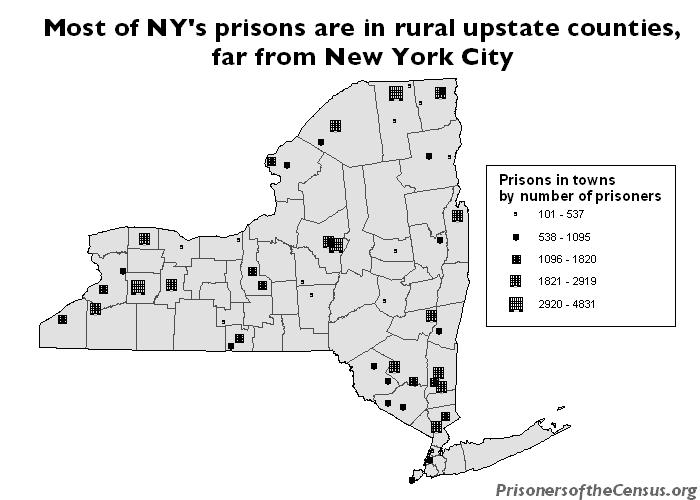
The geographical distribution of prisons across New York State is a significant aspect when considering them as landmarks. These institutions are not concentrated solely in urban centers but are dispersed throughout the state, often in rural or semi-rural areas. This placement can influence local economies, land use patterns, and community dynamics. For instance, a large correctional facility can be a major employer in a smaller town, impacting its social and economic fabric.
Examining a map of New York State with the locations of its correctional facilities marked would reveal a pattern that is not entirely coincidental. Factors such as historical land acquisition, proximity to transportation routes, and the availability of suitable land have likely played a role in their establishment. Some facilities might be found in regions with a history of industrial decline, where the prison became a substitute economic engine. Others may occupy former military bases or large tracts of state-owned land.
The architecture of these facilities often reflects their specific location and the era of their construction. Older institutions, such as those built in the 19th or early 20th centuries, may exhibit the robust stone masonry and imposing design characteristic of that period, akin to historical fortresses or penitentiaries. Newer facilities, in contrast, tend to feature more modern construction materials and designs, prioritizing functionality and efficiency. Regardless of their age or style, these buildings contribute to the diverse architectural heritage of New York, even if they are not the typical tourist attractions.

Historical Significance and Architectural Context
From a historical perspective, correctional facilities in New York are integral to understanding the state’s past. The design and operation of prisons have evolved significantly over centuries, reflecting changing societal views on crime, punishment, and rehabilitation. Early penal institutions were often harsh and overcrowded, characterized by rudimentary facilities. As reform movements gained momentum, architectural designs began to incorporate elements intended to promote order and, eventually, rehabilitation.
The influence of architectural styles can be observed across different periods. For example, the congregate system, prevalent in the 19th century, often led to the construction of large, cellular institutions designed for silence and individual confinement. Later, the reformatory movement saw the introduction of facilities with more open dormitory-style living quarters and a greater emphasis on vocational training. The mid-20th century brought about a move towards more decentralized and specialized facilities, including work camps and minimum-security institutions.
Many older prisons in New York State are themselves historical landmarks, representing specific eras of penal reform and architectural innovation. While access to these facilities for the general public is, understandably, not permitted, their imposing structures and historical presence contribute to the historical geography of the state. They are tangible reminders of the evolution of the justice system and the societal challenges that have shaped New York. The study of these structures, even from afar, provides valuable insight into the state’s historical development and its approach to social issues.
In concluding this examination of correctional facilities as landmarks, it is important to reiterate that the exact number of prisons in New York State is dynamic and best obtained through official sources such as the New York State Department of Corrections and Community Supervision (DOCCS). However, their presence, distribution, and architectural styles collectively contribute to the state’s rich and complex historical and geographical narrative, making them a unique category of landmark within the diverse landscape of New York.
LifeOutOfTheBox is a participant in the Amazon Services LLC Associates Program, an affiliate advertising program designed to provide a means for sites to earn advertising fees by advertising and linking to Amazon.com. Amazon, the Amazon logo, AmazonSupply, and the AmazonSupply logo are trademarks of Amazon.com, Inc. or its affiliates. As an Amazon Associate we earn affiliate commissions from qualifying purchases.