
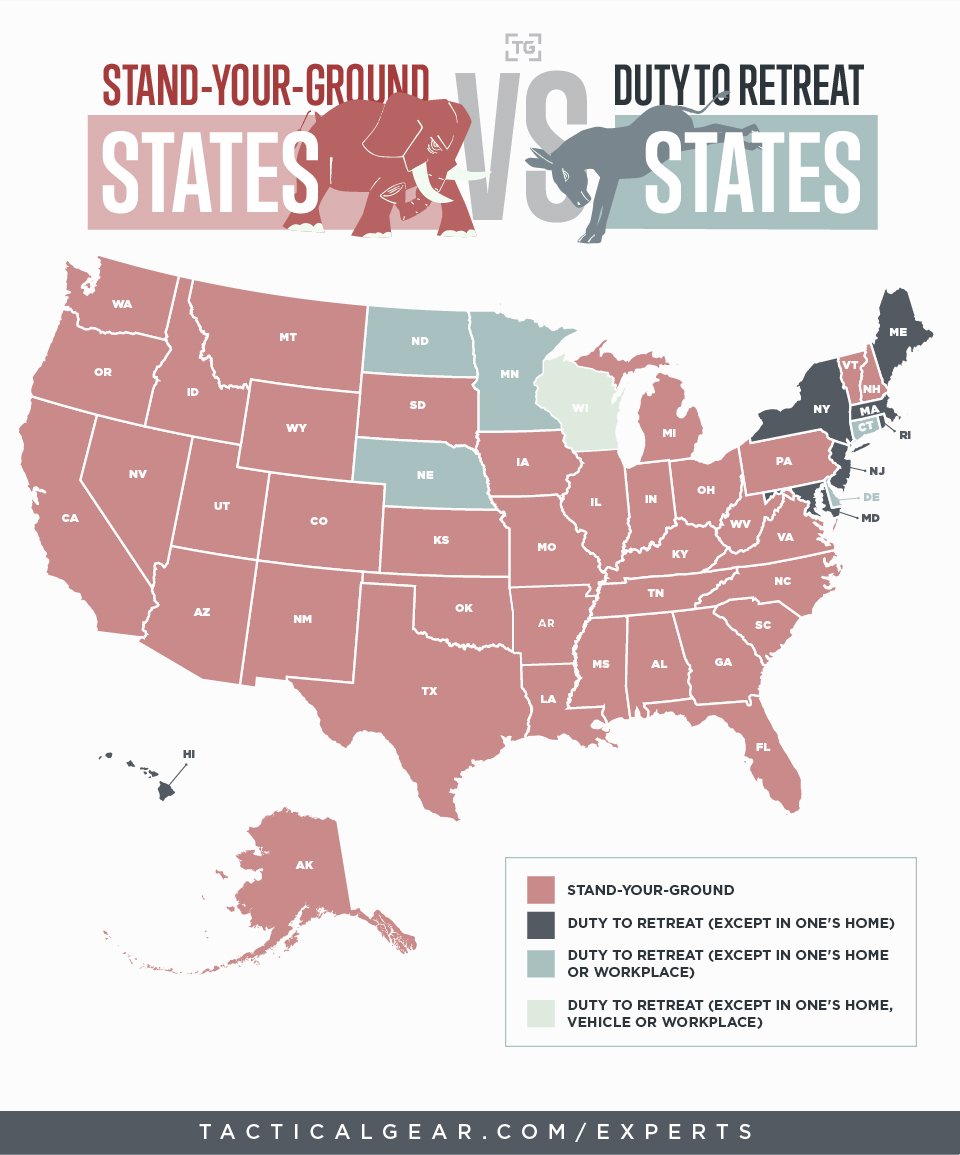
The question of whether New York is a “Stand Your Ground” state is a complex one, deeply intertwined with the state’s legal framework concerning self-defense and the use of force. While the term “Stand Your Ground” is often associated with specific legislative enactments in other United States jurisdictions, New York’s approach to self-defense operates under a different, though related, legal doctrine that emphasizes the duty to retreat. Understanding this distinction is crucial for anyone seeking to grasp the nuances of self-defense laws in the Empire State, particularly for travelers or residents who may find themselves in situations where their safety is threatened. This exploration will delve into the legal principles, practical implications, and historical context surrounding self-defense in New York, aiming to provide clarity for those navigating these important issues.

The Legal Landscape of Self-Defense in New York
Unlike states that have explicitly adopted “Stand Your Ground” laws, New York operates under a legal framework that generally imposes a “duty to retreat” when faced with a threat, before resorting to deadly physical force. This principle is codified in New York’s Penal Law. However, this duty is not absolute and is subject to significant exceptions, particularly when an individual is in their own home or dwelling.
The Duty to Retreat: A General Principle
New York’s Penal Law, specifically Section 35.15, outlines the conditions under which a person may use physical force in self-defense. The general rule is that a person may use physical force against another person when and to the extent that they reasonably believe such force is necessary to defend themselves or a third person from what they reasonably believe to be the imminent use of unlawful physical force. However, when deadly physical force is involved, the statute introduces the concept of a duty to retreat.
This means that if an individual is faced with a situation where they reasonably believe they are in imminent danger of death or serious bodily harm, they are generally required to retreat if they can do so safely, rather than using deadly physical force. This duty to retreat applies in any place other than the person’s home or dwelling. The rationale behind this rule is that it prioritizes de-escalation and avoids unnecessary loss of life when a safe avenue of escape is available.
Exceptions to the Duty to Retreat: The Castle Doctrine
The most significant exception to the duty to retreat in New York is the “Castle Doctrine.” This doctrine, deeply rooted in common law, states that an individual has no duty to retreat when they are in their own home or dwelling and are attacked. In such a scenario, a person is justified in using any degree of physical force, including deadly physical force, if they reasonably believe it necessary to defend themselves or another person in their dwelling from imminent unlawful entry or unlawful physical force.
The “dwelling” in this context is generally understood to include not only the primary residence but also other places where a person resides, such as a hotel room or a temporary lodging. The underlying principle is that one’s home is their sanctuary, and they should not be compelled to flee from an intruder or aggressor within their own domain. This exception significantly broadens the scope of permissible self-defense within the confines of one’s home.
Defining “Reasonable Belief” and “Imminent Threat”
Central to any self-defense claim in New York is the concept of “reasonable belief.” The law does not require that the danger be actual, but rather that the person reasonably believed they were in danger. This belief is judged from the perspective of a reasonable person in the same situation, considering all the circumstances. Factors such as the aggressor’s actions, words, demeanor, and any history of violence can contribute to establishing a reasonable belief of imminent danger.
Similarly, the threat must be “imminent.” This means that the danger must be immediate and impending, not a future or speculative threat. The individual must reasonably believe that the attack is happening or is about to happen, not that it might happen at some point in the future.
Practical Implications for Visitors and Residents
The legal framework governing self-defense in New York has tangible implications for both residents and visitors, particularly concerning personal safety and awareness when traveling. Understanding these nuances can help individuals make informed decisions and act appropriately in potentially dangerous situations.
When Traveling in New York City and Beyond
While New York is renowned for its vibrant tourist attractions, such as the Times Square, Central Park, and the Statue of Liberty, it’s important for travelers to be aware of their surroundings and local laws. When outside of their hotel room or other private dwelling, travelers in New York are generally subject to the duty to retreat. This means that if faced with a threat that does not involve immediate bodily harm, or if a safe escape route is available, the law expects individuals to attempt to disengage from the confrontation rather than engage in physical force.
This principle applies in public spaces, on public transportation, and even when visiting other cities like Buffalo or Rochester. While the presence of law enforcement in tourist areas is generally high, situations can arise where individuals may need to consider their legal rights and responsibilities regarding self-defense.
The Sanctity of Private Dwellings
The Castle Doctrine provides a significant layer of protection for individuals within their private residences. This extends to temporary accommodations such as hotels. If someone unlawfully enters a hotel room with the intent to cause harm, the occupant is generally not required to retreat and can use reasonable force, including deadly force, to defend themselves and others within that room. This principle underscores the legal recognition of a private space as a place where individuals have a heightened right to defend themselves without the obligation to flee.
Carrying Weapons and Self-Defense Tools
It is critical to note that New York has some of the strictest gun control laws in the United States. Obtaining a permit to carry a firearm is a complex and challenging process. The laws regarding the possession and use of other self-defense tools, such as pepper spray or tasers, are also highly regulated and vary by jurisdiction within the state. It is crucial for anyone considering carrying such items to thoroughly research and understand the applicable laws in New York to avoid legal repercussions. Ignorance of the law is not a defense.
Comparing New York’s Approach to “Stand Your Ground” Laws
The distinction between New York’s legal framework and explicit “Stand Your Ground” laws found in other states is a critical point of clarification. “Stand Your Ground” laws, in their most common interpretation, remove the duty to retreat entirely, even in public places, if an individual reasonably believes they are facing imminent danger. This means that in a “Stand Your Ground” state, a person can legally stand their ground and use deadly force if necessary, without first attempting to escape.
New York, by contrast, maintains the duty to retreat outside of one’s dwelling. While the Castle Doctrine provides robust protection within private spaces, the general obligation to seek a safe retreat in public differentiates New York from states that have fully embraced the “Stand Your Ground” philosophy. This difference in legal philosophy reflects varying societal views on the balance between the right to self-defense and the imperative to avoid violence and loss of life.
The Evolution of Self-Defense Laws
The legal principles governing self-defense are not static; they evolve over time through legislative action and judicial interpretation. While New York has not enacted a law explicitly titled “Stand Your Ground,” the interpretation and application of its existing self-defense statutes, particularly the exceptions to the duty to retreat, can sometimes lead to outcomes that might seem similar to “Stand Your Ground” scenarios in specific contexts, especially within the home. However, the underlying legal presumption and the general requirement to retreat outside of one’s dwelling remain a significant distinguishing factor.
The Role of the Courts in Interpretation
New York’s courts play a vital role in interpreting and applying self-defense laws. Each case is fact-specific, and judges and juries must consider all evidence to determine whether the use of force was justified under the law. The “reasonable belief” and “imminent threat” standards are continuously scrutinized and refined through case law. Therefore, while the statutes provide a framework, the judicial system ultimately dictates how these principles are applied in practice.
Frequently Asked Questions About Self-Defense in New York
Navigating the legalities of self-defense can be confusing. Here are some common questions that arise when discussing New York’s self-defense laws.
Is it legal to use deadly force in New York?
Yes, it is legal to use deadly physical force in New York under specific circumstances. Generally, deadly physical force is justified if a person reasonably believes that such force is necessary to defend themselves or another person from what they reasonably believe to be the imminent use of deadly physical force by another person, or to prevent the commission of a violent felony. However, outside of one’s dwelling, there is typically a duty to retreat if it can be done safely.
What is considered a “dwelling” in New York for self-defense purposes?
A dwelling in New York for self-defense purposes is generally considered a place where a person resides. This includes a person’s home, apartment, or house. It can also extend to other places where a person has a right to be and is residing, such as a hotel room, a rented vacation home, or even a tent if it is being used as a dwelling. The key is that the person has lawful possession and is living there.
Do I have to retreat if someone breaks into my home in New York?
No, under New York’s Castle Doctrine, you generally do not have a duty to retreat if someone unlawfully enters your dwelling with the intent to commit a crime or inflict harm. You are justified in using reasonable force, including deadly physical force, to defend yourself and others within your home.

What are the rules for carrying pepper spray in New York?
Possession of pepper spray in New York is generally legal for individuals 18 years of age or older, provided it is for self-defense purposes. However, there are restrictions on the concentration and type of pepper spray that can be possessed. It is advisable to consult the specific New York State laws or local ordinances regarding pepper spray to ensure compliance.
In conclusion, while New York does not have a statute explicitly labeled “Stand Your Ground,” its self-defense laws, particularly the robust Castle Doctrine protecting individuals within their homes, offer significant rights to self-protection. Understanding the duty to retreat outside of one’s dwelling is paramount for anyone seeking to navigate these complex legalities. This nuanced approach underscores New York’s commitment to personal safety while maintaining a framework that encourages de-escalation whenever feasible.
LifeOutOfTheBox is a participant in the Amazon Services LLC Associates Program, an affiliate advertising program designed to provide a means for sites to earn advertising fees by advertising and linking to Amazon.com. Amazon, the Amazon logo, AmazonSupply, and the AmazonSupply logo are trademarks of Amazon.com, Inc. or its affiliates. As an Amazon Associate we earn affiliate commissions from qualifying purchases.