
The question “Is New York Pacific Time?” might seem elementary to seasoned travelers and residents, but for those planning a trip to the bustling metropolis or simply seeking to understand the geographical nuances of time zones, it’s a crucial piece of information. The answer, unequivocally, is no. New York operates on Eastern Time, a designation that significantly impacts travel planning, scheduling, and general coordination. Understanding this fundamental difference between New York’s time zone and Pacific Time is not merely an academic exercise; it’s a practical necessity for navigating the vastness of the United States and its diverse temporal landscapes.

Understanding U.S. Time Zones
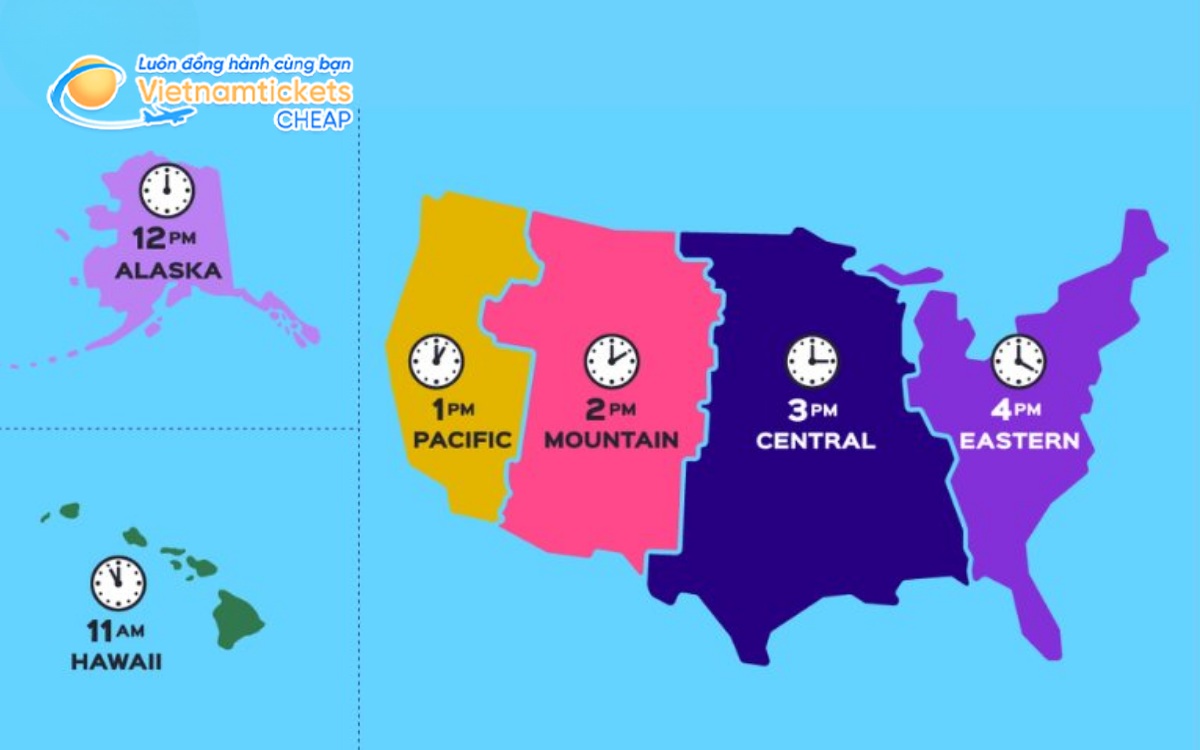
The continental United States is divided into six primary time zones, each spanning roughly 15 degrees of longitude, corresponding to one hour of difference. These zones are meticulously defined to align with solar time as much as possible, though political and practical considerations also play a role. From east to west, these are:
Eastern Time Zone (ET)
This is the time zone that governs New York City and a significant portion of the eastern United States. It encompasses states from Maine down to Florida and west to Michigan and Indiana. Eastern Time is further divided into two seasonal variations:
- Eastern Standard Time (EST): Observed during the fall and winter months, EST is UTC-5. This is the “standard” time from which Daylight Saving Time deviates.
- Eastern Daylight Time (EDT): Observed during the spring and summer months, EDT is UTC-4. The shift to EDT typically occurs on the second Sunday in March, and the return to EST happens on the first Sunday in November.
The practical implication of New York being in the Eastern Time Zone is that it is three hours ahead of Pacific Time. This means when it’s noon in New York, it’s only 9 AM in Los Angeles. This time difference is a critical factor for business meetings, flight bookings, and coordinating with friends or family located in different parts of the country. For instance, if you have a business call scheduled for 10 AM EST, you need to remember that this corresponds to 7 AM PST on the West Coast.
Pacific Time Zone (PT)
The Pacific Time Zone is the westernmost of the contiguous U.S. time zones. It covers states like California, Oregon, Washington, Nevada, and Idaho. Similar to Eastern Time, Pacific Time also observes Daylight Saving Time:
- Pacific Standard Time (PST): Observed during the fall and winter, PST is UTC-8.
- Pacific Daylight Time (PDT): Observed during the spring and summer, PDT is UTC-7.
The three-hour difference between ET and PT is perhaps the most significant and frequently encountered time disparity for many Americans and international visitors. This distinction impacts everything from late-night television shows (which air live on the East Coast and are rebroadcast three hours later on the West Coast) to the planning of cross-country events and conferences.
Other U.S. Time Zones
While ET and PT are the most relevant for the initial question, a complete understanding of U.S. time zones includes:
- Central Time Zone (CT): This zone lies between Eastern and Mountain Time and includes states like Texas, Illinois, and Wisconsin. It is two hours behind Eastern Time (UTC-6 Standard, UTC-5 Daylight).
- Mountain Time Zone (MT): This zone includes states like Colorado, Utah, and Arizona (though Arizona largely does not observe Daylight Saving Time, remaining on MST year-round). It is one hour behind Central Time (UTC-7 Standard, UTC-6 Daylight).
- Alaska Time Zone (AKT): This zone covers most of Alaska. It is typically four hours behind Eastern Time (UTC-9 Standard, UTC-8 Daylight).
- Hawaii-Aleutian Time Zone (HAT): This zone includes Hawaii and the westernmost Aleutian Islands. Hawaii does not observe Daylight Saving Time and remains on Hawaii Standard Time (HST), which is UTC-10. This makes it five hours behind Eastern Time.
The presence of multiple time zones across the contiguous U.S. underscores the importance of precise communication and planning, especially when geographical distances are involved.
Navigating Time Differences: Practical Travel Tips
For travelers, understanding and respecting time zone differences is paramount to a smooth and enjoyable experience. The “Is New York Pacific Time?” question is a gateway to appreciating these complexities.

Planning Your Itinerary
When planning a trip to New York from a Pacific Time Zone location, or vice versa, several considerations come into play:
- Flight Times: A flight from Los Angeles to New York might be approximately 5-6 hours. However, due to the three-hour time difference, if you depart Los Angeles at 9 AM PST, you will arrive in New York at approximately 5 PM EST (9 AM PST + 5-hour flight + 3-hour time difference). Always double-check departure and arrival times as listed in local time for each city.
- Booking Accommodations: While hotels in New York operate on Eastern Time, your booking confirmations will usually reflect local times. It’s good practice to confirm check-in and check-out times with the hotel directly if you have any concerns about the time difference impacting your schedule.
- Activities and Tours: Many attractions and guided tours in New York have specific start times. If you’re coming from the West Coast, be mindful of jet lag and the feeling of being “earlier” than your body clock might suggest. Similarly, when booking return travel, ensure you account for the time difference. Missing a flight because you miscalculated the time difference is a common, albeit frustrating, traveler’s mistake.
Communication and Business
The three-hour gap between Eastern and Pacific Time significantly affects communication, particularly for business purposes.
- Business Hours: Standard business hours in New York typically run from 9 AM to 5 PM EST. On the West Coast, this translates to 6 AM to 2 PM PST. This means early morning calls for West Coast businesses wanting to reach East Coast counterparts, or late afternoon calls for East Coast businesses reaching out to the West.
- Conferences and Meetings: Scheduling virtual meetings requires careful coordination. If a conference call is set for 1 PM EST, it’s important to remind participants that this is 10 AM PST. Many companies utilize scheduling tools that automatically adjust for time zones, but manual confirmation is always advisable.
- Staying Connected: If you have friends or family on the opposite coast, being aware of the time difference helps you avoid calling them too early or too late. A 9 PM EST call is 6 PM PST – a reasonable hour. However, a 9 PM PST call is midnight EST – likely too late for most.
Cultural and Daily Life Adjustments
Beyond formal scheduling, the time difference subtly influences daily life.
- News Cycles: Major news events often break on the East Coast and are reported throughout the day. By the time news reaches the West Coast, it has already been circulating for hours.
- Entertainment: Live broadcasts of sporting events and television shows on the East Coast are typically aired at their scheduled times. For Pacific Time viewers, these events are often shown on a delay, or the broadcast times are adjusted to be more convenient locally. For example, a New Year’s Eve ball drop in Times Square is a late-night event on the East Coast, while for those on the West Coast watching live, it happens in the evening.
- Jet Lag: Traveling from the Pacific Time Zone to New York means “losing” three hours. This can lead to symptoms of jet lag, such as difficulty sleeping, fatigue, and disorientation. Adjusting your sleep schedule a few days before your trip can help mitigate these effects. Conversely, traveling from New York to the Pacific Time Zone means “gaining” three hours, which can make you feel sleepy earlier than usual.
The Significance of Time Zones in Geography and Culture
The existence of distinct time zones is a fundamental aspect of global geography and a reflection of human civilization’s efforts to synchronize activities across vast distances. The question “Is New York Pacific Time?” touches upon this larger framework.
Historical Context
The standardization of time zones was a relatively recent development, largely driven by the expansion of railroads in the late 19th century. Before standardized time, each town or city would often set its own local time based on the sun’s position. This led to considerable confusion and inefficiency, especially for train schedules. The establishment of standard time zones, with the first being introduced in the United States in 1883, was a revolutionary step in global coordination.
The Impact on National Identity and Perception
While the United States is a single nation, its time zones create distinct temporal experiences that subtly shape regional identities and perceptions. The East Coast, being the first to greet the sun each day, is often perceived as being ahead, leading the way, or more fast-paced. The West Coast, with its later sunrises and sunsets, can be seen as more laid-back or a land of opportunity that unfolds later in the day. These perceptions, while generalizations, are part of the rich tapestry of American culture.
New York City: A Hub of Eastern Time
New York City, a global financial, cultural, and media capital, epitomizes the dynamism of the Eastern Time Zone. Its stock exchanges, major news networks, and Broadway theaters operate on EST/EDT. The city’s rhythm is deeply intertwined with this temporal designation, influencing everything from the morning rush hour to late-night entertainment. Understanding that New York is firmly rooted in Eastern Time is not just about knowing a fact; it’s about appreciating the operational heartbeat of one of the world’s most influential cities.
Conclusion: Clarifying the Temporal Geography
In conclusion, the question “Is New York Pacific Time?” is definitively answered with a resounding “no.” New York City, along with a vast swath of the eastern United States, observes Eastern Time (EST/EDT). This temporal distinction is not a minor detail; it is a critical element for anyone planning to travel to, conduct business in, or communicate with individuals in New York. Understanding the differences between Eastern Time and Pacific Time, as well as the other time zones that crisscross the nation, is an essential skill for efficient and effective navigation in the United States. It allows for seamless travel, accurate scheduling, and a deeper appreciation for the geographical and logistical realities that shape our interconnected world.
LifeOutOfTheBox is a participant in the Amazon Services LLC Associates Program, an affiliate advertising program designed to provide a means for sites to earn advertising fees by advertising and linking to Amazon.com. Amazon, the Amazon logo, AmazonSupply, and the AmazonSupply logo are trademarks of Amazon.com, Inc. or its affiliates. As an Amazon Associate we earn affiliate commissions from qualifying purchases.