
The name “Five Points” evokes a vivid image, conjuring scenes of 19th-century New York City, a period of intense immigration, burgeoning industry, and stark social contrasts. For those interested in the historical geography of this iconic metropolis, understanding the location and evolution of Five Points is crucial. It wasn’t merely a street intersection; it was a complex urban district, a crucible of American urban life that profoundly shaped the city’s narrative.
The Genesis of a Notorious District
The physical manifestation of Five Points as a distinct neighborhood emerged from the organic growth and planned development of lower Manhattan. Its origins are tied to the expansion and alteration of the city’s street grid and the repurposing of natural features.
Engineering and Topography
The area we now know as Five Points was not always an urban nexus. Its early development was significantly influenced by the natural landscape and subsequent human intervention. The infamous “Collect Pond,” a substantial freshwater body that once served as a primary water source for the early colonial settlement, was a prominent feature. As the city grew, this pond became increasingly polluted by industrial and human waste. By the early 19th century, efforts were made to drain and fill the Collect Pond, an ambitious engineering feat aimed at creating more usable land for development. However, the land proved unstable, prone to settling and waterlogging due to the underlying marshy terrain and the remnants of the drained pond. This inherent instability would later contribute to the district’s dilapidated and often precarious structures.
The Confluence of Streets
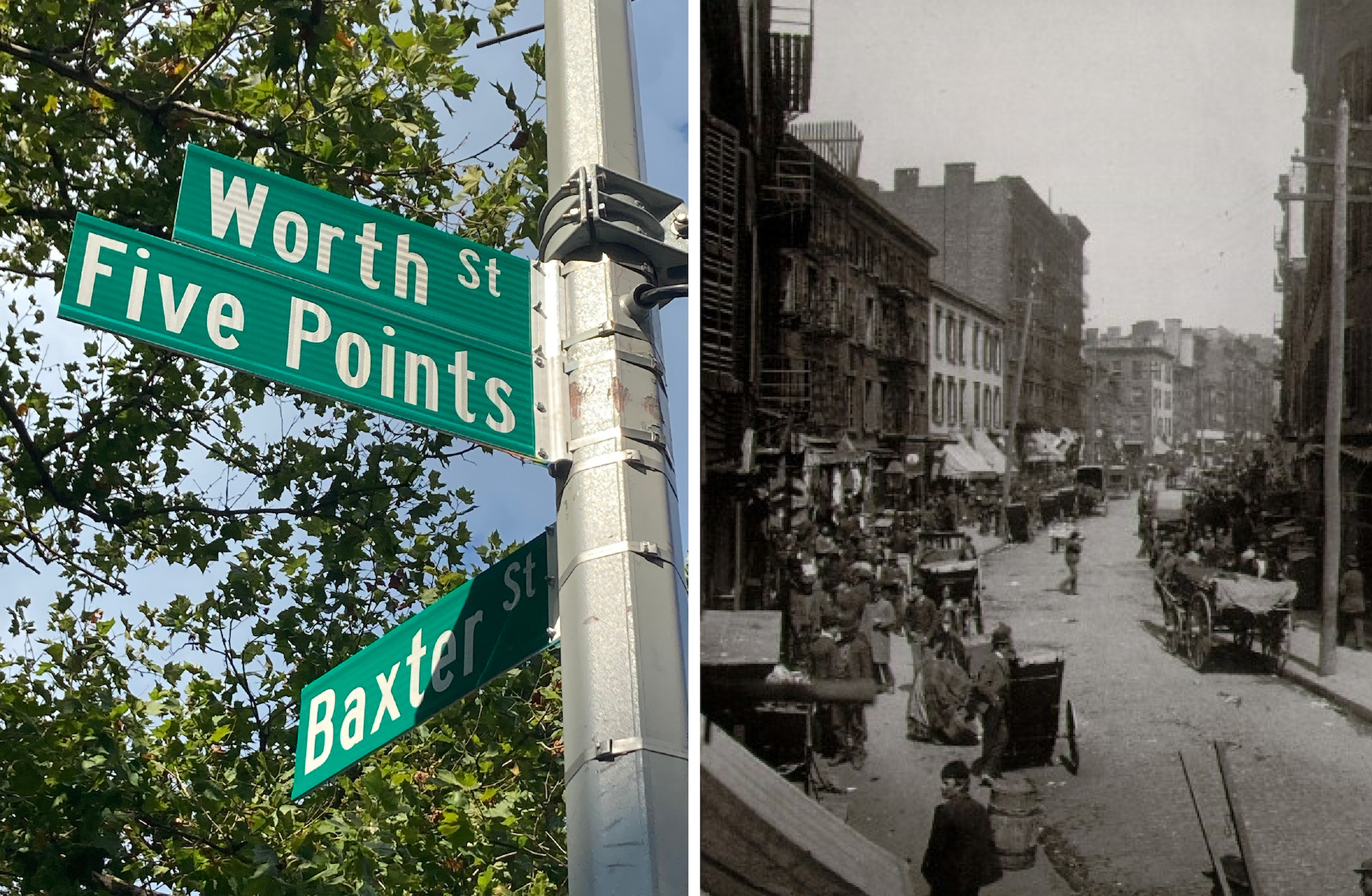
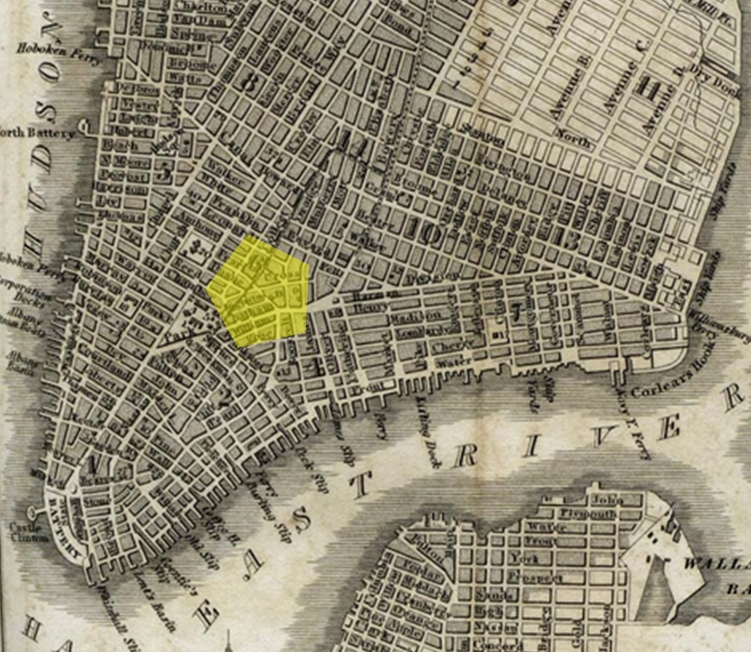
The name “Five Points” itself hints at its geographical configuration. It referred to the five distinct streets that converged at a central, irregular intersection: Anthony Street (now Worth Street), Cross Street (now Mosco Street), Orange Street (now Baxter Street), Mulberry Street, and Chatham Street (now Park Row). The convergence of these thoroughfares, particularly at a point where development was already dense, created a unique and, by the mid-19th century, infamous focal point. This intersection became the heart of a densely populated, rapidly evolving, and increasingly marginalized urban territory. The very geometry of the place, a confluence of converging arteries, became synonymous with the influx of people and the ensuing social dynamics.
The Unfolding Narrative of Five Points
From its nascent stages, Five Points was characterized by a diverse and often impoverished population, attracting immigrants and those seeking opportunity or refuge. Its reputation, however, would solidify over time, becoming a symbol of urban challenges and societal stratification.
Immigration and Population Density
The 19th century witnessed unprecedented waves of immigration to America, and New York City served as the primary gateway. Five Points, with its relatively cheap rents and proximity to docks and early industrial centers, became a magnet for newcomers, particularly from Ireland and, later, from Germany and other European nations. The Irish Potato Famine, in particular, led to a massive influx of impoverished Irish immigrants who found themselves concentrated in areas like Five Points. This rapid population growth, coupled with the area’s limited infrastructure, led to extreme overcrowding, substandard housing, and a breeding ground for disease and social unrest. Tenements, often built in haste and with little regard for sanitation or safety, became the defining architecture of the district.

Social Stratification and Reputation
As the 19th century progressed, Five Points became synonymous with poverty, crime, and vice. The stark contrasts between the opulent mansions of Fifth Avenue and the squalid rookeries of Five Points highlighted the growing economic disparities within the city. The district’s notoriety was amplified by sensationalist journalism and lurid literature, which often depicted Five Points as a den of iniquity. While these portrayals often exaggerated the reality, they reflected genuine concerns about public health, crime, and the challenges of integrating a rapidly growing, diverse, and impoverished population into the urban fabric. Institutions like the Five Points Mission sought to address the area’s social ills through education, religious outreach, and vocational training, aiming to uplift its inhabitants and mitigate the perceived dangers emanating from the district.
The Physical Landscape and Its Transformation
The physical environment of Five Points was a direct consequence of its history, its population, and the city’s ongoing development. It was a landscape shaped by both necessity and neglect.
Tenements and Slums
The housing in Five Points was predominantly composed of overcrowded and poorly constructed tenements. These buildings, often several stories high, housed multiple families in small, often single-room dwellings. Conditions were dire, with inadequate ventilation, lack of running water, and primitive sanitation facilities. Disease was rampant, and infant mortality rates were alarmingly high. The term “slum” became indelibly linked to Five Points, a physical manifestation of urban poverty and the harsh realities faced by many immigrants and working-class families. Streets were narrow, often unpaved, and littered with refuse, contributing to the district’s unsanitary conditions.
Attempts at Reform and Redevelopment
Over time, the extreme conditions in Five Points drew the attention of reformers and city planners. The persistent issues of disease, crime, and squalor made it a focal point for efforts aimed at urban improvement. Various initiatives, ranging from philanthropic endeavors to public health campaigns and, eventually, urban renewal projects, sought to transform the area. The establishment of parks, the development of improved sanitation systems, and the construction of new, albeit often still crowded, housing were part of these efforts. However, the deep-seated issues of poverty and social marginalization proved difficult to eradicate, and the legacy of Five Points continued to influence discussions about urban planning and social welfare for decades.
The Enduring Legacy of Five Points
Though the physical boundaries and characteristics of Five Points have evolved and largely disappeared under the pressures of modern urban development, its historical significance remains. It serves as a crucial case study in the challenges of urbanization, immigration, and social inequality in America.
Echoes in Modern New York City
While the specific intersection of Five Points as it existed in the 19th century is no longer a prominent feature of the cityscape, the area it occupied is now part of modern lower Manhattan. The streets that once converged there have been rerouted and renamed, and much of the original architecture has been replaced. Today, the vicinity of Five Points is a vibrant and bustling part of the city, home to commercial districts and residential buildings. However, beneath the surface of contemporary New York City, the historical echoes of Five Points persist. Its story is a reminder of the city’s complex past, its struggles with poverty and immigration, and the enduring human spirit that has shaped its development. The narrative of Five Points continues to inform our understanding of urban history, social justice, and the ongoing evolution of metropolitan life. It is a reminder that behind the gleaming skyscrapers and bustling avenues lies a layered history of hardship, resilience, and transformation.
LifeOutOfTheBox is a participant in the Amazon Services LLC Associates Program, an affiliate advertising program designed to provide a means for sites to earn advertising fees by advertising and linking to Amazon.com. Amazon, the Amazon logo, AmazonSupply, and the AmazonSupply logo are trademarks of Amazon.com, Inc. or its affiliates. As an Amazon Associate we earn affiliate commissions from qualifying purchases.