
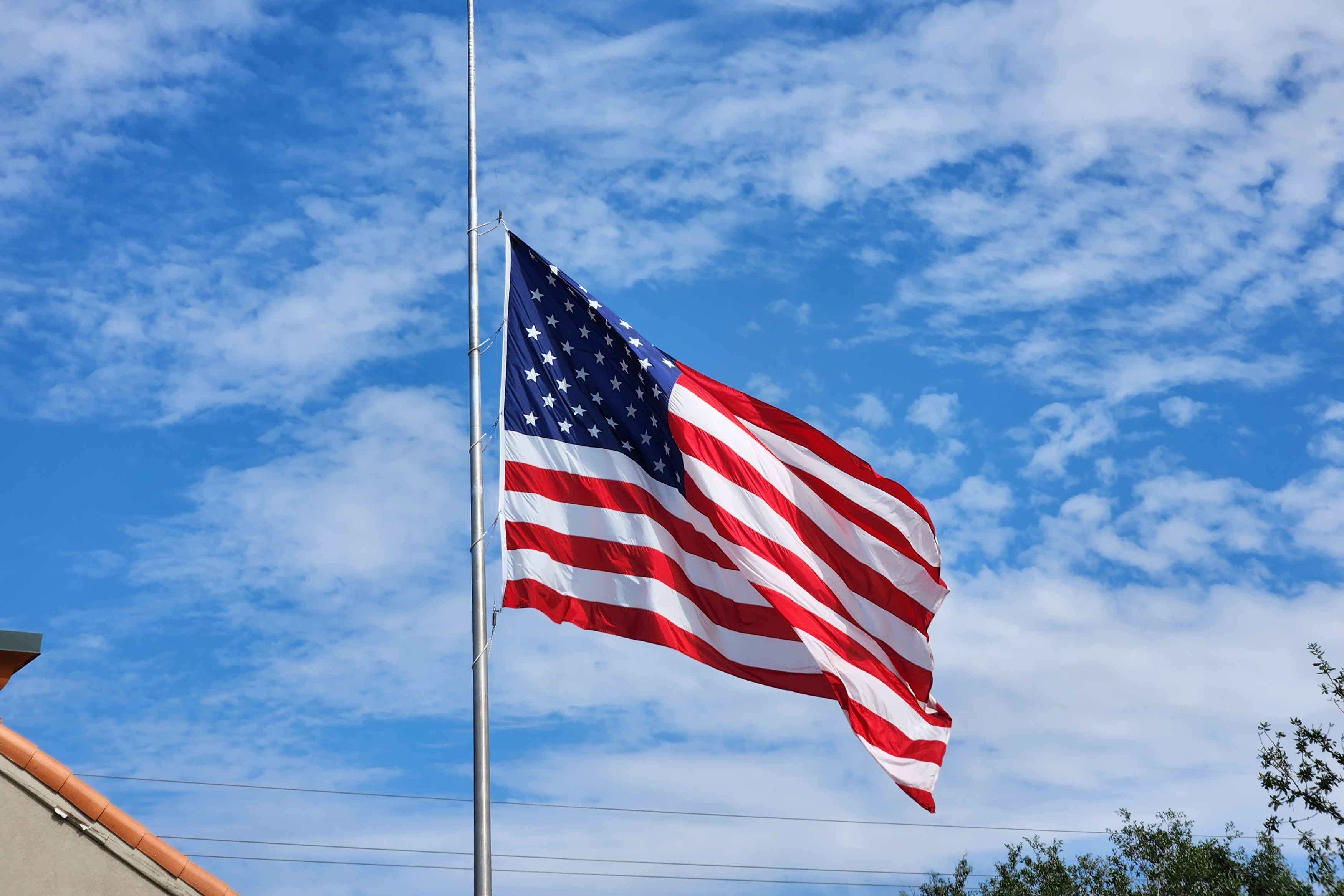
The sight of a flag lowered to half-mast is a somber and significant one, often prompting questions about the reasons behind this display of national or state mourning. When flags across New York are observed at half-mast, it indicates a moment of collective remembrance and respect for individuals or events of profound consequence. Understanding the protocols and the types of occasions that necessitate such a tribute sheds light on the civic and emotional landscape of the state and the United States as a whole. This practice is not arbitrary; it is governed by specific rules and traditions that reflect deeply held values of honor, loss, and solidarity.

Protocols and Significance of Half-Mast Display
The practice of flying the flag at half-mast, or half-staff as it is technically known for pole-mounted flags, is a universally recognized symbol of mourning. In the United States, this solemn tradition is guided by federal law and presidential proclamations, as well as state-specific statutes and executive orders. The rationale behind this display is to acknowledge a significant loss, be it the death of a prominent figure, a tragic event, or a day of national remembrance.
Federal Guidelines and Presidential Proclamations
The U.S. Flag Code outlines the specific instances when the national flag should be flown at half-mast. Primarily, this occurs upon the death of the President of the United States, the Vice President, the Chief Justice and Associate Justices of the Supreme Court, the Speaker of the House of Representatives, and other high-ranking government officials. Following the death of a former President, the flag is flown at half-mast for 30 days from the day of death. For other specified officials, the duration is typically 10 days.
Presidential proclamations are the formal mechanism through which the national flag is ordered to be flown at half-mast for specific individuals or events. These proclamations often extend the directive to all federal buildings, military installations, and naval vessels across the nation and its territories. While federal law dictates national observances, individual states and territories have the authority to issue their own proclamations for state-level mourning.
State-Level Executive Orders in New York
In New York, the Governor of the state holds the authority to order the flag to be flown at half-mast on state buildings. These orders are often issued in response to the death of a prominent New Yorker, such as a former governor, state official, or a distinguished citizen whose passing has had a significant impact on the state. Additionally, governors may issue proclamations to honor victims of tragic events, whether they occurred within the state or had a particular resonance for New York residents.
The duration of these state-level half-mast directives can vary. They might align with federal observances or be specific to the state’s own period of remembrance. For instance, if a New York native who served in a significant national role passes away, both federal and state flags might be lowered. Similarly, in the wake of a devastating event like a natural disaster or a terrorist attack, the state governor might order flags lowered to honor the victims and express collective grief.
The Symbolism of Half-Mast
The act of lowering the flag to half-mast carries profound symbolic weight. It represents a pause in the usual vibrancy and prominence of the national or state emblem, mirroring a collective moment of introspection and sorrow. It is a visual cue that draws attention to a loss that has deeply affected the community, the state, or the nation. This shared visual acknowledgment fosters a sense of unity in grief and a collective commitment to remember and honor those lost or the gravity of the event. The act is a quiet, dignified way to express respect and solidarity during times of national or state tragedy and loss.
Common Occasions for Half-Mast in New York
The reasons for New York flags being flown at half-mast are diverse, ranging from the passing of national leaders to the commemoration of significant historical events or tragic incidents. These occasions are meticulously observed to ensure that the state appropriately honors those deserving of solemn tribute.
Honoring Deceased Public Officials and Dignitaries
One of the most frequent reasons for flags to be lowered is the death of a public official or a significant dignitary. In New York, this extends to former governors, members of the congressional delegation, state senators and assembly members, and other prominent figures who have served the state and its citizens. When such an individual passes, the Governor of New York will typically issue an executive order to lower the state flag, and often directs that the U.S. flag also be flown at half-mast, aligning with federal guidelines if the deceased held federal office.
The duration of this observance is usually prescribed by the executive order, often lasting for a specified number of days following the announcement of death or the interment. This period allows citizens and government employees to reflect on the contributions of the departed and to participate in memorial services. For example, the passing of a former Mayor of New York City, especially one who had a significant impact on the city’s development or resilience, would very likely trigger such a directive.
Commemorating Tragic Events and Victims
New York has, unfortunately, experienced its share of tragic events that have profoundly impacted its residents and the nation. In such times, flags are often flown at half-mast to honor the victims and express collective grief. This can include acts of terrorism, mass shootings, natural disasters, or any event that results in significant loss of life and widespread suffering.
A poignant example is the annual observance of September 11th. On this solemn anniversary, the flags at federal, state, and local government buildings throughout New York are flown at half-mast to remember the nearly 3,000 lives lost in the attacks on the World Trade Center. This act of remembrance is not only for the victims but also a testament to the resilience and unity of the city and the nation in the face of immense adversity. Similarly, in the aftermath of devastating natural disasters, such as those that have occasionally affected parts of the state, governors have the authority to order flags lowered in solidarity with affected communities and to honor those who perished.
Observances of National Days of Mourning and Remembrance
Beyond specific deaths or tragedies, flags in New York are also lowered during federally mandated days of national mourning or remembrance. These are often designated by presidential proclamations and apply to all federal installations. State governors typically follow suit, ensuring that the state’s flags are also lowered in unison with the rest of the nation.
Examples include days set aside to honor fallen service members, such as Memorial Day, when flags are flown at half-mast until noon before being raised to full-staff. This solemn observance pays tribute to those who have made the ultimate sacrifice in service to the country. Other national days of mourning might be declared in response to widespread national tragedies or to commemorate significant historical moments that warrant a period of collective reflection and respect. The consistent application of these observances across the nation, including in New York, reinforces a shared sense of identity and a collective commitment to remembering important aspects of the American story, both in times of triumph and sorrow.
Procedures for Raising and Lowering the Flag
The proper procedure for raising and lowering the flag is as important as the decision to do so. Adherence to these protocols ensures that the solemnity and respect associated with the act are maintained. These procedures are not merely procedural; they are steeped in tradition and designed to honor the symbol of the nation and its people.
The Art of “First and Last Raise”
When a flag is to be flown at half-mast, there are specific instructions for its handling. The flag should first be raised to the peak of the staff for an instant and then lowered slowly to the half-mast position. This “first raise” is crucial; it symbolizes the nation’s vitality and the commitment to hoist the flag to its full glory before acknowledging a period of sorrow. When the flag is to be lowered at the end of the half-mast period, it should again be raised to the peak for an instant before being lowered completely. This “last raise” signifies the return to normalcy and the continued strength and endurance of the nation.
Designated Personnel and Locations
The responsibility for correctly handling the flag typically falls to designated personnel, such as facility managers, honor guards, or members of the maintenance staff at government buildings, schools, and other public institutions. In more solemn ceremonies, such as state funerals or major memorial events, the U.S. military may be involved in the flag-raising and lowering procedures, ensuring the highest level of protocol and respect.
Flags are flown at half-mast on all official buildings and grounds within the jurisdiction covered by the proclamation or order. This includes state capitol buildings, municipal offices, courthouses, public schools, and other state-operated facilities across New York. The visibility of the flag at half-mast serves as a constant reminder of the occasion being commemorated, prompting reflection and understanding among the public.

Timing and Duration Considerations
The timing of when a flag is lowered to half-mast and when it is returned to full-staff is usually stipulated in the official proclamation or executive order. For federal observances, the President’s proclamation will specify the exact dates and times. For state-specific events, the Governor’s executive order will provide these details.
It is essential that these timings are adhered to precisely. For instance, on Memorial Day, the flag is flown at half-mast until noon and then raised to full-staff. This practice signifies the memory of the fallen during the morning and the continued resolve of the living in the afternoon. In cases of prolonged mourning, such as after the death of a former President, the flag remains at half-mast for a set number of days, signifying a sustained period of national grief and remembrance. The meticulous attention to detail in these procedures underscores the deep respect accorded to the flag and the solemnity of the occasions it represents.
LifeOutOfTheBox is a participant in the Amazon Services LLC Associates Program, an affiliate advertising program designed to provide a means for sites to earn advertising fees by advertising and linking to Amazon.com. Amazon, the Amazon logo, AmazonSupply, and the AmazonSupply logo are trademarks of Amazon.com, Inc. or its affiliates. As an Amazon Associate we earn affiliate commissions from qualifying purchases.