
Navigating the legal landscape of recording conversations, whether for personal journaling, investigative purposes, or even documenting memorable travel experiences, can be complex. A crucial aspect of this legal framework is understanding a state’s stance on one-party consent versus two-party consent laws. These laws dictate whether all parties involved in a conversation must agree to its recording, or if just one party’s consent is sufficient. This inquiry into whether Oklahoma operates as a one-party consent state is vital for anyone considering recording interactions within its borders, especially when planning trips or documenting local culture.
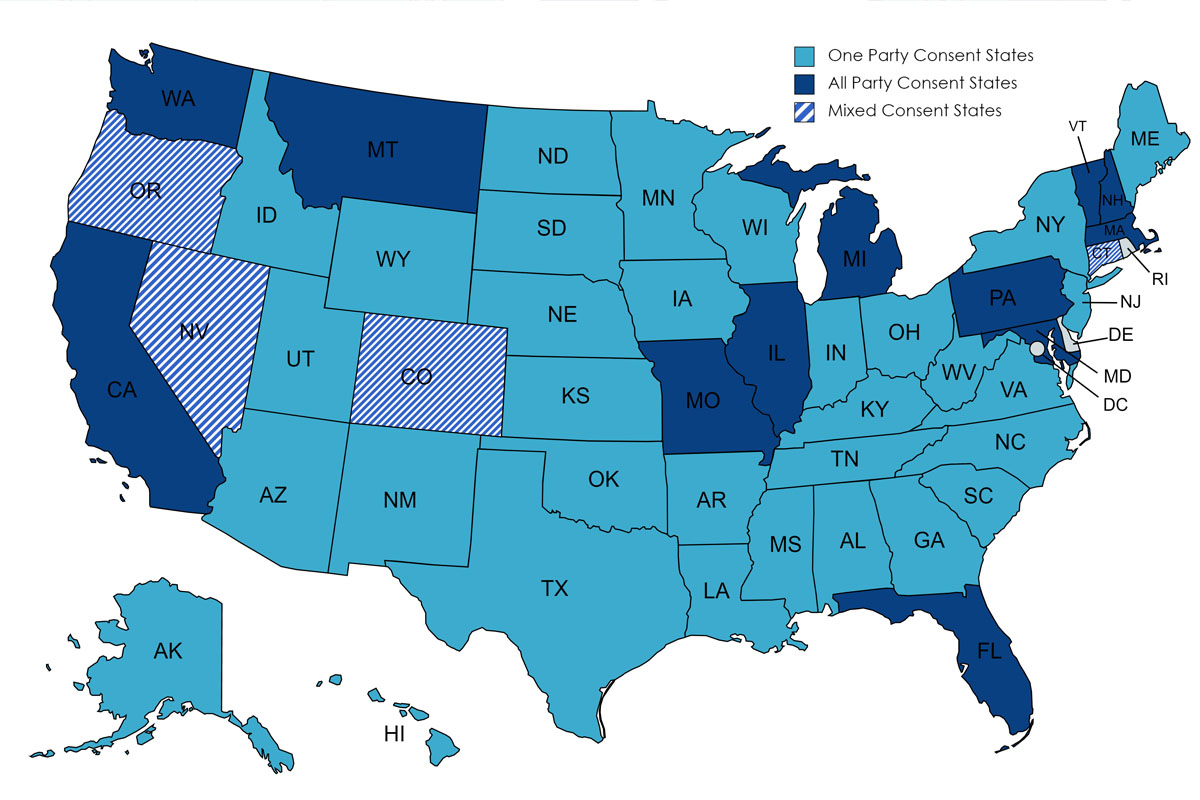
Understanding Consent Laws in Conversation Recording
At its core, the distinction between one-party and two-party consent laws hinges on the number of individuals whose permission is legally required to record an oral communication.
One-Party Consent
In a one-party consent state, a conversation can be legally recorded if at least one participant in the conversation is aware of and consents to the recording. This means that if you are part of a conversation, you have the legal right to record it without the knowledge or consent of the other participants, provided you are a consenting party yourself. The rationale behind such laws often centers on the idea that individuals engaging in conversations have no reasonable expectation of privacy when they themselves are aware that the conversation might be recorded. For travelers exploring Oklahoma, this could mean being able to capture spontaneous interactions with locals, document market transactions, or record insights from tour guides without explicitly asking everyone involved for permission, as long as you are part of the conversation.
Two-Party Consent
Conversely, two-party consent (often referred to as all-party consent) states require that all parties to a conversation must agree to its recording. If you are in a two-party consent state, you cannot legally record a conversation unless every single participant has given their explicit consent. Failing to obtain this universal consent in such states can lead to serious legal repercussions, including civil lawsuits and criminal charges. While this approach emphasizes a stronger right to privacy for all participants, it can add layers of complexity to spontaneous recording, particularly in public or semi-public spaces where identifying and obtaining consent from every individual might be impractical.
Oklahoma’s Position: A Legal Deep Dive
The question of Oklahoma’s status as a one-party or two-party consent state is a matter of statutory law. Understanding the specific statutes governing this area is paramount for both residents and visitors.
The Oklahoma Statutes on Recording Conversations
Oklahoma law, specifically 13 O.S. § 176.3, addresses the interception and disclosure of wire, oral, or electronic communications. This statute generally aligns with a one-party consent framework. The law states that it is unlawful for any person to willfully intercept, attempt to intercept, or procure any other person to intercept or attempt to intercept any wire, oral, or electronic communication, unless:
- The interception is made with the consent of at least one of the parties to the communication.
- The interception is made for the purpose of a law enforcement investigation under specific legal authorization.
This provision clearly indicates that if you are a participant in a conversation within Oklahoma, you are legally permitted to record that conversation without the knowledge or consent of the other parties, as long as you are one of the consenting parties. This is a critical piece of information for anyone planning to document their travels, conduct interviews, or engage in any activity where recording spoken words might be beneficial.
Implications for Travelers and Local Explorers
For those visiting or residing in Oklahoma, the one-party consent law offers a degree of freedom when it comes to capturing audio. This could be particularly relevant when exploring Oklahoma’s rich cultural tapestry, from attending live music performances in Tulsa or Oklahoma City to recording personal reflections on historical sites like the Oklahoma City National Memorial & Museum or the natural beauty of the Wichita Mountains Wildlife Refuge.
However, it is crucial to remember that even in a one-party consent state, there are nuances and potential limitations.

Reasonable Expectation of Privacy
While Oklahoma follows one-party consent, the concept of a “reasonable expectation of privacy” still plays a role. This means that while you can record a conversation you are part of, recording private conversations taking place around you without your involvement, or in places where individuals have a strong expectation of privacy (like inside a private residence or a restroom), could still be problematic. The law primarily protects the privacy of the communication itself, not necessarily the absolute right of individuals to speak without any possibility of being overheard or recorded by someone participating in their dialogue.
Public vs. Private Spaces
In public spaces, the expectation of privacy is generally lower. For instance, recording a street performance in downtown Oklahoma City or a conversation at an outdoor farmers market is less likely to run afoul of privacy concerns than attempting to record a private discussion in a hotel room at the Skirvin Hilton Oklahoma City.
Business and Professional Contexts
Even within the context of travel and tourism, certain situations might warrant extra caution. If you are conducting interviews for a travel blog or documentary, or if you are in a business meeting while in Oklahoma, it is always a best practice to inform all parties that you intend to record. While legally permissible under one-party consent, transparency often fosters better relationships and avoids potential misunderstandings. For example, when interviewing a local artisan at the Plaza District or a shop owner near Bricktown, a simple “Would it be alright if I recorded our conversation for my notes?” can be both courteous and prevent any future issues.
Best Practices and Considerations
Despite Oklahoma’s clear stance on one-party consent, adopting a mindful approach to recording can enhance experiences and mitigate potential risks.
Transparency is Key
While not always legally mandated in Oklahoma, being upfront about recording is often the most respectful and professional approach. This is especially true when engaging with individuals for interviews, educational purposes, or any professional capacity. Informing participants can lead to more open and honest dialogue, as well as prevent any feelings of being deceived or surveilled.
Understanding the “Oral Communication” Definition
It’s important to recognize what constitutes “oral communication” under the law. This typically refers to spoken words that are not in a public broadcast or in any other circumstance where the parties involved have no reasonable expectation that the communication will be overheard or recorded. Spontaneous conversations between individuals generally fall under this umbrella.
Legal Advice and Specific Situations
While this article provides an overview of Oklahoma’s one-party consent law, it is not a substitute for legal advice. Specific situations can involve complex legal interpretations. If you are undertaking a recording project with significant legal implications, or if you are unsure about the legality of a particular recording scenario, consulting with a qualified attorney in Oklahoma is always recommended. This is particularly relevant if your activities might involve areas with overlapping federal laws or interstate communication.
Respecting Cultural Norms
Beyond legal statutes, understanding and respecting local cultural norms is crucial when traveling. While the law may permit recording a conversation you are part of, some individuals or communities might have sensitivities around being recorded. Being aware of these cultural nuances, even if not legally binding, can foster positive interactions and ensure a more enriching travel experience. For instance, when visiting Native American cultural centers or participating in community events, demonstrating respect for privacy and consent can be paramount.

Conclusion
In conclusion, Oklahoma is indeed a one-party consent state for the recording of oral communications. This means that if you are a participant in a conversation within the state, you can legally record it without the explicit consent of the other parties involved. This legal framework can be a useful tool for travelers and residents alike, allowing for documentation of experiences and interactions. However, it is always advisable to proceed with transparency and respect, especially in sensitive situations or when engaging in professional activities. Understanding the law, combined with an awareness of privacy expectations and cultural sensitivities, ensures responsible and ethical recording practices during your exploration of the Sooner State.
LifeOutOfTheBox is a participant in the Amazon Services LLC Associates Program, an affiliate advertising program designed to provide a means for sites to earn advertising fees by advertising and linking to Amazon.com. Amazon, the Amazon logo, AmazonSupply, and the AmazonSupply logo are trademarks of Amazon.com, Inc. or its affiliates. As an Amazon Associate we earn affiliate commissions from qualifying purchases.