
Navigating the legal landscape of employment can feel complex, especially when considering the specific regulations of a particular state. For businesses operating in or considering expanding to the Sooner State, understanding its employment laws is paramount. One of the most fundamental aspects of this is the concept of “at-will” employment. This article delves into the nature of at-will employment in Oklahoma, its implications for both employers and employees, and the exceptions that shape its practical application.
Understanding At-Will Employment
At its core, the doctrine of at-will employment means that an employer can terminate an employee’s work for any reason, or for no reason at all, as long as it’s not an illegal reason. Conversely, an employee can also leave their job for any reason, or for no reason, without penalty. This mutual freedom defines the at-will relationship.
The Origins and Rationale
The at-will doctrine is deeply rooted in American common law. Its historical justification stemmed from a desire to promote economic freedom and facilitate a dynamic labor market. Employers were perceived as having the freedom to hire and fire as they saw fit to meet business needs, while employees retained the freedom to seek better opportunities. This principle was widely adopted by states, including Oklahoma, as a default employment relationship.
Key Characteristics in Oklahoma
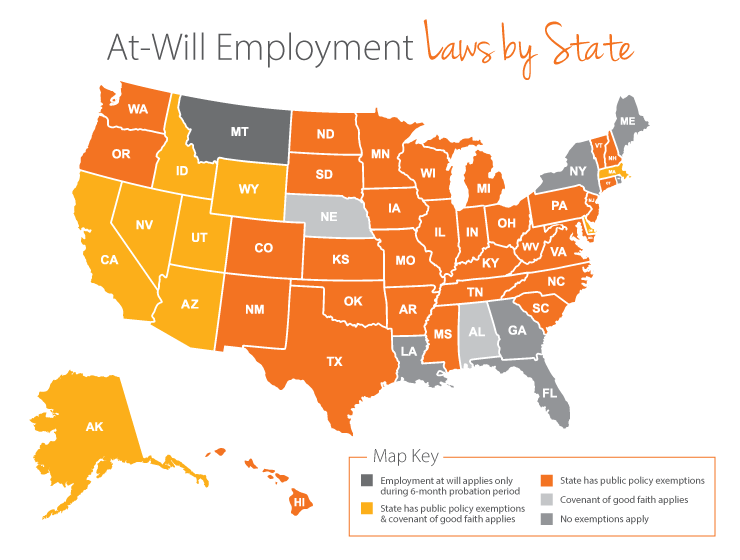
In Oklahoma, the at-will doctrine is the prevailing standard. This means that unless there is a specific contract, collective bargaining agreement, or statutory exception in place, the at-will principle applies to most employment relationships within the state. Employers in Oklahoma generally have broad discretion in their hiring and firing decisions. This can offer employers flexibility in managing their workforce, adapting to market changes, and addressing performance issues swiftly.
However, this flexibility is not absolute. The legal framework in Oklahoma, like in many other states, has evolved to incorporate protections for employees, creating important caveats to the at-will doctrine.
Exceptions to the At-Will Doctrine in Oklahoma
While the default is at-will, several crucial exceptions limit an employer’s ability to terminate an employee for any reason. These exceptions are designed to protect employees from unlawful discrimination, retaliation, and unfair practices.
Public Policy Exception
One of the most significant exceptions to the at-will doctrine is the public policy exception. This exception prevents employers from terminating an employee for refusing to commit an illegal act or for reporting illegal activities by the employer. In essence, an employer cannot fire an employee for upholding the law or for participating in lawful activities that benefit society.
For instance, if an employee is asked to falsify financial records for their company, and they refuse based on the illegality of the request, they would likely be protected from termination under the public policy exception. Similarly, whistleblowers who report violations of the law to the appropriate authorities are typically protected from retaliatory discharge. The scope of this exception can be broad, encompassing various public interests, from environmental protection to workplace safety.
Statutory Exceptions
Beyond public policy, numerous state and federal statutes provide explicit protections against termination for specific reasons. These statutes often overlap with public policy concerns but offer clearer legal recourse for employees.
- Discrimination: Federal laws such as Title VII of the Civil Rights Act of 1964, the Age Discrimination in Employment Act (ADEA), and the Americans with Disabilities Act (ADA) prohibit employers from terminating employees based on race, color, religion, sex, national origin, age, or disability. Oklahoma also has its own anti-discrimination laws, such as the Oklahoma Anti-Discrimination Act, which mirrors many federal protections. An employer cannot fire an employee because they belong to a protected class or because of a perceived characteristic related to these classes.
- Retaliation: These same statutes also protect employees from retaliation. If an employee engages in a protected activity, such as filing a discrimination complaint, participating in an investigation, or requesting a reasonable accommodation, an employer cannot fire them in retaliation for that action.
- Wage and Hour Laws: Employees are protected from termination for asserting their rights under wage and hour laws, such as claiming overtime pay or minimum wage.
- Workers’ Compensation: An employer cannot terminate an employee for filing a workers’ compensation claim after a workplace injury. This protection is vital for ensuring that employees feel secure in seeking medical attention and compensation for work-related injuries without fear of losing their jobs.
- Family and Medical Leave: While Oklahoma does not have a state-specific broad family and medical leave law similar to the federal Family and Medical Leave Act (FMLA), employees who qualify under the FMLA are protected from termination for taking approved leave for serious health conditions or to care for family members.

Contractual Exceptions
The at-will presumption can also be altered by an express or implied contract for employment.
- Express Contracts: If an employer and employee enter into a written employment contract that specifies a definite term of employment (e.g., a one-year contract) or outlines specific conditions under which termination can occur, the terms of that contract will generally supersede the at-will doctrine. In such cases, an employer can only terminate the employee for the reasons stated in the contract or at the end of the contract term.
- Implied Contracts: While more difficult to establish, an implied contract can sometimes arise from an employer’s promises or actions. This can include statements made in employee handbooks, oral assurances of job security, or long-standing company practices that suggest termination will only occur for cause. However, employers often include disclaimers in their handbooks and policies to explicitly state that the handbook does not create an employment contract and that employment remains at-will.
Implications for Employers in Oklahoma
For businesses operating in Oklahoma, understanding the at-will doctrine and its exceptions is crucial for mitigating legal risks.
Developing Sound Employment Practices
- Clear Policies: Employers should maintain clear, written policies regarding hiring, performance, discipline, and termination. Employee handbooks should explicitly state that employment is at-will, and any statements that could be construed as contractually binding should be avoided.
- Documentation: Thorough documentation of performance issues, disciplinary actions, and reasons for termination is essential. This documentation serves as evidence to support termination decisions if challenged.
- Consistent Application: Policies and procedures must be applied consistently to all employees. Inconsistent application can lead to claims of discrimination or unfair treatment.
- Training: Managers and supervisors should receive training on employment laws, including the at-will doctrine, anti-discrimination laws, and proper documentation procedures. This helps prevent well-intentioned but legally problematic actions.
Navigating Termination Decisions
When considering terminating an employee in Oklahoma, employers must:
- Review the Reason: Ensure the reason for termination is not illegal (e.g., discriminatory, retaliatory, or in violation of public policy).
- Check for Contracts: Verify if any express or implied contract exists that might alter the at-will relationship.
- Consult Legal Counsel: It is always advisable to consult with an employment attorney before proceeding with a termination, especially in complex situations or when significant legal risks are perceived. An attorney can assess the specific facts and provide guidance to ensure compliance with Oklahoma and federal laws.
Implications for Employees in Oklahoma
For employees in Oklahoma, understanding their rights under the at-will doctrine is equally important.
Knowing Your Rights
- Protection Against Unlawful Termination: Employees are protected from termination based on illegal discrimination, retaliation for engaging in protected activities, or for refusing to violate the law.
- Seeking Legal Advice: If an employee believes they have been wrongfully terminated in violation of an exception to the at-will doctrine, they should seek legal advice from an employment attorney. An attorney can help evaluate the situation and determine the best course of action.
- Reviewing Employment Agreements: Employees should carefully review any employment contracts or offer letters they receive, as these documents can significantly impact their employment status and termination rights.
The Importance of Documentation
Employees should also maintain their own records of employment-related matters, including performance reviews, communications with supervisors, and any incidents that might suggest wrongful termination. This personal documentation can be invaluable if legal action becomes necessary.

Conclusion: A Nuanced At-Will Landscape
In conclusion, while Oklahoma operates primarily as an at-will state, this doctrine is not an unfettered license for employers to terminate employment arbitrarily. A complex web of exceptions, including public policy, statutory protections against discrimination and retaliation, and contractual agreements, significantly shapes the at-will landscape. Both employers and employees in Oklahoma must be well-informed about these nuances to navigate the employment relationship legally and equitably. Understanding these principles fosters a more transparent and fair working environment for all parties involved.
LifeOutOfTheBox is a participant in the Amazon Services LLC Associates Program, an affiliate advertising program designed to provide a means for sites to earn advertising fees by advertising and linking to Amazon.com. Amazon, the Amazon logo, AmazonSupply, and the AmazonSupply logo are trademarks of Amazon.com, Inc. or its affiliates. As an Amazon Associate we earn affiliate commissions from qualifying purchases.