
The question of why Texans might seem to harbor animosity towards their northern neighbor, [Oklahoma], is a common one, often fueled by friendly (and sometimes not-so-friendly) inter-state banter. While the narrative of “hate” is largely an exaggeration, rooted in a complex tapestry of historical rivalries, cultural differences, and a healthy dose of competitive spirit, understanding these dynamics offers a fascinating glimpse into the regional identities of both states. This exploration delves into the historical roots, the cultural contrasts, and the sporting rivalries that contribute to this peculiar, and often humorous, Texan sentiment towards [Oklahoma].
A Legacy of Land and Independence
The origins of Texan-Oklahoman relations are deeply embedded in the historical acquisition and settlement of the land now comprising both states. The vast territories were once part of larger administrative entities, and their eventual establishment as separate states led to inherent points of contention and distinct developmental paths.
The Red River Rivalry’s Historical Echoes
The border between [Texas] and [Oklahoma] is demarcated by the [Red River], a geographical feature that has witnessed centuries of territorial disputes and cultural exchanges. Historically, land claims and resource allocation were significant drivers of friction. The [Cherokee Outlet], a large tract of land purchased by the [Cherokee Nation] from the [Muscogee (Creek) Nation], eventually became part of [Oklahoma]. Prior to that, this land was a buffer and a point of contention, influencing settlement patterns and economic development for both Native American tribes and later European-American settlers, many of whom had ties to [Texas].
The establishment of [Oklahoma Territory] in 1890 and its subsequent statehood in 1907, alongside [Texas]’s long-established statehood dating back to 1845, created distinct political and economic landscapes. [Texas], with its early independence from [Mexico] and its booming cattle industry, developed a strong sense of self-reliance and a distinct Southern-Western identity. [Oklahoma], on the other hand, emerged from a mix of Native American territories, land rushes, and the later oil boom, fostering a unique blend of frontier spirit and agricultural focus. These differing origins and developmental trajectories laid the groundwork for contrasting regional identities, which would later manifest in various forms of rivalry.
Economic Divergence and Shared Resources
While both states have historically relied on natural resources, their primary economic drivers have often differed, leading to periods of both competition and occasional cooperation. [Texas]’s economic powerhouse has long been its oil and gas industry, alongside a rapidly growing technology sector and diversified agricultural output. [Oklahoma]’s economy, while also significantly tied to oil and gas, has historically had a stronger agricultural base, particularly in its western regions, and has seen growth in aerospace and manufacturing.
The proximity of these economies means that they are inevitably intertwined. Decisions made in one state regarding resource management, trade policies, or industrial development can have ripple effects in the other. This interdependence, however, can also breed a sense of competition, particularly when resources are perceived as scarce or when one state gains a perceived economic advantage over the other. For instance, debates over water rights or the impacts of fluctuating oil prices can highlight economic sensitivities between the two states.
The Red River Rivalry: A Sporting and Cultural Clash
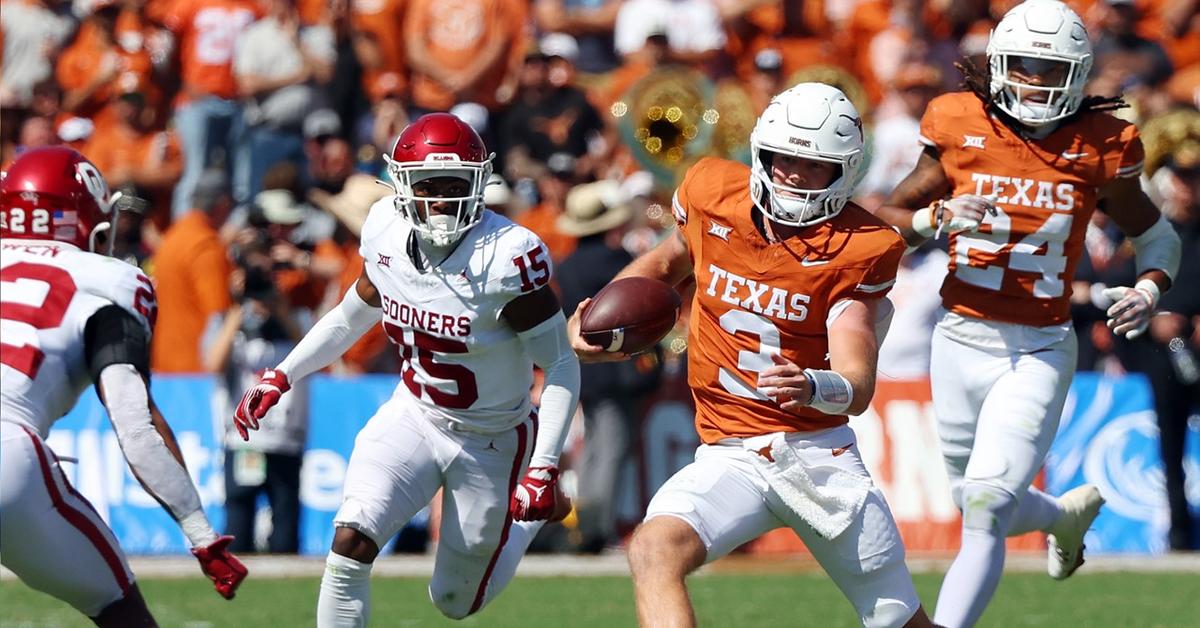
Perhaps the most visible and passionately felt aspect of the Texan-Oklahoman dynamic is the intense rivalry in collegiate athletics, particularly between the [University of Oklahoma] and the [University of Texas]. This “Red River Rivalry” transcends mere sports and has become a defining element of regional identity for many.
The Sooners vs. The Longhorns: More Than Just a Game
The annual football game between the [Oklahoma Sooners] and the [Texas Longhorns], held at the [Cotton Bowl] in [Dallas], [Texas], is a spectacle that captures the attention of not just students and alumni, but entire states. The intensity of this matchup is legendary, with passionate fan bases on both sides. For Texans, the game is an opportunity to assert their dominance and pride, while for Oklahomans, it’s a chance to finally best their larger, more populous neighbor.
The origins of this rivalry are as old as the football programs themselves, dating back to the early 20th century. Over the decades, it has evolved from a simple athletic contest into a cultural touchstone. The traditions surrounding the game, from the shared stadium to the distinctive colors and mascots, are deeply ingrained in the regional consciousness. Losing to [Oklahoma] is often seen as a particularly bitter pill for many Texans to swallow, contributing to the perception of “hate,” even if it’s delivered with a wink and a smile.
Beyond Football: A Broader Competitive Spirit

While football is the most prominent arena for this rivalry, the competitive spirit extends to other sports and even to broader cultural metrics. Whether it’s discussing state rankings in economic growth, population, or even barbecue quality, there’s a natural inclination for Texans to view themselves as superior. This is not unique to [Texas] and [Oklahoma]; many states have similar dynamics with their neighbors. However, the proximity, the shared history, and the deeply entrenched athletic rivalry amplify this sentiment between these two particular states. The friendly taunts and exaggerated claims of superiority are part of the shared cultural narrative that defines the relationship, a testament to the enduring impact of competition on regional identity.
Cultural Contrasts and Stereotypes
Beyond the historical and sporting arenas, a range of cultural differences and prevailing stereotypes contribute to the perception of Texan animosity towards [Oklahoma]. These often manifest in humorous, albeit sometimes stereotypical, portrayals of each other.
“Everything’s Bigger in Texas” vs. The Oklahoma Spirit
One of the most enduring Texan self-identifiers is the concept of “everything’s bigger in Texas.” This slogan encapsulates a sense of pride in the state’s vast size, expansive landscapes, and ambitious spirit. It can sometimes translate into a perception that anything smaller or less grand in a neighboring state, like [Oklahoma], is inherently less significant. This is a broad generalization, of course, as both states boast diverse geographies and distinct communities.
However, the stereotype persists, and it’s often played upon in the context of the rivalry. Texans might playfully (or not so playfully) dismiss Oklahoman achievements as being on a smaller scale or lacking the distinctive Texan flair. Conversely, Oklahomans often view Texans as boastful and sometimes overly ostentatious. This dynamic of contrasting self-perceptions fuels the ongoing banter and reinforces the idea of a distinct identity for each state, one that often feels defined in opposition to the other.
Regional Identity and Perceived Differences
The cultural nuances between [Texas] and [Oklahoma] are multifaceted. [Texas] has a strong Southern influence, blended with a robust Western frontier heritage, and a growing urban cosmopolitanism. This creates a complex cultural mosaic. [Oklahoma] also has elements of both Southern and Western culture, but its history as a frontier territory and its significant Native American heritage give it a unique flavor.
These differences, while subtle to outsiders, can be amplified within the context of regional identity. Texans might perceive Oklahomans as being more laid-back, or perhaps less sophisticated, depending on the stereotype being invoked. Oklahomans might see Texans as more aggressive or driven. These perceptions, while not necessarily grounded in objective reality for every individual, become part of the collective narrative that informs the perceived “hate” or, more accurately, the spirited rivalry. It’s a case of two distinct cultural identities finding expression, and sometimes friction, in their close proximity and shared history.
The Enduring Nature of the Rivalry
The “hate” that Texans allegedly hold for Oklahomans is, for the most part, a cultural construct. It’s a playful, albeit sometimes intense, form of competition that is deeply ingrained in the regional psyche. The historical underpinnings, the electrifying athletic rivalries, and the subtle cultural differences all contribute to this ongoing narrative.
More Banter Than Bitterness
It is crucial to distinguish between genuine animosity and spirited competition. For the vast majority of Texans, the sentiment towards [Oklahoma] is more akin to that of siblings playfully teasing each other. There’s a recognition of shared heritage in the American West and South, and a mutual understanding of the unique challenges and triumphs of life in the heartland. The rivalry, especially the [Red River Rivalry], provides a common ground for passion and identity, uniting communities under shared banners, even if those banners are clashing.
The notion of “hate” is likely a hyperbolic expression of pride and competitive spirit. Texans are fiercely proud of their state, its history, and its culture. When they express disdain for [Oklahoma], it often stems from a desire to elevate their own state and identity. Similarly, Oklahomans are equally proud of their heritage. The dynamic is one of mutual acknowledgment and spirited one-upmanship, rather than genuine ill will.

A Unifying Force in Regional Identity
Ultimately, the perceived animosity between Texans and Oklahomans serves as a unifying force for regional identity. It provides a framework for understanding who they are in relation to their neighbors. The shared history, the common struggles, and the enduring rivalries create a unique bond that, while expressed through playful antagonism, also fosters a sense of belonging and shared experience. The next time a Texan makes a jab about [Oklahoma], remember it’s likely less about hate and more about a deep-seated pride in their own unique corner of the American landscape.
LifeOutOfTheBox is a participant in the Amazon Services LLC Associates Program, an affiliate advertising program designed to provide a means for sites to earn advertising fees by advertising and linking to Amazon.com. Amazon, the Amazon logo, AmazonSupply, and the AmazonSupply logo are trademarks of Amazon.com, Inc. or its affiliates. As an Amazon Associate we earn affiliate commissions from qualifying purchases.