
Oregon’s minimum wage is a dynamic and evolving aspect of its economic landscape, directly impacting the lives of workers and the operations of businesses across the state. Understanding its intricacies is crucial for residents, visitors, and employers alike, as it shapes the cost of living, tourism sector affordability, and the overall economic health of communities from Portland to the Oregon Coast. This comprehensive overview delves into the current minimum wage rates, the system governing its adjustments, and the broader implications for those who live, work, and travel within the Beaver State.
Understanding Oregon’s Minimum Wage Structure
Oregon’s approach to minimum wage is distinctive and multifaceted. Unlike many states that adopt a single, statewide rate, Oregon operates a tiered system that accounts for regional variations in the cost of living and economic activity. This approach aims to ensure that the minimum wage is more reflective of local economic realities, providing a more nuanced and potentially equitable standard across the state.

The Three Minimum Wage Regions
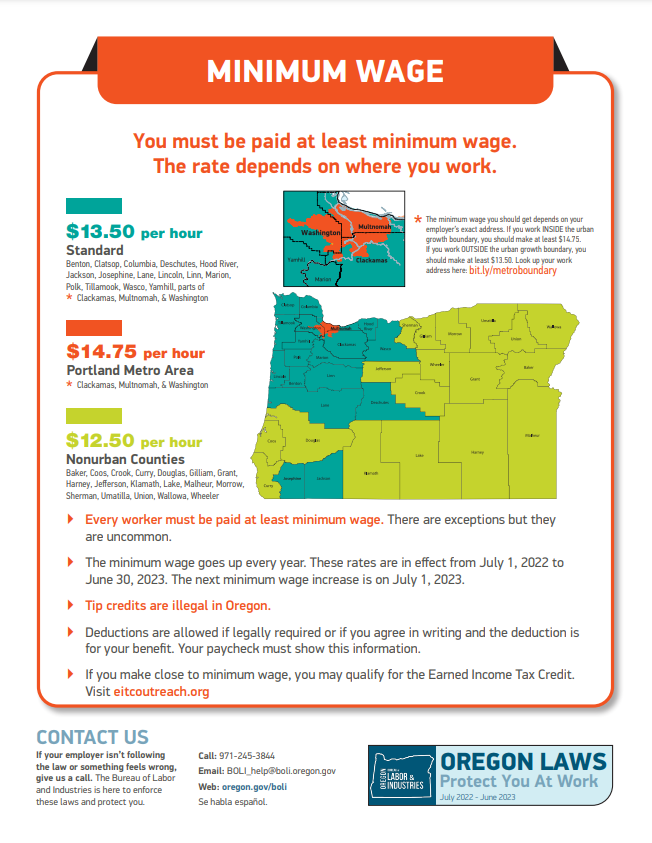
The state is divided into three distinct regions, each with its own minimum wage rate. These regions are designed to capture the differing economic conditions and cost of living that characterize various parts of Oregon.
1. Portland Metropolitan Area
This region encompasses the urban core and its immediate surrounding counties. Due to the higher cost of living associated with major metropolitan areas, the minimum wage here is set at the highest level. This reflects the greater expenses for housing, transportation, and daily necessities prevalent in and around Portland.
2. Standard Non-Urban Area
This designation covers the majority of the state’s counties that do not fall into the Portland metropolitan area or the higher-wage region. The minimum wage in these areas is set at a moderate level, aiming to balance the needs of workers with the economic capacity of businesses in these more widespread communities.
3. Higher-Wage Region (Urban and Surrounding Areas)
This tier is for urban areas and their immediate surroundings that have a higher cost of living than the standard non-urban areas but are not part of the Portland metropolitan zone. This designation recognizes that certain cities and their environs may experience cost-of-living pressures that warrant a wage rate higher than the standard non-urban rate but lower than the most expensive metropolitan area.
Annual Adjustments Based on Inflation
A key feature of Oregon’s minimum wage is its annual adjustment to account for inflation. The state uses the Consumer Price Index (CPI) as the benchmark for these adjustments. This mechanism ensures that the purchasing power of the minimum wage is maintained over time, preventing it from being eroded by rising costs. The adjustments typically take effect on January 1st of each year, following a prescribed calculation based on the CPI data from the previous 12 months. This proactive approach is designed to keep the minimum wage relevant to the economic conditions faced by low-wage workers.
Historical Context and Evolution
Oregon was an early adopter of minimum wage legislation, with its initial laws dating back to the early 20th century. Over the decades, the state has seen numerous adjustments and reforms to its minimum wage laws, reflecting shifts in economic philosophy, labor advocacy, and the recognition of the importance of a living wage. The introduction of the regional wage structure was a significant evolution, aiming to provide a more tailored approach to wage setting. The ongoing debate and legislative efforts surrounding minimum wage in Oregon highlight its status as a recurring and vital topic in state policy.
Impact on Tourism and Travel in Oregon
The minimum wage in Oregon, particularly within its popular tourist destinations, has a direct and indirect impact on the travel experience. Understanding these effects can help travelers budget more effectively and appreciate the economic context of the services they utilize.

Cost of Services for Tourists
Many essential services within the tourism sector, such as hospitality staff at hotels, restaurants, and attractions, are often paid at or near the minimum wage. Therefore, an increase in the minimum wage can lead to a corresponding increase in the operational costs for businesses in these industries. This can, in turn, influence the prices of hotel rooms, dining, and other tourist activities. For travelers, this might translate to slightly higher costs for certain services, particularly in higher-wage regions like Portland. However, it also means that service workers are receiving a more equitable wage, contributing to a stronger local economy that can benefit the entire community, including the tourism sector.
Local Economy and Visitor Spending
A higher minimum wage can lead to increased disposable income for low-wage workers. When these workers have more money to spend, they tend to patronize local businesses, including restaurants, shops, and entertainment venues. This can create a positive feedback loop, stimulating local economies and potentially leading to more vibrant and diverse visitor experiences. Tourists often seek authentic local experiences, and a thriving local economy supported by fair wages can contribute significantly to this authenticity. Areas with a robust minimum wage can foster a sense of community well-being that is often palpable to visitors.
Business Operations and Service Quality
Businesses operating in the tourism sector are sensitive to minimum wage fluctuations. Higher labor costs may necessitate strategic adjustments. Some businesses might absorb these costs, while others may seek efficiencies elsewhere, potentially through technology or improved operational processes. In some cases, businesses might adjust staffing levels or service offerings. However, many businesses recognize that fair compensation contributes to employee morale, reduces turnover, and can ultimately lead to improved customer service, a critical component of a positive travel experience. For instance, a well-compensated hotel staff member at a resort might be more motivated to provide exceptional service, enhancing a guest’s stay.
Regional Variations and Destination Choices
The regional differences in Oregon’s minimum wage can subtly influence the cost of a trip depending on where one chooses to travel. A vacation focused on the Oregon Coast in a standard non-urban area might have slightly lower associated costs for some services compared to a similar trip centered in Portland. While the allure of destinations like Crater Lake National Park or the cultural offerings of Eugene is not directly tied to minimum wage rates, the economic environment that the wage contributes to can shape the overall visitor experience and the affordability of ancillary services. Travelers who are budget-conscious might take these regional economic factors into consideration when planning their itineraries.
Navigating Minimum Wage and Your Oregon Trip
For travelers visiting Oregon, understanding the minimum wage structure can offer valuable insights into the local economic landscape and help inform expectations regarding prices for goods and services.
Budgeting Considerations
When planning your travel budget for Oregon, it’s helpful to be aware that prices for dining, accommodation, and activities might vary based on the region you are visiting. For example, restaurant meals or services at a spa in Portland might be priced higher than in smaller towns in the Willamette Valley. This difference is partly attributable to the regional minimum wage rates and the associated cost of doing business. While many attractions are fixed-price, day-to-day expenses can be influenced by these economic factors.
Supporting Local Economies
By patronizing local businesses, including independent restaurants, shops, and tour operators, travelers can contribute directly to the economic well-being of the communities they visit. When these businesses are operating with fair labor practices, including adherence to the minimum wage, your spending helps support local families and fosters a more sustainable and vibrant tourism industry. This can lead to more authentic and rewarding travel experiences.
Understanding Service Staff
A higher minimum wage generally means that the individuals providing services – from your hotel concierge to your server at a local eatery – are earning a more livable wage. This can lead to greater job satisfaction and a more positive customer service experience. It’s a reminder that the people who make your trip enjoyable are often working within an economic framework that seeks to provide them with fair compensation.
Staying Informed
While the minimum wage rates are set by the state, they are subject to annual adjustments. For the most current information, it is advisable to check official state resources or reputable financial news outlets closer to your travel dates. This will provide the most up-to-date figures for the specific region you plan to explore. Whether you’re planning a wine tasting tour in the Willamette Valley, exploring the natural beauty of Silver Falls State Park, or enjoying the vibrant city life of Portland, a basic understanding of Oregon’s minimum wage adds another layer of appreciation for the state’s economic fabric and the people who contribute to its rich visitor experience.
LifeOutOfTheBox is a participant in the Amazon Services LLC Associates Program, an affiliate advertising program designed to provide a means for sites to earn advertising fees by advertising and linking to Amazon.com. Amazon, the Amazon logo, AmazonSupply, and the AmazonSupply logo are trademarks of Amazon.com, Inc. or its affiliates. As an Amazon Associate we earn affiliate commissions from qualifying purchases.