
The question of when Puerto Rico became a territory of the United States and when its inhabitants gained U.S. citizenship is a complex one, deeply rooted in historical events and legislative decisions that continue to shape the island’s unique political and social landscape. Understanding this timeline is crucial for anyone interested in the island’s history, culture, and its ongoing relationship with the mainland. It’s a narrative that stretches back to the end of the Spanish-American War and the subsequent acquisition of territories by the United States.
The Aftermath of War: A New Dawn for an Island
The late 19th century was a period of significant global power shifts, and the Spanish-American War of 1898 proved to be a pivotal moment for Puerto Rico. The war, which lasted only a few months, resulted in a decisive victory for the United States, leading to the cession of several Spanish territories. Among these was Puerto Rico, along with Cuba and Guam. This transfer of sovereignty occurred through the Treaty of Paris, signed on December 10, 1898.
The Treaty of Paris and its Immediate Impact
The signing of the Treaty of Paris marked the end of over 400 years of Spanish rule in Puerto Rico. Under the terms of the treaty, Spain relinquished all claims to the island, and the United States gained possession. Initially, Puerto Rico was placed under the jurisdiction of the U.S. military government. This period saw significant changes in administration, law, and public infrastructure as the island began to integrate into the U.S. system. However, the status of the inhabitants and their rights remained a subject of debate and legislative consideration.
The Insular Cases and the Path to Citizenship
The legal status of the newly acquired territories, including Puerto Rico, was a matter of considerable legal and constitutional scrutiny in the years following the Spanish-American War. The Supreme Court of the United States addressed these questions through a series of landmark decisions known as the Insular Cases. These rulings established the concept of unincorporated territories, meaning that the U.S. Constitution did not fully apply to these territories unless Congress specifically extended its provisions.
Defining “Incorporated” vs. “Unincorporated” Territories
The Insular Cases, beginning in 1901, created a distinction between incorporated and unincorporated territories. Incorporated territories were intended to eventually become states, and the Constitution generally applied in full. Unincorporated territories, on the other hand, were considered possessions of the United States but not an integral part of it. For these territories, Congress had the authority to decide which constitutional rights and laws would be applied. This framework had profound implications for Puerto Rico and its people, setting the stage for the eventual granting of citizenship.
The Foraker Act of 1900
The first major legislative act addressing the governance of Puerto Rico after the war was the Foraker Act, also known as the Organic Act of 1900. This act formally established a civilian government in Puerto Rico and declared it an unincorporated territory. Crucially, the Foraker Act did not grant statutory citizenship to the people of Puerto Rico. Instead, it stated that all inhabitants who were Spanish subjects residing in Puerto Rico on April 11, 1899, and their children born thereafter, were declared to be citizens of Puerto Rico. This meant they were considered “foreigners” in the United States for most legal purposes, though they were subjects of the U.S..
The Granting of U.S. Citizenship: A Definitive Step

The question of U.S. citizenship for the people of Puerto Rico was a persistent issue. Many felt that having acquired the island, the United States had a moral and political obligation to grant its inhabitants the full rights and privileges of U.S. citizenship. This led to prolonged debate and advocacy.
The Jones-Shafroth Act of 1917
The landmark legislation that finally addressed the citizenship question was the Jones-Shafroth Act, enacted on March 2, 1917. This act served as a new organic act for Puerto Rico, replacing the Foraker Act. The most significant provision of the Jones-Shafroth Act was the collective naturalization of the people of Puerto Rico.
Collective Naturalization and its Implications
Under the Jones-Shafroth Act, all citizens of Puerto Rico as defined by the act were granted statutory U.S. citizenship. This was a collective act, meaning that all eligible inhabitants became U.S. citizens simultaneously, without having to individually apply for naturalization. This granted them the right to travel freely to the mainland United States, serve in the U.S. armed forces, and enjoy many of the protections afforded to U.S. citizens.
However, it’s important to note that this citizenship was not full and equal to that of citizens born in the states. Puerto Rico remained an unincorporated territory, meaning that residents of Puerto Rico could not vote in presidential elections unless they resided in a U.S. state, and they had no voting representation in U.S. Congress. They did have a non-voting Resident Commissioner in the U.S. House of Representatives.
Subsequent Legislative Developments and the Ongoing Status
While the Jones-Shafroth Act granted citizenship, the political status of Puerto Rico has remained a subject of ongoing debate and has seen further legislative action. The relationship between Puerto Rico and the United States has evolved, with various acts and plebiscites attempting to clarify its future.
The Elective Governor Act of 1947
Another significant development was the Elective Governor Act of 1947, which allowed Puerto Ricans to elect their own governor. This was a crucial step towards greater self-governance and a reflection of the island’s evolving political maturity.

The Compact of Free Association and Commonwealth Status
In 1950, the U.S. Congress passed Public Law 600, which authorized Puerto Rico to draft its own constitution. This led to the ratification of the Constitution of the Commonwealth of Puerto Rico in 1952, establishing the current political status known as the Commonwealth. While this granted significant autonomy, it did not change Puerto Rico’s status as an unincorporated territory of the United States.
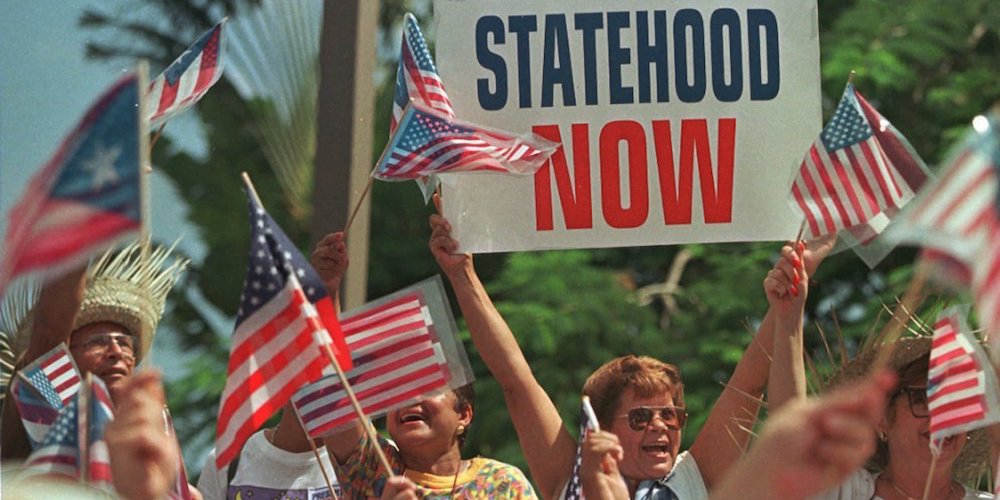
The question of statehood, independence, or enhanced commonwealth status remains a persistent and central theme in Puerto Rican politics, with numerous plebiscites held over the decades. Each has yielded varying results and interpretations, highlighting the complexity and deep divisions surrounding the island’s ultimate political destiny. Despite these ongoing debates, the fundamental answer to when Puerto Rico became U.S. citizens lies with the passage of the Jones-Shafroth Act in 1917.
In conclusion, Puerto Rico became a territory of the United States following the Spanish-American War and the Treaty of Paris in 1898. Its inhabitants were granted statutory U.S. citizenship collectively through the Jones-Shafroth Act in 1917, a pivotal moment that continues to define the island’s relationship with the mainland and the rights of its people. This historical trajectory offers a fascinating insight into the evolution of territorial governance and citizenship within the United States.
LifeOutOfTheBox is a participant in the Amazon Services LLC Associates Program, an affiliate advertising program designed to provide a means for sites to earn advertising fees by advertising and linking to Amazon.com. Amazon, the Amazon logo, AmazonSupply, and the AmazonSupply logo are trademarks of Amazon.com, Inc. or its affiliates. As an Amazon Associate we earn affiliate commissions from qualifying purchases.