
The question of “How deep is the San Francisco Bay?” is more than just a geographical curiosity; it’s a gateway to understanding the complex ecosystem, rich history, and vital role this iconic waterway plays in the lives of millions. The Bay, a vast estuary where the Sacramento and San Joaquin Rivers meet the Pacific Ocean, presents a dynamic profile of depths, ranging from shallow marshlands to profoundly deep channels. Its apparent uniformity on a map belies a varied bathymetry that has shaped everything from early maritime trade to modern environmental challenges.
The Variable Depths of a Living Estuary
Understanding the depth of the San Francisco Bay requires acknowledging its nature as an estuary – a transition zone influenced by both freshwater inflow and tidal action from the ocean. This constant interplay creates a constantly shifting seabed.
General Depth Ranges
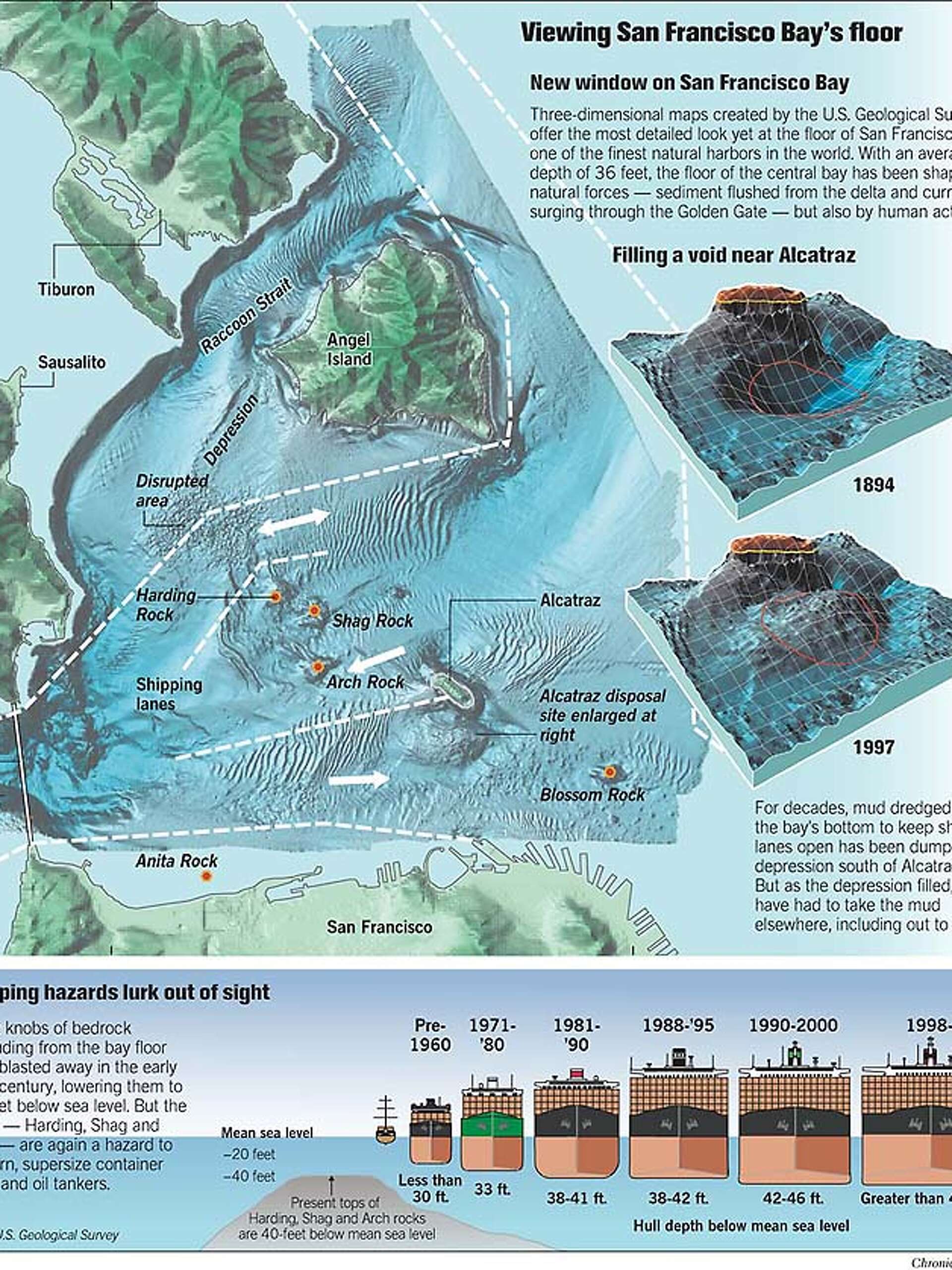
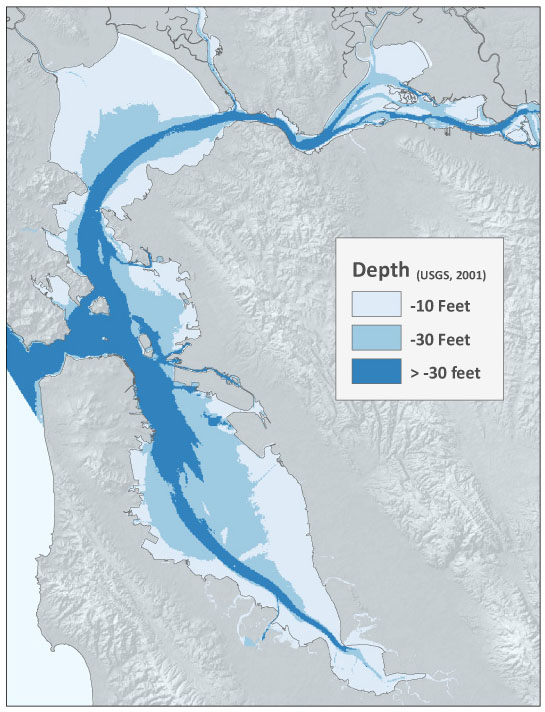
On average, the San Francisco Bay is relatively shallow, with much of its area averaging around 30 to 40 feet (9 to 12 meters) deep. However, this average is misleading, as it encompasses extensive tidal flats and mudflats that are exposed at low tide and only a few feet deep at high tide. These areas are crucial habitats for countless species of birds, fish, and invertebrates.
The Deep Channels: Arteries of Commerce and Nature
The true intrigue lies in the deeper channels that scar the Bay’s floor. These are not natural formations in their current state but have been extensively dredged and maintained to facilitate navigation. The most significant of these is the main shipping channel, which plunges to depths of over 50 feet (15 meters) in many areas, and in some crucial sections, reaches depths of 60 feet (18 meters) and even up to 65 feet (20 meters). These channels are the lifelines for the bustling ports of Oakland, San Francisco, and Vallejo, allowing massive container ships and tankers to access the inland parts of the estuary.
The Deepest Points: Unveiling the Bay’s Underbelly
While the main channels are impressive, the San Francisco Bay holds some even more remarkable depths. The deepest known point within the Bay itself is located near Alcatraz Island. Here, the seabed drops to an astonishing 113 feet (34.4 meters). This particular deep spot is a result of natural geological features exacerbated by historical dredging activities. The Alcatraz Deep is a stark contrast to the surrounding shallower waters and plays a role in local currents and the distribution of marine life.
Beyond the main Bay, the Golden Gate, the narrow strait connecting the Bay to the Pacific Ocean, presents a dramatic drop-off. While not technically within the Bay, its depth is intrinsically linked to the Bay’s hydrological system. The Golden Gate Strait plunges to depths of up to 330 feet (100 meters) in its deepest channel, creating a powerful tidal current that flushes the Bay. This deep, constricted passage is a natural phenomenon that has been essential for the Bay’s health and also a significant challenge for mariners throughout history.
Geological Formations and Human Intervention
The varied depths of the San Francisco Bay are a testament to both geological processes and extensive human engineering.
Natural Topography
The Bay itself sits within a larger geological basin, a remnant of tectonic activity and ancient river valleys. However, the dramatic changes in elevation from shallow mudflats to deep channels are not solely natural. Pre-human activity, the Bay was likely a more extensive, shallower system. The current deep channels are largely a result of human efforts to make the waterway navigable.
The Legacy of Dredging
From the Gold Rush era onwards, the need to transport goods and people spurred extensive dredging operations. The discovery of gold in California in 1848 led to an explosion in maritime traffic. To accommodate larger vessels, channels were widened and deepened, transforming the Bay’s natural topography. This process has continued for over a century, with ongoing maintenance dredging required to counteract natural sedimentation. The material removed from the Bay floor has often been used to create new land, further altering the coastline and filling in shallower areas. This practice, while facilitating commerce, has had significant ecological consequences, reducing habitat and altering water flow.
Ecological Significance of Depth Variations
The stratification of depths within the San Francisco Bay creates diverse microhabitats, each supporting distinct ecological communities.
Shallow Water Ecosystems

The extensive tidal marshes and mudflats, while shallow, are incredibly productive. These areas are nurseries for many fish species, providing food and shelter. They are also critical feeding grounds for migratory birds on the Pacific Flyway. The benthic organisms that thrive in these soft sediments form the base of the food web.
Deep Water Habitats
The deeper channels and basins, such as the Alcatraz Deep, support different types of marine life. Here, larger fish, marine mammals like seals and occasional dolphins, and bottom-dwelling invertebrates adapted to lower light and higher pressure conditions are found. The currents in these deep channels also play a vital role in oxygenating the water and transporting nutrients throughout the estuary.
The Golden Gate as a Gateway
The dramatic depth of the Golden Gate Strait is crucial for the entire Bay’s health. The powerful tides that surge through this deep passage facilitate the exchange of water between the ocean and the Bay. This influx of salty ocean water helps to maintain the salinity balance of the estuary, which is essential for the survival of many species that inhabit it. It also helps to flush pollutants and excess nutrients out of the Bay.
Navigational and Historical Perspectives
The depths of the San Francisco Bay have profoundly influenced its history, from the arrival of the first European explorers to the modern era of global shipping.
Early Exploration and Settlement
When Juan Rodríguez Cabrillo first sailed past the mouth of the Bay in 1542, its true extent and depth were unknown. It remained undiscovered by Europeans for over two centuries. When it was finally entered in 1769 by Gaspar de Portolá, the natural harbors and deep-water access points were quickly recognized as strategically important. The deep water near the site of present-day San Francisco provided an excellent anchorage for ships.
The Maritime Hub of the West Coast
As California grew, particularly after the Gold Rush, the San Francisco Bay became the preeminent maritime hub of the American West Coast. The ability to navigate large vessels deep into the Bay was essential for establishing trade routes, supporting military operations, and facilitating the growth of cities like San Francisco and Oakland. The construction of ports, shipyards, and ferry terminals was all dictated by the available depths.
Modern Shipping and Infrastructure
Today, the Bay remains a critical artery for international commerce. The depth of the main shipping channels is a constant consideration for port authorities and maritime engineers. Maintaining these depths requires continuous dredging, a costly but essential operation. The capacity of the Bay to host the world’s largest container ships and oil tankers is directly dependent on the engineered deep-water channels that have been carved into its floor. The iconic Golden Gate Bridge, while spanning the strait, stands as a testament to the sheer depth of the water below, with its massive piers anchored in the formidable depths of the Golden Gate Strait.
Challenges and Future Considerations
The interplay of natural processes and human modifications has created both opportunities and significant challenges for the San Francisco Bay. Understanding its depths is crucial for addressing these issues.
Sedimentation and Dredging Needs
The Bay is a dynamic system where natural sedimentation is a constant force. Rivers carry sediment into the Bay, and tidal currents can redistribute it. This means that the dredged channels require ongoing maintenance to prevent them from becoming too shallow for navigation. The disposal of dredged material is also a significant environmental consideration, with efforts made to reuse it in beneficial ways, such as wetland restoration.
Sea Level Rise and Depth
As global sea levels rise, the effective depth of the Bay will change. While the Bay floor itself will not rise, the water column above it will deepen. This has implications for coastal flooding, the salinity of the estuary, and the habitats of marine life. Understanding the existing bathymetry is critical for modeling and mitigating the impacts of sea level rise.
Environmental Health and Water Quality
The depth of the Bay influences water circulation, temperature, and the distribution of dissolved oxygen. Shallower areas can experience greater temperature fluctuations and are more susceptible to the effects of pollution. Deeper areas can sometimes develop stratification with lower oxygen levels. Managing water quality and protecting the delicate ecosystem of the San Francisco Bay requires a detailed understanding of how its varied depths influence these processes. The health of this magnificent estuary, from its shallowest mudflats to its deepest trenches, depends on a careful balance that is intrinsically tied to its complex bathymetry.
LifeOutOfTheBox is a participant in the Amazon Services LLC Associates Program, an affiliate advertising program designed to provide a means for sites to earn advertising fees by advertising and linking to Amazon.com. Amazon, the Amazon logo, AmazonSupply, and the AmazonSupply logo are trademarks of Amazon.com, Inc. or its affiliates. As an Amazon Associate we earn affiliate commissions from qualifying purchases.