
The question of distance between two iconic West Coast cities, Seattle and San Francisco, is more than just a geographical inquiry; it’s an invitation to explore the vast and varied landscapes, cultures, and experiences that lie between the Emerald City and the City by the Bay. Whether you’re planning a road trip, a scenic flight, or contemplating the logistics of relocation, understanding this stretch of the Pacific Northwest and Northern California is key to unlocking the full potential of your journey. The distance, while seemingly straightforward, opens up a multitude of travel options, each offering a distinct perspective on the American West.
Navigating the Miles: Driving and Road Trip Considerations
The most common method of traversing the distance between Seattle and San Francisco for many is by car. The primary route, largely following Interstate 5 (I-5), offers a direct path that minimizes detours. This is the most efficient option for those prioritizing speed and ease.
The Direct Route: I-5 South
The most direct driving route from Seattle to San Francisco spans approximately 800 miles. Under ideal traffic conditions and with minimal stops, this journey can be completed in about 12 to 13 hours of pure driving time. However, this is rarely the case for most travelers. Factors such as traffic congestion, particularly around major metropolitan areas like Portland, Eugene, and the San Francisco Bay Area, can significantly extend this duration.
Essential Stops and Overnight Stays
For most travelers, a single day of driving 800 miles is an arduous undertaking. A more realistic and enjoyable approach involves breaking the journey into at least one, and ideally two, overnight stops.
Portland, Oregon
Located roughly halfway between Seattle and San Francisco, Portland is a natural and popular choice for a first overnight stop. It’s approximately a 3-hour drive south of Seattle. This vibrant city offers a wealth of attractions, from its renowned food scene and craft breweries to its distinctive urban parks and quirky culture. Visitors can explore areas like the Pearl District or the International Rose Test Garden. Numerous hotel options cater to all budgets, from boutique inns to well-known chains.
Northern California Stopovers
Continuing south from Portland, the next stretch of I-5 is less punctuated by major cities. Drivers might consider stopping in areas like Ashland for its renowned Oregon Shakespeare Festival, or pushing further into Northern California. Cities like Redding or even slightly off-route locations near Shasta Lake can serve as second overnight points before the final push to San Francisco. Alternatively, some travelers opt for a more coastal detour, which adds significant time but offers breathtaking scenery.
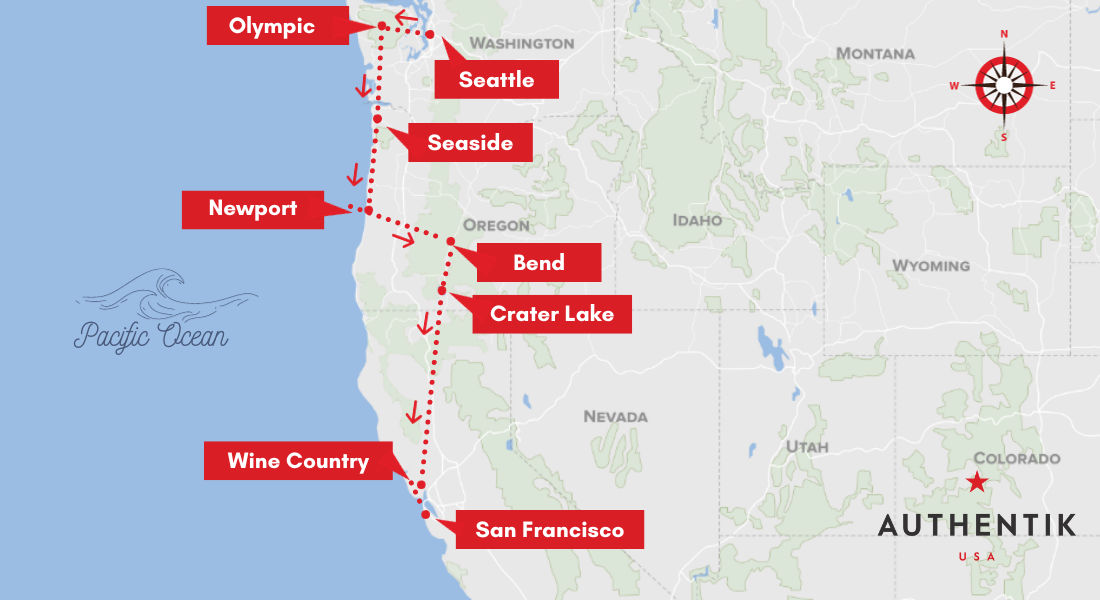
Scenic Detours: The Pacific Coast Highway (Highway 101)
While I-5 is the quickest route, it largely bypasses the dramatic coastline. For those with more time and a desire for unparalleled natural beauty, a detour onto U.S. Route 101, often incorporating parts of the iconic Pacific Coast Highway (Highway 1), is a highly recommended alternative. This route adds substantial mileage and driving time, potentially doubling the journey duration and requiring multiple overnight stays, but the rewards are immense.
Key Coastal Attractions
This extended journey allows for exploration of stunning coastal towns like Cannon Beach in Oregon, with its dramatic Haystack Rock. Further south, Redwood National and State Parks, home to the majestic giant redwood trees, present an unforgettable natural spectacle. Towns like Mendocino and the Big Sur coastline offer dramatic vistas, charming inns, and a slower pace of life. This slower, more scenic approach transforms the drive from a simple transit into a destination in itself, offering a rich tapestry of landscapes from dense forests to rugged cliffs overlooking the Pacific Ocean.
Flying Between Cities: Speed and Efficiency
For travelers prioritizing time, flying is the most efficient option for covering the distance between Seattle and San Francisco. The aerial distance is considerably shorter, and with direct flights, the travel time can be remarkably brief.
Flight Durations and Airlines

Direct flights between Seattle-Tacoma International Airport (SEA) and San Francisco International Airport (SFO) typically range from 1 hour 45 minutes to 2 hours 15 minutes. Major airlines operating this route include Alaska Airlines, United Airlines, and Delta Air Lines. These airlines offer multiple daily departures, providing flexibility for travelers.
Airport Logistics and Travel Time
While the flight itself is short, it’s crucial to factor in the total travel time. This includes getting to the airport, check-in procedures, security screening, boarding, deplaning, and traveling from the arrival airport to your final destination in either city. For Seattle, this means considering travel to SEA, often via the Link light rail or car. In San Francisco, travelers arrive at SFO, which is well-connected to the city and surrounding areas via BART (Bay Area Rapid Transit) and other public transportation options. Overall, when accounting for all logistical elements, a flight from Seattle to San Francisco typically consumes half a day, rather than the 12-13 hours of pure driving.
Alternative Airports and Regional Connections
Beyond the primary airports, travelers might consider flights into or out of smaller regional airports. For instance, Oakland International Airport (OAK) and San Jose International Airport (SJC) serve the greater San Francisco Bay Area and can sometimes offer more competitive pricing or different flight schedules. Similarly, in the Seattle area, Paine Field (PAE) in Everett offers limited commercial flights. These alternatives can add or subtract from overall travel time depending on the traveler’s final destination within each metropolitan area.
The Train Journey: A Leisurely Perspective
For those who prefer to relax and watch the scenery unfold without the stress of driving or the hurried pace of air travel, the train offers a unique and often scenic intercity experience. The journey between Seattle and San Francisco by train is a significant undertaking, primarily operated by Amtrak.
Amtrak Routes and Travel Times
Amtrak’s route connecting these two cities is not direct. The most common itinerary involves taking the Coast Starlight service, a renowned long-distance train known for its spectacular views along the Pacific Coast. However, the Coast Starlight does not run directly between Seattle and San Francisco.
The Seattle to Emeryville Connection
Travelers typically depart from Seattle’s King Street Station on the Coast Starlight, heading south. The train makes its way down the West Coast, offering views of coastal towns, forests, and mountain ranges. The journey concludes not directly in San Francisco, but rather in Emeryville, a city across the San Francisco Bay from the city. From Emeryville, Amtrak provides a connecting bus service that transports passengers directly into downtown San Francisco, completing the journey.
The total travel time for this train journey is substantial, usually ranging from 20 to 24 hours, depending on the specific schedule and any potential delays. This makes it a multi-day travel option, best suited for those who view the journey as an integral part of their travel experience, offering a chance to disconnect and appreciate the evolving landscape at a more deliberate pace. Sleeping accommodations, including private roomettes and bedrooms, are available for overnight travel, enhancing comfort and the overall experience.
The Scenic Appeal of Rail Travel
The Coast Starlight route is celebrated for its panoramic windows and the opportunity to witness landscapes that are often inaccessible or less appreciated from the highway. The passage through the Cascade Mountains and along the Pacific Coast provides a continuously changing vista of natural beauty. This mode of transport allows passengers to avoid the hassles of airport security or the fatigue of driving, offering instead a relaxed environment to read, work, or simply gaze out at the passing scenery, making the distance between Seattle and San Francisco a visually rich narrative.
Distance and Interconnectedness: A West Coast Corridor
The approximately 800 miles separating Seattle and San Francisco represent more than just miles; they are a segment of a vital economic and cultural corridor along the West Coast of the United States. This stretch of land is home to a diverse array of ecosystems, from the evergreen forests of the Pacific Northwest to the rolling hills and Mediterranean climate of Northern California.
Understanding the Metrics: Miles and Kilometers
Geographically, the driving distance is approximately 800 miles (about 1,287 kilometers). The direct flight distance, or “as the crow flies,” is shorter, around 680 miles (approximately 1,094 kilometers). These figures are fundamental for planning any form of travel, whether it’s calculating fuel costs for a road trip, estimating flight times, or determining train ticket pricing.

Factors Influencing Perceived Distance
The “distance” can also be perceived differently based on the mode of travel and the traveler’s priorities. For a business traveler needing to maximize productivity, the quick flight might make the cities feel closer. For a nature enthusiast, the 800-mile drive, especially with scenic detours, might feel like an expansive exploration rather than a long haul. The interconnectedness of these cities via I-5, Amtrak, and numerous daily flights underscores their importance as key hubs in the Western United States, fostering trade, tourism, and cultural exchange.
LifeOutOfTheBox is a participant in the Amazon Services LLC Associates Program, an affiliate advertising program designed to provide a means for sites to earn advertising fees by advertising and linking to Amazon.com. Amazon, the Amazon logo, AmazonSupply, and the AmazonSupply logo are trademarks of Amazon.com, Inc. or its affiliates. As an Amazon Associate we earn affiliate commissions from qualifying purchases.