
The comparison of major airports often sparks curiosity, particularly when considering their sheer scale and the operational scope they represent. While both Denver International Airport (DEN) and San Francisco International Airport (SFO) are significant international hubs, their physical footprints and operational capacities present a fascinating study in airport design and purpose. When asking if Denver Airport is bigger than San Francisco, the answer hinges on how “bigger” is defined – by land area, by terminal size, or by passenger traffic.
Land Area: A Tale of Two Expanses
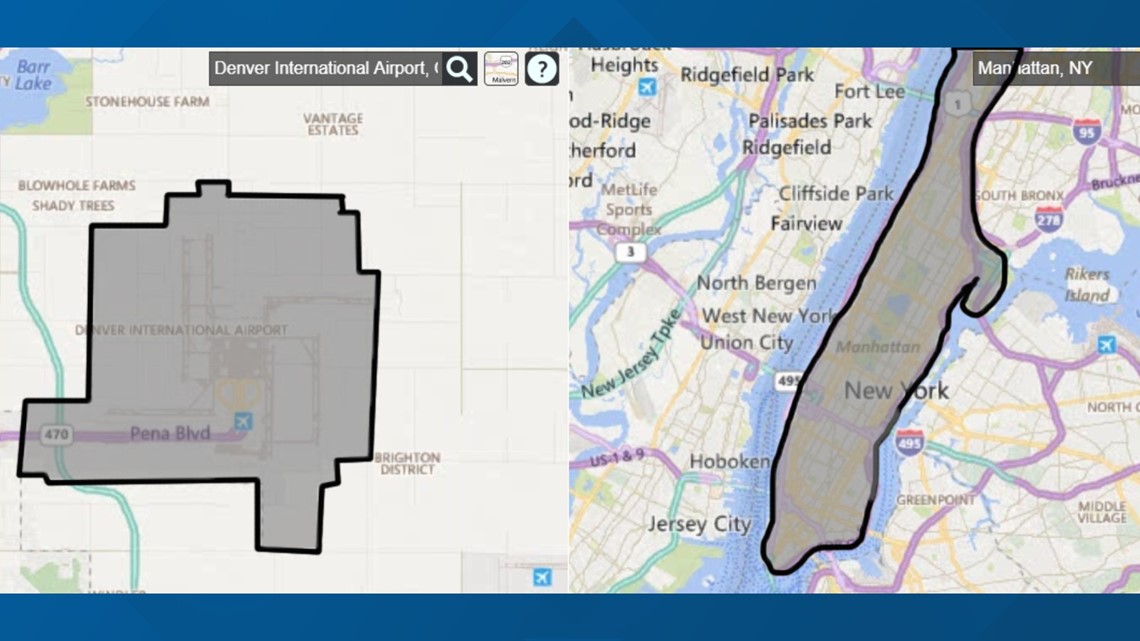
The most striking difference between Denver International Airport and San Francisco International Airport lies in their land area. Denver Airport is renowned for its vast expanse, a characteristic often cited in discussions of its size.

Denver’s Expansive Footprint
Denver International Airport covers an astonishing 52.4 square miles (approximately 135.7 square kilometers) of land. This makes it not only one of the largest airports in North America but also one of the largest in the world by land area. This immense space was deliberately planned to accommodate future expansion, multiple runways, and a wide buffer zone for noise abatement and security. The sheer scale of the property allows for the construction of additional terminals, concourses, and support facilities without encroaching on surrounding communities.
San Francisco’s More Compact Design
In contrast, San Francisco International Airport occupies a considerably smaller area of about 4.7 square miles (approximately 12.3 square kilometers). Its location, nestled in the densely populated San Francisco Bay Area, presents inherent spatial limitations. While extensive, SFO has been developed with a focus on maximizing the efficiency of its existing footprint. Expansion efforts at SFO often involve intricate redesigns and the optimization of terminal space rather than the acquisition of vast new tracts of land.
Conclusion on Land Area: Based purely on land area, Denver International Airport is overwhelmingly larger than San Francisco International Airport. Its size is a defining characteristic, enabling flexibility and future growth that would be impossible for SFO to replicate within its current geographic constraints.
Terminal Size and Design: Function Over Sheer Volume
While land area is a significant metric, the actual usable space for passengers and operations – the terminal complex – offers another perspective on airport size. This includes concourses, gate areas, passenger amenities, and operational facilities.
Denver’s Multi-Terminal Structure
Denver International Airport features a distinctive multi-terminal design, with a central Jeppesen Terminal and three concourses (A, B, and C) accessible via an underground automated people mover system. The Jeppesen Terminal itself is a monumental structure, housing check-in, baggage claim, and a vast array of shops and restaurants. The concourses, each dedicated to specific airlines or alliances, provide extensive gate areas and further retail and dining options. The total square footage of its terminal buildings is substantial, designed to handle a high volume of passengers and the operational needs of a major hub.
San Francisco’s Integrated Terminal System
San Francisco International Airport employs a more integrated terminal system. It comprises the International Terminal, the largest of its kind in Northern California, along with Terminals 1, 2, and 3. The International Terminal is a significant architectural achievement, designed to handle both international arrivals and departures, as well as domestic flights. The other terminals are primarily dedicated to domestic traffic, with inter-terminal transportation facilitating movement between them. While the total terminal square footage is considerable and well-equipped, it is generally more concentrated and efficiently laid out compared to the dispersed nature of DEN.
Comparison of Terminal Space: When considering the terminal buildings themselves, both airports offer extensive facilities. Denver Airport has a larger overall built footprint due to its distinct concourse system, but San Francisco Airport has a highly functional and interconnected terminal network that prioritizes passenger flow and access. The perception of size can therefore differ based on whether one is considering the raw square footage of buildings or the efficiency of passenger movement within them.
Passenger Traffic and Operational Scope: A Measure of Activity
Perhaps the most common way to gauge the “bigness” of an airport is by its passenger volume and the number of flights it handles. This reflects its importance as a transportation hub and its economic impact.
Denver’s Growing Passenger Hub
Denver International Airport has consistently ranked among the busiest airports in the world by passenger traffic. In recent years, it has served well over 60 million passengers annually, making it a major gateway for both domestic and international travel. Its strategic location in the Mountain West makes it a key connection point for many routes across the United States. The airport handles a significant number of aircraft movements daily, supporting its role as a primary hub for United Airlines and a focus city for other carriers.
San Francisco’s International Connectivity
San Francisco International Airport is also a highly trafficked airport, typically serving around 50-60 million passengers per year, though numbers can fluctuate. It is a critical gateway to the Pacific and a major international hub, with extensive routes to Asia, Europe, and other global destinations. SFO is the primary hub for United Airlines on the West Coast and a focus city for several other airlines. Its operational complexity is high, given the demand for international flights and its role in connecting Silicon Valley to the rest of the world.
Traffic Comparison: In terms of passenger traffic, both airports are very close in volume, often trading places in annual rankings. Denver Airport has recently seen slightly higher passenger numbers, solidifying its position as one of the top-tier busiest airports globally. However, the operational scope of SFO, particularly its focus on international connectivity and its role in a densely populated economic region, gives it a distinct significance.
Beyond the Numbers: Unique Aspects and Perceptions
The perception of an airport’s size can also be influenced by its unique characteristics, infrastructure, and the stories surrounding it.
Denver’s Unique Features
Denver International Airport is known for its distinctive tent-like roof, inspired by the Native American tipis. It also has a reputation for its extensive public art collection and, perhaps most famously, for the numerous conspiracy theories that have emerged regarding its construction and alleged hidden facilities. The sheer undeveloped land surrounding the airport contributes to its imposing scale, often making it feel more remote and vast than other airports. Its significant number of runways (six) further underscores its capacity for high operational throughput.
San Francisco’s Urban Integration
San Francisco International Airport, while not having the same vast land area or the same level of conspiracy lore, is deeply integrated into the urban fabric of the Bay Area. Its proximity to cities like San Francisco, Oakland, and San Jose means it serves a highly concentrated population and a global center of technology and innovation. Its access via public transportation, including BART (Bay Area Rapid Transit), is a key feature that differentiates it from the more car-dependent nature of travel to DEN. The airport has also been a pioneer in sustainability initiatives and passenger experience enhancements.

Final Verdict: Denver Airport is Bigger
When directly comparing the two based on the most common metrics, the answer to “Is [The Denver Airport] Bigger Than [San Francisco]?” is a definitive yes, particularly when considering land area.
- Land Area: Denver International Airport is vastly larger, covering over 52 square miles compared to San Francisco International Airport’s approximately 4.7 square miles.
- Terminal Buildings: While both have substantial terminal facilities, DEN generally possesses a larger total built area due to its multi-concourse design.
- Passenger Traffic: Passenger volumes are remarkably similar, with both airports consistently ranking among the busiest in the world. DEN has recently edged out SFO in some rankings for overall passenger numbers.
Therefore, while both are critical international gateways with significant operational capacities, Denver International Airport holds the distinction of being the physically larger airport by a considerable margin. This expansive land area provides DEN with considerable strategic advantages for future development and operational flexibility that are simply not feasible for SFO within its existing urban constraints.
LifeOutOfTheBox is a participant in the Amazon Services LLC Associates Program, an affiliate advertising program designed to provide a means for sites to earn advertising fees by advertising and linking to Amazon.com. Amazon, the Amazon logo, AmazonSupply, and the AmazonSupply logo are trademarks of Amazon.com, Inc. or its affiliates. As an Amazon Associate we earn affiliate commissions from qualifying purchases.