
Seattle, Washington, a city celebrated for its lush evergreen landscapes, innovative spirit, and vibrant cultural scene, experiences a climate that is as dynamic as its reputation. Understanding the typical temperatures in Seattle is crucial for any traveler planning a visit, whether their interests lie in exploring the iconic Space Needle, indulging in the local coffee culture, or venturing into the surrounding natural beauty of the Pacific Northwest. The city’s weather is largely influenced by its coastal location and the proximity of the Olympic Mountains and the Cascade Mountains, which create a rain shadow effect, leading to a generally mild, temperate climate.
Understanding Seattle’s Climate Patterns
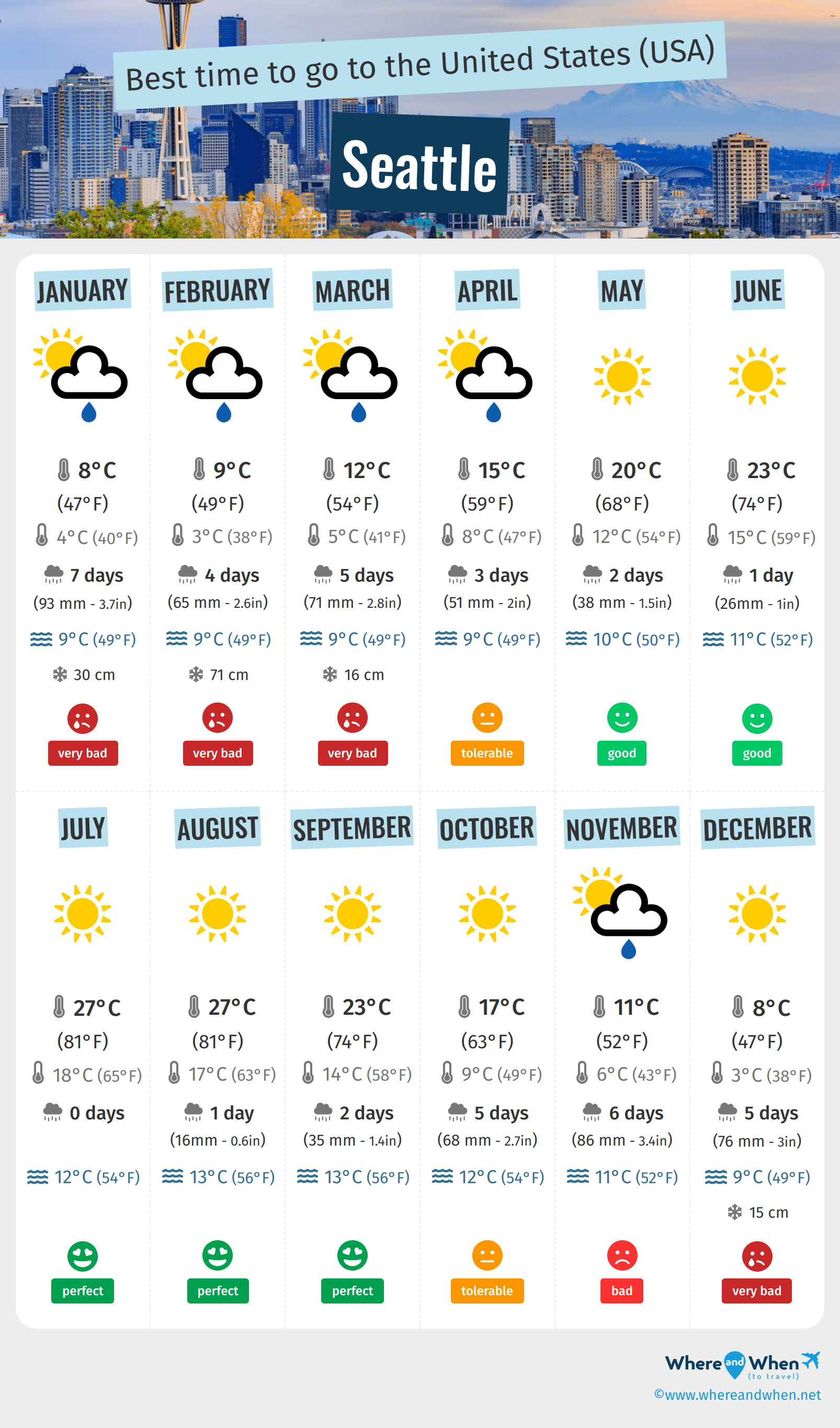
Seattle’s climate is characterized by distinct seasons, each offering a unique ambiance and set of conditions for visitors. Unlike many other major cities, Seattle does not experience extreme temperature fluctuations. The Pacific Ocean plays a significant role in moderating its temperatures, preventing scorching summers and brutally cold winters. This maritime influence results in generally mild conditions throughout the year, making it a destination that can be enjoyed during any season, provided one is prepared for the prevailing weather.
Seasonal Temperature Ranges
Summer (June – August):
Summers in Seattle are typically warm and dry, offering the most pleasant weather for outdoor activities. Average daily high temperatures hover around the mid-70s Fahrenheit (around 24-26 degrees Celsius), with occasional heatwaves pushing temperatures into the 80s and 90s. Evenings cool down considerably, often requiring a light jacket. Rainfall is minimal during these months, making it an ideal time to explore the city’s numerous parks, waterfronts, and outdoor attractions. The long daylight hours, especially around the summer solstice, further enhance the appeal of visiting during this period.
Autumn (September – November):
As summer transitions into fall, Seattle’s weather becomes cooler and wetter. September often retains some of the summer warmth and sunshine, but by October, cloudy skies and rain become more common. Average high temperatures in the fall range from the mid-60s Fahrenheit (around 18-20 degrees Celsius) in September to the low 50s Fahrenheit (around 10-12 degrees Celsius) by November. This season is perfect for enjoying cozy coffee shops, exploring museums like the Museum of Pop Culture (MoPOP), or taking scenic drives through the changing autumn foliage in nearby areas.
Winter (December – February):
Seattle winters are generally mild and damp, characterized by frequent cloud cover and rain. Snowfall is infrequent and usually does not accumulate for long periods, though occasional snow events can occur. Average high temperatures in the winter typically range from the low to mid-40s Fahrenheit (around 5-8 degrees Celsius), with overnight lows often dipping just above freezing. While the weather might seem less inviting for outdoor pursuits, it’s an excellent time to experience the city’s indoor attractions, enjoy a warm meal at one of its many renowned restaurants, or catch a performance at the Paramount Theatre. The festive holiday atmosphere also adds a special charm to the city during this time.
Spring (March – May):
Spring in Seattle brings a gradual warming trend and a gradual increase in sunshine, though rain showers are still a common occurrence, especially in the early spring. Temperatures begin to climb from the low 50s Fahrenheit (around 10-12 degrees Celsius) in March to the low 60s Fahrenheit (around 16-18 degrees Celsius) by May. This season is marked by the blooming of flowers, particularly rhododendrons and cherry blossoms, adding vibrant colors to the city’s landscapes. It’s a wonderful time to visit the Chihuly Garden and Glass or take a ferry ride across Puget Sound to enjoy the awakening of nature.
Temperature Variations and Microclimates
While general seasonal trends provide a good overview, the temperature in Seattle can also be influenced by specific local factors and microclimates. The city’s topography, proximity to water, and elevation can lead to subtle but noticeable variations in temperature across different neighborhoods.
Elevation and Coastal Influence
Areas closer to Puget Sound tend to have slightly milder temperatures year-round due to the moderating effect of the water. Conversely, neighborhoods situated on higher ground or further inland might experience slightly cooler temperatures in the winter and warmer temperatures in the summer. The prevailing winds, often coming from the west off the Pacific Ocean, also play a role in shaping the daily temperature patterns.
The “Seattle Mist” and Humidity
While often associated with rain, Seattle also experiences periods of dense fog, commonly referred to as the “Seattle Mist.” This phenomenon can occur at any time of year, but it is more prevalent during the cooler months. Humidity levels are generally moderate, rarely reaching uncomfortable extremes. The combination of mild temperatures and moderate humidity contributes to the city’s comfortable climate for much of the year.

Planning Your Seattle Itinerary Based on Temperature
Knowing the expected temperatures for your visit can significantly enhance your Seattle travel experience. It allows for more effective packing and better planning of activities, ensuring you are prepared for whatever the Emerald City has in store.
Packing Essentials for Every Season
Summer: Lightweight clothing, t-shirts, shorts, sundresses, comfortable walking shoes, a light jacket or sweater for evenings, sunglasses, and sunscreen.
Autumn: Layers are key. Long-sleeved shirts, sweaters, jeans, a waterproof and windproof jacket, and comfortable waterproof shoes or boots. An umbrella is also a wise addition.
Winter: Warm layers are essential. Thermal base layers, sweaters, waterproof and insulated outerwear, warm socks, waterproof boots, a hat, and gloves. While heavy snow gear isn’t typically needed, staying dry is paramount.
Spring: Similar to autumn, layering is recommended. Lighter jackets, sweaters, long pants, and comfortable walking shoes. Be prepared for intermittent rain showers.
Maximizing Your Experience
For travelers seeking outdoor adventures, the summer months offer the best conditions for hiking in nearby Olympic National Park or exploring the San Juan Islands. During the cooler, wetter months, the focus can shift to enjoying the city’s renowned culinary scene, visiting world-class museums like the Seattle Art Museum, or attending sporting events for the Seattle Seahawks or the Seattle Mariners. Understanding the temperature is not just about comfort; it’s about unlocking the full potential of what Seattle has to offer throughout its diverse climatic cycle.
Real-Time Temperature and Weather Forecasts
While understanding the general climate is beneficial for planning, having access to real-time temperature data and current weather forecasts is indispensable for day-to-day activities during your stay. This allows for spontaneous adjustments to your plans and ensures you are always appropriately dressed.
Resources for Accurate Information
Numerous reliable sources provide up-to-the-minute weather information for Seattle. These include:
- National Weather Service: A government agency that provides detailed forecasts, radar imagery, and severe weather alerts.
- Reputable Weather Apps and Websites: Popular platforms like AccuWeather, The Weather Channel, and local news station weather sections offer user-friendly interfaces and often include hourly forecasts, precipitation probabilities, and wind speed information.
- Hotel Concierge Services: For those staying at hotels, the concierge desk is an excellent resource for current weather conditions and recommendations for local activities based on the forecast.
Staying Informed for an Optimal Visit
By checking the local forecast regularly, you can optimize your daily schedule. For instance, a sunny morning might be perfect for a walk through Discovery Park, while an afternoon shower could be an ideal time to visit the unique shops and eateries in the Pike Place Market. Being prepared for the temperature and weather ensures that every moment in Seattle is an opportunity for discovery and enjoyment, from the crisp air of a spring morning to the warm glow of a summer evening.
LifeOutOfTheBox is a participant in the Amazon Services LLC Associates Program, an affiliate advertising program designed to provide a means for sites to earn advertising fees by advertising and linking to Amazon.com. Amazon, the Amazon logo, AmazonSupply, and the AmazonSupply logo are trademarks of Amazon.com, Inc. or its affiliates. As an Amazon Associate we earn affiliate commissions from qualifying purchases.