
Understanding labor laws, especially those governing meal and rest breaks, is crucial for anyone working in [California], whether you’re a long-term resident, a seasonal worker in the bustling tourism sector, or a business traveler on an extended assignment. [California]’s labor laws are renowned for being some of the most employee-protective in the [United States], and meal breaks are a prime example of this commitment. For those venturing into the [Golden State] for work or considering employment within its vibrant hospitality industry, from the luxury resorts of [Beverly Hills] to the bustling restaurants of [San Francisco], knowing your rights and an employer’s obligations regarding lunch breaks is not just good practice—it’s essential for ensuring fair treatment and a balanced work-life experience.
This guide delves into the specifics of [California]’s meal break regulations, answering the fundamental question of how early you can take your lunch break, and exploring the nuances that govern these critical periods of respite. We’ll examine the legal framework, practical implications for various industries, and how these rules contribute to the overall lifestyle and well-being of workers in this dynamic state.
The Foundation of California’s Meal Break Laws
At its core, [California] labor law mandates that employees receive a non-exempt meal period, typically referred to as a lunch break, within a specific timeframe of their workday. These rules are designed to prevent employees from working excessively long stretches without an opportunity to rest and eat, thereby promoting health, safety, and productivity. The primary statutes governing these breaks are found in the [California Labor Code] and reinforced by the Industrial Welfare Commission (IWC) Wage Orders, which provide detailed regulations for different industries.
The 5-Hour Rule and the 10-Hour Rule
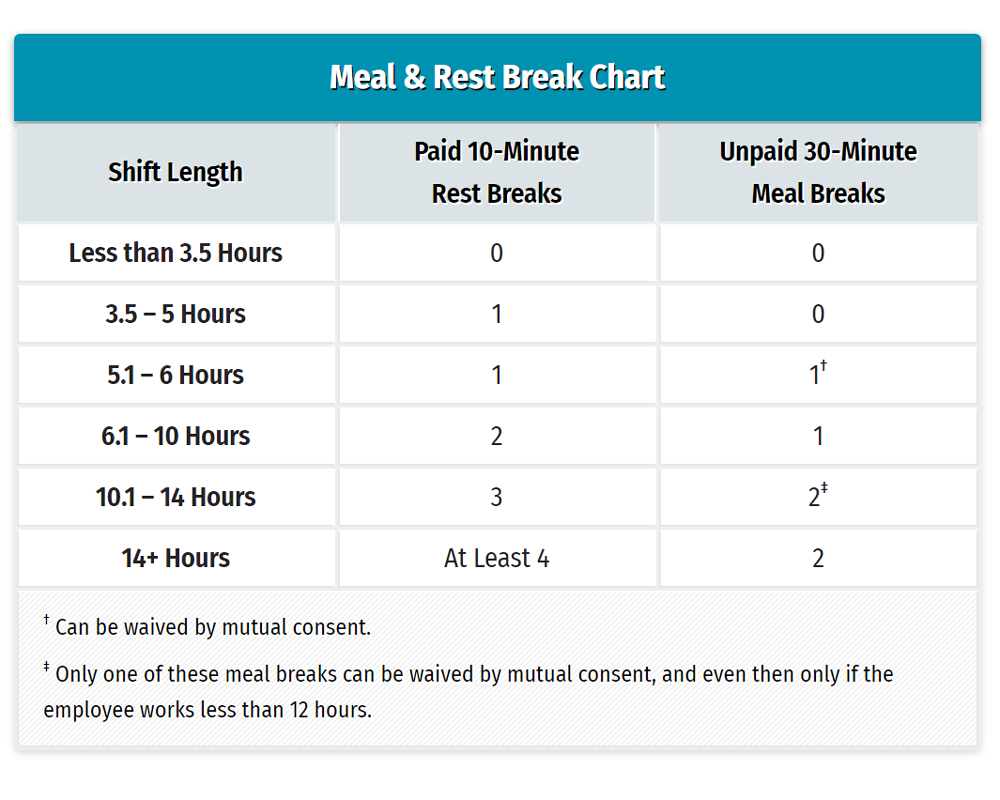
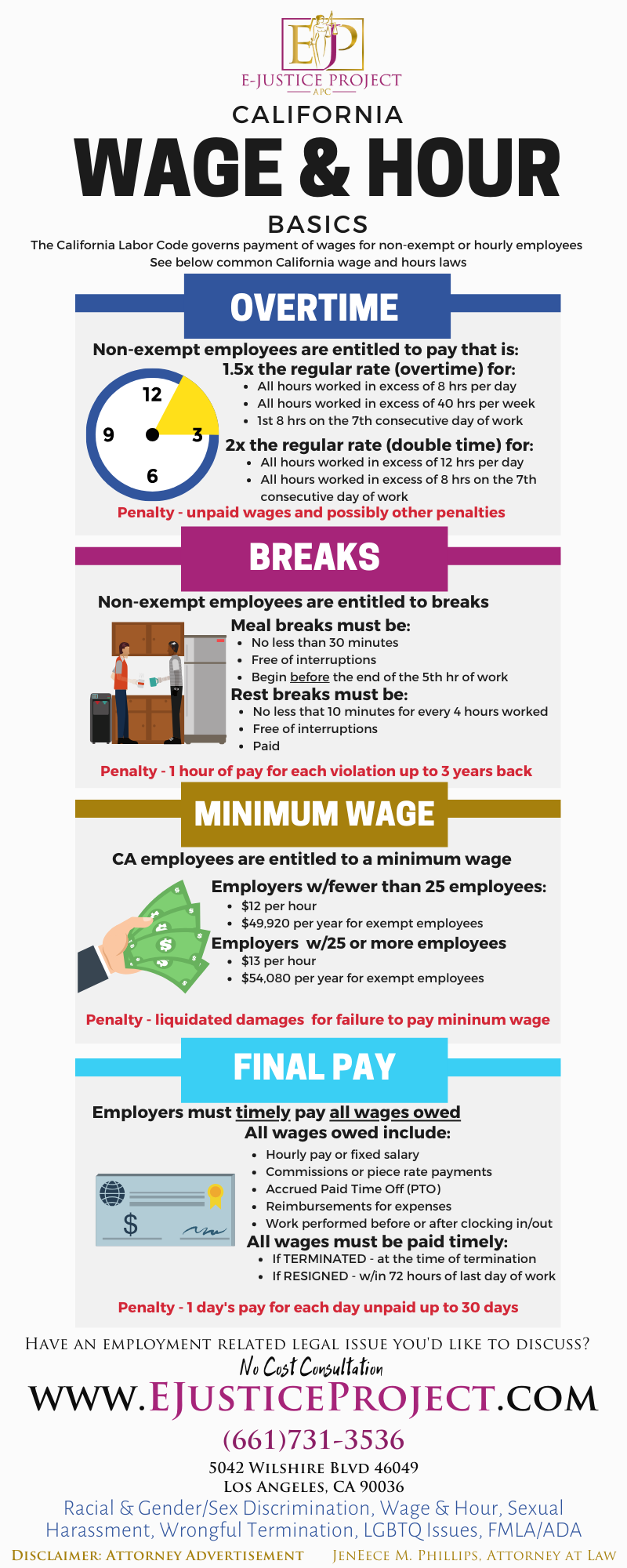
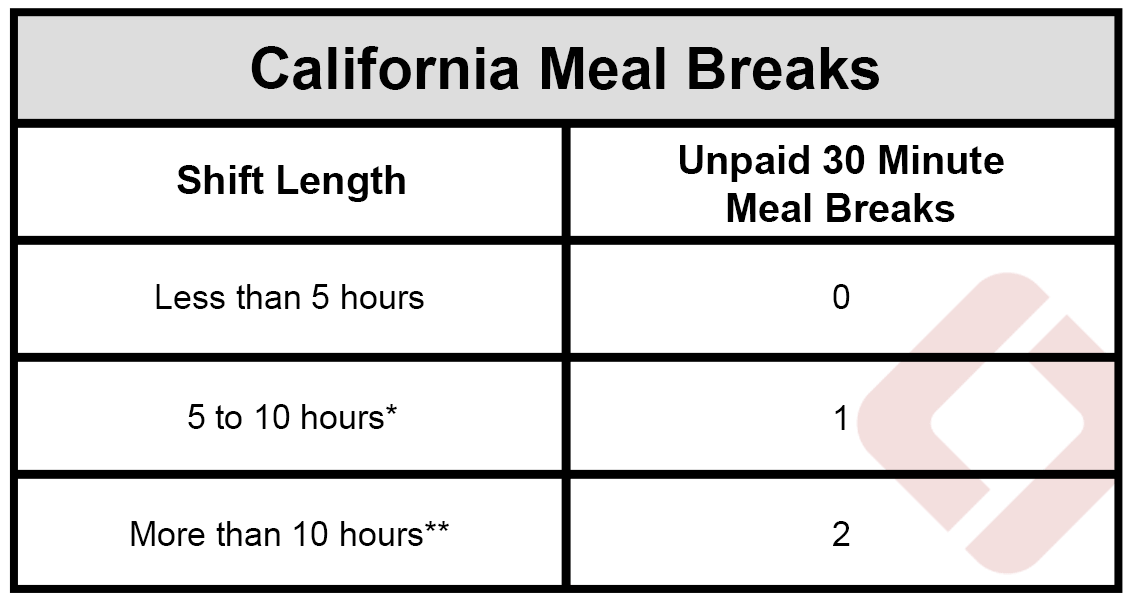
The cornerstone of [California]’s meal break law is what is often called the “5-hour rule.” This rule stipulates that an employer generally cannot employ an employee for a work period of more than five hours without providing an unpaid, uninterrupted meal period of at least 30 minutes. This meal period must begin before the end of the fifth hour of work. For instance, if you start your shift at 8:00 AM, your lunch break must commence no later than 12:59 PM. The objective is to ensure that employees receive a significant break before working a full half-day or more.
Expanding on this, if an employee works a shift of more than ten hours, they are entitled to a second unpaid meal period of at least 30 minutes. This second meal period must be provided before the end of the tenth hour of work. However, there’s a specific exception for the second meal break: it can be waived by mutual consent of the employer and employee if the total hours worked in the workday do not exceed 12 hours, and if the first meal period was not waived. This flexibility is often useful in industries with varying demands, such as event planning for major attractions like [Disneyland] or managing guest services at the [Hotel del Coronado].
It’s important to note that these meal periods must be “bona fide” — meaning the employee must be relieved of all duties and free to leave the premises. They are generally unpaid, though exceptions exist for “on-duty” meal periods in specific circumstances. The employer has an affirmative duty to ensure that employees are provided with the opportunity to take their meal breaks, and they cannot impede or discourage employees from doing so.
What Constitutes a Valid Meal Break?
A valid meal break in [California] isn’t just about stopping work; it’s about being genuinely relieved of duties. During a 30-minute meal break, an employee must be free from the employer’s control and able to pursue personal matters, such as leaving the workplace to run an errand or simply relax without interruption. If an employee is required to remain on the premises, carry a pager, answer phones, or perform any work-related tasks, even if they are eating, that time may not qualify as a valid, off-duty meal period and may need to be compensated as work time.
For employees working in environments like major tourist destinations, such as [Universal Studios Hollywood] or the bustling areas around [Pier 39] in [San Francisco], this distinction is particularly relevant. A front-desk agent at a [Fairmont San Francisco] property, for example, cannot be expected to answer guest inquiries while on their mandated lunch break. The employer’s responsibility extends to ensuring there are sufficient staff coverages to allow for uninterrupted breaks.
This strict definition underscores [California]’s commitment to employee well-being, recognizing that true rest is essential for mental and physical recuperation. Employers who fail to provide proper meal periods are subject to significant penalties, highlighting the seriousness with which the state regards these protections.
“On-Duty” Meal Periods: Exceptions and Requirements
While the standard is an off-duty meal period, [California] law does allow for “on-duty” meal periods under very specific and limited circumstances. An “on-duty” meal period means the employee is not relieved of all duties and remains available to work during their break. For such a meal period to be lawful, two conditions must be met:
- The nature of the work prevents the employee from being relieved of all duty. This is typically reserved for situations where continuous operation is critical and interrupting work would cause serious disruption or harm, such as a lone security guard at a remote site or a caretaker for vulnerable individuals.
- There must be a written agreement between the employer and employee, voluntarily agreeing to an on-duty meal period. This agreement must state that the employee can revoke it at any time.
- The employee must be paid for the “on-duty” meal period. Unlike off-duty breaks, on-duty meal periods are considered compensable work time.
These exceptions are narrowly construed by the [California Division of Labor Standards Enforcement (DLSE)] and the courts, emphasizing that the default expectation is a genuine off-duty break. They are rarely applicable in typical office or retail environments but might be seen in niche roles within industries that require constant presence, perhaps in certain critical operations at a large facility like a data center in [Silicon Valley] or essential services near [Los Angeles].
Practical Implications for Workers and Employers in the Golden State
The robust nature of [California]’s meal break laws has significant practical implications for both employees and employers across various sectors. For employees, it means a clearer understanding of their right to rest and recuperation. For employers, it necessitates meticulous scheduling, clear policies, and thorough record-keeping to ensure compliance and avoid costly penalties.
Industry-Specific Considerations (e.g., Hospitality, Tourism)
In industries like hospitality and tourism, which are cornerstones of [California]’s economy, meal break compliance can be particularly complex due to fluctuating demands, varied shift schedules, and the continuous nature of customer service. From the housekeepers at the [Waldorf Astoria Beverly Hills] to the tour guides leading groups through [Yosemite National Park], ensuring every employee receives their proper break requires careful planning.
For instance, a hotel might need to adjust staffing levels dynamically to ensure that a concierge can take their mandated 30-minute break without leaving the front desk unattended. Similarly, restaurants and cafes in popular tourist hubs like [Santa Monica] or [Napa Valley] must schedule their kitchen and wait staff to ensure breaks are taken before the 5-hour mark, often requiring staggered lunch shifts during peak hours. Travel agencies or tour operators based out of [San Diego] or [Oakland] also need to ensure their staff, whether in office or on the road, adhere to these guidelines.
The IWC Wage Orders address specific industries, providing some tailored regulations. For example, specific rules might apply to employees in the transportation industry or those working in agriculture. Employers must consult the relevant Wage Order for their industry to ensure full compliance. This often involves detailed training for supervisors and managers who are responsible for implementing these break schedules on the ground.
Consequences of Non-Compliance: Penalties and Remedies
[California]’s labor laws are backed by significant penalties for employers who fail to provide proper meal breaks. If an employer fails to provide a compliant meal period, the employee is entitled to “premium pay” — one additional hour of pay at their regular rate for each workday that a meal period was not provided or was not compliant. This “one-hour penalty” is designed to compensate the employee for the deprivation of their statutory right.Beyond this, employers can face civil penalties and even class-action lawsuits if a pattern of non-compliance is identified. The financial implications can be substantial, especially for large organizations with numerous employees. The [California Labor Commissioner]’s office, also known as the [DLSE], is responsible for investigating wage claims and enforcing these labor laws. They have the authority to issue citations, order payment of wages and penalties, and can pursue legal action against non-compliant employers.
For employees, understanding these penalties provides a crucial layer of protection. It empowers them to speak up if their rights are being violated, knowing there are clear legal consequences for employers who disregard the law. This framework encourages employers to be diligent in their compliance efforts, fostering a fairer work environment across the state, from the bustling tech companies of [Silicon Valley] to the agricultural fields of the [Central Valley].
Navigating Your Rights and Responsibilities
For employees, proactively understanding your rights and responsibilities concerning meal breaks is key to protecting yourself and ensuring fair treatment. For employers, it means fostering a culture of compliance and transparency.
Documenting Your Meal Breaks
One of the most effective ways for employees to protect themselves is to accurately document their work hours and meal periods. This includes noting the start and end times of your shift, as well as the exact start and end times of your lunch breaks. If you are ever denied a meal break, forced to work during one, or provided one late, make a note of the date, time, and specific circumstances.
Many employers use timekeeping systems that automatically record these details, but it’s still wise for employees to keep personal records. In the event of a dispute, such documentation can be invaluable evidence when filing a wage claim with the [DLSE] or consulting with a labor attorney. This meticulous approach is particularly important for individuals new to the [California] workforce, perhaps those working in seasonal positions at various tourist attractions or temporary roles in urban centers like [Oakland] or [Long Beach].
When to Seek Assistance: The DLSE and Legal Recourse
If you believe your meal break rights are being violated, several avenues for assistance are available. The primary resource for employees in [California] is the [DLSE]. You can file a wage claim with the [Labor Commissioner]’s office, which will investigate your complaint. The [DLSE] offers free services and guidance throughout the process.
Additionally, employees can consult with a labor law attorney specializing in [California] employment law. An attorney can provide personalized advice, assess the strength of your case, and represent you in legal proceedings, which might include individual lawsuits or participation in class-action litigation against an employer. Organizations such as employee advocacy groups can also offer support and resources.
It is illegal for an employer to retaliate against an employee for asserting their meal break rights or for filing a complaint. If you experience any adverse employment action (e.g., termination, demotion, reduced hours) after raising concerns about meal breaks, you may have grounds for a separate retaliation claim. Knowing these protections empowers employees to advocate for themselves without fear.
Balancing Work and Lifestyle in California
The commitment to employee well-being embedded in [California]’s meal break laws extends beyond mere legal compliance; it shapes the overall work experience and even influences how individuals integrate work with the unique lifestyle offerings of the state. For many, [California] is a dream destination, and even for those who work there, the opportunity to enjoy its natural beauty and cultural richness is a major draw.
Planning Your Day Around Meal Breaks in Tourist Areas
For individuals visiting [California] as tourists, understanding that service workers in places like [San Francisco], [Los Angeles], or [San Diego] are legally entitled to their breaks can inform their planning. A quick lunch spot near the [Hollywood Walk of Fame] might experience a staff changeover around midday as employees rotate for breaks. Businesses operating near popular landmarks such as the [Golden Gate Bridge] or the [Santa Monica Pier] are particularly adept at managing these rotations to maintain service quality while adhering to labor laws.
This awareness helps tourists manage their expectations and appreciate the fair labor practices at play. For those working in these vibrant areas, a guaranteed 30-minute break offers a precious window to step away from the hustle, perhaps grab a quick bite from a food truck near [Golden Gate Park] or simply enjoy a moment of quiet reflection away from the demands of the job. It’s a small but significant aspect of the [California] lifestyle that prioritizes worker welfare.
For Business Travelers: Maximizing Your Time in San Francisco, Los Angeles, or San Diego
Business travelers on extended stays in [California]’s major economic hubs—[San Francisco], [Los Angeles], [San Diego], and [Sacramento]—also benefit from predictable meal break schedules. While focused on work, the guaranteed break allows for efficient personal time management. You might use your lunch break to grab a healthy meal, make a quick personal call, or even take a short walk to explore a nearby street, perhaps admiring the architecture around [Pasadena] or catching a glimpse of the [Hollywood Sign] in the distance.
Understanding these laws, especially if you’re managing a team in [California], is crucial for compliance. It means scheduling meetings around the mandatory breaks of your [California]-based employees and ensuring that your own work schedule respects these local regulations if you are performing work for a [California] entity. This careful planning ensures that business operations run smoothly while respecting the local legal framework, allowing both employees and visitors to maximize their time in this bustling state.
The Importance of Employee Well-being in California’s Diverse Workforce
Ultimately, [California]’s stringent meal break laws reflect a broader commitment to employee well-being. By ensuring that employees receive adequate time to rest and recuperate, the state aims to reduce burnout, improve job satisfaction, and promote a healthier, more productive workforce. This is especially vital in a state as diverse and dynamic as [California], where industries range from high-tech in [Silicon Valley] to agriculture in [Fresno], and tourism in scenic areas like [Big Sur] and [Lake Tahoe].
For workers, these laws offer a sense of security and validation that their basic human needs for rest are recognized and protected. For employers, while challenging to implement at times, compliance fosters a positive work environment, reduces legal risks, and can even enhance employee loyalty and retention. The question of “how early can I take my lunch break in [California]?” therefore leads to a deeper understanding of the state’s values, where even the smallest details of labor law contribute to a larger picture of fairness, respect, and a balanced lifestyle for all who contribute to the [Golden State]’s vibrant economy.
LifeOutOfTheBox is a participant in the Amazon Services LLC Associates Program, an affiliate advertising program designed to provide a means for sites to earn advertising fees by advertising and linking to Amazon.com. Amazon, the Amazon logo, AmazonSupply, and the AmazonSupply logo are trademarks of Amazon.com, Inc. or its affiliates. As an Amazon Associate we earn affiliate commissions from qualifying purchases.