
Navigating the legal landscape of carrying certain tools and self-defense items can be a complex endeavor, especially when venturing into new territories. For travelers and residents alike in the great state of Texas, understanding the specifics of what constitutes a lawful carry is paramount. Among the items that frequently raise questions are Out-The-Front (OTF) knives. These distinctive knives, characterized by their mechanism that deploys and retracts the blade from the front of the handle via a sliding button or switch, possess a unique appeal and utility that sparks curiosity regarding their legality. This article aims to demystify the regulations surrounding OTF knives in Texas, offering clarity for those seeking to understand their rights and responsibilities.
Understanding Texas Knife Laws: A General Overview
Before delving into the specifics of OTF knives, it’s crucial to grasp the broader framework of Texas knife legislation. The state operates under a generally permissive approach to knife possession, a characteristic often associated with its frontier spirit and emphasis on self-reliance. Historically, Texas has had a more lenient stance on knives compared to many other states, allowing for a wider variety of blade types and sizes to be carried openly or concealed.
However, leniency does not equate to a complete absence of restrictions. While Texas law is often characterized by its freedom, there are still nuances that prudent individuals must be aware of. The key lies in understanding what constitutes an illegal carrying of a weapon rather than an outright ban on specific types of knives. For instance, the law often focuses on the intent behind carrying a knife, particularly in conjunction with other circumstances that might suggest criminal activity.
The Significance of “Criminal Intent”
A pivotal aspect of Texas weapon laws, including those pertaining to knives, is the concept of criminal intent. Texas Penal Code Section 30.06 and 30.07 address carrying handguns and knives, respectively, on certain premises where notice is given. However, the broader implications for knife carry often revolve around Section 46.02, which defines unlawful carrying of a weapon. This section generally prohibits carrying a handgun, illegal knife, or club on one’s person or in a vehicle. The critical distinction for knives often comes down to what is defined as an “illegal knife.”
Defining “Illegal Knife” in Texas
Texas law defines an “illegal knife” as a:
- Knife with a blade over five and one-half inches (5.5″)
- Screwdriver
- Chisel
- Ice pick
- Awl
- That can be used as a stabbing weapon
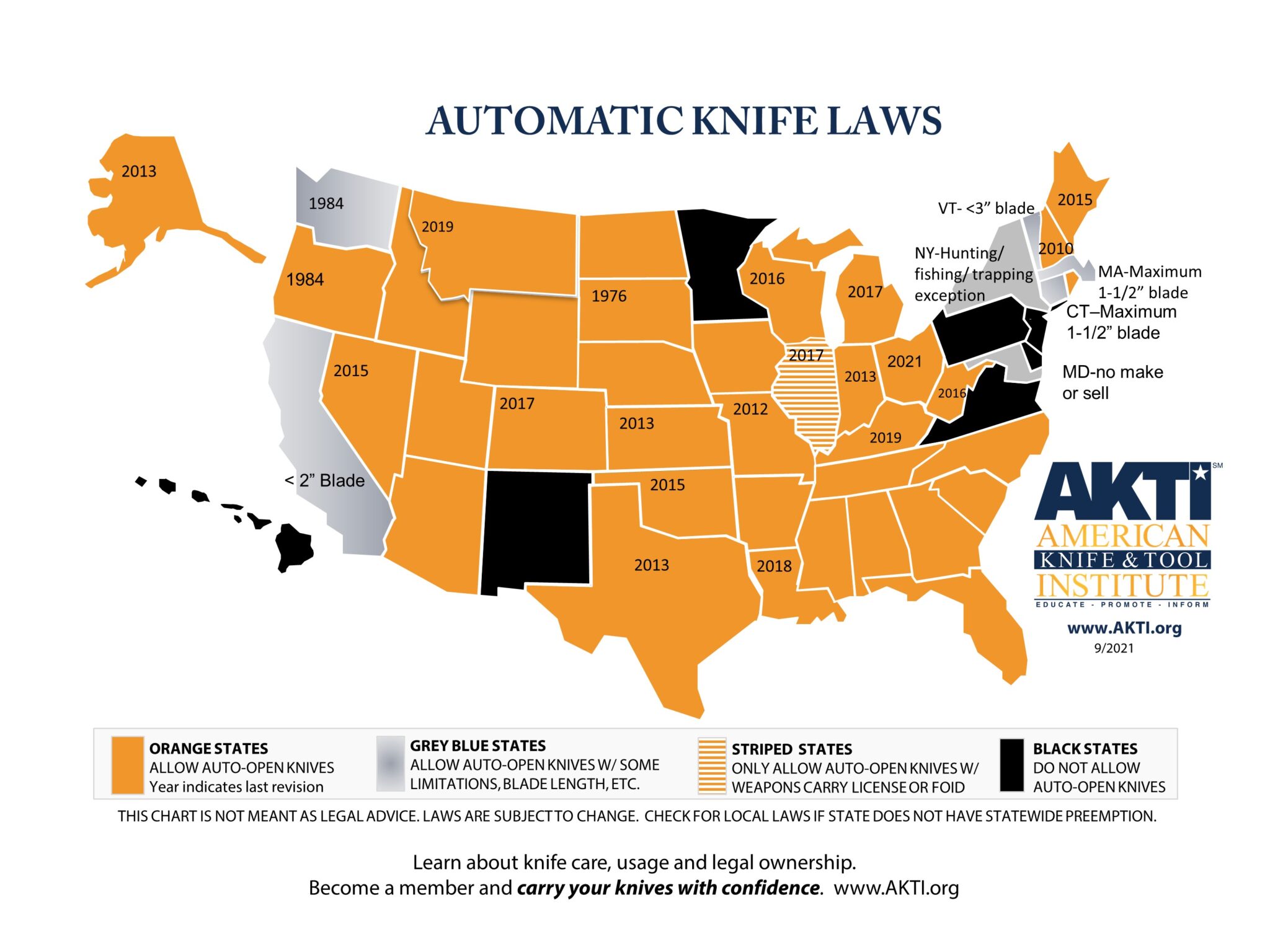
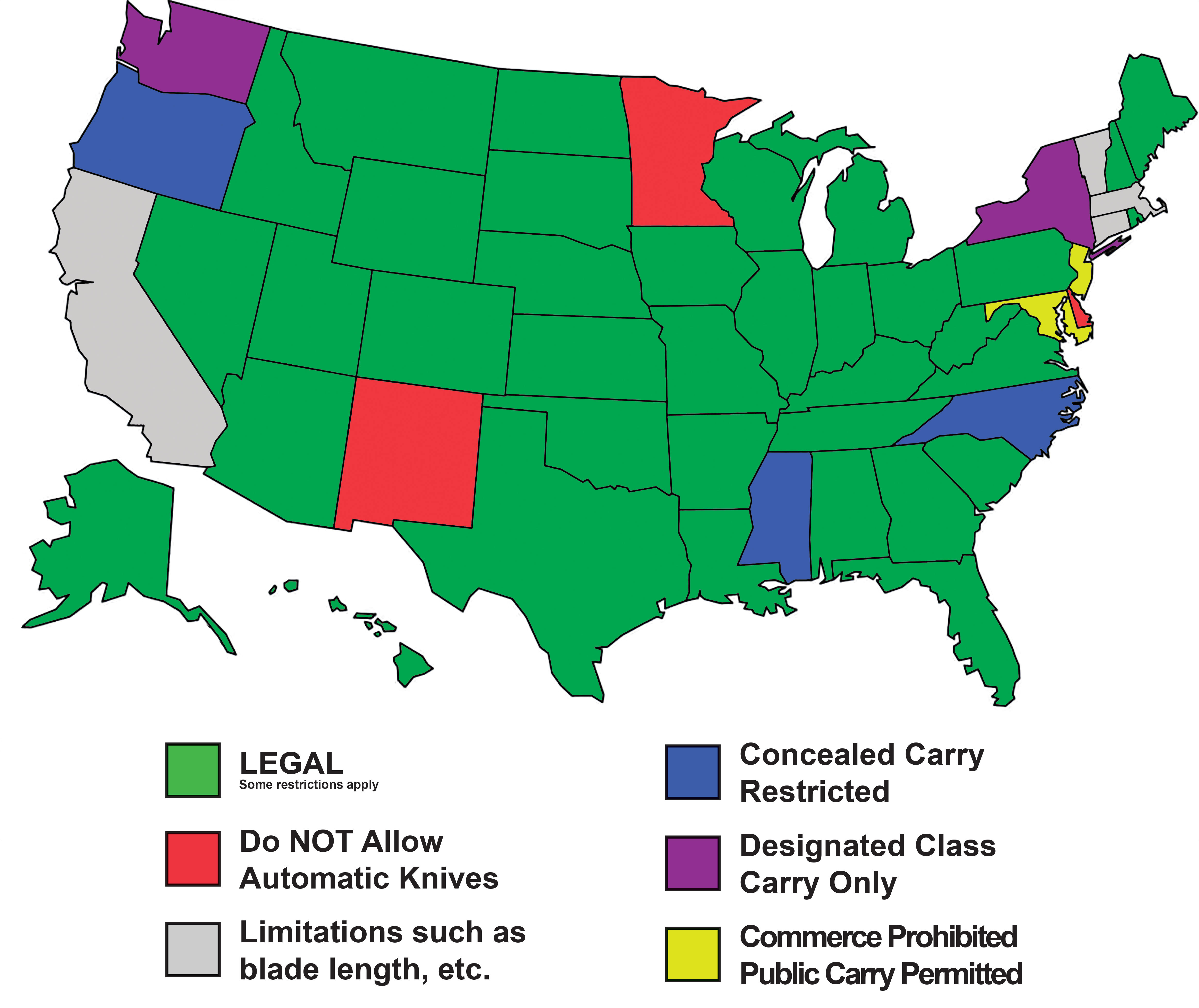
- Any knife with a blade that opens, closes, or extends automatically by manipulation of a switch, press button, or similar device.
This last point is where OTF knives enter the discussion. The statute explicitly categorizes knives that deploy automatically via a switch or button as “illegal knives.” This definition is crucial for understanding the legality of OTF knives in Texas.
The Legality of OTF Knives in Texas: A Closer Look
Based on the statutory definition of an “illegal knife,” the question of whether OTF knives are legal in Texas becomes more nuanced. The definition clearly states that “any knife with a blade that opens, closes, or extends automatically by manipulation of a switch, press button, or similar device” is considered an illegal knife. OTF knives, by their very design, fall precisely into this category, as their blades deploy and retract through an automatic mechanism operated by a switch or button.
This specific clause in the law directly addresses the operational mechanism of an OTF knife, distinguishing it from manual folding knives or fixed-blade knives. Therefore, according to the letter of the law in Texas, an OTF knife is generally classified as an illegal knife.
Implications for Carrying OTF Knives
The classification of an OTF knife as “illegal” under Texas law has significant implications for individuals wishing to carry them. This means that possessing an OTF knife in a manner that constitutes unlawful carrying of a weapon could lead to legal consequences.
However, it’s important to note that Texas law also provides certain exceptions and considerations. The primary offense related to illegal knives is the unlawful carrying of one. This often pertains to carrying the knife in specific locations or under specific circumstances that are prohibited.
Where Can You Legally Possess an OTF Knife?
While the definition labels OTF knives as “illegal,” their possession is not entirely prohibited. The distinction lies in where and how one possesses them. Generally, you are permitted to possess an OTF knife on your own property, in your own vehicle, or in your own home. The restrictions primarily apply when you are carrying the knife outside of these private spaces, especially in public areas or sensitive locations.
Furthermore, the law often distinguishes between possessing an illegal knife and brandishing it in a threatening manner. While the knife itself is classified as illegal due to its automatic nature, the act of unlawfully carrying it is the offense.
The “Legal” Counterpart: Automatic Knives vs. OTF Knives
It’s worth clarifying a common point of confusion regarding automatic knives in Texas. The statutory definition of an “illegal knife” encompasses automatic knives with a blade that opens, closes, or extends automatically by manipulation of a switch, press button, or similar device. This description broadly includes both side-opening automatic knives (often called “switchblades”) and OTF knives.
The key differentiator is the automatic deployment mechanism. A knife that requires manual manipulation to open, such as a standard folding knife where the user must flick open the blade or use a thumb stud, does not fall under the “illegal knife” definition unless its blade exceeds the five-and-a-half-inch limit.
Navigating Restrictions and Responsible Ownership
Given that OTF knives are classified as “illegal knives” in Texas, responsible ownership and awareness of legal boundaries are paramount. The primary concern for individuals interested in carrying such knives should be to understand the circumstances under which such possession becomes unlawful.
Prohibited Locations
Texas law, like many jurisdictions, imposes restrictions on carrying weapons, including illegal knives, in certain locations. These often include:
- Schools and educational institutions
- Polling places on election day
- Courts of law
- Correctional facilities
- Federal buildings
Even if you possess an OTF knife legally on your private property, bringing it into one of these prohibited zones can constitute unlawful carrying. It is crucial to be aware of signage that may indicate such restrictions, as per Texas Penal Code Sections 30.06 and 30.07, which specifically address notice for carrying handguns and knives.
Travel and Interstate Carry
For those traveling into or through Texas with an OTF knife, understanding both Texas law and the laws of any other states you will be traversing is critical. Interstate travel with knives, especially those classified as illegal in one state but legal in another, can be a legal minefield. The federal law, the Interstate Transportation of Dangerous Weapons Act, may offer some protections, but it is complex and often requires that the knife be legal in both the state of departure and the state of arrival. Given the classification of OTF knives as illegal in Texas, carrying one across state lines into Texas could present legal challenges.
Responsible Handling and Intent
Beyond the specific classification of the knife, the overarching principle of responsible conduct remains. While Texas law is permissive, it does not condone the use of any weapon, including a knife, for intimidation or illegal purposes. Carrying a knife, regardless of its type, with the intent to commit a crime is a serious offense.
The emphasis on “unlawful carrying” suggests that the legality is often tied to the circumstances of possession. If you are carrying an OTF knife solely for its utility or as a personal item, and not with intent to threaten or harm, you are generally operating within a more legally sound framework, provided you are not in a prohibited location.
Seeking Professional Advice
Laws are subject to interpretation and change. While this article aims to provide a clear understanding of the legality of OTF knives in Texas based on current statutes, it is not a substitute for professional legal advice. If you have specific questions regarding knife carry laws, personal defense tools, or any legal concerns, it is always advisable to consult with a qualified attorney in Texas. They can provide guidance tailored to your individual circumstances and ensure you are fully compliant with all applicable laws and regulations. Staying informed and adhering to legal guidelines ensures peace of mind and allows for the lawful enjoyment of personal freedoms.
LifeOutOfTheBox is a participant in the Amazon Services LLC Associates Program, an affiliate advertising program designed to provide a means for sites to earn advertising fees by advertising and linking to Amazon.com. Amazon, the Amazon logo, AmazonSupply, and the AmazonSupply logo are trademarks of Amazon.com, Inc. or its affiliates. As an Amazon Associate we earn affiliate commissions from qualifying purchases.