
Texas is a state that often conjures images of wide-open spaces, vibrant cities, and a distinct cultural heritage. For those considering a move, a significant life event, or simply planning a prolonged stay within its borders, understanding the legal framework surrounding relationships is crucial. One area that frequently sparks questions is the recognition of common law marriage. This concept, often depicted in media, can be a source of confusion, particularly when juxtaposed with the more formal requirements of ceremonial marriage.
Understanding Common Law Marriage
Common law marriage, also known as informal marriage, is a legal framework where a couple can be considered married without a formal ceremony or a marriage license. This typically requires the couple to meet specific criteria demonstrating their intent to be married and to hold themselves out to the public as a married couple. The specifics of these requirements can vary significantly from state to state, and importantly, not all states recognize common law marriage at all. This distinction is vital for individuals navigating their marital status, especially when considering property division, inheritance, or other legal matters that hinge on marital recognition.
The Historical Roots and Modern Application
The concept of common law marriage has roots in historical legal traditions where formal state-sanctioned marriage was less prevalent or accessible. In earlier times, it was often a practical necessity for couples living together and functioning as a marital unit to have their union recognized for social and legal purposes. While many states have abolished common law marriage, some continue to recognize it, albeit under strict conditions. The modern application of common law marriage in these states aims to provide legal protections and recognition for couples who, for various reasons, have not undergone a formal wedding ceremony but have otherwise established a marital relationship.
Key Elements of a Valid Common Law Marriage in Texas
In Texas, common law marriage, or informal marriage, is indeed recognized. However, it is not as simple as simply living together for a certain period. Texas law outlines three distinct elements that must be met simultaneously for an informal marriage to be legally valid. These elements are designed to ensure that a couple truly intended to be married and acted accordingly.
-
Agreement to be Married: The couple must have a present agreement, or a mutual understanding, that they are married. This is not about a future intention to marry, but a current commitment to be husband and wife (or spouses). This agreement can be expressed verbally or through conduct, but it must be a clear and present intent to be married now, not at some point in the future.
-
Living Together in Texas: Following the agreement to be married, the couple must have lived together in Texas as husband and wife (or spouses). This cohabitation is a crucial element, demonstrating the couple’s intent to live as a married unit. The duration of cohabitation is not as important as the fact that it occurred subsequent to the agreement to be married.
-
Holding Out to Others as Married: The couple must represent themselves to other people in Texas as being married. This means they must have held themselves out to the public as husband and wife (or spouses). This can be demonstrated through various actions, such as introducing each other as “my husband” or “my wife,” filing joint tax returns (though this can be complex and depends on specific circumstances), signing leases or loan documents as a married couple, or referring to each other as married in social or professional settings.
It is important to emphasize that all three of these elements must exist concurrently. If any one of these elements is missing, or if they do not occur in the correct sequence (i.e., the agreement to be married must precede or be contemporaneous with cohabitation and holding out), a common law marriage will not be established in Texas.
Proving a Common Law Marriage in Texas
Establishing the existence of a common law marriage in Texas is not always straightforward, especially if one party disputes the marriage’s validity. Since there is no marriage license or ceremony to serve as definitive proof, the burden of proof lies with the party asserting the marriage. This often requires presenting evidence that convincingly demonstrates the fulfillment of the three required elements.
Gathering Evidence
Evidence for a common law marriage can be multifaceted and may include:
-
Testimony: Sworn statements from the couple themselves, if they agree, or from friends, family members, neighbors, or colleagues who can attest to the couple’s statements and actions indicating they considered themselves married.
-
Documents: This could include joint bank accounts, joint leases or mortgages, insurance policies listing each other as spouse, joint tax returns (though filing jointly as “married” when not formally married can have legal implications and may not be sufficient on its own), or any other legal documents where the couple represented themselves as married.
-
Correspondence: Letters, emails, or social media posts where the couple referred to each other as husband or wife, or otherwise indicated their marital status.
-
Behavioral Evidence: Consistent introductions as “my wife” or “my husband” in various social and professional contexts.
The more substantial and consistent the evidence, the stronger the claim for a common law marriage. This is particularly critical in situations like divorce proceedings, where a court must determine if a valid marriage existed before dividing assets and addressing other marital matters.
The Statute of Limitations and Proof of Marriage
While Texas law does not impose a strict statute of limitations for proving a common law marriage after the fact, it is generally advisable to seek legal clarification or formalize the marriage if the couple intends for it to be recognized. The longer a couple delays in formally acknowledging or seeking proof of their informal marriage, the more challenging it may become to gather sufficient evidence.

In Texas, an informal marriage can be proven through a “Suit to Declare Existence of Informal Marriage.” This is a legal action where a party petitions the court to officially declare that an informal marriage exists. This is often done in anticipation of or during divorce proceedings. The court will then review the evidence presented to determine if the statutory elements have been met.
Common Scenarios and Legal Implications
The recognition of common law marriage in Texas has significant implications across various life events and legal proceedings. Understanding these implications is essential for individuals in informal marital relationships.
Divorce and Dissolution of Common Law Marriage
When a common law marriage is recognized in Texas, its dissolution follows the same legal procedures as a ceremonial marriage. This means that if a couple wishes to end their common law marriage, they must go through a formal divorce process. They cannot simply cease cohabiting or stop holding themselves out as married.
During a Texas divorce, the court will address issues such as:
-
Division of Marital Property: Texas is a community property state. All assets and debts acquired by the couple during the marriage (including the period of the common law marriage) are considered community property and are subject to equitable division by the court.
-
Spousal Support: The court may order one spouse to pay spousal support to the other, depending on various factors.
-
Child Custody and Support: If the couple has children, the court will make orders regarding custody, visitation, and child support.
The inability to prove a common law marriage in Texas can lead to complex legal battles, particularly when one party seeks to claim marital rights or responsibilities that the other disputes.
Inheritance and Benefits
The recognition of common law marriage can also impact inheritance rights and eligibility for benefits. If an individual dies intestate (without a will) and was recognized as being in a common law marriage in Texas, their surviving spouse may be entitled to inherit from their estate according to Texas intestacy laws. Similarly, surviving spouses of common law marriages may be eligible for certain benefits, such as social security or pension benefits, provided the marriage can be proven.
Other Legal Considerations
Beyond divorce and inheritance, the existence of a common law marriage can affect:
- Insurance Policies: The ability to name a common law spouse as a beneficiary.
- Testimony: Spousal privilege in legal proceedings.
- Joint Filings: Such as tax returns or loan applications.
It is crucial for individuals who believe they are in a common law marriage in Texas to understand their legal standing and seek professional legal advice to clarify their rights and responsibilities.
Other States and Interstate Recognition
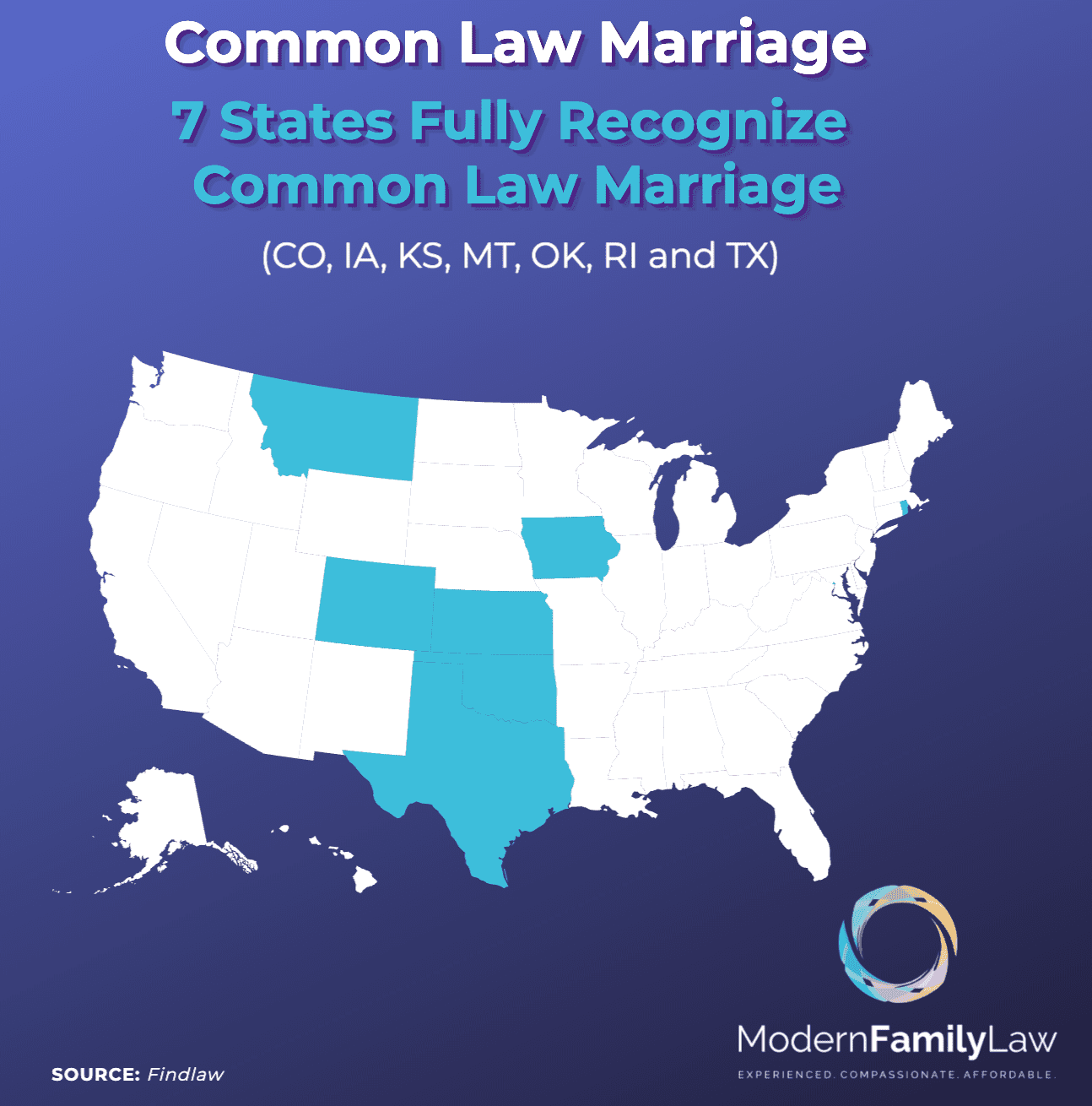
It is important to note that Texas is one of the few states that still permit the formation of common law marriages. Many other states have abolished this form of marriage. However, Texas does recognize common law marriages that were validly established in other states that permit them. This principle of “full faith and credit” under the U.S. Constitution means that a legally recognized common law marriage in one state will generally be recognized in Texas, even if Texas itself does not allow such marriages to be formed within its own borders.
States That Recognize Common Law Marriage
As of recent legal standing, the states that currently allow common law marriages to be formed within their jurisdiction include:
- Colorado
- Iowa
- Kansas
- Montana
- New Hampshire (for inheritance purposes only)
- Oklahoma
- Rhode Island
- South Carolina
- Texas
- Utah
- District of Columbia
Even within these states, the specific requirements and the ease of proof can vary. For example, some states may have specific evidentiary standards or timeframes.

The Importance of Formalization
Given the complexities and potential for dispute, it is often advisable for couples who meet the criteria for common law marriage in Texas to consider formalizing their union. This can be done by obtaining a marriage license and having a ceremonial wedding. Formalization eliminates any ambiguity, provides clear documentation of the marital status, and simplifies future legal and financial matters. It offers peace of mind and a clear legal foundation for the relationship, protecting both partners’ rights and interests. For those who have already been living as married under common law, seeking legal counsel to confirm the validity of their marriage and explore options for formalization is a prudent step.
LifeOutOfTheBox is a participant in the Amazon Services LLC Associates Program, an affiliate advertising program designed to provide a means for sites to earn advertising fees by advertising and linking to Amazon.com. Amazon, the Amazon logo, AmazonSupply, and the AmazonSupply logo are trademarks of Amazon.com, Inc. or its affiliates. As an Amazon Associate we earn affiliate commissions from qualifying purchases.