
Navigating the intricacies of property ownership and taxation can often feel like a complex journey, especially when you’re dealing with specific benefits designed to ease the financial burden on homeowners. In Texas, a cornerstone of this homeowner support is the homestead exemption. This vital provision offers a reduction in your property taxes by exempting a portion of your home’s value from taxation. Understanding how to apply for and benefit from this exemption is crucial for any Texan homeowner looking to manage their finances more effectively. This guide will walk you through the process, eligibility requirements, and key considerations for securing your homestead exemption in the Lone Star State.
Understanding the Texas Homestead Exemption
The homestead exemption is not a one-size-fits-all benefit. In Texas, it primarily serves two crucial functions: reducing your property tax bill and protecting your home from forced sale by certain creditors. This dual nature makes it an indispensable tool for homeowners.
What is Homestead Exemption?
At its core, a homestead exemption is a legal provision that allows homeowners to protect a certain amount of their home’s value from property taxation. In Texas, this exemption translates into a direct reduction in the amount of taxes you owe to local taxing authorities, such as your county, city, and school district. The amount of the exemption can vary, with the most common one offering a substantial deduction from your home’s appraised value.
Types of Homestead Exemptions in Texas
Texas offers several types of homestead exemptions, each catering to specific circumstances and offering varying levels of benefit.
General Homestead Exemption
This is the most common type of homestead exemption available to Texas homeowners. It applies to your primary residence and provides a standard reduction in the appraised value of your home for tax purposes. For example, the state mandates a $40,000 homestead exemption for school district taxes for all homeowners. Local taxing units, like cities and counties, may offer additional homestead exemptions of up to 20% of the home’s value, with a minimum of $5,000.
Additional Exemptions for Specific Groups
Beyond the general exemption, Texas provides enhanced homestead exemptions for certain individuals who may face greater financial challenges or have specific needs.
-
Over 65 or Disabled Homestead Exemption: Homeowners who are 65 years of age or older or are certified as disabled by a physician can qualify for an additional exemption amount on their homestead. This exemption is applied to the appraised value of their home. The exact amount is determined by local taxing units, but it often represents a significant portion of the home’s value. Once granted, this exemption can often be transferred to a surviving spouse under certain conditions.
-
Exemption for Disabled Veterans and Survivors: Disabled veterans and the surviving spouses of disabled veterans or those killed in action may qualify for substantial homestead exemptions. The amount of this exemption can be up to 50% of the home’s appraised value, with a minimum exemption of $5,000. For 100% disabled veterans, there can be an additional exemption that covers the entire appraised value of their home, meaning they pay no property taxes.
-
Exemption for Families of Deceased First Responders: In recognition of their sacrifice, the surviving spouses and minor children of Texas first responders killed in the line of duty may also qualify for a homestead exemption that exempts their home from property taxes.
Why is Homestead Exemption Important?
The financial implications of the homestead exemption are significant. Property taxes are a substantial ongoing cost of homeownership, and any reduction can provide considerable relief. This is particularly true for seniors and disabled individuals whose fixed incomes may struggle to keep pace with rising property values and tax rates. Furthermore, the homestead exemption offers a layer of protection against losing your home due to insurmountable debt, making it a vital safety net for many families.
Eligibility Requirements for Homestead Exemption in Texas
To qualify for a homestead exemption in Texas, you must meet specific criteria related to ownership, residency, and the property itself.
Primary Residence Requirement
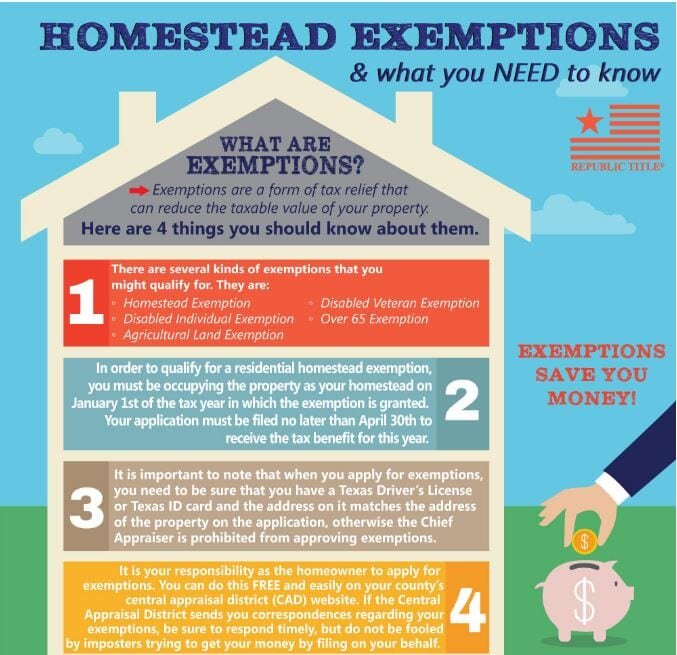
The most critical requirement is that the property for which you are seeking an exemption must be your primary residence. This means it’s the home where you live most of the time. You cannot claim a homestead exemption on a vacation home, a rental property, or any other property that is not your principal dwelling.
Ownership and Residency Dates
- Ownership: You must own the home on January 1st of the tax year for which you are applying.
- Residency: You must have occupied the home as your primary residence on January 1st of the tax year for which you are applying. This is a crucial distinction; simply owning the home is not enough; you must also be living in it.
Other Considerations
- Multiple Exemptions: You can only claim one homestead exemption per household.
- Previously Claimed Exemptions: If you previously claimed a homestead exemption on a different property and have now moved, you will need to apply for a new exemption on your new primary residence.
- Mobile Homes: In certain circumstances, a mobile home can qualify as a homestead if it is affixed to land you own and is your primary residence.
The Application Process for Homestead Exemption
Applying for a homestead exemption in Texas is a straightforward process, but it requires attention to detail and timely submission.
When and Where to Apply
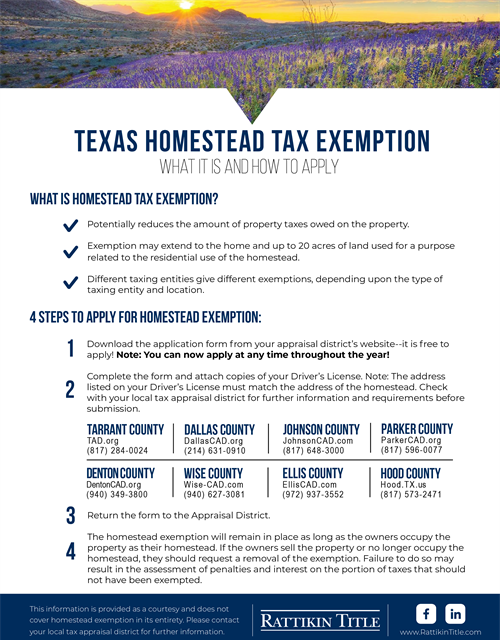
The application period for homestead exemptions typically opens on January 1st and closes on April 30th for school district taxes. However, deadlines can vary slightly for other taxing units. It is always advisable to check with your local[^1] county appraisal district[^2] for the exact dates and procedures.
You will file your application with the appraisal district in the county where your property is located. Each county has its own appraisal district, responsible for appraising all property within its jurisdiction for tax purposes.

Step-by-Step Application Guide
-
Obtain the Application Form: You can usually download the homestead application form from your local[^1] county appraisal district[^2]’s website. Alternatively, you can visit their office in person to pick up a form. The form is often titled “Application for Residence Homestead Exemption.”
-
Complete the Application Accurately:
- Your Information: Fill in your name, address, and contact information precisely as it appears on your property deed.
- Property Information: Provide the property’s address and legal description, which can be found on your property tax statement or deed.
- Ownership Details: Indicate how you own the property (e.g., individually, jointly, as part of a trust).
- Prior Exemptions: If you have claimed a homestead exemption on a previous property in Texas, you will need to provide information about it.
- Additional Exemptions: If you believe you qualify for an additional exemption (e.g., over 65, disabled, veteran), you will need to indicate this and may be required to submit supporting documentation.
-
Gather Supporting Documentation: Depending on the type of exemption you are applying for, you may need to provide proof of eligibility.
- For the general homestead exemption, simply completing the application and attesting to your primary residency is usually sufficient.
- For the over 65 or disabled exemption, you might need to provide proof of age (like a driver’s license or birth certificate) or a disability certificate from the Social Security Administration or a physician.
- For disabled veteran exemptions, you will need to provide a disability rating letter from the Department of Veterans Affairs.
-
Submit Your Application: Once completed and signed, submit the application and any supporting documents to your local[^1] county appraisal district[^2]. Most districts accept applications by mail, in person, or through their online portals. It is highly recommended to keep a copy of your submitted application for your records.
-
Confirmation and Approval: The appraisal district will review your application. If approved, you will receive a notice confirming your homestead exemption. This exemption will then be reflected on your subsequent property tax bills. If your application is denied, the appraisal district will notify you of the reason for the denial and provide instructions on how to appeal the decision.
What Happens After Application?
Once your homestead exemption is approved, it typically remains in effect year after year as long as you continue to own and occupy the property as your primary residence. You generally do not need to reapply annually for the general homestead exemption. However, if your circumstances change (e.g., you move, the property is no longer your primary residence, or you no longer meet the criteria for an additional exemption), you must notify the appraisal district. This is particularly important for individuals who move from a homestead to a different property, as the exemption does not automatically transfer.
Special Circumstances and Considerations
While the process is generally straightforward, certain situations may require additional attention or different procedures.
Moving to a New Home
If you sell your current homestead and purchase a new primary residence in Texas, you must file a new homestead exemption application for the new property. You cannot simply transfer the exemption from one property to another; it is tied to the specific location of your primary residence. Ensure you apply by the deadline in the new county.
Trusts and Other Ownership Structures
If your home is held in a trust or owned through other complex legal structures, you may need to provide additional documentation to prove your eligibility. The trustee or an authorized representative of the trust will need to demonstrate that the property is indeed your primary residence and that you meet the ownership requirements. Consulting with the appraisal district or a legal professional can be beneficial in these cases.
Proving Primary Residency
Occasionally, the appraisal district may question whether a property is truly your primary residence. They might request evidence such as:
- Your voter registration address.
- Your driver’s license or state ID address.
- Where you file your income taxes.
- Where your vehicles are registered.
- Utility bills in your name at the property address.
Maintaining consistent residency and address records across these different entities can help support your claim.
Appealing a Denial
If your homestead exemption application is denied, you have the right to appeal. The denial letter from the appraisal district will outline the process and deadlines for filing an appeal. Generally, you can request a review by the appraisal review board[^3] in your county. If you are still unsatisfied with the decision, further appeal options may be available through the courts.
Maximizing Your Homestead Exemption Benefits
Beyond the basic application, there are ways to ensure you are getting the most out of your homestead exemption and to stay informed about its benefits.
Staying Informed About Local Taxing Units
Remember that while the state mandates certain exemptions (like the $40,000 school district exemption), local taxing units (cities, counties, special districts) have the discretion to offer additional homestead exemptions. These can significantly increase your tax savings. Regularly check your local[^1] county appraisal district[^2]’s website or contact them directly to understand the specific exemption amounts offered by your city and county.
The 10% Homestead Cap
For homestead properties, Texas law imposes a 10% cap on annual increases in property taxes, excluding taxes on new improvements. This means that even if your property’s appraised value jumps by more than 10% in a given year, your property tax bill cannot increase by more than 10% (plus taxes on any new construction or additions). This “homestead cap” provides a valuable buffer against sudden, dramatic tax hikes.
Transfers for Seniors and Disabled Homeowners
As mentioned earlier, the additional homestead exemptions for individuals over 65 or those with disabilities have a portability feature. If you qualify for and receive one of these exemptions and then move to a different home in Texas, you may be able to transfer the same dollar amount of the exemption to your new homestead, provided you still meet the eligibility criteria. This is a significant benefit that can help seniors and disabled individuals maintain their tax savings even after relocating.
The Importance of Timeliness
The deadlines for applying for homestead exemptions are strict. Missing the deadline can mean forfeiting the exemption for that tax year. Therefore, it’s essential to mark your calendar and submit your application well in advance of the deadline. If you purchase a new home, make applying for the homestead exemption a priority in your moving checklist.
By understanding the nuances of the homestead exemption, diligently following the application process, and staying informed about its benefits, you can effectively reduce your property tax burden and secure your financial stability as a homeowner in Texas. This exemption is more than just a tax break; it’s a fundamental aspect of homeownership that supports Texans and their families.
[^1]: Local is a general term and not a specific proper noun to be slugified.[^2]: County appraisal district is a descriptive term, not a specific proper noun.
[^3]: Appraisal review board is a descriptive term, not a specific proper noun. LifeOutOfTheBox is a participant in the Amazon Services LLC Associates Program, an affiliate advertising program designed to provide a means for sites to earn advertising fees by advertising and linking to Amazon.com. Amazon, the Amazon logo, AmazonSupply, and the AmazonSupply logo are trademarks of Amazon.com, Inc. or its affiliates. As an Amazon Associate we earn affiliate commissions from qualifying purchases.