
Navigating the journey to secure a teaching certificate in Texas is a multifaceted process, but one that promises immense personal and professional fulfillment. This guide aims to demystify the requirements and outline the essential steps for aspiring educators looking to embark on their careers within the Lone Star State’s vibrant educational landscape. From understanding the initial prerequisites to the final application, each stage is crucial for a successful transition into the classroom.
Understanding the Texas Educator Certification Program (TEAL)
The Texas Education Agency (TEA) oversees the Texas Educator Certification Program (TEAL). This program ensures that all individuals who wish to teach in public schools meet rigorous standards of knowledge and competence. Before embarking on your certification journey, it is essential to familiarize yourself with the overarching framework and the various pathways available.
Prerequisites for Certification
Before delving into specific program requirements, prospective teachers must meet certain foundational criteria. These typically include:
- Bachelor’s Degree: A minimum of a bachelor’s degree from an accredited college or university is almost always required. The degree subject should ideally align with the subject area you intend to teach.
- Academic Performance: A satisfactory GPA is usually expected, though specific requirements can vary.
- Background Check: All candidates must undergo a criminal background check to ensure the safety and well-being of students. This involves fingerprinting and submission to the Texas Department of Public Safety and the Federal Bureau of Investigation.
- Basic Skills Test: In many cases, candidates are required to pass a basic skills assessment, such as the Texas Success Initiative (TSI) Assessment, or demonstrate proficiency through college coursework.
Choosing a Certification Area
Texas offers a wide array of certification areas, catering to diverse academic interests and subject specializations. Identifying your desired teaching field is a critical early step.
- Subject Areas: Common subject areas include English Language Arts, Mathematics, Science (Biology, Chemistry, Physics, etc.), Social Studies, Spanish, and various special education fields.
- Grade Levels: Certifications are typically associated with specific grade level bands, such as early childhood (EC-6), elementary (1-8), middle school (4-8), and high school (8-12). Some certifications allow for broader grade level coverage.
- Specialized Certifications: Beyond core academic subjects, Texas offers specialized certifications in areas like Health Science, Career and Technical Education, and more.
Pathways to Certification
Texas provides several distinct pathways for individuals to obtain their teaching certificate. Understanding these options will help you select the route that best suits your academic background, professional experience, and personal circumstances.
Traditional University-Based Programs
This is the most common pathway. It involves completing a state-approved teacher education program at an accredited university.
- Enrollment in a Bachelor’s Degree Program: Aspiring teachers typically enroll in a bachelor’s degree program that includes a designated teacher preparation component.
- Coursework and Field Experiences: These programs involve rigorous coursework in pedagogy, educational psychology, and the specific subject matter to be taught. They also include extensive supervised field experiences, such as student teaching, in actual classroom settings.
- Program Completion: Upon successful completion of all program requirements, including coursework and student teaching, graduates are eligible to apply for their certification.
Alternative Teacher Certification Programs (ATCPs)
For individuals who already hold a bachelor’s degree but did not complete a traditional teacher education program, ATCPs offer a more direct route to certification.
- Eligibility Requirements: ATCPs are designed for college graduates who wish to transition into teaching. Specific eligibility criteria, such as academic major and GPA, will apply and vary by program provider.
- Program Structure: ATCPs are typically intensive and compressed programs. They often combine pedagogical coursework with a period of supervised teaching. Many ATCPs allow participants to begin teaching in a classroom while completing their certification requirements.
- Approved Providers: Numerous accredited institutions and organizations in Texas are approved to offer ATCPs. It is crucial to select a program accredited by the TEA.
- Internship and Provisional Certificates: Upon acceptance into an ATCP and meeting certain criteria, candidates may be eligible for an intern certificate, allowing them to teach under supervision while completing the program.
Out-of-State Certification
Individuals holding a valid teaching certificate from another U.S. state may be eligible for certification in Texas through a process called “credential evaluation” or “reciprocity.”
- Evaluation of Credentials: The TEA will review the applicant’s out-of-state certificate and educational background to determine if it meets Texas standards.
- Additional Requirements: Depending on the evaluation, additional coursework or examination might be required to fulfill Texas specific requirements.
- Standard Certificate: Upon successful evaluation and meeting any additional requirements, the applicant will be issued a Texas standard teaching certificate.
The Examination Process
A significant component of obtaining a teaching certificate in Texas is successfully passing state-mandated examinations. These tests are designed to assess foundational knowledge and subject-specific expertise.
The State of Texas Assessments of Educator Competencies (TExES)
The TExES series is the primary examination system used by the TEA to evaluate the readiness of individuals seeking certification.
- Core Subjects: The TExES exams cover a broad range of competencies, including generalist exams for elementary education and specialized exams for specific subject areas and grade levels.
- Pedagogical Exams: In addition to subject-specific tests, candidates often must pass exams that assess their understanding of pedagogical principles, classroom management, and child development.
- Exam Registration and Scheduling: Candidates must register for TExES exams through the official testing provider, which is typically ETS (Educational Testing Service). Exams can be scheduled at various testing centers across Texas and in some out-of-state locations.
- Preparation Resources: Ample preparation resources are available, including study guides, practice tests, and review courses, to help candidates succeed on the TExES exams.
Application and Issuance of Certificate
Once all program requirements and examinations have been successfully completed, the final step is to formally apply for the teaching certificate.
The Educator Certification Online System (ECOS)
The TEA utilizes the Educator Certification Online System (ECOS) for all certification applications and management.
- Account Creation: Applicants must create an account on the ECOS portal to initiate and track their application process.
- Submission of Documentation: Within ECOS, candidates will upload all necessary supporting documents, including transcripts, test scores, and program completion verification.
- Application Review: The TEA reviews each application meticulously to ensure all requirements have been met. This process can take several weeks.
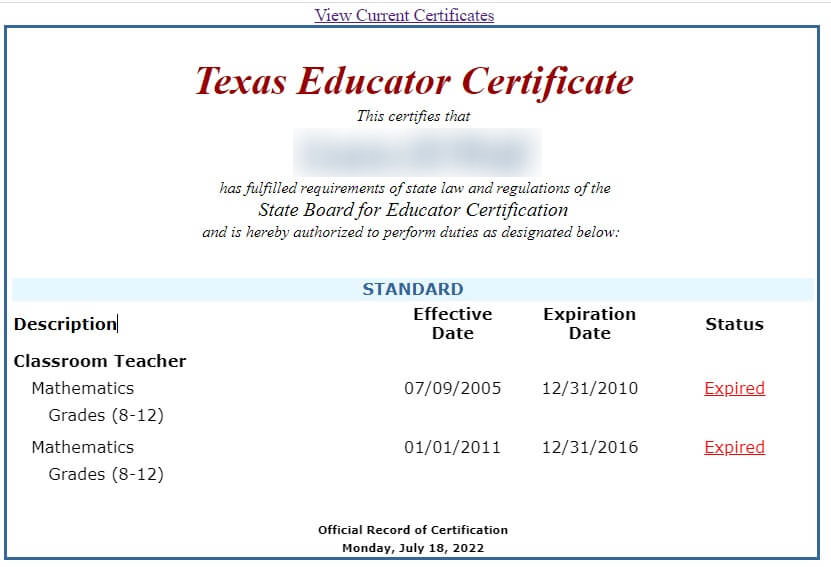
- Certificate Type: Upon approval, candidates will be issued a standard teaching certificate, valid for a specified period and often renewable.

Types of Certificates
Texas issues several types of certificates, with the standard teaching certificate being the ultimate goal for most.
- Intern Certificate: Issued to individuals accepted into an approved ATCP who are beginning their teaching career under supervision.
- Probationary Certificate: May be issued under specific circumstances, often requiring additional coursework or testing within a defined timeframe.
- Standard Certificate: The highest level of certification, issued upon successful completion of all program requirements, testing, and application processes. This is typically valid for five years and renewable.
- Professional Certificate: An advanced level of certification achieved after gaining experience and completing further professional development and coursework.
Obtaining a teaching certificate in Texas is a structured yet rewarding endeavor. By understanding the prerequisites, choosing the appropriate pathway, diligently preparing for examinations, and meticulously following the application procedures, aspiring educators can confidently embark on their mission to shape the minds of future generations. The dedication required is significant, but the impact a qualified and passionate teacher has on their students and community is immeasurable.
LifeOutOfTheBox is a participant in the Amazon Services LLC Associates Program, an affiliate advertising program designed to provide a means for sites to earn advertising fees by advertising and linking to Amazon.com. Amazon, the Amazon logo, AmazonSupply, and the AmazonSupply logo are trademarks of Amazon.com, Inc. or its affiliates. As an Amazon Associate we earn affiliate commissions from qualifying purchases.