
The history of Texas and its relationship with Mexico is a complex tapestry woven with threads of exploration, colonization, revolution, and ultimately, independence. Understanding the duration of [Texas]’s status as part of [Mexico] requires delving into the intricate historical periods that shaped its identity. From the early Spanish claims to the establishment of [Mexico] as an independent nation and the subsequent Texas Revolution, the timeline is marked by significant political and social transformations.
The Spanish Colonial Era and Mexican Independence
The territorial claims over what is now [Texas] began with the arrival of European explorers. While various European powers had their own claims, the Spanish Empire asserted significant control over the region for centuries. However, this was a period of exploration and sporadic settlement rather than direct governance as a unified province of a fully formed nation. The Spanish presence was characterized by the establishment of missions, presidios (forts), and some civilian settlements, primarily in the eastern and southern parts of the [Texas] territory. These efforts were often driven by a desire to counter French influence and to convert indigenous populations to Christianity.

The early 19th century brought seismic shifts with the Mexican War of Independence from Spain. This conflict, which lasted from 1810 to 1821, dramatically altered the political landscape of North America. Upon achieving independence, [Mexico] inherited Spain’s vast territorial claims, including [Texas].
The Birth of Mexican Texas
Following its independence in 1821, [Mexico] embarked on a period of nation-building. One of the key policies adopted by the new Mexican government was to encourage settlement and economic development in its northern territories, including [Texas]. The vast, sparsely populated region was seen as vulnerable and in need of cultivation. To achieve this, [Mexico] invited foreign immigration, most notably from the United States, through the empresario system.
Under this system, individuals known as empresarios were granted large tracts of land and were tasked with recruiting settlers, typically from the United States, to populate and develop these lands. Stephen F. Austin, often hailed as the “Father of Texas,” was the most successful of these empresarios, bringing the first significant group of Anglo-American settlers to the region. These settlers agreed to become Mexican citizens, adopt the Roman Catholic faith (though this was often loosely enforced), and abide by Mexican laws.
This period, from the establishment of [Mexico] in 1821, marks the beginning of [Texas] being an integral part of a sovereign [Mexican] state. The territory was initially organized as the province of [Tejas], and later, in 1824, it was incorporated into the state of [Coahuila y Tejas] as part of the Federal Republic of [Mexico]. This state was one of the constituent states of the newly formed Mexican nation.
Growing Tensions and the Texas Revolution
Despite the initial attempts at integration, the relationship between the settlers in [Texas] and the central Mexican government began to deteriorate. Several factors contributed to this growing estrillamento. The cultural differences between the Anglo-American settlers and the Mexican population were significant. Many settlers clung to their language, customs, and legal traditions, which were distinct from those of [Mexico].
Furthermore, political instability within [Mexico] itself played a crucial role. The young republic experienced frequent changes in government, coups, and constitutional crises. The centralized policies of some Mexican administrations, particularly those that sought to curtail states’ rights and limit immigration from the United States, were viewed with suspicion and resentment by the settlers in [Texas].
Key Events Leading to Conflict
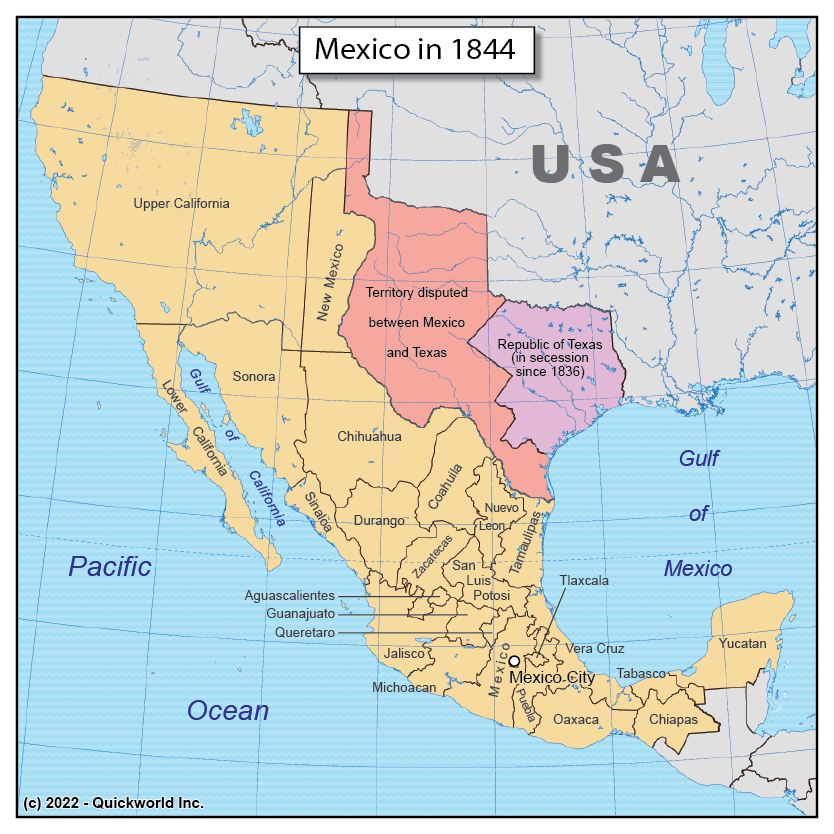
A pivotal moment in the escalating tensions was the Law of April 6, 1830. This law was designed to strengthen Mexican control over [Texas], effectively halting further immigration from the United States and increasing military presence. It also aimed to enforce Mexican laws more rigorously. This was seen by many settlers as an infringement on their liberties and a threat to their burgeoning way of life.
The political climate in [Mexico] further polarized when Antonio López de Santa Anna came to power. Initially seen by some as a liberal reformer, Santa Anna later abolished the Constitution of 1824, which had established a federal system and granted significant autonomy to the states. He moved towards a more centralized government, which deeply concerned the residents of [Coahuila y Tejas].
By the early 1830s, the political differences and perceived disregard for the rights of the settlers in [Texas] reached a boiling point. Events such as the Battle of Anahuac in 1832 and the subsequent resolutions calling for separate statehood for [Texas] signaled the growing resistance.
The Declaration of Independence and War
The breaking point arrived in 1835. In response to Santa Anna’s increasingly authoritarian rule, settlers in [Texas] began to organize militarily. This culminated in the Texas Revolution, which officially began with skirmishes in October 1835. The Texas Declaration of Independence was adopted on March 2, 1836, formally severing [Texas]’s ties with [Mexico].
The revolution was a bloody and arduous struggle. Significant battles, such as the heroic but tragic defense of the Alamo and the Goliad Massacre, galvanized Texan resolve. The decisive victory for the Texan forces came at the Battle of San Jacinto on April 21, 1836, where General Sam Houston’s army captured Santa Anna.
The Duration of Texas as Part of Mexico
Based on this historical progression, we can establish the approximate duration of [Texas]’s direct governance as a part of [Mexico].
The period of [Texas] being part of the sovereign nation of [Mexico] began with [Mexico]’s independence from Spain in 1821. This marked the transition from Spanish colonial rule to Mexican national territory. The province of [Tejas] was then integrated into the new Mexican republic as part of the state of [Coahuila y Tejas].
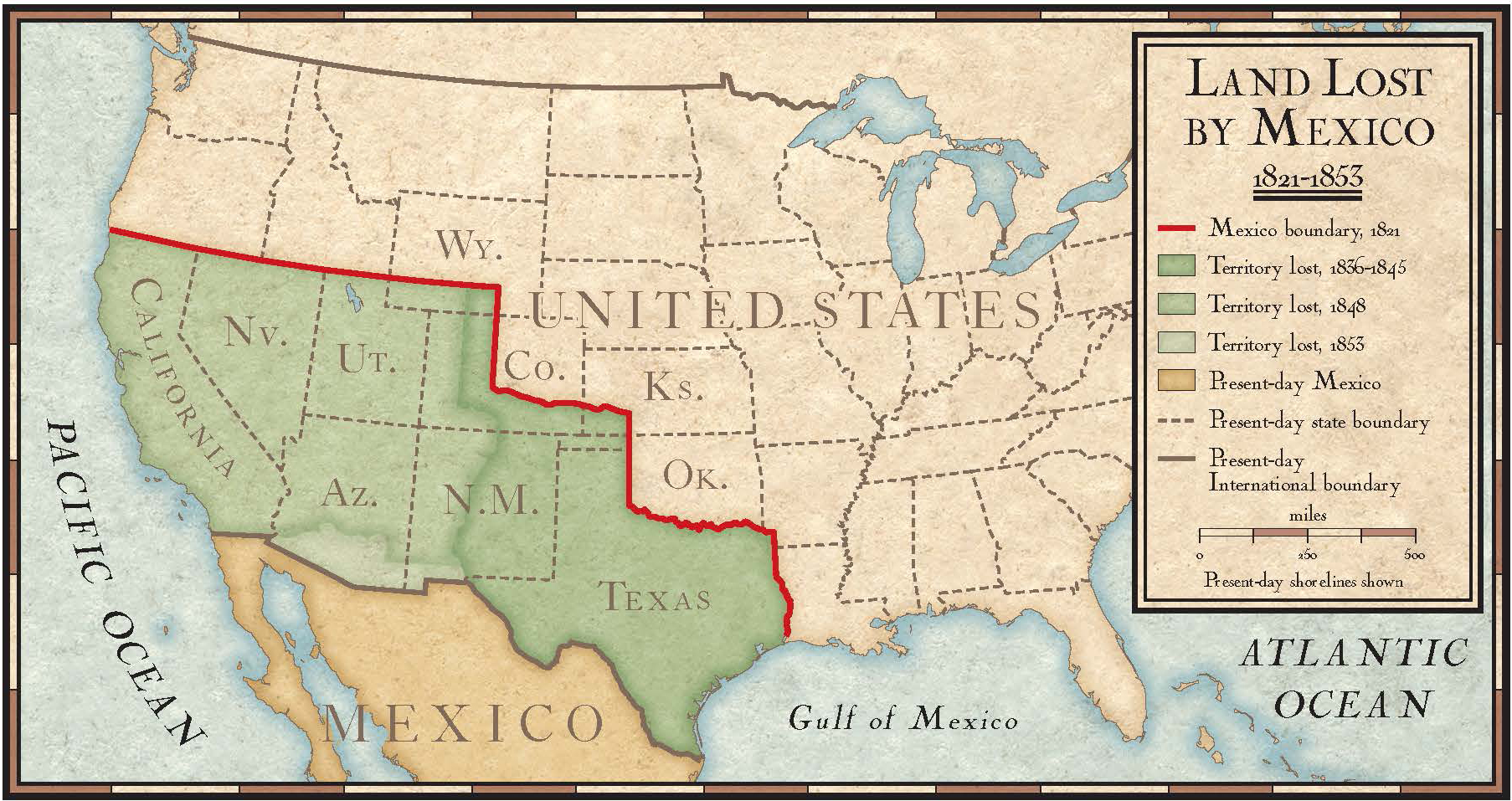
The Texas Revolution, commencing in 1835 and culminating in the declaration of independence in 1836, effectively ended [Texas]’s status as a part of [Mexico]. Therefore, the period during which [Texas] was officially and directly governed as a constituent part of the nation of [Mexico] spans approximately 15 years, from 1821 to 1836.
It is important to distinguish this period from the earlier Spanish claims. While Spain claimed vast territories including [Texas] for centuries prior, these were colonial claims often exercised through exploration, missions, and limited settlements, rather than direct integration into a unified Spanish state in the same way [Texas] was integrated into the newly formed Mexican Republic.
Following the revolution and after a period as the independent Republic of Texas, [Texas] eventually joined the United States of America in 1845, a move that would lead to the Mexican-American War (1846-1848). The legacy of this era continues to shape the cultural and historical landscape of [Texas] and its relationship with [Mexico] to this day.
LifeOutOfTheBox is a participant in the Amazon Services LLC Associates Program, an affiliate advertising program designed to provide a means for sites to earn advertising fees by advertising and linking to Amazon.com. Amazon, the Amazon logo, AmazonSupply, and the AmazonSupply logo are trademarks of Amazon.com, Inc. or its affiliates. As an Amazon Associate we earn affiliate commissions from qualifying purchases.