
The question of “How Many Cards For Texas Hold’em?” might seem deceptively simple, but for those embarking on a journey into the world of this immensely popular poker variant, understanding the fundamental components of the game is paramount. While the core gameplay revolves around player strategy, betting rounds, and reading opponents, the very foundation of Texas Hold’em is the deck of cards from which all action unfolds. This article will delve into the specific number of cards used in a standard Texas Hold’em game, exploring the composition of the deck and how it dictates the flow and possibilities of play.
The Standard Deck: A Foundation of 52
At its heart, Texas Hold’em is played with a single, standard 52-card deck. This is a crucial piece of information for any aspiring player, whether they are learning the game in a casual home setting or preparing for a more structured tournament. This deck consists of four suits: spades (♠), hearts (♥), diamonds (♦), and clubs (♣). Each suit contains 13 ranks: Ace (A), King (K), Queen (Q), Jack (J), 10, 9, 8, 7, 6, 5, 4, 3, and 2.
The numerical value of these cards is generally consistent across most poker games, with Aces sometimes acting as high or low, depending on the specific hand being formed. In Texas Hold’em, an Ace can be the highest card in a straight (A-K-Q-J-10) or the lowest (A-2-3-4-5). The interaction between ranks and suits is what creates the vast array of potential hands that players aim to assemble.
The Role of Suits and Ranks
Understanding the composition of the deck isn’t just about counting to 52. It’s about recognizing the patterns and probabilities that emerge from these 52 cards.
- Suits: While suits don’t inherently hold a “higher” value than others in Texas Hold’em, they are critical for forming flushes. A flush occurs when a player has five cards of the same suit. The strength of a flush is determined by the highest card within that suit. For instance, a King-high flush is stronger than a Queen-high flush.
- Ranks: The ranks are the primary determinants of hand strength. Pairs, three of a kind, straights, and full houses are all based on matching or sequential ranks. The hierarchy of ranks, from highest to lowest, is typically: Ace, King, Queen, Jack, 10, 9, 8, 7, 6, 5, 4, 3, 2.
Why 52? The Mathematical Significance
The choice of a 52-card deck is not arbitrary. It provides a rich and complex landscape for strategic play without becoming overwhelmingly complicated. The number 52 is a product of 4 suits and 13 ranks. This arrangement allows for a diverse range of possible hands and combinations, which is essential for a game that relies on skill, probability, and calculated risk.
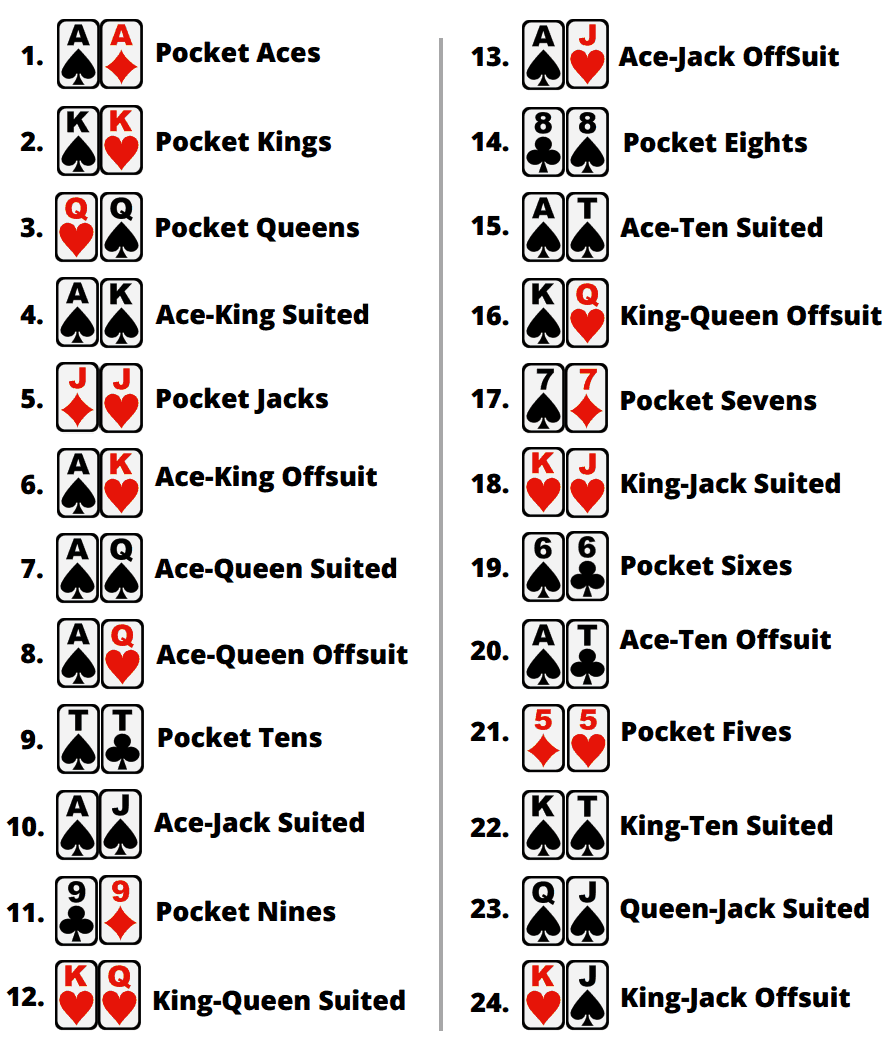
Consider the sheer number of possible starting hands in Texas Hold’em. Each player is dealt two private cards, and the possibilities for these two cards are numerous. When combined with the five community cards (the flop, turn, and river), the total number of ways to form a seven-card hand from which to make a five-card poker hand is astronomically large. The 52-card deck is the perfect engine for this intricate dance of probability and deception.
Variations and Considerations: Beyond the Standard Deck
While the 52-card deck is the undisputed standard for Texas Hold’em, it’s worth noting that in very casual or informal settings, or for specific teaching purposes, variations might occasionally arise. However, for any serious play, tournament, or even a regular home game, adhering to the 52-card standard is crucial for fairness and consistency.
Joker Cards: Generally Excluded
Jokers are typically not used in standard Texas Hold’em games. Their inclusion would significantly alter the probabilities and strategic elements of the game, as they often act as “wild cards” capable of representing any other card to complete a hand. This would diminish the skill involved in identifying and playing specific hand combinations. Therefore, when you sit down at a table, whether in a brick-and-mortar casino like the Bellagio in Las Vegas or a high-stakes online game on PokerStars, you can expect a clean 52-card deck.
Multi-Deck Games: Not for Hold’em

The concept of using multiple decks is common in other casino games, such as Blackjack. In Blackjack, multiple decks are used to make card counting more difficult for players and to speed up the game. However, this practice is not applicable to Texas Hold’em. The dynamics of Hold’em, particularly the way players are dealt their hole cards and the subsequent community cards, rely on the predictable probabilities and limited options presented by a single 52-card deck. Introducing multiple decks would fundamentally change the game’s strategic underpinnings and likely make it unplayable in its current form.
Special Formats and Practice
For absolute beginners, some online platforms or apps might offer simplified versions of poker for practice, which could potentially use modified decks or fewer cards to illustrate basic concepts. However, these are pedagogical tools and not representative of actual Texas Hold’em played anywhere from the World Series of Poker to a friendly game in your living room. When moving beyond the introductory stages, the 52-card deck remains the constant.
The Practical Implications of a 52-Card Deck
The consistent use of a 52-card deck has several practical implications for players of Texas Hold’em, influencing everything from hand probabilities to game strategy.
Calculating Probabilities
Understanding that there are precisely 52 cards in play allows players to begin calculating the odds of certain hands occurring. For example, knowing there are four Aces means a player can estimate the probability of flopping three Aces or hitting an Ace on the turn or river to complete a set. This foundational knowledge is the first step in developing a mathematically sound poker strategy. Websites and apps dedicated to poker strategy often provide detailed charts and calculators based on the 52-card deck, illustrating the odds of making various hands.
Hand Ranking and Strategy
The ranking of hands in Texas Hold’em is directly tied to the ranks and suits within the 52-card deck. From the humble pair to the mighty royal flush, each hand’s value is determined by its rarity and the combination of cards that form it. This hierarchy is fundamental to the game’s objective: to have the best five-card hand at the showdown or to bluff your opponents into folding.
For instance, the rarity of a royal flush (A-K-Q-J-10 of the same suit) is precisely why it is the highest possible hand. There is only one such combination in each suit, making it incredibly scarce within the 52-card universe. Conversely, a high card is the lowest possible hand, as it’s formed when no other standard poker hand is made, and its strength is determined by the single highest card held.
Player Psychology and Observation
While the number of cards is fixed, how players interact with those cards is where the art of Texas Hold’em truly shines. Observing how opponents react to the cards dealt, their betting patterns, and their physical tells (if playing live) all contribute to a player’s ability to deduce the strength of their hand. The predictable nature of the 52-card deck allows experienced players to make educated guesses about what cards their opponents might hold, especially as the community cards are revealed.
Dealer and Player Roles
In a standard game, a designated dealer (who may rotate among players in a home game) shuffles and deals the cards from the 52-card deck. The process of shuffling is vital to ensure randomness and fairness. Professional dealers in establishments like The Venetian in Macau are highly skilled in rapid and efficient shuffling techniques, often using a riffle shuffle followed by a cut to randomize the deck before dealing.

Conclusion: The Simplicity and Depth of 52 Cards
In conclusion, the answer to “How Many Cards For Texas Hold’em?” is unequivocally 52. This standard deck of 52 cards, comprising four suits and thirteen ranks, forms the bedrock of this universally beloved poker game. Its composition provides a perfect balance of complexity and accessibility, enabling a vast array of strategic possibilities and exciting gameplay.
From the careful consideration of starting hands to the intricate calculations of pot odds and implied odds, every aspect of Texas Hold’em is influenced by this fundamental component. Whether you’re playing at a friendly gathering or participating in a major tournament, the familiar 52-card deck remains the constant, offering an endless source of challenge, excitement, and the potential for remarkable victories. Mastering the game means understanding not just the strategy, but also the very tools with which the game is played.
LifeOutOfTheBox is a participant in the Amazon Services LLC Associates Program, an affiliate advertising program designed to provide a means for sites to earn advertising fees by advertising and linking to Amazon.com. Amazon, the Amazon logo, AmazonSupply, and the AmazonSupply logo are trademarks of Amazon.com, Inc. or its affiliates. As an Amazon Associate we earn affiliate commissions from qualifying purchases.