
Understanding the intricacies of child support in Texas is crucial for parents navigating the complexities of family law. This guide aims to demystify the process, focusing specifically on the calculation for a single child. While each case is unique and dependent on specific circumstances, Texas employs a standardized method to ensure fairness and consistency. This approach prioritizes the best interests of the child, striving to maintain a level of financial support that reflects the non-custodial parent’s ability to contribute.
Texas Child Support Guidelines: The Foundation
The Texas child support system is primarily governed by Texas Family Code guidelines. These guidelines are not arbitrary; they are designed to provide a predictable framework for calculating support obligations. The core principle is that child support should be based on the income of the non-custodial parent and the number of children they are responsible for supporting. For parents with one child, this means a specific percentage of the non-custodial parent’s net monthly income will generally be applied.
Net Monthly Income Calculation
The first crucial step in determining child support is establishing the non-custodial parent’s net monthly income. Texas law defines net income as gross income minus federal income tax withholding for a single person claiming one exemption, state income tax withholding, Social Security taxes, and the cost of the child’s health insurance and medical support. It’s important to note that “income” can encompass more than just wages from employment. It can include:
- Wages and Salary: This is the most common form of income.
- Overtime Pay: While generally included, courts may consider whether overtime is consistent and voluntary.
- Commissions and Tips: These are typically averaged over a period, often 6 to 12 months, to determine a consistent monthly amount.
- Self-Employment Income: This involves deducting ordinary and necessary business expenses from gross receipts.
- Other Income Sources: This can include unemployment benefits, disability benefits, retirement benefits, and rental income, although specific rules apply to each.
If a parent is intentionally unemployed or underemployed, the court may “impute” income, meaning they will calculate support based on what the parent could be earning based on their earning potential, work history, and skills. This prevents parents from deliberately reducing their income to avoid child support obligations.
The Percentage of Net Monthly Income
Once the net monthly income is established, the Texas guidelines apply a percentage based on the number of children the non-custodial parent is obligated to support. For a single child, the guideline percentage is typically:
- 20% of the non-custodial parent’s net monthly income if they have only one child.
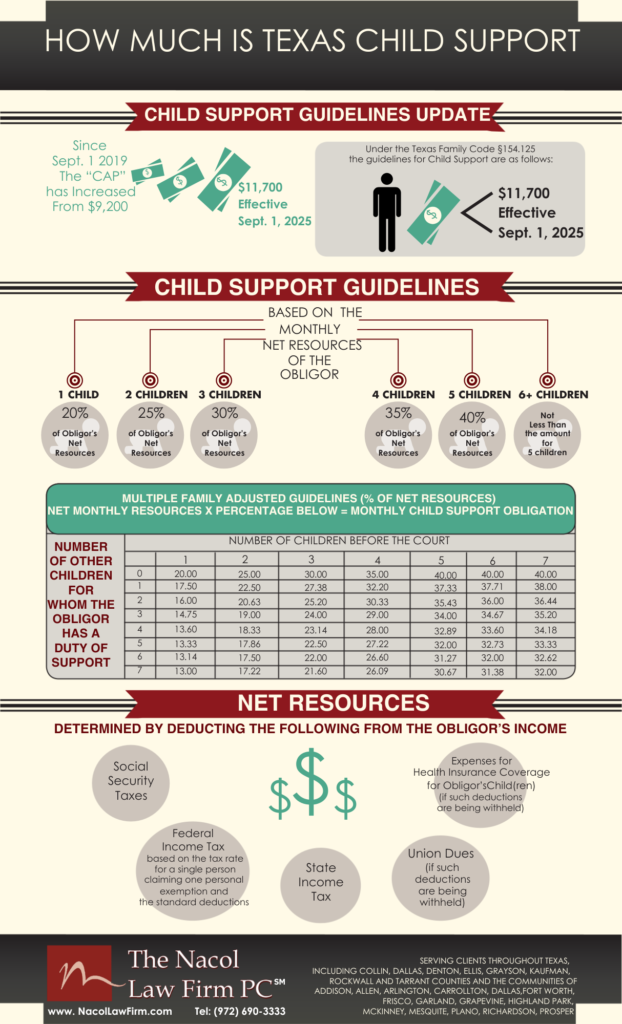
It is important to understand that this percentage applies up to a certain statutory cap. As of the latest revisions, this cap is applied to the first $9,200 of net monthly income. If the non-custodial parent’s net monthly income exceeds this cap, the guideline support amount is calculated on $9,200, and any income above that may be considered for additional support through a deviation from the guidelines.
Income Caps and Statutory Limits
The statutory cap is a critical component of the calculation. It ensures that child support obligations remain reasonable and do not impose an undue financial burden on the non-custodial parent, particularly when their income is very high. For example, if a non-custodial parent has a net monthly income of $12,000, the child support calculation for one child would be based on $9,200, not the full $12,000.
Therefore, the maximum guideline child support for one child in Texas is 20% of $9,200, which equals $1,840 per month. However, courts retain the discretion to order support above this amount if it is deemed to be in the child’s best interest and the non-custodial parent has the ability to pay. This might occur in cases involving special needs of the child or a significantly higher standard of living the child enjoyed prior to the separation.
Factors That Can Influence Child Support Calculations
While the guidelines provide a strong baseline, Texas courts recognize that rigid application may not always serve the child’s best interest. Several factors can lead to deviations from the standard calculations.
Standard of Living and Best Interests of the Child
The overarching principle in all child support matters is the best interest of the child. This includes ensuring the child has access to the same standard of living they would have enjoyed if the parents had remained together. This can sometimes justify deviating from the guidelines.
Other Children in the Household
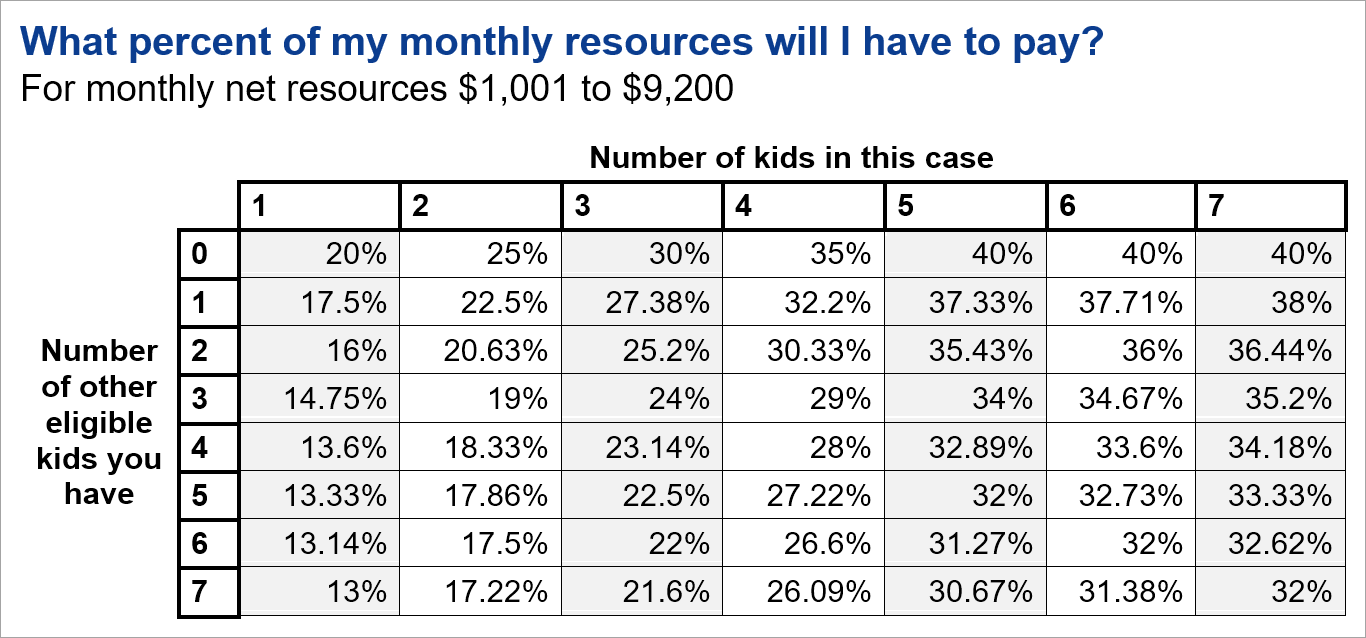
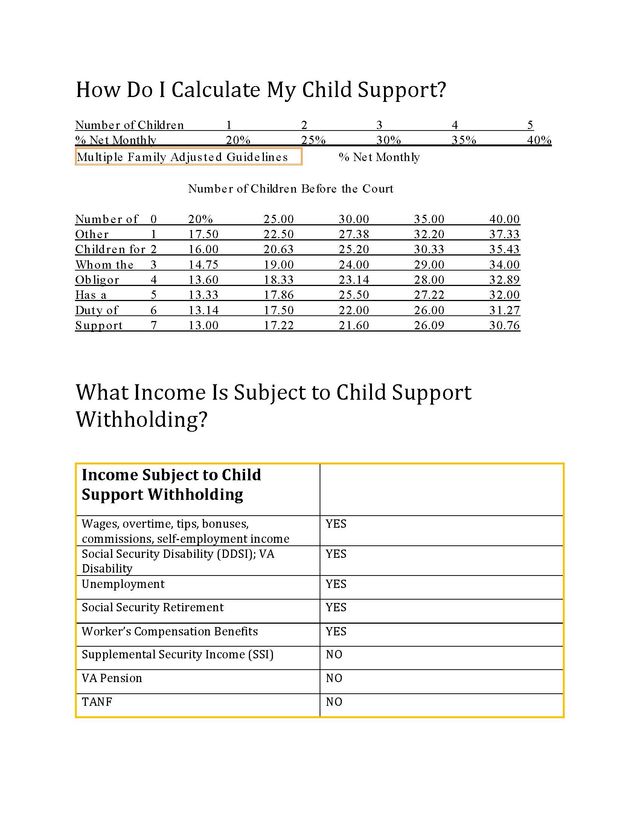
The number of children for whom the non-custodial parent is legally obligated to provide support is a significant factor. If the non-custodial parent has other children from a different relationship for whom they are paying support, the percentages are adjusted. The guideline percentages are applied as follows:
- One child: 20%
- Two children: 25%
- Three children: 30%
- Four children: 35%
- Five or more children: 40%
These percentages are applied to the total number of children the non-custodial parent supports. For instance, if a non-custodial parent has one child in the current case and one child from a previous marriage, they are supporting two children in total. The support calculation for the child in the current case would then be based on the guidelines for two children, adjusted downward if they are already paying court-ordered support for the other child.
Health Insurance and Medical Expenses
The cost of providing health insurance for the child is factored into the net income calculation. Specifically, the amount paid for the child’s portion of the health insurance premium is deducted from the non-custodial parent’s gross income. Additionally, the court will order how uninsured medical expenses, such as deductibles and co-pays, will be allocated between the parents, typically on a pro-rata basis according to their incomes.
Standard Possession Orders and Travel
While not directly affecting the calculation of the base support amount, the type of possession order in place can indirectly influence the overall financial picture. For example, parents who agree on less frequent but longer periods of possession might have different travel-related costs associated with exchanges, which could be a point of discussion during negotiations, though not a direct input into the Texas guidelines.
Modifications and Enforcement
Child support orders are not set in stone. Circumstances change, and Texas law provides mechanisms for modifying and enforcing these orders.
Modification of Child Support
A parent can request a modification of a child support order if there has been a material and substantial change in circumstances since the last order was signed. Common reasons for modification include:
- Significant change in income: A substantial increase or decrease in either parent’s income.
- Change in the child’s needs: The child developing special medical needs or requiring educational support not previously anticipated.
- Change in custody or possession schedule: A significant alteration in the time each parent spends with the child.
A modification must be in the best interest of the child. To seek a modification, a formal court process is required, involving filing a petition for modification and serving the other parent.
Enforcement of Child Support
When a parent fails to pay child support as ordered, the custodial parent has legal recourse through enforcement actions. The Office of the Attorney General (OAG) provides services for child support enforcement. Enforcement options include:
- Income Withholding Orders: This is the most common method, where a portion of the non-custodial parent’s wages is directly sent to the custodial parent.
- Contempt of Court: The court can hold a non-paying parent in contempt, which can result in fines, jail time, or a repayment plan.
- License Suspension: Driver’s licenses, professional licenses, and recreational licenses can be suspended.
- Tax Refund Intercepts: Federal and state tax refunds can be intercepted.
- Liens on Property: Liens can be placed on real or personal property owned by the non-paying parent.
It is vital for parents to understand their rights and responsibilities regarding child support in Texas. Consulting with a qualified family law attorney is highly recommended to ensure accurate calculations, navigate the legal process, and protect the best interests of the child. The system, while complex, is designed to provide a clear path for financial support, ensuring children receive the necessary resources for their upbringing.
Frequently Asked Questions About Texas Child Support for One Child
Navigating child support can bring up numerous questions. Here are answers to some of the most common inquiries regarding child support for a single child in Texas.
What is considered “gross income” for child support purposes in Texas?
Gross income for child support calculations in Texas is generally defined as all sources of income. This includes wages, salary, tips, commissions, bonuses, overtime pay, self-employment income, disability benefits, unemployment benefits, retirement benefits, and any other income the parent receives. The specific treatment of each income source can vary, and courts have the authority to consider various forms of remuneration.
Can the child support amount be negotiated outside of court?
While parents can attempt to negotiate a child support agreement outside of court, any agreement regarding child support must ultimately be approved by a judge and incorporated into a court order. The judge will review the agreement to ensure it complies with Texas law and is in the best interest of the child. Agreements that significantly deviate from the statutory guidelines may face scrutiny.
What happens if the non-custodial parent loses their job?
If a non-custodial parent loses their job, they should immediately seek a modification of the child support order. Failure to pay support due to job loss without seeking a modification can lead to enforcement actions and accumulation of arrears. The court will assess the circumstances of the job loss and the parent’s efforts to find new employment. If the job loss is not voluntary, the court may reduce or suspend child support payments retroactively or prospectively.
Are there any circumstances where child support can be waived?
In Texas, child support cannot be “waived” in the traditional sense if it pertains to the support of a minor child. This is because child support is considered the right of the child, not the parents. While parents can agree to specific payment arrangements, a court will not approve an agreement that leaves the child without adequate financial support. Similarly, a custodial parent cannot unilaterally forgive past-due child support (arrears) without a court order.
How is child support paid in Texas?
In most cases, child support payments are made through the Texas Child Support Enforcement system, typically managed by the Office of the Attorney General. Payments are often made via income withholding orders, where the employer deducts the support directly from the non-custodial parent’s paycheck. Alternatively, payments can be made through direct deposit or other electronic transfer methods as ordered by the court.
What is the difference between “guideline support” and “non-guideline support”?
Guideline support refers to the child support amount calculated according to the Texas Family Code’s statutory guidelines, which are based on the non-custodial parent’s net monthly income and the number of children. Non-guideline support is an amount ordered by the court that deviates from these guidelines. Courts may order non-guideline support if they find that applying the guidelines would be unjust or inappropriate and that a deviation is in the best interest of the child, considering factors such as the child’s needs, the parents’ abilities to pay, and the standard of living the child would have enjoyed.
LifeOutOfTheBox is a participant in the Amazon Services LLC Associates Program, an affiliate advertising program designed to provide a means for sites to earn advertising fees by advertising and linking to Amazon.com. Amazon, the Amazon logo, AmazonSupply, and the AmazonSupply logo are trademarks of Amazon.com, Inc. or its affiliates. As an Amazon Associate we earn affiliate commissions from qualifying purchases.